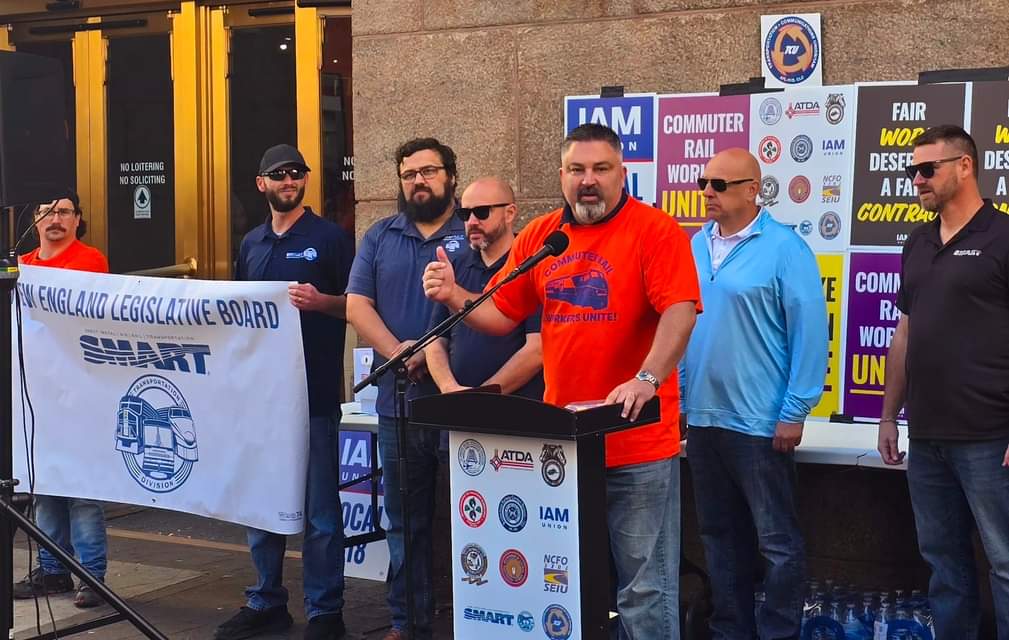
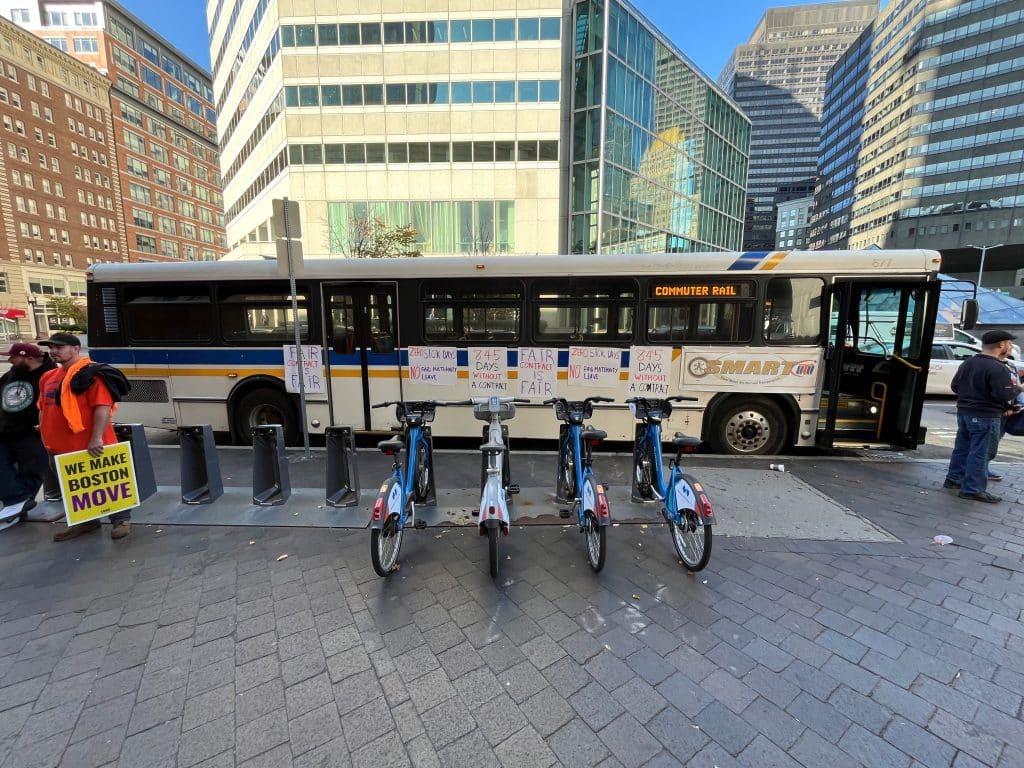
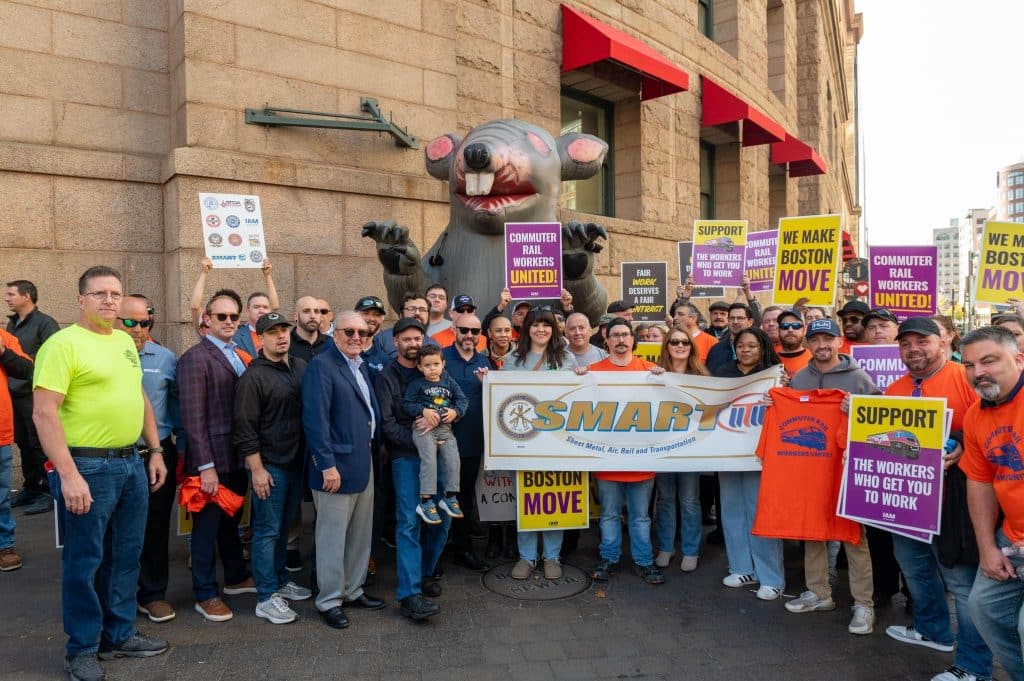
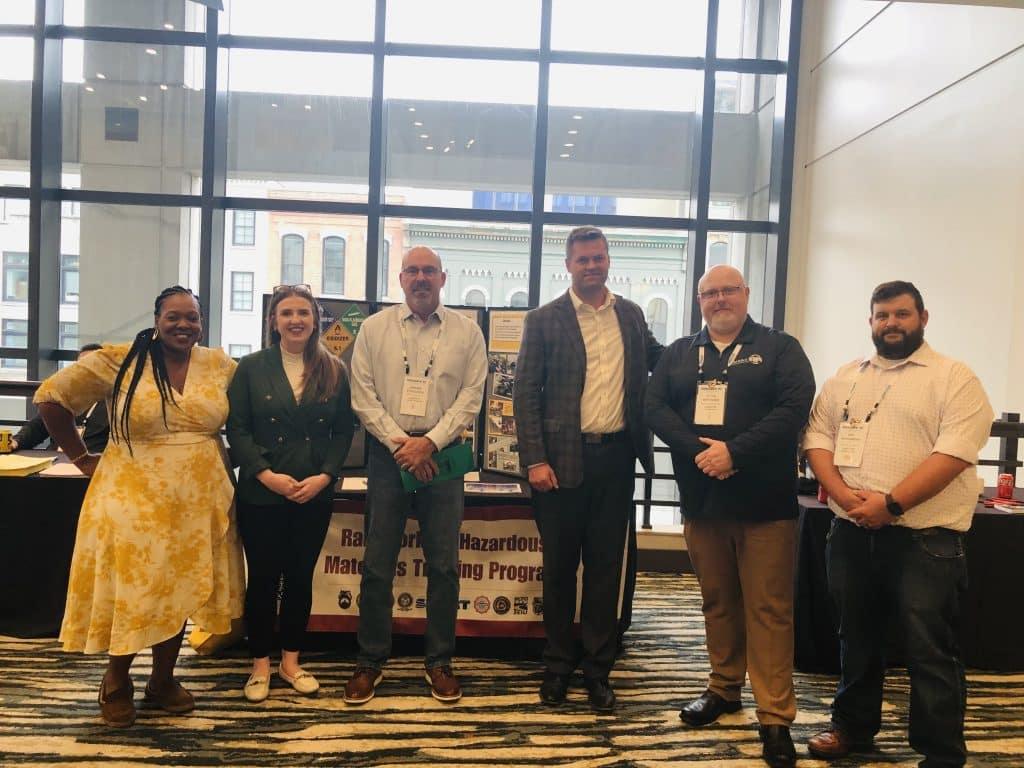
Boston, MA (October 23, 2024) — Hundreds of railroaders, along with friends, family and labor supporters, gathered at Boston’s historic South Station to rally for fair wages, sick leave, maternity days and other essential benefits.  

The event was coordinated by a coalition of rail labor organizations, including SMART-TD, the AFL-CIO, IAM, ATDA, BRS, TCU, and IBEW. They confronted Keolis, the French-owned passenger rail operator of the Massachusetts Bay Transportation Authority, who have neglected negotiations since the previous contract expired July 1, 2022. 

The rally featured passionate speeches from local Boston elected officials, four members of Congress and representatives from multiple rail unions.  

Notably, SMART-TD was represented by Deputy National Safety and Legislative Director Jared Cassity, who emphasized the importance of solidarity among the unions. “Today is our day. Now is the time to get the contract you all deserve!” Cassity declared. “It does not matter if you are an engineer. It does not matter if you are a conductor, if you’re a signalman, a dispatcher, a track worker, whatever the issues are, they are OUR issues. And the only way we fix them is when we stand together, and we fight together!” 

Keolis, which operates under contract with MBTA, has been accused of failing to bargain in good faith with SMART-TD and the other unions representing their workforce. As Congresswoman Ayanna Pressley (D-MA 7) pointed out in her speech, Keolis workers are paid on average 12% less than their counterparts on Amtrak to move the same passengers in Massachusetts. 

“We showed Keolis that workers, riders, our congressional delegation and the whole Massachusetts labor movement is behind us in our fight for a fair contract,” said New England Safety & Legislative Director Dave Stevenson.  

The mood at the rally was one of determination and unity. The overwhelming message was clear: the workers will continue to fight for a fair agreement until they have a new contract. An additional message was sent by several of the speakers, most notably by Congressman Steve Lynch, (D-MA 8) who pointed out that Keolis is contracted out by MBTA to run the commuter rail system in Boston, and their contract is coming up for bid. He made it clear that if Keolis doesn’t come to the table and get serious about retaining their frontline workers who keep Boston trains running safely and on time, they will be replaced by a contractor that will.  

SMART-TD is proud to report that more than 50 of our men and women attended the Oct. 23 rally and would like to thank all our members including our brothers and sisters on the Sheet Metal side of our organization who attended and contributed their voices to a good cause.  

SMART News will continue to keep you informed as the fight against Keolis continues.  

For SMART-TD union bus operators, and railroaders nationwide, threats to Social Security loom large


In a recent Washington Post article, it was reported that the Committee for a Responsible Federal Budget, a nonpartisan group aimed at opposing the federal deficit, stated that “A new report projects that the Social Security Trust Fund might run out of money within six years under a Donald Trump presidency.” This alarming projection raises significant concerns for all members of our union (especially members of our bus department) as well as retirees nationwide, who rely on Social Security to support their retirement.

Rail members and retirees who benefit from a defined pension provided by the Railroad Retirement Board are quick to point out that our RRB pensions are completely separate from the Social Security system that the majority of Americans pay into. That is not as true as we would like to think. It is true that the RRB trust fund and the Social Security trust fund are two separate pots of money. Also, it is a fact that the RRB trust fund is in better shape than its counterpart at SS; however, Social Security is still the national standard, and when they change policies, RRB tends to follow suit. If and when SS runs out of money and begins reducing the percentage they are paying out, it is distinctly possible RRB will mirror that policy change as it relates to how they manage Tier I retirement payments. So when Social Security payments get reduced, railroaders could very well feel the squeeze right along with every other American retiree.  

If Social Security dries up in this country, it will not be a bus member issue or a rail member issue; it will be a SMART-TD issue.

Social Security’s solvency directly affects bus and transit operators and retirees nationwide. Most Americans depend on Social Security, which they have faithfully contributed to throughout their careers. They’ve paid their fair share into a system designed to provide them with financial stability throughout retirement. It is unacceptable that after a lifetime of labor, they may face an uncertain future due to reckless fiscal policies.

The Washington Post article highlights a stark reality: “Compared to prior presidential campaigns, I can’t think of anything that would be this order of magnitude in its detrimental effect on Social Security’s bottom line compared to the policies Trump has proposed,” Marc Goldwein, senior policy director for Committee for a Responsible Federal Budget, told the newspaper. These proposals, which include massive tax cuts for business owners and corporate bailouts, threaten to deplete the very retirements our members have diligently built.

As the report outlines, the potential consequences are severe: “All added up, the report forecasts that Social Security under Trump would hit the point where by law it must cut benefits in 2031 or 2032,” leading to a “reduction for all Social Security checks to a predicted cut of about 33 percent.”

For the workers and retirees dependent on Social Security, this translates to a significant and devastating reduction in the retirement income they expect and deserve after years of dedication and service to the public and to this union.

SMART-TD is not in the business of accepting agreements from transit agencies or railroad companies that give our members a 33% pay cut. It is unacceptable for our active members, and it is unacceptable to accept this for the nation’s retirees!

This situation represents a shocking abuse of the American worker, particularly for our SMART-TD brothers and sisters. The threat to Social Security is not just an economic issue. For SMART-TD, it is a moral one. Our members deserve what they have worked for, and it is our responsibility to stand against the policies of any employer, and in this case, any presidential candidate, that jeopardizes that security.

As we move forward as a union, we must remain vigilant in advocating for the protection and enhancement of Social Security. It is crucial that we amplify our voices and demand that the rights of all workers are upheld. The future of our retirement security is at stake, and together, we can fight to ensure that our hard-earned benefits are preserved for generations to come.

On Aug. 12, delegates at the Third SMART General Convention voted to endorse Vice President Kamala Harris for president in the upcoming 2024 election following President Joe Biden’s announcement on July 21 that he would end his re-election campaign.

This significant endorsement reflects the voice of SMART-TD’s members, who have long fought for the safety and well-being of our freight rail workers.

SMART-TD extends its heartfelt thanks to President Biden for his dedicated service and commitment to the labor movement. Under his watch, we made significant advancements in protecting our bus, transit and railroad members. The doors of his administration were always open when we needed to speak with the Department of Transportation, FRA, FTA, NTSB or STB, or others.

We are eager to support Vice President Harris and her running mate, Minnesota Gov. Tim Walz in continuing the vital work that has marked the Biden-Harris administration’s tenure.

Advocating for two-person crews

Four years ago, during a global pandemic that tested our resilience, SMART-TD members united to support Biden and Harris, driven by their promise to uphold workers’ rights and enhance safety measures across the board.

The Biden-Harris administration has delivered, notably through the recent Federal Railroad Administration regulation mandating two-person crews on freight trains. This crucial regulation, finalized this spring, stands as a testament to their dedication to improving the working conditions of freight rail members and ensuring safer operations on our railroads.

Two-person crews are not just a policy choice but a critical safety measure that impacts the well-being of every freight rail worker. The presence of two qualified individuals in the cab of a freight train helps prevent accidents, ensures immediate response to emergencies, and supports overall operational safety. It is an essential step towards protecting our members and reinforcing the safety standards within the industry.

Championing worker safety and rights

The Biden-Harris administration has also demonstrated a strong commitment to protecting public transit and bus workers. Their focus on addressing worker assaults in these sectors aligns with our broader goal of ensuring safety and respect for all transportation workers. This administration’s proactive stance on worker safety issues, including FTA’s establishment of Public Transit Safety Plans reflects a clear understanding of the challenges faced by frontline transportation employees and a dedication to creating safer working environments.

Building on a legacy of pro-worker policies

Vice President Harris and Gov. Walz have consistently demonstrated their support for the labor movement. Harris, with her leadership in the White House Task Force on Worker Organizing, and Walz, with his pro-labor legislation as governor — he is the first and only governor to have signed legislation covering yardmaster hours of service — are both strong allies in our continued fight for workers’ rights and safety.

Looking ahead

As we face the possibility of a return to anti-worker policies in November’s election, the SMART-TD stands firm in its support for the Harris-Walz ticket.

Their commitment to the labor movement and their track record of advancing worker-friendly policies make them the best choice to lead our nation forward.

We extend our deepest gratitude to President Biden for his unwavering support and look forward to working with Vice President Kamala Harris to continue advancing the interests of our members and all working families across the country.


For more than a century, the carriers’ lobbyists and lawyers have been paid very well for their ability to argue out of both sides of their mouths.

One of the battlefields where our union and the carriers have clashed since the onset of Precision Scheduled Railroading (PSR) is the issue of recording the length of freight trains. In multiple cases where train length factored into the discussion, the carriers have defaulted to the excuse that there is no official data on average train length, and therefore our arguments cannot possibly have a basis in reality. They love to characterize our comments on these and other topics as entirely anecdotal and dismiss them altogether.

The flip side is that when it is proposed that train length data should be documented to fill that information gap, carriers often argue that we are infringing on their business, and that it is not practical for them to calculate that data. They conveniently say that they can’t be held accountable for statistics that are unknowable, and then are not eager to comply with requests to start keeping track of the data needed to do so.

As we all know, they already have that data. It’s on our work order in multiple places. We enter it into PTC, TO/Leader. It is displayed on the dispatchers’ screens so they can calculate train meets and what trains fit into what sidings. Until recently, on some railroads, the train length was even announced by wayside defect detectors until the trains got so long the axle counts triggered errors on the detectors and they reprogrammed them to stop calculating that statistic. Historically, the railroads have always tracked their train lengths. It would be a terrible business practice if they didn’t. They need this data when designing yards and sidings and for day-to-day decision making.

Like we said, they talk out of both sides of their mouths.

As anyone with railroad experience knows, the length and weight of a consist factors into most aspects of railroading and dramatically amplifies the risk factors we face in our daily tasks. Your union has been banging this drum as loudly as possible.

On January 19, it appears that we have finally turned the corner on this important issue.

In response to the conflict surrounding this hot issue, FRA Administrator Amit Bose and the Biden administration made an announcement the railroads have feared for years. Bose and the FRA put out a public notice in the Federal Register stating Class I freight railroads are one step closer to having to report the length of every train on their system by filling out two extra questions on a report the carriers are already required to provide to FRA.

In practice, if this ruling becomes final, it would not be a difficult lift for the railroads. It’s the equivalent of a few more keystrokes to enter. But the ramifications of having to give us and the public access to this data will be a tough pill for them to swallow.

The process required to force the railroads to begin sharing this data with the FRA involves two departments of the federal government signing off on it. First being the FRA, which happened January 19th. Next up is the Office of Management and Budget (OMB), which is part of the executive branch and answers to the White House.

In the first round of public comments where interested parties were invited to make their arguments for or against the new requirement to the FRA, the Association of American Railroads and other surrogates for these billion-dollar enterprises made the same arguments we had predicted. They stated that this new regulation would be overly burdensome, and that railroads should not be expected to provide this information.

SMART-TD and the AFL-CIO’s Transportation Trades Department (TTD) both stepped to the plate and countered these ridiculous arguments.

FRA informed AAR and the carriers they had lost this round of the fight in the Federal Register. In their decision notice, they quoted SMART-TD and the AFL-CIO TTD’s arguments as to why they made the decision they made. Our union is happy to have played a role in bringing about this decision from Bose and the FRA.

Our union cannot call this a win just yet because FRA does not have the authority to make a final ruling in this matter. That duty lies with the OMB. So, this prize fight is not over, but SMART-TD is proud to say that we are ahead on the judges’ scorecards as we head into the last round.

Public comments are due to the OMB on February 21st, and by statute, their agency has 60 days to issue a final ruling. If we are successful, train lengths will now be public records and subject to public records requests. Not only will our union, the biggest freight rail union in the country, and 11 other rail industry labor organizations have access to this data, but every non-profit activist group, every state’s attorney general and legislators wanting to examine the impact of blocked crossings, and every lawyer looking to make a case as to why a railroad is liable for the delay of an ambulance getting to their client in time will have a right to every piece of train length data they could ever want.

It is hard to overstate what this victory would mean for railroad workers and public safety if we can get this initiative over the finish line. These corporate powerhouses have largely been getting their way for a century and a half, and they are not taking this setback lying down.

With public comments on this round due to the OMB on Feb. 21st, it is almost guaranteed AAR and the carriers are retooling their arguments and are doubling down on the amount of billable hours their lobbyists and lawyers are putting into this issue. Rest assured; your union is not going to let our guard down. We have every intention to issue further comment affirming our stance and categorically addressing the railroads’ flimsy, yet well-funded arguments.

Momentum is with us, but we aren’t taking anything for granted. SMART-TD and the AFL-CIO’s Transportation Trades Department are in this for the long haul. We won’t be satisfied with a partial or short-lived victory.

You will be kept up to date as this story progresses.

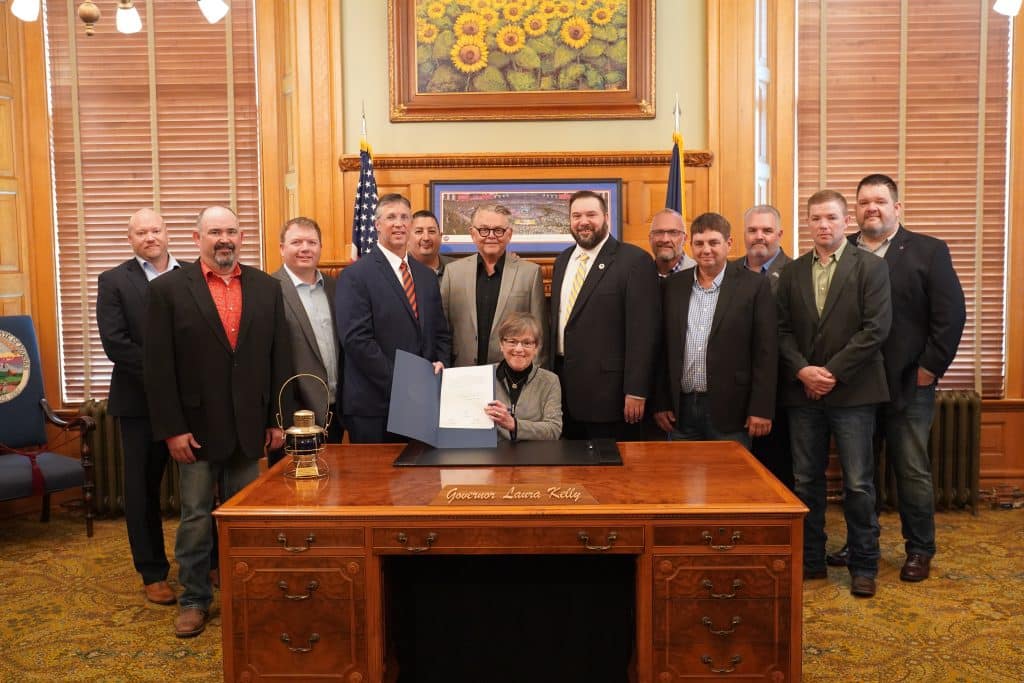
Updated comment from Kansas State Legislative Director Ty Dragoo:

“I want to thank everyone involved; this was a team effort.  And what an honor to have Vice President Brent Leonard and National State Legislative Director Greg Hynes in attendance during the signing ceremony. We have much more to do and won’t stop here!

“Today is a win for rail workers, the public, and our union. None of this could have been done without the steadfast support from our international president, international officers, GCAs, SLDs, local officers and members fighting for our legislative efforts in their communities. The regulation is one of the strongest and clearest in the nation.” 


Read the full release from Kansas Gov. Laura Kelly’s office below.

For Immediate Release:         
October 11, 2023

Governor Kelly Announces Kansas Two-Person Crew Rule in Effect to Improve Safety for Kansas Railroad Workers

Rule Officially Makes Kansas 10th State in Country with Strengthened Safety Requirement

TOPEKA — Governor Laura Kelly announced that to improve safety for workers and Kansas communities, Kansas today put into effect the rule requiring railroads operating in the state to have at least two railroad crew members in the lead locomotive. Kansas is now the tenth state in the country with this safety requirement.

“Kansans’ safety and security must always come first, and that includes the safety of our railroad crew members,” Governor Laura Kelly said. “This requirement will protect workers from the effects of fatigue, prevent train derailments, and reduce risks in the many Kansas communities along our railroad tracks.”

According to the Federal Railroad Administration, Kansas is in the top 25 states for highway-rail grade crossing collisions, resulting in five deaths and 14 injuries in 2022 alone. Derailments resulted in nearly $10 million in damage in 2022.

Governor Kelly first announced she had directed the Kansas Department of Transportation to propose the requirement in May 2023. Before the regulation was implemented, it was subject to at least a 60-day public comment period. Organizations including the International Association of Sheet Metal, Air, Rail and Transportation Workers (SMART) have supported this rule.

Governor Kelly also met with SMART International President Jeremy R. Ferguson and SMART Transportation Division Kansas State Legislative Director Ty Dragoo today to celebrate the rule.

“This bipartisan two-person crew regulation is monumental for the safety of all Kansans and for our crews that operate day in and day out within this great state. We have all worked hard to show that safety comes first, and corporate profits will never be placed ahead of all the citizens of this great state,” said Jeremy R. Ferguson, SMART International President. “I want to thank all the people who supported this regulation, and we, as the leaders in rail transportation, congratulate you on achieving one of the most common-sense standards in rail safety that will now be the law of the land. I also want to thank Governor Kelly for directing her agency to promulgate this rule, and we are also very proud of her longstanding leadership on rail safety. We look forward to working together with everyone to make Kansas even safer wherever we can!”

“This is a banner day for Kansas communities and the Kansas workers that operate trains throughout the state. The industry norm is and has been a two-person operation; however, as trains grow longer and heavier, it is vital that a minimum safety standard is established. In many instances across the state, trains can range from 8500 feet weighing a few hundred tons to over 4 miles long and 20,000+ tons,” said Ty Dragoo, SMART Transportation Division Kansas State Legislative Director.

“It still takes a minimum of two individuals, regardless of size, to safely move and respond to emergencies as they arise throughout the state; an on-scene crew to mitigate emergencies as they arise the second an accident happens is paramount. This regulation ensures Kansas communities and citizens have the already widely accepted industry-wide minimum standard in place for their safety. Governor Kelly has always chosen Kansas people and made public safety her priority, and that commitment continues today. We thank her for her continued leadership in transportation safety throughout the state.”

The majority of railroads in Kansas are currently operating two-person crews and will have no increased labor costs from the implementation of this regulation.

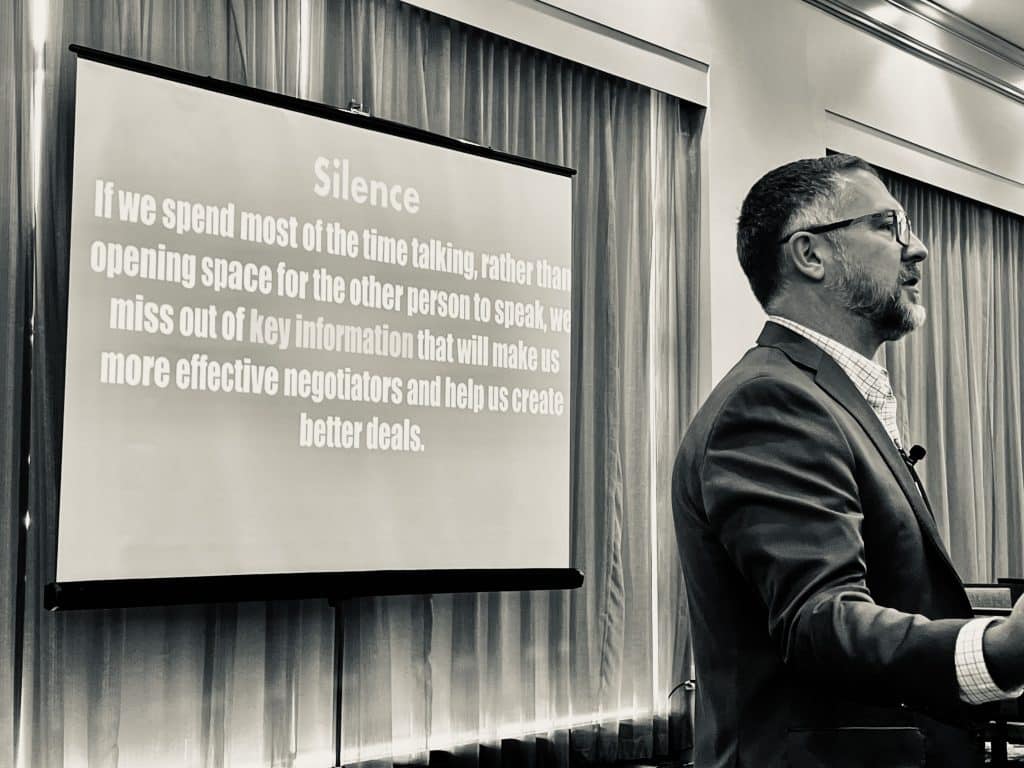
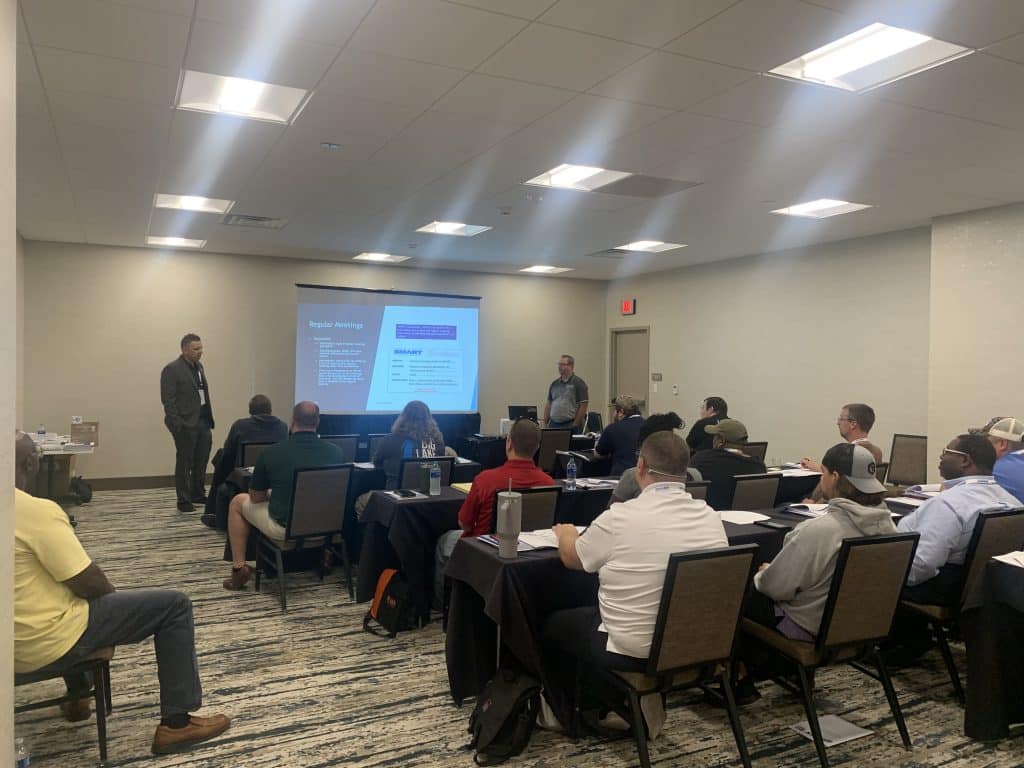
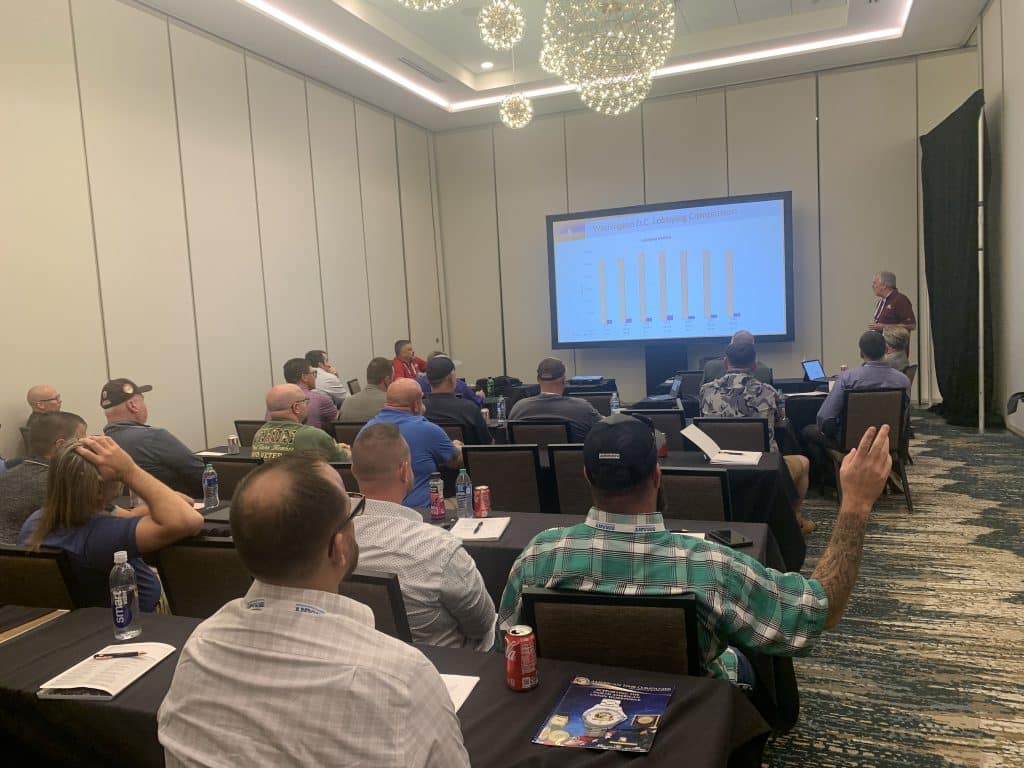
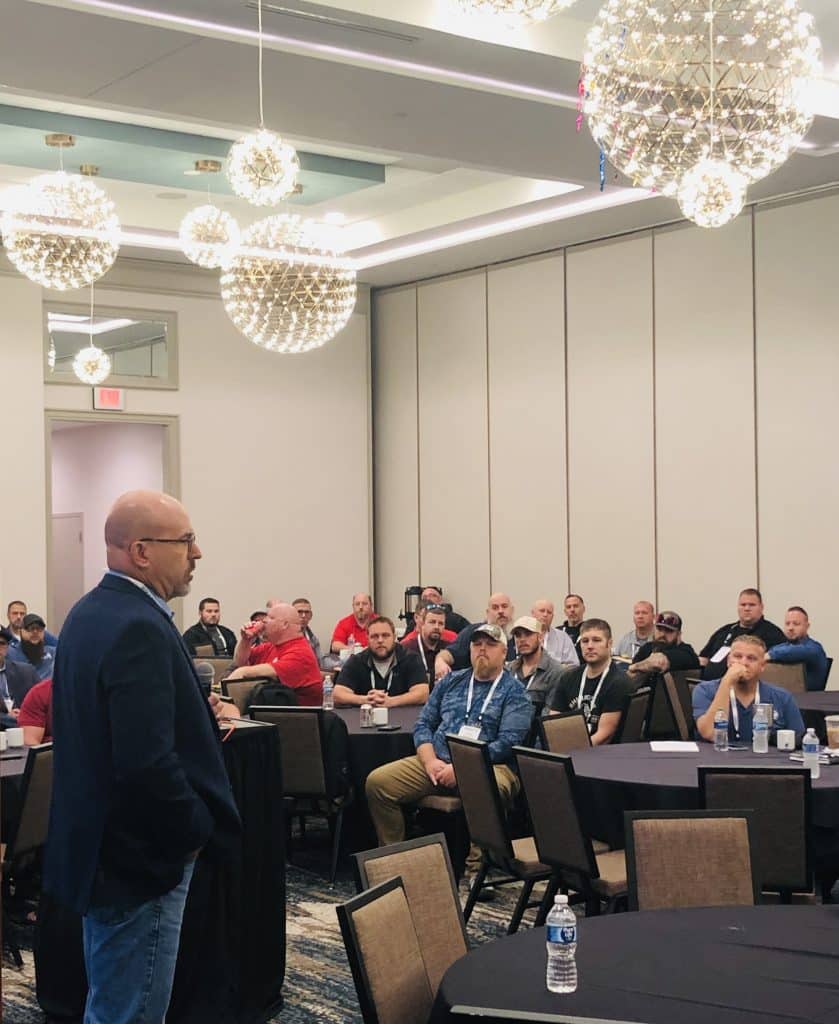
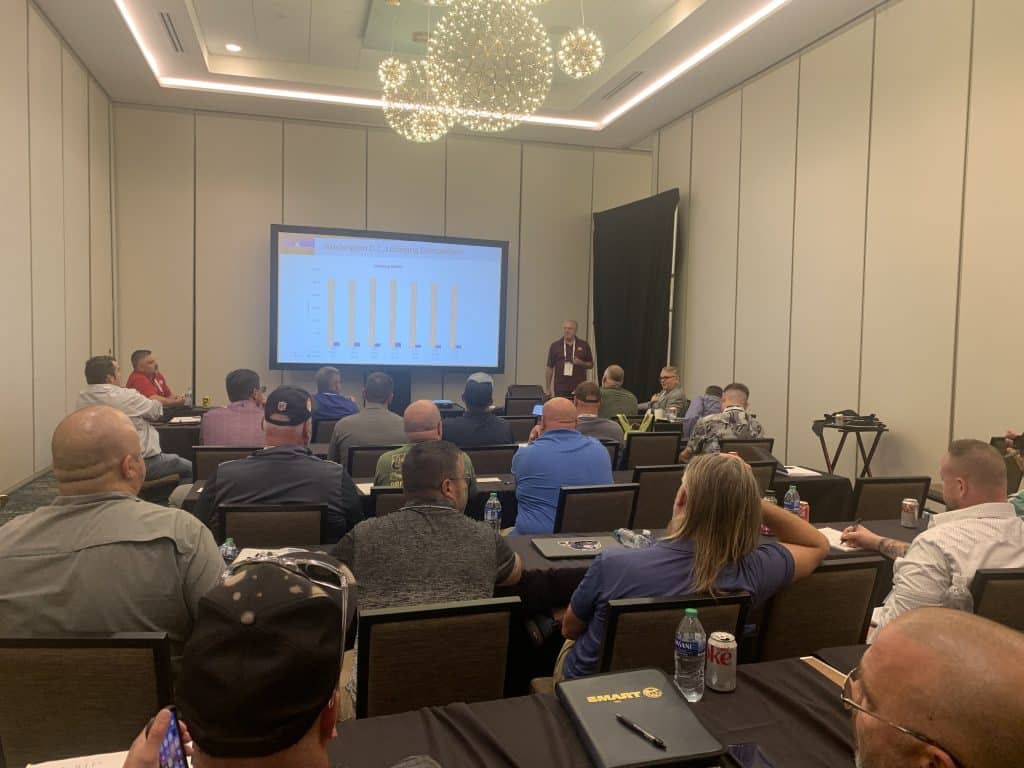
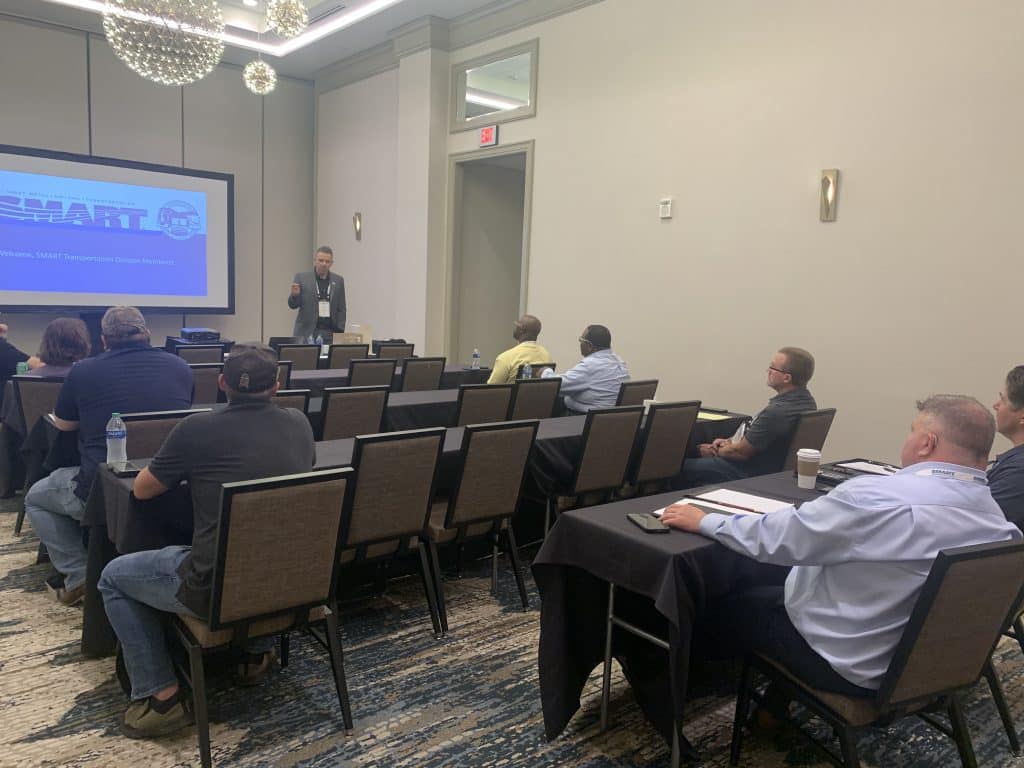
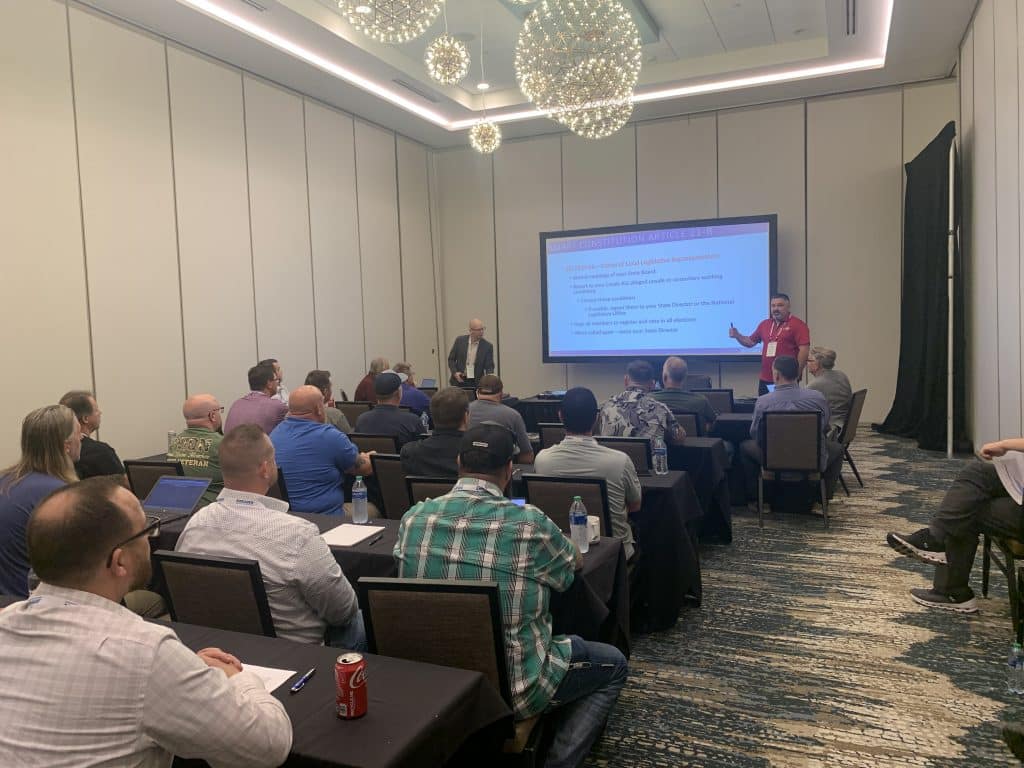
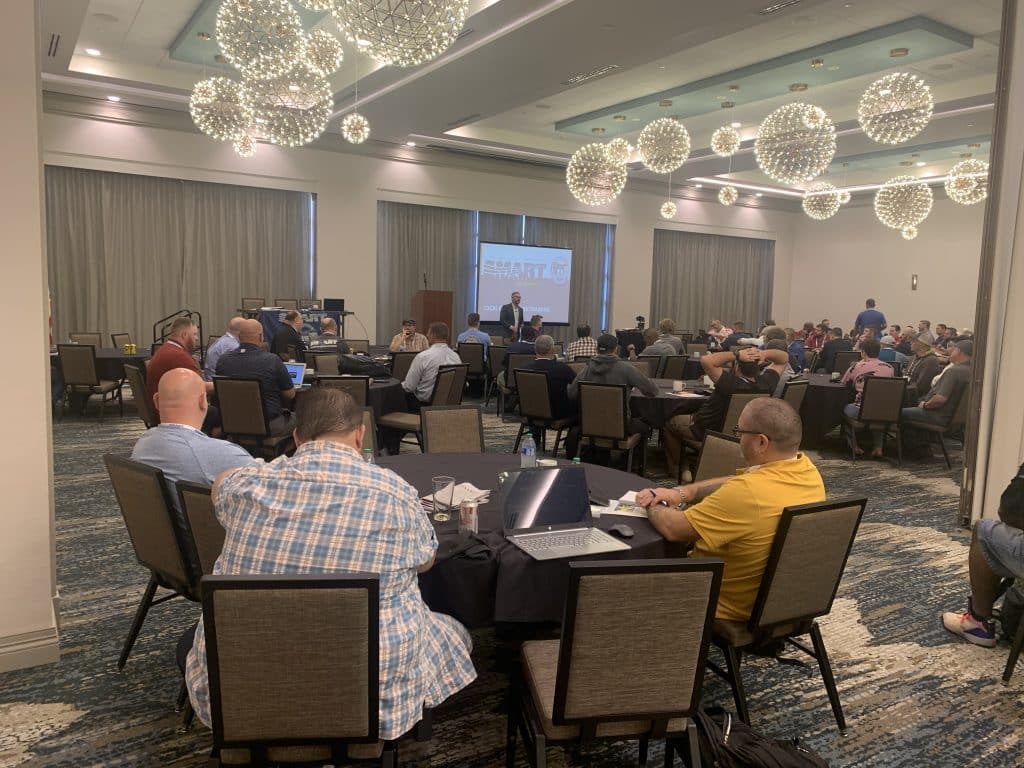
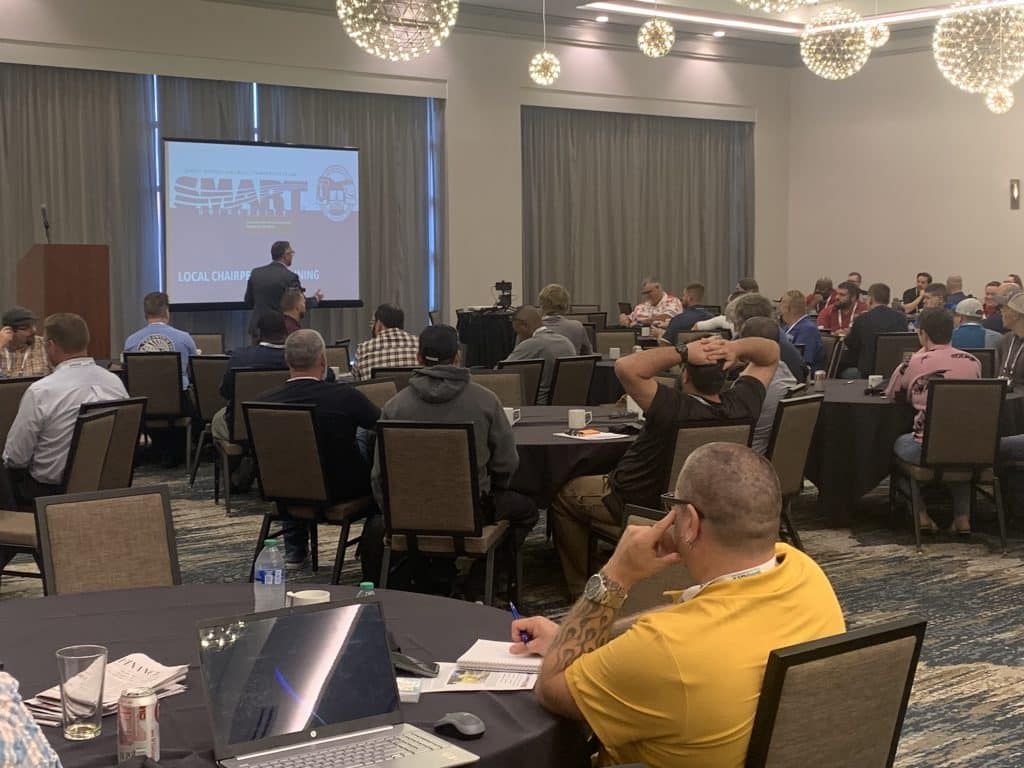
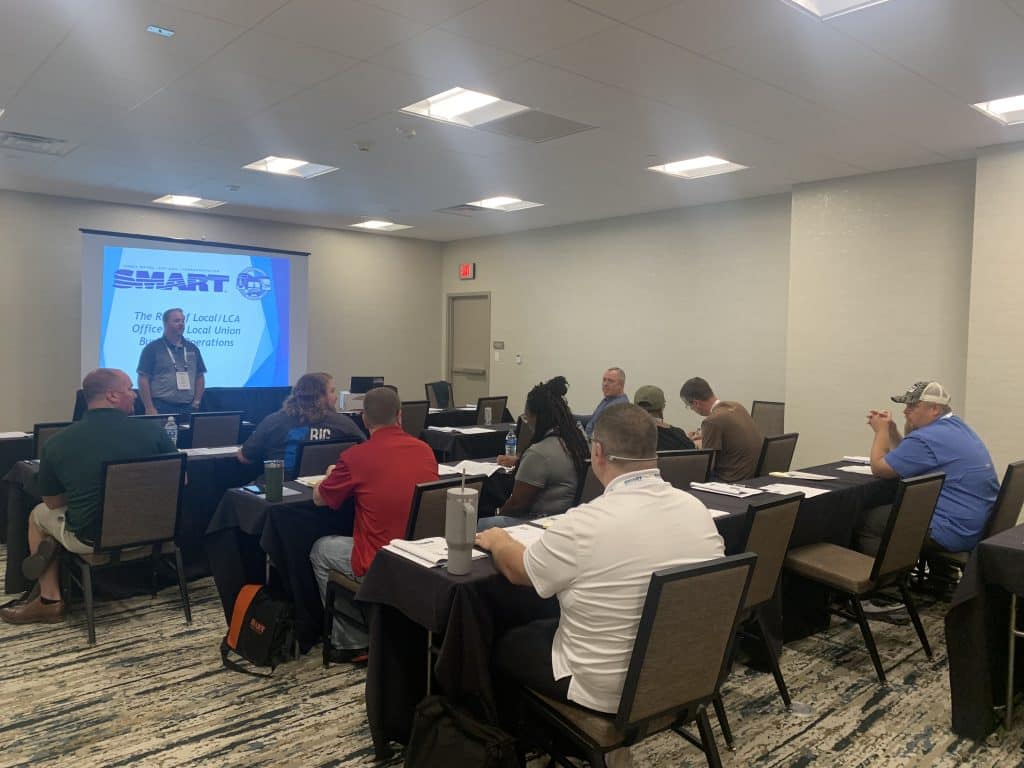
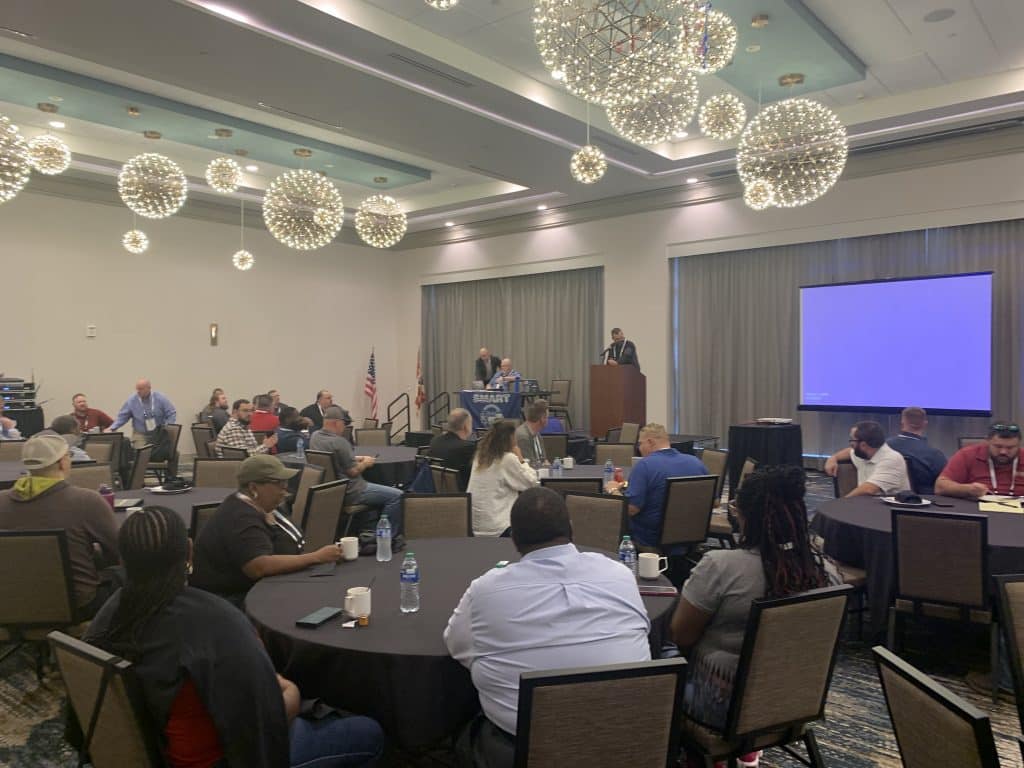
SMART-TD’s shift to Regional Training Seminars (RTS) has been gaining momentum throughout 2022 and 2023. Last week in Toledo, Ohio, roughly 200 SMART-TD members gathered and received intense hands-on training from this organization’s best sources of information.

Much like it is important to go over a new quarter’s System Bulletins and figure out what changes have been made, and what will be the new hot-button issue for the carrier’s field testing, it is of the utmost importance for SMART-TD to address current trends and changes we are seeing from the FRA, the Department of Transportation, and the Department of Labor. These topics and many others were covered in the four days of work.

Among the itineraries participants were able to choose from were classes presented for Local Chairpersons and Vice Local Chairpersons taught by SMART-TD Vice President Jamie Modesitt. The course aimed at Legislative Representatives was taught by SMART-TD’s National Legislative Department team of National Director Greg Hynes and Alternate National Legislative Director Jared Cassity. Those who chose the curriculum for Local Presidents were led for the week by Ralph Leichliter, Senior Assistant to President Ferguson. The class aimed at Secretary and Treasures was taught by Brother John Purcell, a SMART-TD Field Support Representative.

In addition to these primary instructors, the courses in Toledo’s RTS were supplemented by State Legislative Directors Kenny Edwards of Indiana, Don Roach of Michigan, and Clyde Whitaker of Ohio. These three effective leaders of our organization not only coordinated the RTS, but also were there supplementing the coursework with some of their state’s best-demonstrated practices. SMART-TD is very appreciative of the work these three brothers put into this conference, and as a union, we will all benefit from what the three of them orchestrated in Toledo.

In short, SMART-TD brings out its A-team at these Regional Training Sessions. As we are seeing, it is paying off for our members in a big way. These RTS’s over the past couple of years have played a vital role in the quality and consistency of the work being done on behalf of our members nationwide. Statistically, our rates of successful appeals have gone way up, as well as the number of claims that have been paid on appeal.

These Regional Training Sessions play a large role in this heightened level of success. As President Ferguson said when he addressed the general session of the RTS on Friday, October 6th, “We knew that we had a lot of young officers coming into this union. We knew that we had a lot of young Local Chairmen coming in and they were starving for training, starving for the information. How to handle themselves, write claims, and protect that member when they got charged. So, we had to answer that call.”

SMART-TD’s Regional Training Seminars have been a big part of what President Ferguson referred to as “answering that call.”  As Brother Ferguson put it, “In the last two years, out of 369 cases that went to the First Division, 217 of those were sustained. That’s a 58.8% win-to-loss ratio. When I first got involved, when Vice Presidents Modesitt and Brent Leonard got involved, we were happy with 22% to 25% coming out of a public law board. That is why we needed this training.” He went on to say, “The cases we have in the pipeline are going to be even better than that. Why? Because we’ve been doing training like this. We’re not going to an annual regional meeting where we spend two hours a day in class and 20 hours talking shop.”

The next opportunity to benefit from the curriculum of SMART-TD’s Regional Training Seminars is coming soon to Davenport, Iowa. This Davenport, RTS will be held at the Rhythm City Casino from November 6-9. To register for this event, please follow this link.

As President Ferguson said in Toledo when talking about the value of the RTS programs, “This is what we’re doing with the member’s money. We are helping officers to get up to speed to where we need to be so we can back them up when their jobs and their lives are on the line out there on the ballast.”

If you are a local officer in Iowa or any surrounding states, please consider joining us at this RTS. Space is limited, so please register online at your earliest convenience.

From October 3-6 SMART-TD held a Regional Training Seminar in Toledo, Ohio featuring classes to sharpen the skills of Local Chairs, Presidents, Legislative Representatives, Secretaries, and Treasurers.  The four days of coursework were packed with information and learning opportunities on all four days of the event.

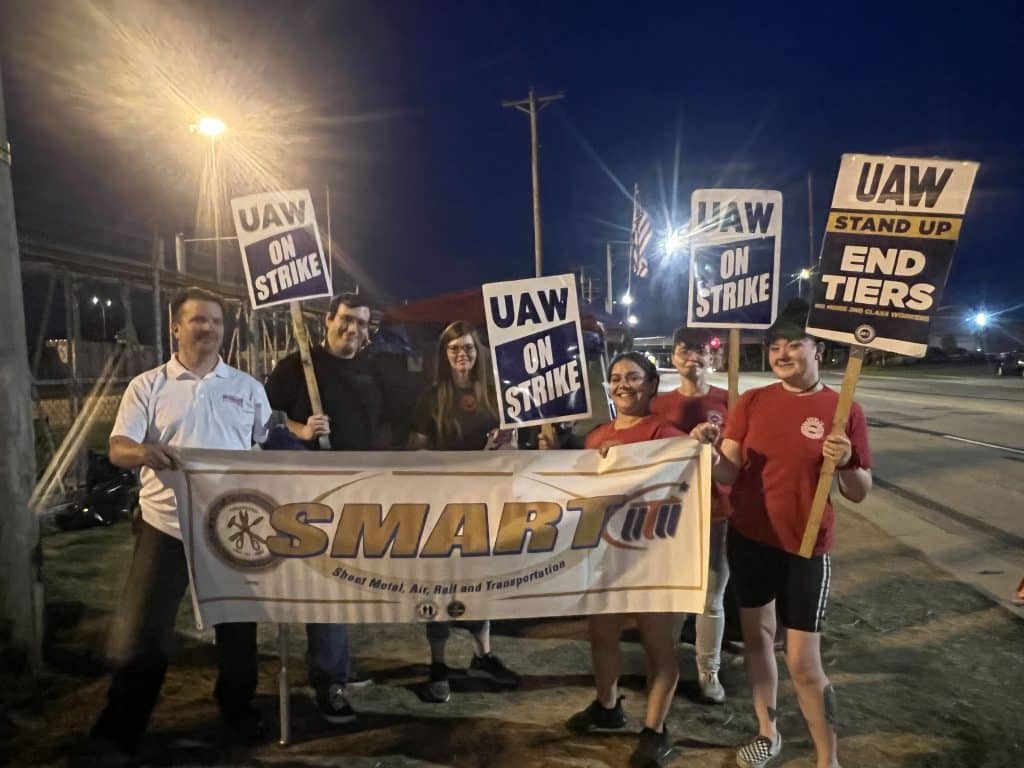
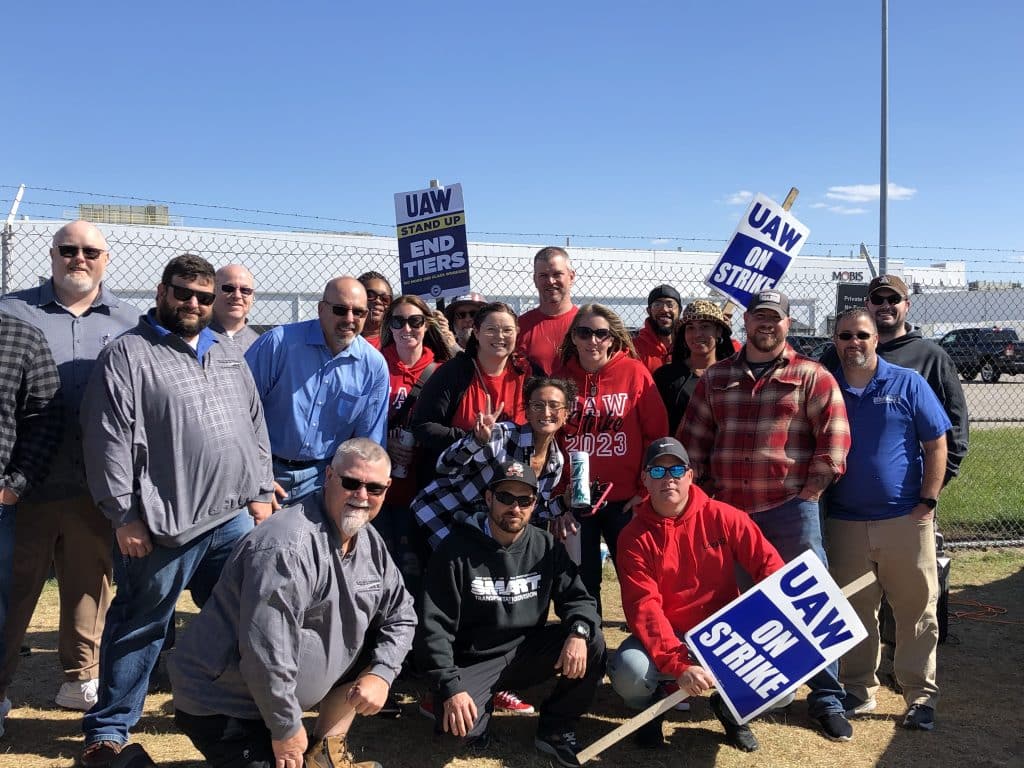
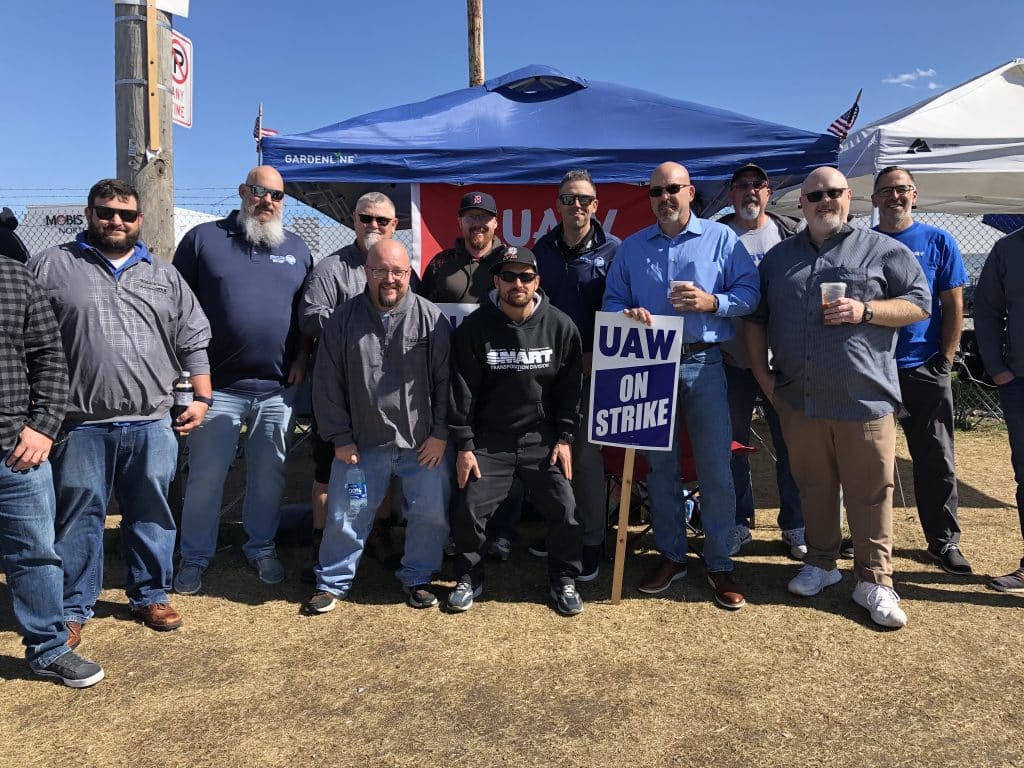
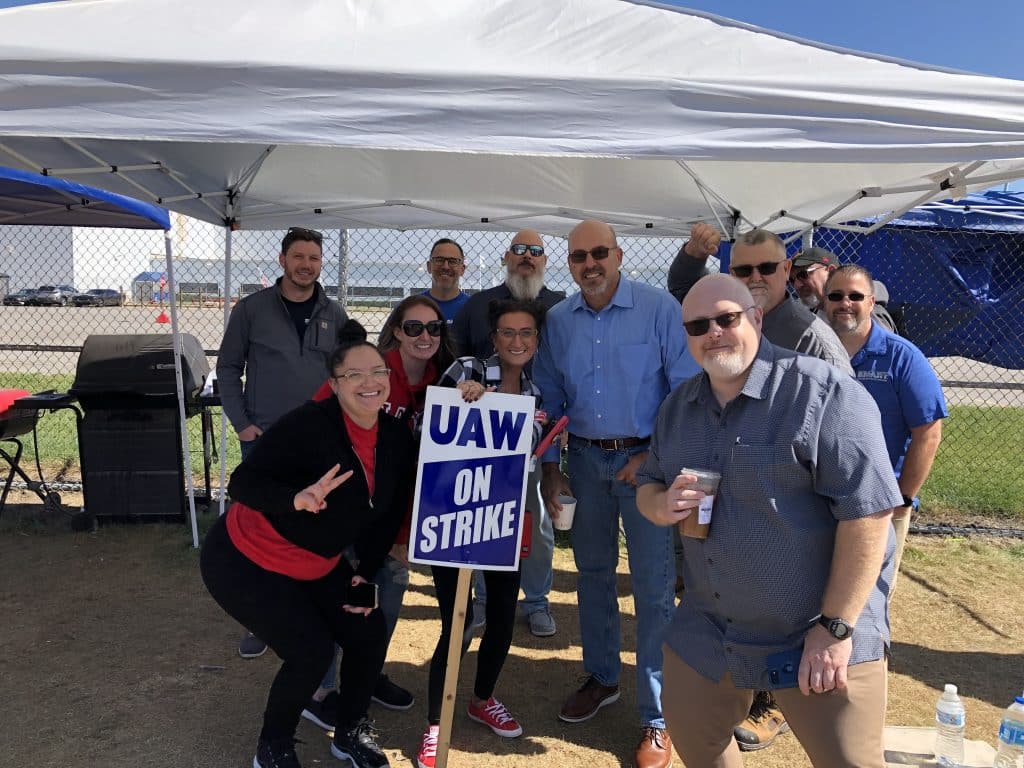
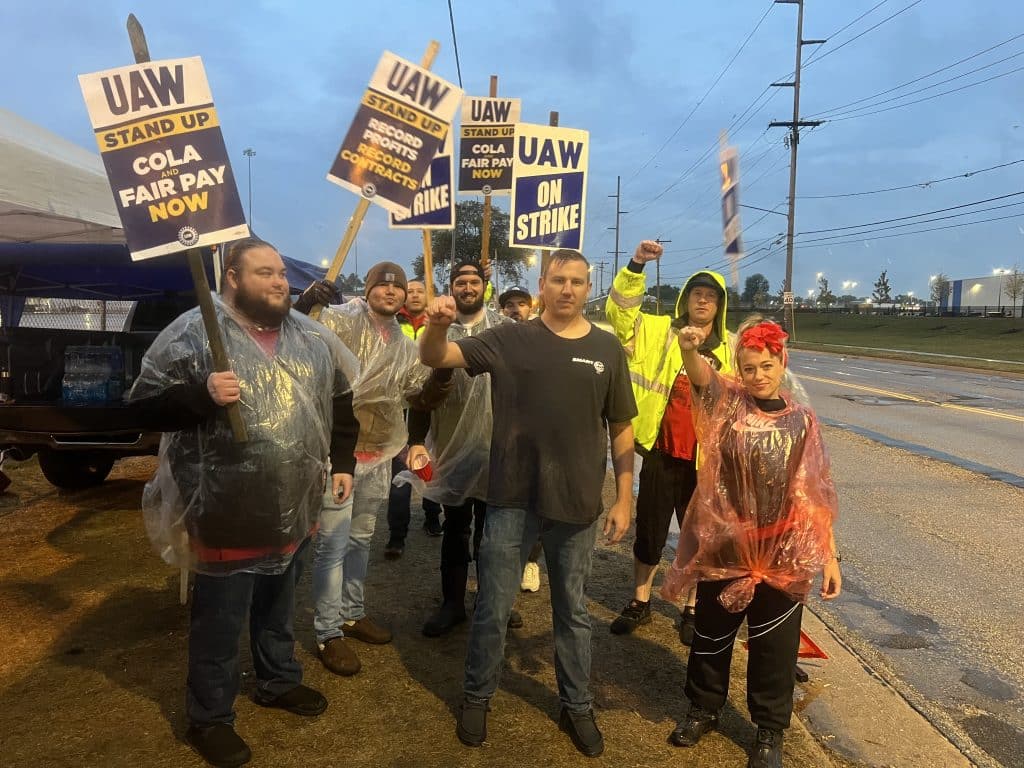
But even though the schedule of classes was intense, the attending officers made sure to find time to support our UAW brothers and sisters holding the line at the nearby Stellantis-owned Stickney Plant that manufactures Jeep Gladiators in Toledo.

Through rain, shine, day, and night, SMART-TD members were shoulder to shoulder with Toledo UAW Local #12, from Monday the 2nd through Friday the 6th. TD President Jeremy Ferguson himself was on the line letting the UAW workers know they have the support SMART-TD and the labor movement on the whole.

“As their work action stretches on, these men and women will need all of the support they can get.  Our members can help by getting food to their picket lines or by donating to their strike fund.” Ferguson said Friday as he walked the line at the Toledo Jeep plant.  He went on to add, “On a personal note, these brothers and sisters of ours need firewood. As the weather is turning colder in places like Toledo, and Detroit, these guys will need to keep the burn barrels going all night. It won’t be long before they’re going to need them going 24/7. I will begin the effort on this by buying a couple of truckloads of firewood and working with SMART-TD’s Toledo area locals (1529, and 002) to get it delivered to the UAW local 12 members at Toledo’s Jeep plant.”