
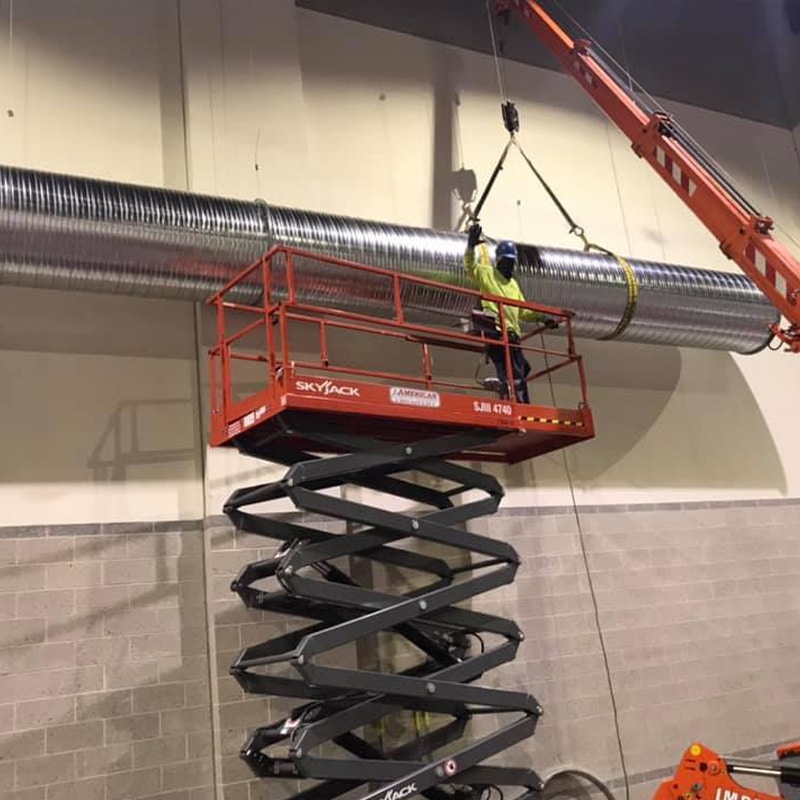
The North America’s Building Trades Unions (NABTU) and CPWR-The Center for Construction Research and Training released a new national standard for infectious disease exposure control practices for U.S. construction sites. These guidelines aim to prevent disease, disability and death caused by infectious disease exposure in lieu of federal action by OSHA.
The new national framework outlines planning and implementation elements with strong minimum standards, screening policies and the requirement of a comprehensive employer exposure control plan comprised of control measures, symptom checking, social distancing, training, hygiene and decontamination procedures.
“The COVID-19 pandemic clearly underscores the need for and value of a strong, adaptable and multi-purpose exposure control standard to prevent the spread of infectious diseases on U.S. construction sites,” said Sean McGarvey, President of NABTU. “Amid growing concerns across various industries regarding workplace safety in lieu of federal actions, the building trades are trying to do our best to protect our members and contractors on the job, and – for that matter- everyone in the construction industry.”
“With the broad and complex challenges from infectious diseases today, providing a framework of exposure control practices is critical. COVID-19 has not only raised awareness about the emergence and spread of infectious diseases, it has also provided the opportunity to advance their control,” said Chris Trahan Cain, Executive Director of CPWR-The Center for Construction Research and Training. “Given the current pandemic and the probability of future infectious disease outbreaks, this national framework will help the construction industry advance functions to better prevent and control infectious diseases and improve health on worksites.”
“In many places across the country, our unions, contractors, and project owners have already implemented these protocols,” McGarvey said. “The industry has been calling for a single national standard, and this is a product we highly recommend for owners, contractors, union members and all of our industry. We hope these guidelines will raise the bar to prevent and control infectious threats and improve safety and health management practices for not just construction, but all industries.”
Related News
- CSX ENDS OPERATION REDBLOCK
- House passes bill to stop health care price spike for SMART members — General President Coleman responds
- CTRail Conductor Killed in Car Accident
- Registration Open for St. Paul Regional Training Seminar
- Important DOT Drug Testing Notice Affects Members
- Honoring the Life of Brother Ed Weathers, Jr.
- Members Helped Raise $200K for Brothers and Sisters in Need
- Resolve to Keep Your Timebook Current in 2026
- Victory in Chicago as SMART-TD Helps Establish New $1.5 Billion Transit Agency
- New Jersey Train Length, Crew Size Law Awaits Governor’s Signature