
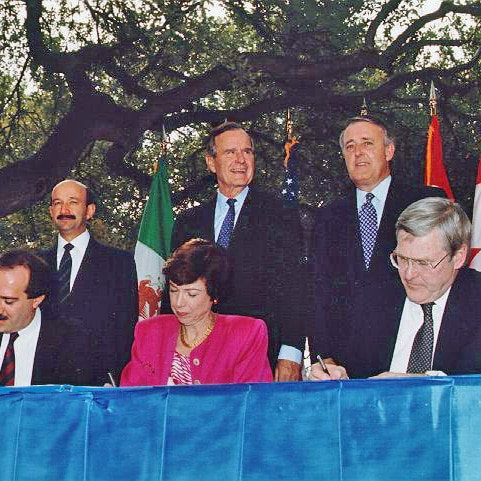
Canada is formally demanding, in talks on a new NAFTA agreement, that any such pact force the U.S. to eliminate so-called right-to-work laws.
During the 2016 U.S. campaign, GOP presidential nominee Donald Trump labeled NAFTA “the worst trade pact ever signed” and vowed to dump it. That promise helped him gain a 50-50 split among unionists and their families in key Great Lakes industrial states. By narrowly carrying Ohio, Pennsylvania, Michigan and Wisconsin, Trump wound up in the White House.
But once there, he decided to renegotiate, not dump, NAFTA, with what he says is the objective to help U.S. workers. The current NAFTA hasn’t. U.S. unions say Trump has adopted only a few pro-worker NAFTA negotiating goals, out of a 47-page detailed list presented during pre-talks hearings.
Instead of Trump, Canadian negotiators have begun pushing hard to eliminate U.S. based right to work laws which have served to deteriorate wage rates and living standards for workers in the United States. This has in turn harmed workers in Canada as well, along with those in the free to bargain states, where employers have used the existence of lower right to work labor standards to drive down wages and benefits for working families.
Related News
- Santa Monica Local Wins Cost of Living Increases
- UTUIA is now American Journey Financial Life (AJFL)
- Senate Hearing Indicates Trouble for Public Transportation
- REMINDER: Registration Open for Anaheim Regional Training Seminar
- Cancelled Cleveland-Cliffs project leads to lost jobs for Dayton-area construction workers
- 2025 National Agreement Freight Negotiations Update from President Ferguson
- Brother Bill Link Retires After a Memorable 53 Year Career
- Bad Actors to be Restrained Thanks to New SMART-TD-backed Transit Bill
- Nebraska Reforms Standards for Rail Crew Transportation
- Show Your Pride, Win Shirts for Your Entire Local