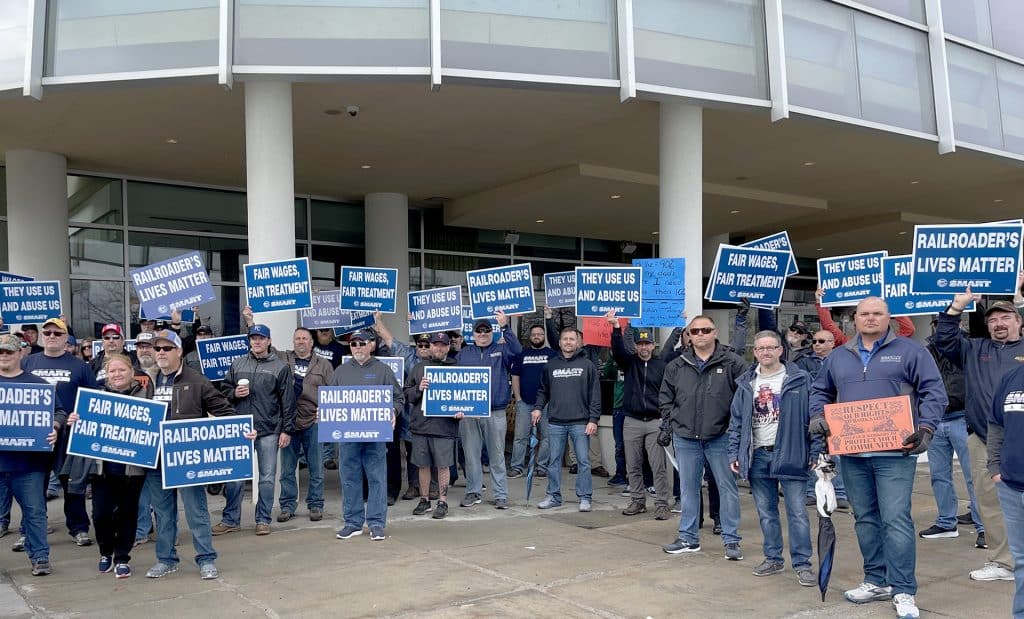
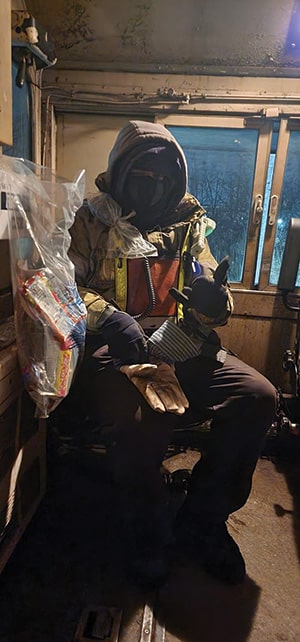
SMART-TD is not backing down in the fight for the safety of its members. The union is formally calling out BNSF Railway for asking the Federal Railroad Administration (FRA) to let them keep using cement cross ties and substandard infrastructure they know is not up to code. This waiver request, if approved, would allow BNSF to continue operating with defective concrete crossties and rail fastening systems for the next five years on over 61 miles of track across 19 subdivisions and multiple states.
BNSF’s “Clean Record” is Nothing But Smoke and Mirrors
BNSF’s argument is simple: no derailments have happened on these tracks since the last waiver was granted. But SMART-TD isn’t buying it. The fact that no accidents have happened yet doesn’t mean it’s safe, and it sure as hell doesn’t mean we should keep running trains on tracks that aren’t up to federal standards. The longer BNSF gets away with this, the more dangerous it becomes. It’s only a matter of time before something catastrophic happens.
Let’s talk about the so-called “clean record” BNSF is boasting about with their “three-quarter” concrete ties and shoddy rail fastening systems. BNSF is responsible for reporting any issues with these tracks, but there’s no independent body ensuring they’re being honest. Unless NTSB or FRA officials are on-site, it’s all too easy for BNSF to downplay or sweep incidents under the rug in the interest of maintaining their waiver. This is a serious problem, and SMART-TD isn’t letting it slide.
Defective Crossties: Acknowledgment is Not Enough
It’s also worth noting that BNSF is blatantly admitting that they’re still using defective crossties—materials that don’t meet federal safety standards. This is unacceptable. A simple acknowledgment of the problem should be enough for the FRA to throw out the request without prejudice rather than allow BNSF to continue operating on these tracks for another five years. The FRA needs to take immediate action and force BNSF to fix these issues, not just kick the can down the road.
Unsafe for Passengers = Unsafe for Freight Railroaders
Here’s the worst part. BNSF argues that no passenger trains run on these tracks, so they claim it’s not a big deal. This is insulting. Freight workers deserve the same level of safety as passengers. Why is BNSF saying our lives are less important? The men and women working on freight trains are exposed to far greater risks than passengers. We are the ones on the front lines, dealing with track failures first on the head end. We are out there exposed to the elements, riding freight cars while carrying tools, lanterns, and paperwork, all while rolling over tracks that the railroad and the federal government acknowledge aren’t up to safety standards. This does not pass the sniff test.
If it’s unsafe for passengers, it’s unsafe for freight rail workers. Period. There is no excuse for putting workers’ lives at risk just to save a few bucks. This waiver request is a slap in the face to every SMART-TD member.
SMART-TD calls for Action from the FRA
SMART-TD is letting the FRA know our position on BNSF’s waiver. Our National Safety/Legislative Department is calling on the FRA to reject this dangerous extension request through the public comment process. We’re calling on the FRA to hold BNSF accountable and force them to replace the defective crossties and rail fastening systems before the next train goes on the ground with one of our brothers or sisters riding the side ladder! Railroad managers accept nothing less than full compliance with established safety standards when it comes to our operational testing, and they should be held to a similar standard. Our members deserve better, and our lives are not for sale.
Make Your Voice Heard: FRA Public Comment Process
The FRA’s public comment process is open to everyone in the U.S. If you would like to voice your opinion, please follow this link and write a brief statement letting the FRA know how you feel about the important issue in front of them. Please reference Doc. Number FRA-2011-0085 so they know exactly which issue you are commenting on.
The deadline for submission is December 23rd at midnight Eastern Standard Time. Please take a moment to weigh in on this and keep our BNSF brothers and sisters safe on the rail, and out of the “Final Call” section of the next SMART newspaper.
December 18 — A collision between a Union Pacific train and a tractor-trailer at a rail crossing in Pecos, Texas claimed two lives this yesterday.
This devastating accident serves as a somber reminder of the inherent risks railroad workers face daily, and it highlights the critical need for urgent safety improvements across the industry.
While we are limited in the details we can provide as SMART-TD assists the National Transportation Safety Board (NTSB) in the investigation, we extend our deepest condolences to the families, friends, and colleagues of Brother Araujo and Brother Burt.
SMART-TD is aware that cell phone footage and pictures of the accident and subsequent derailment are appearing on the internet. As a union, we ask that our members respect our brothers and sisters in Local 823 (Big Springs, TX) by not reposting these images. The friends and family of the two fallen railroaders are not helped by amplifying the spectacle of the accident.
Rail workers do vital work, often at great personal risk. As we mourn this loss, we also renew our commitment to fighting for stronger safety measures that will serve to better protect all those who work on and live near the rails.
Our thoughts and solidarity are with the loved ones of Brother Phillip Araujo and Clay Burt during this incredibly difficult time.
For more information, please contact: SMART-TD Communications Team Phone: (330) 322-5949 Email: dbanks@smart-union.org
FOR IMMEDIATE RELEASE:
“Railroad workers not only sell their labor, they sacrifice more than most to care for themselves and their families. It is through their hard work and efforts that railroad retirement is funded, which is why it is so rewarding to see the senseless reductions from sequestration finally lifted. In this process of advocating for REEF, our brothers and sisters have proven that they are willing to stand in solidarity to put up a fight. I couldn’t be prouder of our members for their tenacity to win back not just what was earned – but what is deserved.” Jared Cassity, SMART-TD Deputy Director National Safety and Legislative Department
SMART-TD Union Celebrates the Passage of the Railroad Employee Equity and Fairness (REEF) Act
WASHINGTON, D.C. – After more than four years of tireless effort and advocacy, the SMART Transportation Division (SMART-TD) is proud to announce the successful passage of the Railroad Employee Equity and Fairness (REEF) Act. This historic legislation, introduced in both the House and Senate, will permanently exempt Railroad Unemployment Insurance benefits from sequestration, ending a 5.7% reduction that railroaders have unfairly borne for years. In simple terms, this bill will end the outdated tax of $50 every two weeks on railroaders drawing unemployment benefits from the Railroad Retirement Board.
The REEF Act, officially titled S. 1274, rights a longstanding wrong that has disproportionately impacted railroad workers, particularly those who find themselves furloughed or medically unable to work. These workers, many of whom already face significant financial hardship when transitioning from regular railroad wages to the modest $450 every two weeks provided by the Railroad Retirement Board (RRB), were subjected to sequestration that further reduced this already limited benefit.
“For most Americans, a $50 cut may seem insignificant, but to a railroader relying on a fixed benefit, it’s a financial crisis,” said Greg Hynes, SMART-TD National Safety and Legislative Director. “After years of fighting this injustice, the REEF Act’s passage is proof that persistence pays off. The work we’ve done on Capitol Hill to secure this victory is worth every ounce of effort and all the shoe leather we left on the steps of the House and Senate buildings.”
The process to get this bill over the line was not easy. It took consistent advocacy, relentless lobbying, and cooperation across party lines. SMART-TD’s Greg Hynes and Jared Cassity, who collectively bring decades of experience from BNSF and CSX respectively, led the charge, ensuring that Congress understood the gravity of the situation faced by railroad workers.
“We understand the struggle because we’ve lived it. We know how much that small cut impacts an out-of-work railroader’s ability to make ends meet,” said Jared Cassity, Deputy National Safety and Legislative Director. “This legislation is a direct result of the tireless advocacy of our members, who took the time to speak out, engage with lawmakers, and apply pressure at every step.” Cassity went on to say, “Railroad workers not only sell their labor, they sacrifice more than most to care for themselves and their families. It is through their hard work and efforts that railroad retirement is funded, which is why it is so rewarding to see the senseless reductions from sequestration finally lifted. In this process of advocating for REEF, our brothers and sisters have proven that they are willing to stand in solidarity to put up a fight. I couldn’t be prouder of our members for their tenacity to win back not just what was earned – but what is deserved.”
Although this $50 reduction may seem small to a member of Congress unfamiliar with the realities of life on the railroad, to those affected, it represents a significant financial burden. For years, the railroad industry’s most vulnerable workers – those most in need of support – have borne this unfair tax. The passage of the REEF Act is a monumental step in righting that wrong. SMART-TD wants to thank all of the Senators and Representatives for their support and sponsorship of this important legislation, with special acknowledgment of U.S. Senator Deb Fischer (R-Nebraska) for being the lead sponsor in the Senate and continuing to see this legislation through to the end. SMART-TD is proud to have endorsed Deb Fisher in her 2024 re-election win and was the only rail labor organization to have stood with her.
“SMART-TD members have stood shoulder-to-shoulder with us every step of the way, from rallies to calls to Congressional offices. This victory belongs to every one of our members who answered the call and fought to make sure their voices were heard,” said Hynes. “It is because of their engagement, their commitment, and their perseverance that we’ve been able to secure this long-overdue relief.”
The REEF Act is a powerful reminder of what is possible when unions, lawmakers, and working people come together to fight for fairness. SMART-TD extends its deepest thanks to all of the sponsors and cosponsors who supported this bill, as well as the thousands of SMART-TD members who stood united throughout the process.
###
If you’re interested in speaking more about the legislation, we’d be happy to connect you with:
SMART Transportation Division President Jeremy Ferguson
President Jeremy Ferguson, a member of Local 313 in Grand Rapids, Mich., was elected president of SMART’s Transportation Division in 2019.
President Ferguson, an Army veteran, started railroading in 1994 as a conductor on CSX at Grand Rapids, Mich. and was promoted to engineer in 1995. Ferguson headed the recent national rail negotiations for the Union with the nation’s rail carriers.
SMART-TD’s National Safety and Legislative Director, Gregory Hynes
Greg Hynes is a fifth-generation railroader and was elected national legislative director in 2019.
Hynes served on the SMART Transportation Division National Safety Team that assists the National Transportation Safety Board with accident investigations, from 2007 – 2014.
In 2014, he was appointed to the Federal Railroad Administration’s Railroad Safety Advisory Committee (RSAC), which develops new railroad regulatory standards.
Hynes was appointed the first chairperson of the UTU Rail Safety Task Force in 2009 and served in that capacity until being elected SMART Transportation Division alternate national legislative director at the Transportation Division’s 2014 convention.
About SMART-TD
The Sheet Metal, Air, Rail, and Transportation Workers—Transportation Division (SMART-TD), also known as the SMART-TD Railroad Union, is the largest rail union in North America, representing more than 100,000 workers. We fight for the rights of our members, ensuring that they receive fair wages, safe working conditions, and the benefits they deserve. Our union is committed to standing up for all railroad workers and ensuring that their voices are heard in Washington, D.C.
Brother Ty Dragoo, SMART-TD’s Kansas State Safety & Legislative Director (SLD), has been elected by labor leaders across Kansas to lead a state-wide labor coalition called the Working Kansas Alliance (WKA).
Collectively representing more than 500,000 workers throughout the state, WKA advocates for policies at the Kansas Legislature that protect the rights of its members, including securing living wages, safe working conditions, and the opportunity to provide for themselves and their families.
WKA ensures that workers have a legislative seat at the table, especially in the face of policies pushed by corporate special interest groups that favor big business at the expense of working families.
Dragoo emphasized how leaders from the broader labor movement across the state have recognized SMART-TD for breaking down legislative barriers.
“Any time there’s a labor issue, SMART-TD is recognized as a leader and standard-bearer,” Dragoo said. “This shows what we can do at the state level and across the country when we have an active and engaged legislative program.”
Ty Dragoo
When it comes to having conversations with legislators who aren’t labor-friendly, Dragoo focuses on finding similarities rather than dwelling on differences. He makes it a point to remind lawmakers that their constituents are workers, too, who are worried about kitchen table issues.
“We try to get rid of all the other outside noise,” Dragoo noted. “We’re really on the same page on a lot of this stuff. It’s when we let in all the outside noise that we get into trouble.”
A member of Local 1503, Brother Dragoo has long ensured that SMART-TD’s voice is heard and amplified at the state legislature. He is focused on collaborating across party lines to address the needs of Kansas’s working families with lawmakers.
Thanks to Dragoo’s advocacy, labor’s presence along with SMART-TD will continue to be felt at the legislature in Topeka.
“I fully intend on bringing that ability to the legislature: to advance the causes of the labor movement. Not just SMART-TD issues but all labor issues.”
Congratulations, Brother! Your union continues to be proud of the progress you and the Kansas Legislative Board have made for our members and the labor movement as a whole!
A Setback for Safety and American Workers
Independence, OH December 13, 2024 – The International Association of Sheet Metal, Air, Rail and Transportation Workers-Transportation Division (SMART-TD) is speaking out against Union Pacific’s (UP) recent decision to lease its interest in Oregon’s railroad operations to the Central Oregon Pacific Railroad (CORP). This move, announced inProgressive Railroading magazine on December 11, 2024, is being strongly condemned by America’s largest rail labor unions as a reckless, cost-cutting measure that endangers safety, reduces the reliability of freight services, and undercuts the livelihoods of hardworking Americans.
Under the new arrangement, UP will relinquish control of rail operations between Eugene, Oregon, and Northern California, including critical freight transportation that supports regional businesses and industries. The lease to CORP, a short-line railroad, will result in the loss of 30 highly-skilled, FRA-certified Class I railroad jobs that will be replaced with about 15 new CORP employees, who will be held to less stringent qualifications. This significant downgrade in workforce quality, combined with a substantial reduction in experience, will lead to serious safety risks for rail employees and the surrounding communities.
“This lease UP is trying to finalize with CORP is a blatant example of hedge fund-driven railroading, where the financial interests of Wall Street investors outweigh the safety and well-being of workers and communities,” said SMART-TD President Jeremy Ferguson. “The unionized, highly-trained workforce that Union Pacific is discarding has the qualifications necessary to operate these trains safely. By replacing them with a less-experienced and less-qualified workforce, UP is not only jeopardizing rail safety but also diminishing the ability to ensure smooth and reliable service for the businesses and industries that depend on this vital transportation network.”
For years, the workers on this stretch of track have operated under strict safety standards, ensuring that the 20,000-ton trains that travel this route are operated with the utmost care. With the transition to CORP, the risk of accidents, delays, and other operational failures has increased dramatically. The fewer, less-experienced employees handling freight operations will almost certainly cause inefficiencies and slower response times, further burdening businesses reliant on quick deliveries of raw materials and distribution of goods.
The communities along the affected rail lines will feel the brunt of this change. Local businesses, manufacturers, and other rail-dependent industries will face slower delivery times and less reliable service. Adding additional interchanges and carriers will result in more delays in the supply chain and more costs to shippers. The diminished workforce will also mean fewer skilled personnel available to handle problems and issues that arise, leading to greater service interruptions and delays.
“The American people deserve a reliable, safe, and efficient rail system that can carry the nation’s freight with the highest standards,” said Ferguson. “Union Pacific’s move in Oregon is just the latest example of how our country is literally getting “Railroaded” by the sharks on Wall Street. The workers on the ground, the businesses, and the communities that rely on these services will pay the price for this callous disregard for safety.”
SMART-TD is committed to fighting for the protection of American rail workers, the safety of the public, and the long-term stability of the U.S. freight rail network. The union is calling on policymakers to take action to prevent further harmful short-term profit-driven cuts and encourage greater oversight of the railroad industry to ensure that safety and reliability remain the top priorities.
###
If you’re interested in speaking more about the legislation, we’d be happy to connect you with:
SMART Transportation Division President Jeremy Ferguson
President Jeremy Ferguson, a member of Local 313 in Grand Rapids, Mich., was elected president of SMART’s Transportation Division in 2019.
President Ferguson, an Army veteran, started railroading in 1994 as a conductor on CSX at Grand Rapids, Mich. and was promoted to engineer in 1995. Ferguson headed the recent national rail negotiations for the Union with the nation’s rail carriers.
SMART Transportation Division National Legislative Director Gregory Hynes
Greg Hynes is a fifth-generation railroader and was elected national legislative director in 2019.
Hynes served on the SMART Transportation Division National Safety Team that assists the National Transportation Safety Board with accident investigations, from 2007 – 2014.
In 2014, he was appointed to the Federal Railroad Administration’s Railroad Safety Advisory Committee (RSAC), which develops new railroad regulatory standards.
Hynes was appointed the first chairperson of the UTU Rail Safety Task Force in 2009 and served in that capacity until being elected SMART Transportation Division alternate national legislative director at the Transportation Division’s 2014 convention.
Kimball, Michigan – December 11, 2024 – In a remarkable display of quick thinking and selflessness, SMART-TD member and Canadian National (CN) conductor, Brandon LaBombard, (Local 1183, Port Huron, MI) acted swiftly to prevent tragedy.
While aboard CN train 484, heading northbound and approaching the railyard in Port Huron, LaBombard saw an 18-wheeler approaching the Wadhams Road crossing. Given the icy conditions and speed of the truck, he suspected that it wouldn’t be able to stop in time. As the head end of the train passed through the crossing, LaBombard kept a sharp eye on the truck through the window on the conductor’s side of the locomotive.
He watched as the truck jackknifed into a Dodge Charger waiting at the crossing. “The trailer swung around and hit that Dodge like a baseball bat swatting a ball off a tee,” he recalled. The car was thrown into the train about 20 cars behind the locomotive.
Technology ill-equipped to detect the crash
The automated safety systems did not detect the collision, and the engineer remained unaware of the incident. Thankfully, as the second crew member, LaBombard was there to take control of the situation. He instructed the engineer to stop the train and then rushed back to the scene to assist the victims.
Fortunately, the drivers of both the truck and the Dodge were able to walk away from the wreckage. While LaBombard was assessing the damage and coordinating with the Huron yard, a second car sped out of control on the icy road. This second car flipped and rolled three times before coming to rest upside down in a deep ditch.
The vehicle was submerged in over three feet of standing water, trapping the driver and passenger inside. The doors were jammed, and as the car began filling with icy water LaBombard again sprang into action.
“My Transportation Supervisor, George Sarrica, and I tried to break the glass on the window, but it wouldn’t budge. We were banging on it, and it just wouldn’t break. So I gave up on that and pried the door open. Thankfully that worked, and I was able to get both of the people out and safe,” LaBombard recalled.
Second crew member is the first responder
In a statement to SMART News, LaBombard downplayed his heroic actions. “I just did what I would hope someone would do for me or my family,” he said. “I’m just glad I was on the train and was available to respond.” He also pointed out that, had he not been on the train, the engineer would not have known about the accident until he arrived at Port Huron yard.
LaBombard’s quick thinking and brave actions saved the lives of two people in the flipped car. His selfless response underscores a critical point raised by proponents of Michigan’s 2-Person Crew bill, (SB 100) which is currently under debate in the state’s House of Representatives.
The bill advocates for a two-person crew on freight trains, highlighting that no amount of technology can replace the human element in ensuring the safety of both train crews and the public. The technology aboard the train showed no signs of trouble and the engineer, focused on the track ahead, had no idea that lives were at risk. Even with Brother LaBombard immediately radioing in a report of the accident, he remained the one and only first responder on the scene for nearly half an hour.
“Technology may be good safety overlay, but it will never replace the human element or a second set of eyes on trains.” said SMART-TD President Jeremy Ferguson. “Brandon’s actions exemplify the values we hold as a union and show why we need trained professionals on the ground, on the trains, and on the scene.”
Thank you, Brother Brandon LaBombard, for your heroic actions and your unwavering service to our industry. You embody the true spirit of SMART-TD.
FOR IMMEDIATE RELEASE
Contact: Dan Banks Government Relations/Public Relations Rep. SMART Union Transportation Division (330) 322-5949 dbanks@smart-union.org
Congressman Troy Nehls, SMART-TD, and Bipartisan Support Push for Railroad Safety Enhancement Act
Washington, D.C. — The Railroad Safety Enhancement Act of 2024 (RSEA), a groundbreaking piece of bipartisan legislation introduced by Chairman Troy Nehls (R-TX) and Congressman Seth Moulton (D-MA), aims to put the safety of railroad workers and the American public ahead of corporate profits. Despite widespread support across the political spectrum, including President Biden and President Trump, the bill has stalled in the House Transportation and Infrastructure Committee. Because this bill is urgent and our men and women on the front line of the rail industry don’t have the luxury of putting off the risk they face at work each day, efforts are being made to send this important legislation directly to the House floor.
Congressman Seth Moulton, along with key supporters like Chairman Nehls, are working to ensure the bill moves forward. Moulton, a member of the Transportation and Infrastructure Committee, has gone to great lengths to support his Republican colleague’s legislation by co-sponsoring the bill. When faced with the gridlock in the T&I Committee, Moulton took the rare step of introducing a Discharge Petition to bypass the committee’s hold. If successful, this petition would send the RSEA directly to the House floor for a full vote, ensuring that the bill cannot be stalled at the committee level.
“I’m proud to have worked with Chairman Nehls and Congressman Moulton to craft this important legislation, which is crucial for improving safety standards and working conditions for railroad employees,” said SMART-TD’s National Safety and Legislative Director. “This bill has received support from both Republicans and Democrats because it addresses the safety of the American people and supports workers on the front lines. It’s time to bring this bill to the full House for a vote.”
The RSEA contains several key provisions aimed at improving safety across the railroad industry, including:
A 2-person crew minimum on all freight trains for enhanced safety.
No preset time limits on safety inspections, with penalties for managers who pressure workers to rush.
Limits on train length and tonnage to improve control and prevent accidents.
Mandatory enrollment in C3RS for Class I railroads.
These measures reflect an ongoing commitment to rail safety and worker protection, supported by both Democratic and Republican members of Congress.
The bill was introduced after a hearing in the House Transportation and Infrastructure Subcommittee on Railroads, where Chairman Nehls, Congressman Moulton, and other members from both parties questioned key stakeholders, including rail labor representatives, the Federal Railroad Administration (FRA), the National Transportation Safety Board (NTSB), and others. Although invited, the railroads chose not to participate, an absence noted by Congressman Derrick VanOrden (R-Wis), who expressed concern that they were avoiding confrontation with facts on a national stage.
“By refusing to engage in the hearing, the railroads made it clear that they are more focused on preserving their profits than on the safety of workers and the American public,” said SMART-TD Deputy National Safety and Legislative Director Jared Cassity. “But we will not let this bill die in committee. We’re going to push forward and ensure it receives the attention it deserves.”
“This is a fight for safety, fairness, and accountability,” Congressman Moulton said. “The time to act is now, and we have an opportunity to make a real difference in the lives of railroad workers and the safety of our communities.”
Director Hynes of SMART-TD added, “The RSEA of 2024 is one of the rare instances where legislation truly lives up to its bipartisan promise, with support from both ends of the political spectrum. This is not just a victory for one party, SMART-TD, Rail Labor, or the workers alone; it’s a win for the American people.”
Take Action Now
To help advance this important legislation, supporters are encouraged to visit SMART-TD’s “Take Action” page, where they can send a pre-written message to their representatives urging them to sign the Discharge Petition. Once the petition reaches 218 signatures, the bill will be sent to the House floor for debate and a full vote.
Now is the time to ensure that the Railroad Safety Enhancement Act receives the attention it deserves and that workers’ safety is prioritized over corporate interests. Together, we can move this bill forward and make railroads safer for everyone.
###
If you’re interested in speaking more about the legislation, we’d be happy to connect you with:
SMART Transportation Division President Jeremy Ferguson
President Jeremy Ferguson, a member of Local 313 in Grand Rapids, Mich., was elected president of SMART’s Transportation Division in 2019.
President Ferguson, an Army veteran, started railroading in 1994 as a conductor on CSX at Grand Rapids, Mich., and was promoted to engineer in 1995. Ferguson headed the recent national rail negotiations for the Union with the nation’s rail carriers.
SMART Transportation Division National Legislative Director Gregory Hynes
Greg Hynes is a fifth-generation railroader and was elected national legislative director in 2019.
Hynes served on the SMART Transportation Division National Safety Team that assists the National Transportation Safety Board with accident investigations, from 2007 – 2014.
In 2014, he was appointed to the Federal Railroad Administration’s Railroad Safety Advisory Committee (RSAC), which develops new railroad regulatory standards.
Hynes was appointed the first chairperson of the UTU Rail Safety Task Force in 2009 and served in that capacity until being elected SMART Transportation Division alternate national legislative director at the Transportation Division’s 2014 convention.
SMART Transportation Division Alternate National Legislative Director Jared Cassity
Jared Cassity, a member of Local 1377 (Russell, Ky.), was elected to the office of alternate national legislative director at the Second SMART Transportation Division Convention in August 2019 and became director of the TD National Safety Team in June 2021.
Cassity started his railroad career with CSX in September 2005 and was promoted to engineer in 2008.
In addition to his elected roles, he has been a member of the National Safety Team since 2014, where he was subsequently elected to the position of Alternate Director (East) for the NST in 2016. Likewise, he was elected by his fellow peers of state directors to serve as the directors’ representative on the CSX Safety Model Executive Board in 2013.
Over the past year, SMART-TD has achieved multiple, significant legislative victories on behalf of its members, including:
Submitted many public comments to the FRA (the sole representative of the 12 rail unions to do so, in some cases)
A favorable ruling on the FRA’s 2-PC rule that was finalized in the spring
Introduced the two most-impactful pieces of rail safety legislation in the modern era in both the House of Representatives and the Senate
Continued to move the needle in Washington for increased protections for railroad and bus members, often serving as the lone voice on that front
Forged relationships with legislators on both sides of aisle and made it clear that SMART-TD’s support will go to those who speak up for the well-being of our brothers and sisters, regardless of the letter that follows their name.
Held lawmakers accountable for their actions by cementing the fact that members’ votes must not be taken for granted in a given election year and must be earned through legislative action and not words
Greg Hynes
This dedicated advocacy has earned Greg Hynes (SMART-TD National Legislative & Safety Director) and Jared Cassity (SMART-TD Deputy National Legislative & Safety Director) a place on The Hill’s list of Top 2024 Lobbyists. Our representatives appear in the Grassroots category for the third year in a row.
We would also like to salute Jenny Miller, Chief of Staff in SMART’s D.C. office, whose efforts are integral to the union’s many legislative victories.
Jared Cassity
Whether in the halls of Congress or at state legislatures across the country, SMART-TD drives change at all levels of government. Together we ensure that our fellow brothers and sisters have a voice in the decisions that impact their paychecks, safety, and well-being.
Erwin, Tennessee – Demonstrating what it truly means to be from the Volunteer State, the members of SMART-TD Local 1162 put the concept of solidarity into action as the community grappled with the devastating flooding caused by Hurricane Helene. As the region struggled with the aftermath of excessive rains and the overflow of the Nolichucky River, Local 1162’s officers took decisive action to assist their fellow union members who were facing unprecedented challenges.
As The Water Recedes, Community Feels Forgotten
Located in the northeastern corner of Tennessee, Erwin is a town that isn’t used to extreme flooding. With so many other areas throughout the southeast located directly in Helene’s path, the bulk of outside aid was focused elsewhere. This left the community feeling forgotten and overlooked. Brother Jason Caldwell, chairperson of SMART-TD’s Local 1162, refused to let that happen.
“Jason wasn’t going to sit back and wait,” said Adren Crawford, SMART-TD’s Tennessee State Safety and Legislative Director (SLD). “Brother Caldwell knew our members needed support, and he was determined to make sure that we took care of every one of our own.”
“I felt that if we could help our brothers so they didn’t have to worry about their families, they could go out to help others in the community.” said Caldwell.
Stepping up to support Local 1162 members
Brother Caldwell’s first priority was to ensure that all members of Local 1162 received welfare checks.
With the help of Josh Puckett, president of SMART-TD’s Local 1162, he reached out to every member and assessed who had weathered the storm without significant damage and who needed immediate assistance.
“I’m so thankful for Josh’s help, and I couldn’t have done it without the help of my good friend and union brother,” Caldwell noted.
“I was very impressed with how Jason handled such a stressful situation,” Crawford emphasized. “He took care of business and brought a sense of stability and calm to his members during a catastrophic event while addressing their most urgent needs.”
“We knew we had to act quickly.”
Alarmingly, 10 members reported losing power, with utility companies estimating restoration times of six to eight weeks.
Determined to help make this right, Caldwell reached out to SLD Crawford. Together, they worked out a plan to purchase large-scale generators for those without power. Crawford communicated with SMART-TD President Jeremy Ferguson, who immediately authorized the use of the union’s disaster relief fund.
“We knew we had to act quickly,” Crawford remarked. “The support from our international union was crucial in getting this plan off the ground.”
Challenges don’t stop Brothers Caldwell and Puckett from delivering much-needed aid
With roads washed out and hazardous conditions throughout the region, Brothers Caldwell and Puckett now faced the daunting task of finding the generators amid widespread demand. They were eventually able to find a supplier and enlisted the help of 1162 members who were less affected. Together, they formed a team equipped with trucks, ATV’s, and a whole lot of urgency to deliver the generators to their brothers in need. Their tireless efforts not only provided much-needed relief but also demonstrated the unwavering camaraderie that defines the SMART-TD union.
A proud moment for Local 1162 and SMART-TD
“What Jason pulled off following this storm is what being part of a union is all about,” Crawford expressed. “We look out for one another, especially in times of crisis. I’m proud of Brother Caldwell, Local 1162, and I’m grateful for the support from every one of the members involved.”
Stay safe in snow and sub-zero temperatures
As winter weather and frigid temperatures blanket large portions of the country, SMART-TD members are continuing to answer the call and report to work.
From snow, to ice, to wind, cold weather presents its own set of unique challenges while on the job.
All employees are entitled to safe workplaces, especially during periods of extreme weather, and employers have an important role to play in ensuring that’s the case.
Employers must prevent illnesses, injuries or fatalities, by controlling the various hazards in workplaces impacted by winter weather. But as railroaders, we know that we don’t get rights that we don’t demand from the companies we work for. We have to know federal standards and our rights, or we will lose them!
Below are some tips provided by OSHA to help prepare for winter weather, as well as information about hazards that workers may face during and after winter storms.
Winter preparedness
Outdoor work requires proper preparation, especially in severe winter weather conditions. Although OSHA does not have a specific standard that covers working in cold environments, employers have a responsibility to provide workers with employment and a place of employment which are free from recognized hazards, including winter weather-related hazards, which are causing or are likely to cause death or serious physical harm to them (Section 5(a)(1) of the Occupational Safety and Health Act of 1970). Employers should, therefore, train workers on the hazards of the job and safety measures to use, such as engineering controls and safe work practices, that will protect workers’ safety and health.
Employers should train workers
At a minimum, employers should train workers on:
Cold Stress:
How to recognize the symptoms of cold stress, prevent cold stress injuries and illnesses
The importance of self-monitoring and monitoring coworkers for symptoms
First aid and how to call for additional medical assistance in an emergency
How to select proper clothing for cold, wet and windy conditions
Other winter weather-related hazards that workers may be exposed to, for example, slippery roads and surfaces, windy conditions and downed power lines
How to recognize these hazards
How workers will be protected: engineering controls, safe work practices and proper selection of equipment, including personal protective equipment
It is important for employers to know the wind chill temperature so that they can gauge workers’ exposure risk better and plan how to safely do the work. It is also important to monitor workers’ physical condition during tasks, especially new workers who may not be used to working in the cold, or workers returning after spending some time away from work.
The National Oceanic and Atmospheric Administration (NOAA) Weather Radio is a nationwide network of radio stations broadcasting continuous weather information from the nearest NWS office. It will give information when wind chill conditions reach critical thresholds. A Wind Chill Warning is issued when wind chill temperatures are life threatening. A Wind Chill Advisory is issued when wind chill temperatures are potentially hazardous.
Wind chill temperature
Outdoor workers exposed to cold and windy conditions are at risk of cold stress, both air temperature and wind speed affect how cold they feel. Wind Chill is the term used to describe the rate of heat loss from the human body, resulting from the combined effect of low air temperature and wind speed. The Wind Chill temperature is a single value that takes both air temperature and wind speed into account.
For example, when the air temperature is 40°F, and the wind speed is 35 mph, the wind chill temperature is 28°F; this measurement is the actual effect of the environmental cold on the exposed skin.
The American Conference of Governmental Industrial Hygienists (ACGIH) developed the following Work/Warm-up Schedule for a 4-hour shift which takes both air temperature and wind speed into account, to provide recommendations on scheduling work breaks and ceasing non-emergency work.
What is cold stress?
What constitutes cold stress and its effects can vary across different areas of the country. In regions that are not used to winter weather, near freezing temperatures are considered factors for “cold stress.” Increased wind speed also causes heat to leave the body more rapidly (wind chill effect). Wetness or dampness, even from body sweat, also facilitates heat loss from the body. Cold stress occurs by driving down the skin temperature, and eventually the internal body temperature. When the body is unable to warm itself, serious cold-related illnesses and injuries may occur, and permanent tissue damage and death may result. Types of cold stress include: trench foot, frostbite and hypothermia.
Trench foot is a non-freezing injury of the feet caused by prolonged exposure to wet and cold conditions. It can occur in temperatures as high as 60°F if feet are constantly wet. Injury occurs because wet feet lose heat 25-times faster than dry feet.
What are they symptoms of trench foot?
Reddening skin, tingling, pain, swelling, leg cramps, numbness and blisters.
First Aid
Call 911 immediately in an emergency; otherwise seek medical assistance as soon as possible.
Remove wet shoes/boots and wet socks.
Dry the feet and avoid working on them.
Keep affected feet elevated and avoid walking. Get medical attention.
Frostbite
Frostbite is caused by the freezing of the skin and tissues. Frostbite can cause permanent damage to the body, and in severe cases can lead to amputation. The risk of frostbite is increased in people with reduced blood circulation and among people who are not dressed properly for extremely cold temperatures.
What are the symptoms of frostbite?
Reddened skin develops gray/white patches in the fingers, toes, nose, or ear lobes; tingling, aching, a loss of feeling, firm/hard, and blisters may occur in the affected areas.
First Aid
Follow the recommendations described below for hypothermia.
Protect the frostbitten area, e.g., by wrapping loosely in a dry cloth and protect the area from contact until medical help arrives.
DO NOT rub the affected area, because rubbing causes damage to the skin and tissue.
Do not apply snow or water. Do not break blisters.
DO NOT try to re-warm the frostbitten area before getting medical help, for example, do not use heating pads or place in warm water. If a frostbitten area is rewarmed and gets frozen again, more tissue damage will occur. It is safer for the frostbitten area to be rewarmed by medical professionals.
Give warm sweetened drinks if alert (no alcohol).
Hypothermia
Hypothermia occurs when the normal body temperature (98.6°F) drops to less than 95°F. Exposure to cold temperatures causes the body to lose heat faster than it can be produced. Prolonged exposure to cold will eventually use up the body’s stored energy.
The result is hypothermia, or abnormally low body temperature.
Hypothermia is most likely at very cold temperatures, but it can occur even at cool temperatures (above 40°F) if a person becomes chilled from rain, sweat, or immersion in cold water.
What are the symptoms of hypothermia?
An important mild symptom of hypothermia is uncontrollable shivering, which should not be ignored. Although shivering indicates that the body is losing heat, it also helps the body to rewarm itself. Moderate to severe symptoms of hypothermia are loss of coordination, confusion, slurred speech, heart rate/breathing slow, unconsciousness and possibly death. Body temperature that is too low affects the brain, making the victim unable to think clearly or move well. This makes hypothermia particularly dangerous because a person may not know what is happening and won’t be able to do anything about it.
First Aid
Call 911 immediately in an emergency.
Move the worker to a warm, dry area.
Remove any wet clothing and replace with dry clothing. Wrap the entire body (including the head and neck) in layers of blankets; and with a vapor barrier (e.g. tarp, garbage bag) Do not cover the face.
If medical help is more than 30 minutes away:
Give warm sweetened drinks if alert (no alcohol), to help increase the body temperature. Never try to give a drink to an unconscious person.
Place warm bottles or hot packs in armpits, sides of chest, and groin. Call 911 for additional rewarming instructions.
Basic Life Support (when necessary)
Co-workers trained in cardiopulmonary resuscitation (CPR) may help a person suffering from hypothermia who has no pulse or is not breathing:
Call 911 for emergency medical assistance immediately.
Treat the worker as per instructions for hypothermia, but be very careful and do not try to give an unconscious person fluids.
Check him/her for signs of breathing and for a pulse. Check for 60 seconds.
If after 60 seconds the affected worker is not breathing and does not have a pulse, trained workers may start rescue breaths for 3 minutes.
Recheck for breathing and pulse, check for 60 seconds.
If the worker is still not breathing and has no pulse, continue rescue breathing.
Only start chest compressions per the direction of the 911 operator or emergency medical services*
Reassess patient’s physical status periodically.
*Chest compressions are recommended only if the patient will not receive medical care within 3 hours.
Dressing properly for the cold
Dressing properly is extremely important to preventing cold stress. When cold environments or temperatures cannot be avoided, the following would help protect workers from cold stress:
Wear at least three layers of loose-fitting clothing. Layering provides better insulation.
An inner layer of wool, silk or synthetic (polypropylene) to keep moisture away from the body. Thermal wear, wool, silk or polypropylene, inner layers of clothing that will hold more body heat than cotton.
A middle layer of wool or synthetic to provide insulation even when wet.
An outer wind and rain protection layer that allows some ventilation to prevent overheating.
Tight clothing reduces blood circulation. Warm blood needs to be circulated to the extremities. Insulated coat/jacket (water resistant if necessary)
Knit mask to cover face and mouth (if needed)
Hat that will cover your ears as well. A hat will help keep your whole body warmer. Hats reduce the amount of body heat that escapes from your head.
Insulated gloves (water resistant if necessary), to protect the hands
Insulated and waterproof boots to protect the feet
Safety tips for workers
Your employer should ensure that you know the symptoms of cold stress
Monitor your physical condition and that of your coworkers
Dress appropriately for the cold
Stay dry in the cold because moisture or dampness, e.g. from sweating, can increase the rate of heat loss from the body
Keep extra clothing (including underwear) handy in case you get wet and need to change
Drink warm sweetened fluids (no alcohol)
Use proper engineering controls, safe work practices, and personal protective equipment (PPE) provided by your employer
Employers should implement safe work practices
Safe work practices that employers can implement to protect workers from injuries, illnesses and fatalities include:
Providing workers with the proper tools and equipment to do their jobs
Developing work plans that identify potential hazards and the safety measures that will be used to protect workers
Scheduling maintenance and repair jobs for warmer months
Scheduling jobs that expose workers to the cold weather in the warmer part of the day
Avoiding exposure to extremely cold temperatures when possible
Limiting the amount of time spent outdoors on extremely cold days
Using relief workers to assign extra workers for long, demanding jobs
Providing warm areas for use during break periods
Providing warm liquids (no alcohol) to workers
Monitoring workers who are at risk of cold stress
Monitoring the weather conditions during a winter storm, having a reliable means of communicating with workers and being able to stop work or evacuate when necessary
Acclimatizing new workers and those returning after time away from work by gradually increasing their workload, and allowing more frequent breaks in warm areas, as they build up a tolerance for working in the cold environment
Having a means of communicating with workers, especially in remote areas
Knowing how the community warns the public about severe weather: outdoor sirens, radio and television
The National Oceanic and Atmospheric Administration (NOAA) provides multiple ways to stay informed about winter storms. If you are notified of a winter storm watch, advisory or warning, follow instructions from your local authorities: NOAA Weather Radio
Winter driving
Although employers cannot control roadway conditions, they can promote safe driving behavior by ensuring workers recognize the hazards of winter weather driving, for example, driving on snow/ice covered roads; are properly trained for driving in winter weather conditions; and are licensed (as applicable) for the vehicles they operate.
For information about driving safely during the winter, visit OSHA’s Safe Winter Driving page. Employers should set and enforce driver safety policies. Employers should also implement an effective maintenance program for all vehicles and mechanized equipment that workers are required to operate. Crashes can be avoided. Learn more at the Motor Vehicle Safety (OSHA Safety and Health Topics Page) . Employers should ensure properly trained workers inspect the following vehicle systems to determine if they are working properly:
Brakes: Brakes should provide even and balanced braking. Also check that brake fluid is at the proper level.
Cooling system: Ensure a proper mixture of 50/50 antifreeze and water in the cooling system at the proper level.
Electrical system: Check the ignition system and make sure that the battery is fully charged and that the connections are clean. Check that the alternator belt is in good condition with proper tension.
Engine: Inspect all engine systems.
Exhaust system: Check exhaust for leaks and that all clamps and hangers are snug.
Tires: Check for proper tread depth and no signs of damage or uneven wear. Check for proper tire inflation.
Oil: Check that oil is at proper level.
Visibility systems: Inspect all exterior lights, defrosters (windshield and rear window), and wipers. Install winter windshield wipers.
An emergency kit with the following items is recommended in vehicles:
Cell phone or two-way radio
Windshield ice scraper
Snow brush
Flashlight with extra batteries
Shovel
Tow chain
Traction aids (bag of sand or cat litter)
Emergency flares
Jumper cables
Snacks
Water
Road maps
Blankets, change of clothes
Preventing slips on snow and ice
To prevent slips, trips, and falls, employers should clear snow and ice from walking surfaces, and spread deicer as quickly as possible after a winter storm. When walking on snow or ice is unavoidable workers should be trained to:
Wear footwear that has good traction and insulation (e.g. insulated and water-resistant boots or rubber over-shoes with good rubber treads)
Take short steps and walk at a slower pace to react quickly to changes in traction