
Public transit is crucial for SMART members and working families in Illinois. The state’s public transportation system, the second largest in the country, helps people get where they need to be every day — and provides jobs for rail workers, transit operators and tradespeople.
But earlier in the year, as a result of funding issues, Metra and other transit agencies in the Chicago area had proposed service cuts of approximately 40% — which would have had devastating consequences for SMART-TD members, Railroad, Mechanical and Engineering members, and union sheet metal workers in the region.
“Metra, publicly, earlier this year, came out with what we call a ‘doomsday scenario,’” explained SMART-TD Illinois Safety and Legislative Director Robert Guy, referring to the funding cliff that faced transit agencies in Northern Illinois.
“We consider ourselves to be the face of Metra; we interact with the passengers more than any other craft,” he added. “So when you’re talking about reducing 300 on-board personnel, that would have been mostly our members. It would have been devastating.”

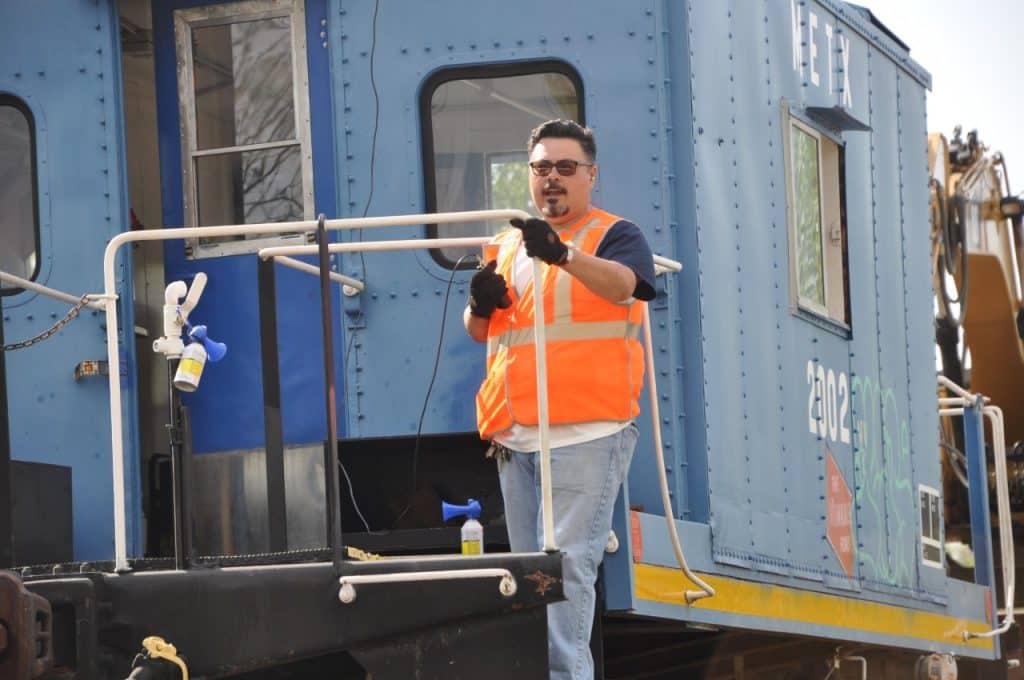
Unions united in response, creating the Labor Alliance for Public Transportation and organizing fiercely to pass transit funding legislation that would protect members’ jobs.
That effort paid off on December 16, 2025, when Illinois Governor J.B. Pritzker signed the Northern Illinois Transit Authority Act into law.
“Failing to address the transit fiscal cliff simply wasn’t an option, so we applaud those in the General Assembly who supported SB 2111, along with the other stakeholders and the thousands of our fellow union members of the Labor Alliance for Public Transportation for fighting every day to get this vital piece of legislation over the finish line,” Guy said.
An existential funding crisis
Back in early 2025, finding a solution for Chicagoland’s transit crisis looked anything but guaranteed.
The root of the problem dated back decades. Years of underfunding, made even worse by the Covid-19 pandemic, led to an impending fiscal cliff that would have exceeded $750 million in 2026. The only possible outcome from such an extraordinary funding shortage would have been dramatic cuts to Metra, the Chicago Transit Authority (CTA) and Pace — leading to lost jobs for SMART members and disrupting the lives of millions of people in Northern Illinois. The CTA has 309 million riders annually, while Metra and Pace have 35 million riders and 17 million riders each year, respectively.
“[Proposed service cuts] would mean less weekday service,” Guy said. “It would mean drastically reduced early morning service, late evening service, less express service, which really would have made commutes longer.”
Notably, the cuts affected not just SMART-TD members, but the SMART RME members who work on the railroad and the Chicago-area sheet metal workers who build and maintain transit infrastructure.
“This would impact SMART Railroad, Mechanical and Engineering employees, SMART-TD members as well as Local 73 members at the CTA,” said Rob Shanahan, International representative in the SMART RME Department.

Labor organizes to protect jobs, transit
The fight to save SMART members’ jobs and public transit in Northern Illinois lasted throughout 2025.
The Labor Alliance for Public Transportation lobbied in the Illinois General Assembly, fighting to win legislation that would fund public transportation, fix existing inefficiencies in the transit systems and keep members working. At the same time, union members made their voices heard, talking about what the Chicagoland transit system means to them and spreading the word about the upcoming fiscal cliff.
The most important thing throughout the process, Guy said, was solidarity.
“Everyone brought their own perspective, their experience, the stories from the membership. We stayed strong, we stayed together. If we would have cracked at all, we probably couldn’t have got this over the finish line,” he noted. “We really did work as one.”
The result? The Northern Illinois Transit Authority (NITA) Act, passed in December. The law creates a new regional authority (NITA) to oversee CTA, Metra and Pace, invests in public transit, capital projects and tollways across the state, and addresses the fiscal cliff that threatened so many SMART members’ jobs.
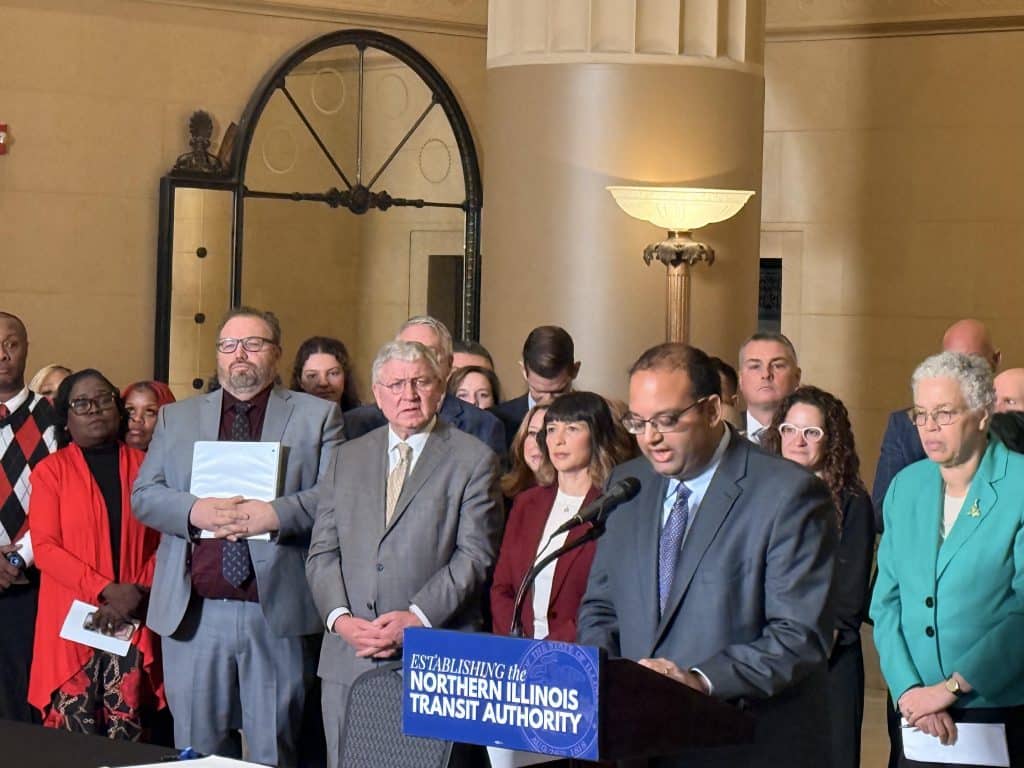
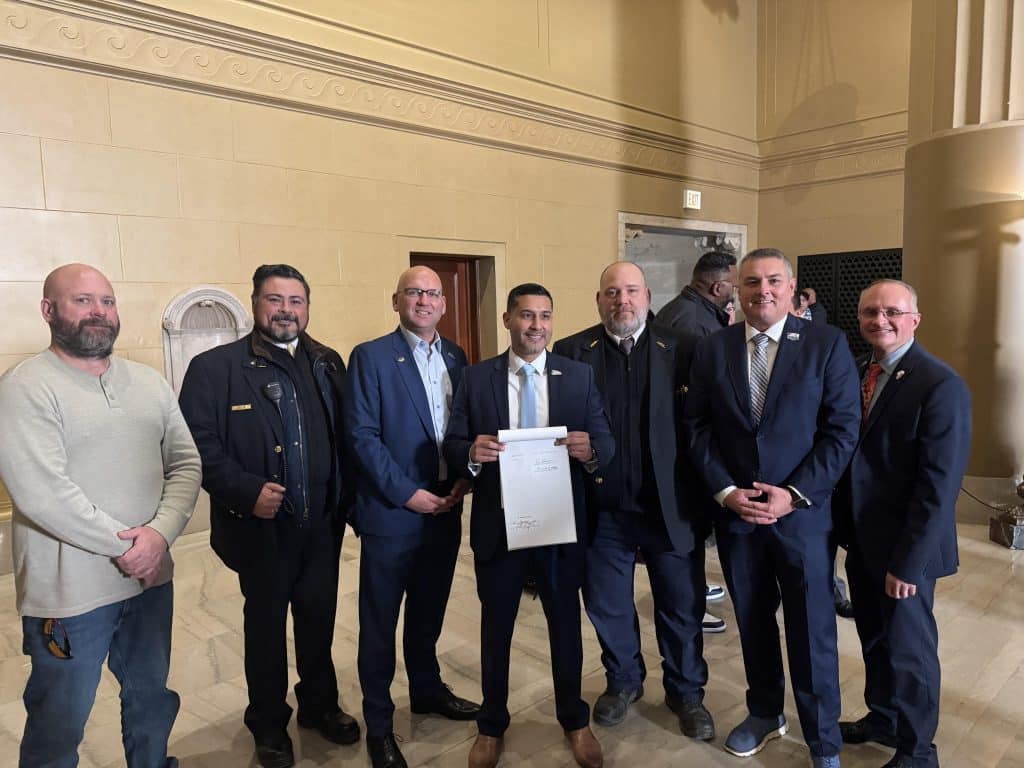
“The bill is going to provide robust funding to continue operations as they currently exist,” said Shanahan, who is a member of SMART Local 256 in Chicago. “It will offer improvements as far as potential expansion, more money to improve facilities and equipment. And finally, it provides some security and stability; it’s a long-term solution to the problem of funding transit in Illinois.”
The law calls for there to be a transition team to move from the current system to the new NITA board system. In a nod to the crucial role unions played in securing the legislation, labor will be part of the transition, Guy said.
“As we were as the legislation moved through the General Assembly, our voices will be heard to protect not only our members currently but hopefully our future members, as we look to expand transit and have a transit system worthy of 10, 15, 20 years down the line,” he concluded.

 Yesterday (January 11), the Supreme Court heard oral arguments in a case you may have heard about — Friedrichs v. California Teachers Association (CTA).