When workers come together to form a union, they’re making a choice to build collective power and win the pay, benefits and workplace standards they deserve. The road to unionization is, far too often, a tough one. But as employees at Dallas-area contractor Stratus Systems demonstrated, solidarity on the job can help workers overcome the challenges in their path.
From 2023 through 2026, workers at Stratus Systems worked with SMART Local 68 members and organizers to build an organizing campaign through sustained outreach, relationship building and the determination of trusted worker leaders.
Organizer Yadriel Carrasquillo and Local 67 Production Organizer Ralph Gomez
Workers fight for their union
The campaign began years ago — and originally met what could have been a devastating setback.
Following worker-to-worker outreach in early 2023 that quickly turned into an organizing campaign by the end of the year, workers filed for an election to join Local 68 with the National Labor Relations Board (NLRB). When the election took place in January 2024, union supporters lost. But that wasn’t the end of the road. The organizing team rebuilt support by strengthening worker engagement, forming an internal organizing committee and expanding worker-led communication. The result? Out of 168 workers at the company, 96 signed cards signaling their intent to join Local 68.
Then, another setback: The United States government shut down, including the NLRB, significantly delaying the workers’ efforts.
Again, the workers refused to give up. In early 2026, organizers secured a rerun NLRB election, then executed an intensive campaign featuring daily strategy meetings, rapid response jobsite outreach, worker-to-worker messaging and strong support from volunteer leaders.
“Everyone was feeling excited because we knew that the workers knew the union had their backs by the workers’ smiles, honks and waves,” said Organizer Yadriel Carrasquillo, who had previously worked as a journeyperson on a jobsite alongside many Stratus employees.
Production Organizer Ralph Gomez, Stratus worker Modesto, Yadriel Carrasquillo, SMART Local 67 Marketing Rep. George PlanePlane and International Organizer Rico Sanchez after giving handbills to workers
And on May 1, 2026, workers voted in favor of union representation, making SMART Local 68 the certified representative of Stratus Systems employees.
The campaign demonstrated the importance of persistence, worker leadership and coordinated organizing in overcoming setbacks and achieving a successful union election.
Welcome, brothers and sisters!
Worker leaders, pictured above, started the campaign and kept driving it forward
In May 2026, the employees of Energy Services in Naperville, Illinois, demonstrated the power of solidarity when they voted 17-3 to join SMART Local 265. The National Labor Relations Board election itself was decisive; it was also the culmination of months of organizing and years of relationships built among coworkers who viewed one another as more than just fellow employees.
For many of the workers at Energy Services, a residential service company in the greater Chicago area, the company was a second home. A significant portion of the workforce had spent between 8 and 12 years building the business and serving customers together. They celebrated milestones, supported one another through difficult times and developed a level of trust that can only come from years of working side-by-side.
That trust became the foundation of a successful organizing campaign.
Organizing for change
The catalyst for change came in late 2025 and early 2026, following a private equity acquisition. As new ownership took control, workers began seeing changes that raised concerns about the future of the company and their livelihoods.
Compensation structures employees had relied upon for years began changing. Workers experienced reductions in pay while increased emphasis was placed on commission-based sales opportunities. Employees who had built careers around providing quality service found themselves questioning the company’s direction and what those changes would mean for both workers and customers.
Across many industries, private equity acquisitions often bring promises of efficiency and growth. Workers, however, frequently bear the burden: They experience pressure to increase profits, reduce labor costs and prioritize short-term financial returns. The employees at Energy Services worried that the workplace culture they had spent years building was beginning to erode.
Those concerns extended beyond long-time employees. Veterans of the company felt a responsibility to protect newer coworkers from further reductions in pay, benefits or workplace stability. What began as conversations among trusted coworkers quickly grew into something larger.
Workers spoke openly about the challenges they faced and the future they wanted to create. Rather than focusing solely on individual concerns, discussions centered on how, by acting collectively, they could provide stability, fairness and a meaningful voice in workplace decisions.
Worker-to-worker organizing builds workplace power
SMART Local 265 Organizers Jay Jones, Joel Orozco and Mike Powers worked alongside the employees throughout the campaign, providing guidance, resources and organizational support. Behind the scenes, the effort included countless evening phone calls, organizing committee meetings and weekend strategy sessions. The goal was never to speak for the workers, but to help workers build the confidence and structure to help them speak for themselves.
The organizing committee became the engine that drove the campaign forward. Workers routinely dedicated evenings and weekends to planning outreach, discussing concerns raised by coworkers and preparing for the next phase of the campaign. Committee members took ownership of the effort, ensuring every Energy Services worker had the chance to ask questions, share concerns and make an informed decision about representation.
The campaign was built through worker-to-worker organizing.
Employees identified natural leaders within the company and focused on one-on-one conversations. Coworkers listened to concerns, answered questions and shared their experiences. Through those discussions, workers discovered that many of the frustrations they believed were personal were shared throughout the workforce.
As support continued to grow, employees signed authorization cards and built a strong organizing committee. The campaign was grounded in a shared belief that workers deserved a seat at the table when decisions affecting their lives were being made.
Management responded with an extensive anti-union campaign.
Employees attended “voluntary” meetings and participated in one-on-one discussions designed to discourage support for union representation. Week after week, workers were presented with reasons why they should reject their union.
By that point, however, the campaign had become about something more than any meeting or presentation.
Years of shared experience had created bonds that could not easily be broken. Employees continued discussing the campaign after meetings, comparing information, and keeping their focus on the issues that had inspired them to organize in the first place.
Throughout the campaign, workers demonstrated remarkable courage. A union campaign is never easy, particularly when management actively opposes it. Yet employees remained focused on securing collective power and protecting the workplace they had helped build.
On May 6, 2026, those efforts paid off.
A worker win in Naperville
When the ballots were counted, the workers voted overwhelmingly in favor of representation by SMART Local 265. The final tally of 17-3 reflected not only support for union representation, but also the strength of the relationships that had fueled the campaign from the beginning.
The Energy Services victory serves as a reminder that successful organizing campaigns are built on solidarity, commitment and workers looking out for one another.
This campaign was not simply about wages, commissions or workplace policies. It was about a group of employees who refused to stand by while decisions affecting their futures were made without them. It was about long-time coworkers protecting one another and ensuring that newer employees would have the same opportunities and stability they had worked for years to create.
Most importantly, it demonstrated a simple truth: When workers stand together, they can shape their own future.
SMART Local 20’s Youth-to-Youth program paid dividends in Indianapolis, Ind., in early December 2024, where members and officers worked to highlight alleged anti-union behavior and win hundreds of thousands in backpay from Performance Mechanical Contracting, Inc (PMC). After the local filed four unfair labor practice charges with the National Labor Relations Board, the NLRB secured a settlement agreement with the contractor that saw PMC pay $459,758 to fired Local 20 workers.
The campaign began when PMC started hiring sheet metal workers. As part of Local 20’s organizing efforts, Local 20 Business Manager Trent Todd explained, eight members in the local’s Youth-to-Youth program applied to work at the company — and declared their union affiliation ahead of time. Those workers were not hired by the company. However, Todd added, two members that did not announce their Local 20 membership were hired. After starting at PMC, the members stated their union affiliation, and they were fired.
Local 20 acted swiftly, filing a complaint that, according to the NLRB, “alleged that the employer unlawfully refused to hire or consider for hire eight applicants and fired two employees because they engaged in union activities, interrogated employees and promulgated an unlawful rule.”
And in December, the NLRB announced the settlement. Along with backpay, PMC agreed to cease and desist from unlawful conduct and to post, read and email a notice of employee rights to its workers.
“Every worker in this country has the right to organize a union, and we at Local 20 will always fight to defend that right,” Todd said. “I am proud of the work our organizing department performed on this campaign. PMC illegally refused to hire qualified applicants because of their union affiliation. This settlement is evidence that rank-and-file organizing has a direct impact on our industry.”
“It is unlawful for an employer to refuse to hire applicants — or fire workers — because of their support for a union,” said [NLRB] Region 25 Regional Director Patricia Nachand in the NLRB’s press release. “I’m proud of Region 25 staff for securing this strong settlement that makes whole the victims of the unfair labor practices.”
SMART Local 20’s Youth-to-Youth program paid dividends in Indianapolis, Ind., in early December 2024, where members and officers worked to highlight alleged anti-union behavior and win hundreds of thousands in backpay from Performance Mechanical Contracting, Inc (PMC). After the local filed four unfair labor practice charges with the National Labor Relations Board, the NLRB secured a settlement agreement with the contractor that saw PMC pay $459,758 to fired Local 20 workers.
The campaign began when PMC started hiring sheet metal workers. As part of Local 20’s organizing efforts, Local 20 Business Manager Trent Todd explained, eight members in the local’s Youth-to-Youth program applied to work at the company — and declared their union affiliation ahead of time. Those workers were not hired by the company. However, Todd added, two members that did not announce their Local 20 membership were hired. After starting at PMC, the members stated their union affiliation, and they were fired.
Local 20 acted swiftly, filing a complaint that, according to the NLRB, “alleged that the employer unlawfully refused to hire or consider for hire eight applicants and fired two employees because they engaged in union activities, interrogated employees and promulgated an unlawful rule.”
And in December, the NLRB announced the settlement. Along with backpay, PMC agreed to cease and desist from unlawful conduct and to post, read and email a notice of employee rights to its workers.
“Every worker in this country has the right to organize a union, and we at Local 20 will always fight to defend that right,” Todd said. “I am proud of the work our organizing department performed on this campaign. PMC illegally refused to hire qualified applicants because of their union affiliation. This settlement is evidence that rank-and-file organizing has a direct impact on our industry.”
“It is unlawful for an employer to refuse to hire applicants — or fire workers — because of their support for a union,” said [NLRB] Region 25 Regional Director Patricia Nachand in the NLRB’s press release. “I’m proud of Region 25 staff for securing this strong settlement that makes whole the victims of the unfair labor practices.”
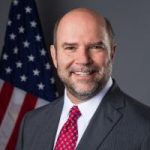
On June 17, 2017, the AFL-CIO issued a legislative alert to U.S. Senators regarding Trump’s nomination of Marvin Kaplan and William Emanuel to fill the vacant seats on the National Labor Relations Board (NLRB).
In the alert, Emanuel is noted for representing the “…notorious union-busting law firm Littler Mendelson,” and Kaplan’s, “…sole experience with labor law is on a policy level, drafting legislation to weaken worker protections…” Click here to read the entire letter from the AFL-CIO.
A Senate committee may vote on these nominations as early as tomorrow, July 19, 2017 – so contact your Senator today:
Visit the SMART TD Legislative Action Center (LAC) to call your Senator and voice your opposition to these nominations.
On Tuesday, July 18, the Chicago Tribune outlined how Trump seeks to dismantle unions in America. Click here to read the article.
Washington – Philip A. Miscimarra has been named chairman of the National Labor Relations Board (NLRB) by President Donald J. Trump.
“It is a great honor to be named NLRB Chairman by the President,” Miscimarra said. “The Board has the important responsibility of applying the National Labor Relations Act in an even-handed manner that serves the interests of employees, employers and unions throughout the country. I remain committed to these efforts.”
President Trump designated Miscimarra NLRB chairman, April 24, 2017, after the White House announced the President’s intent to name Miscimarra Chairman April 21. Miscimarra had been previously designated Acting Chairman by President Trump January 23, 2017, and served as a Board Member since August 7, 2013. Miscimarra was nominated April 9, 2013, to serve on the Board, and was approved unanimously by the Senate Committee on Health, Education, Labor and Pensions May 22, 2013. He was confirmed by the Senate July 30, 2013, and his current term expires December 16, 2017.
The NLRB also consists of NLRB Member Mark Gaston Pearce (previously NLRB Chairman), whose term expires August 27, 2018; and NLRB Member Lauren McFerran, whose term expires December 16, 2019. Two Board member seats are currently vacant.
Before joining the Board, Chairman Miscimarra was a Senior Fellow at the University of Pennsylvania’s Wharton Business School in the Wharton Center for Human Resources, and a labor and employment law partner with Morgan Lewis & Bockius LLP in Chicago. He also previously worked as a labor and employment attorney with Seyfarth Shaw LLP; Murphy Smith & Polk PC (now the Chicago office of Ogletree, Deakins, Nash, Smoak & Stewart, PC); and Reed Smith Shaw & McClay (now Reed Smith LLP).
Miscimarra received his Juris Doctor from the University of Pennsylvania Law School; a Master of Business Administration from the University of Pennsylvania’s Wharton Business School; and a Bachelor of Arts, summa cum laude, from Duquesne University.
Days after the Republican presidential candidate Scott Walker announced his plan to get rid of the National Labor Relations Board, Democratic lawmakers are rolling out a plan to strengthen the government agency. The bill, introduced on Wednesday, will also serve as a litmus test to Democrats vying for union endorsements in the 2016 presidential election.
The Wage Act, which stands for Workplace Action for Growing Economy Act, is being sponsored by Washington senator Patty Murray and Virginia congressman Bobby Scott.
“Too often, as workers are underpaid, overworked, and treated unfairly on the job, some companies are doing everything they can to prevent them from having a voice in the workplace,” Murray said in a statement. “The Wage Act would strengthen protections for all workers and it would finally crack down on employers who break the law when workers exercise their basic right to collective action.”
On August 27, 2015, the National Labor Relations Board (NLRB) overturned its policy that had existed since 1962, and held that employers remain obligated to withhold from wages and remit union dues to their employees’ union, even after the expiration of a collective bargaining agreement (CBA) that creates the obligation.
Collective bargaining agreements frequently contain “dues check off” provisions, which require employers to deduct union dues from their employees’ wages, and to then forward those dues to the union. For the past 50 years, these check off provisions were among certain reciprocal contractual entitlements flowing to the union and employer that automatically terminated when a collective bargaining agreement expired. As such, they were not among other contractual provisions that pertained to the wages, benefits and other terms and conditions of employment for the bargaining unit employees that continued indefinitely after the collective bargaining agreement expired until impasse or a replacement agreement was reached. This allowed employers to stop collecting dues for unions once their contract ended.
Unions and other labor advocates are brainstorming strategies after a National Labor Relations Board ruling that could strengthen the hand of those at the lowest level of such industries as warehousing, construction, fast food and home health care.
The NLRB said Thursday that a Silicon Valley recycling center was a “joint employer,” as was the staffing agency that provided the center’s workers. The ruling determined that companies using workers hired by another business, such as temp agencies, contractors or fast-food franchisees, are still responsible for labor violations and could be required to bargain with unions representing those employees.
That finding, which is sure to be tested in the courts, gives a boost to labor groups, which have scored victories in recent years with highly choreographed nationwide protests for better pay in traditionally minimum-wage industries such as retail and fast food, analysts say. It could also help increase union membership, which has been on the decline.
In the 80 years since the National Labor Relations Act was enacted, the workplace has changed in ways that President Roosevelt never could have imagined when he declared that the goal of the law was “common justice and economic advance” for all. Yet his signature so long ago guaranteed that one thing would and has remained the same — democracy has a rightful place in the workplace.
Enacted in midst of the Great Depression, the National Labor Relations Act gave workers an avenue to join together to improve their wages and working conditions. The ability to organize and bargain collectively put more money in the pockets of workers while helping build – and maintain – the middle-class.
Through good times and bad, the Act has offered workers a voice in their workplace and promoted industrial peace. Our country and workplaces have changed over the last eight decades, but the need for the Act has remained a constant.
Today, the law continues to protect employees who seek to improve their working conditions by joining together, with or without a labor union. It protects the union member seeking to improve conditions at their plant just the same as it does the single-mom in a non-union workplace working the night shift who speaks with coworkers about their pay and work hours. And through collective bargaining, unions and employers can resolve their differences and devise solutions to meet the challenges of our ever-changing economy.
While there is little doubt that the workplace will bear little resemblance in 80 years to what we know today, there is even less doubt that workers will deserve and demand a voice in it. As long as there is the NLRA, that voice will be protected.
President Franklin Delano Roosevelt signed the National Labor Relations Act on July 5, 1935, which among other things established a new independent agency tasked with enforcing the Act, the National Labor Relations Board.