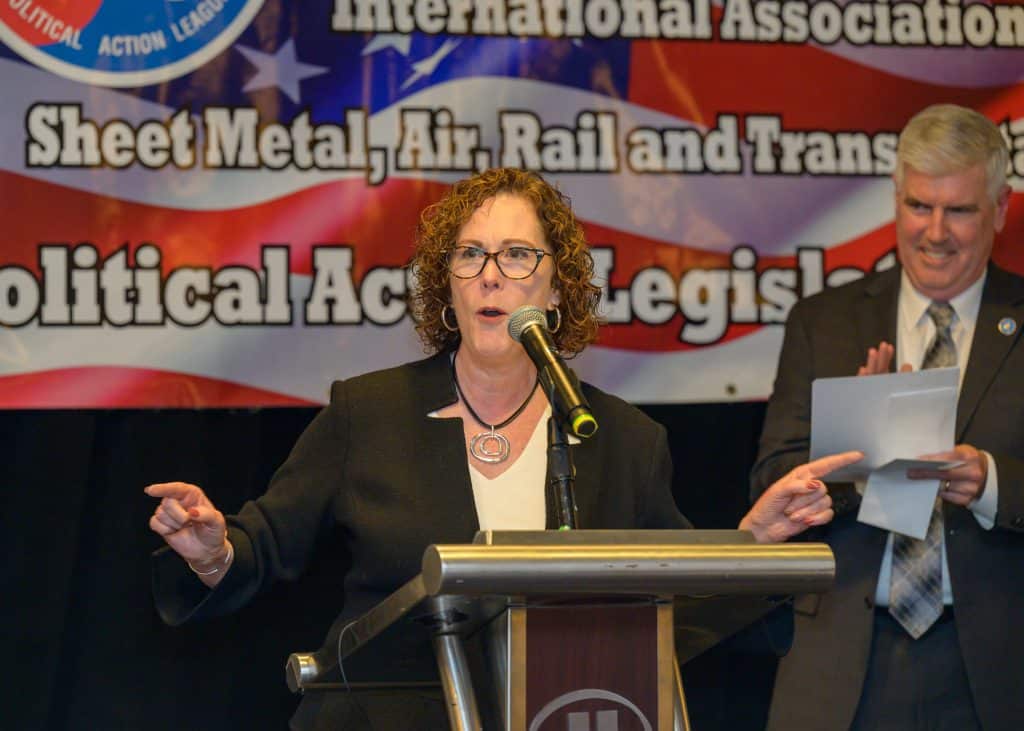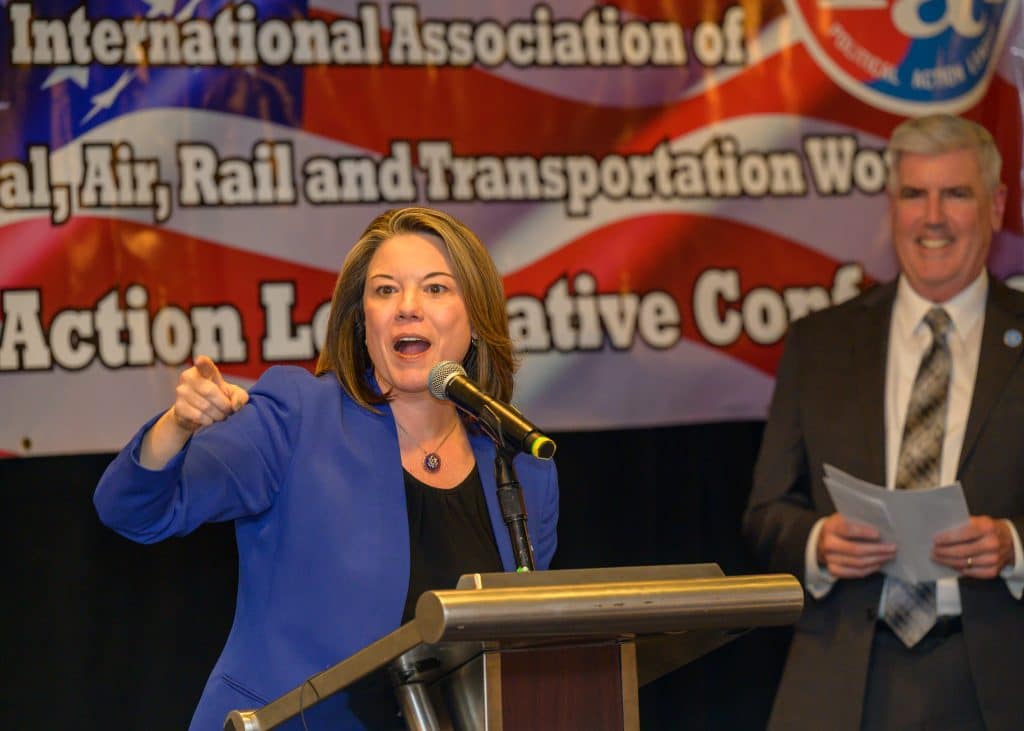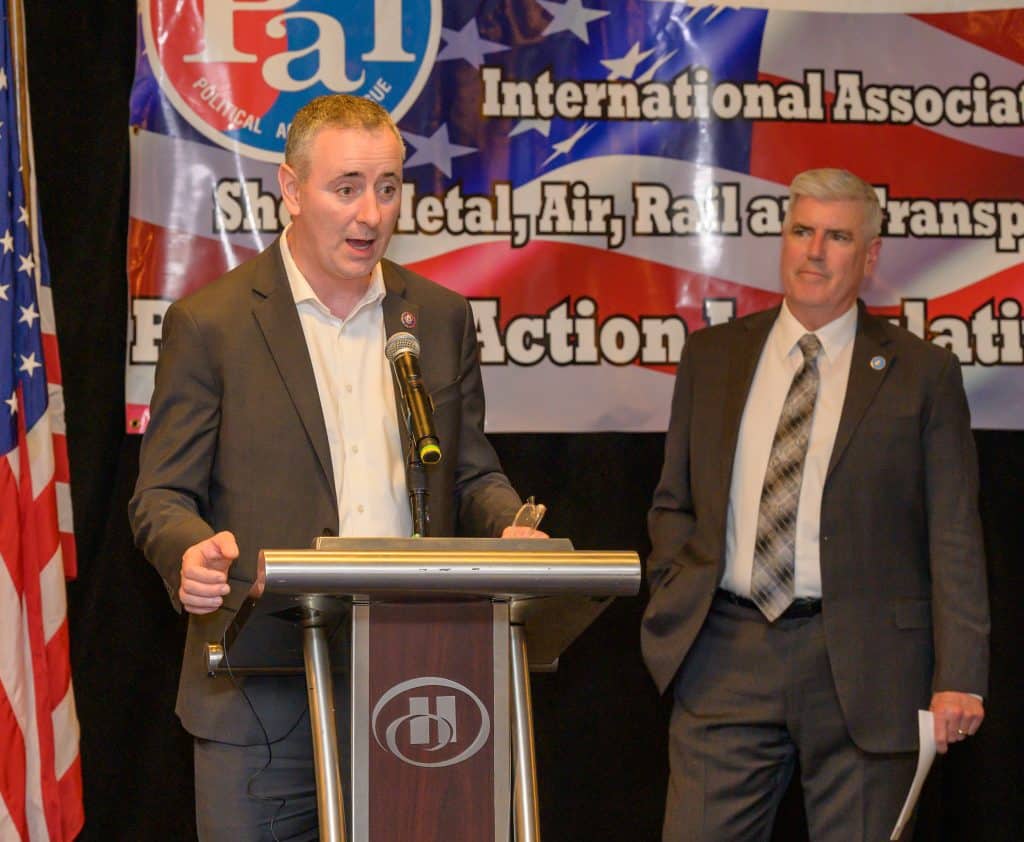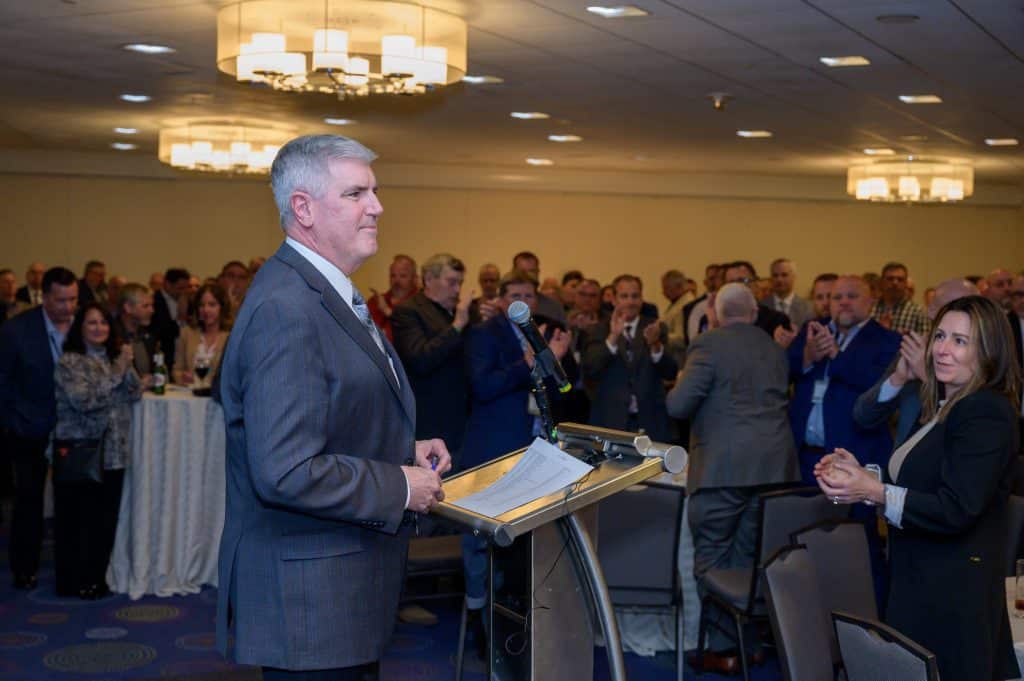
SMART members from across the United States and Canada gathered in Washington, DC on April 25th and 26th for the North America’s Building Trades Unions (NABTU) 2023 Legislative Conference. Throughout the week, workers and elected union leaders came together to push for legislation that prioritizes union members, as well as hear from elected officials, industry stakeholders and others.

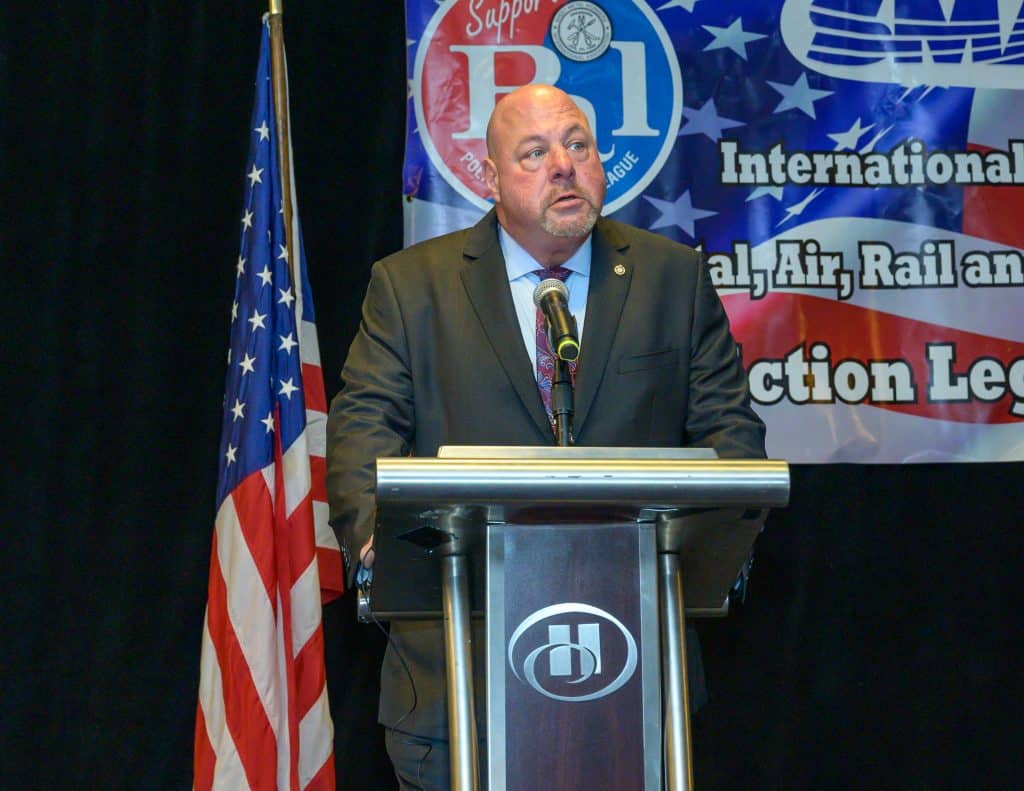
The April 25th plenary session began with a keynote address from NABTU President Sean McGarvey, who introduced and emphasized the 2023 conference theme: “Empowering the Infrastructure Generation.” Unprecedented investment — spurred by pro-worker federal legislation like the Bipartisan Infrastructure Law, the CHIPS and Science Act, the Inflation Reduction Act and more — is creating tens of thousands of jobs and sparking the renewal of America’s infrastructure. This presents opportunity for the workers of today and tomorrow, McGarvey said, and it’s vital that unions push for legislation like the National Apprenticeship Act to ensure we can train the workforce to meet demand and bring workers of all backgrounds — rural, urban, women, people of color, the formerly incarcerated, veterans and more — into unions like SMART.
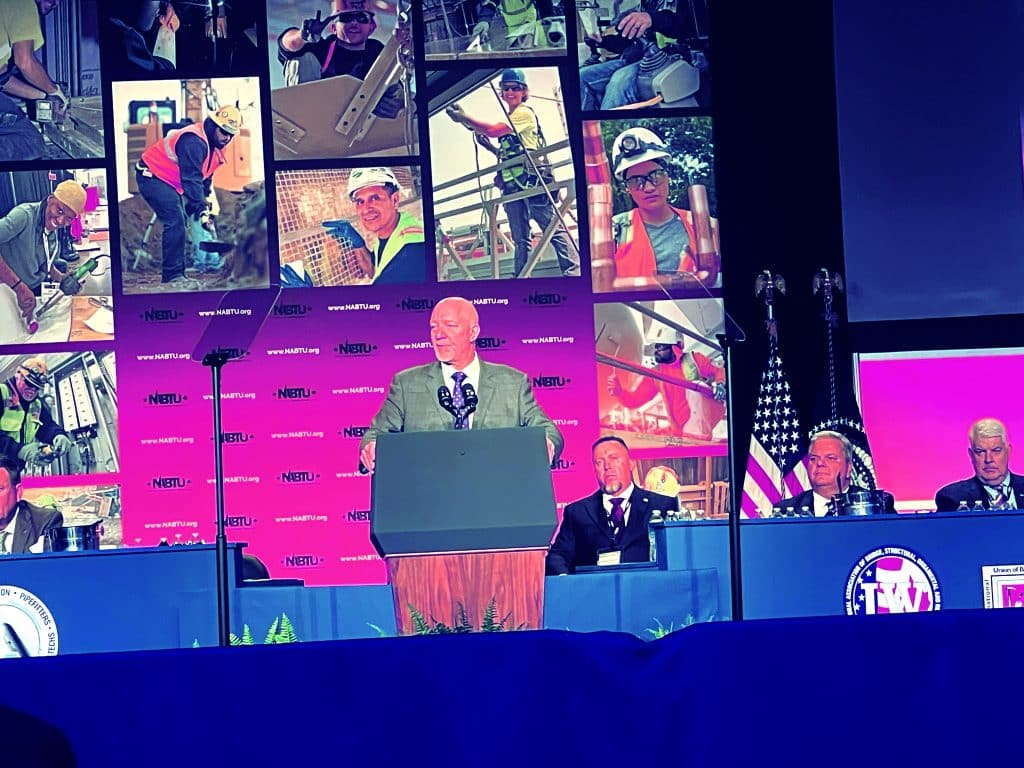
“Our model makes sure workers aren’t just trained for a project, but equipped with the highest skillsets for a long and meaningful career,” McGarvey explained. “This is our time to make sure we are building the opportunity pipeline to maximize private investment with public dollars and reach communities large and small.”

McGarvey was followed by various pro-worker officials, including former Labor Secretary Marty Walsh, Illinois Governor JB Pritzker and Wisconsin Senator Tammy Baldwin. Walsh discussed his time working with the Biden administration and the importance of making our voices heard in the halls of power — and the need to spread the word about how pro-labor elected officials are benefiting working families.
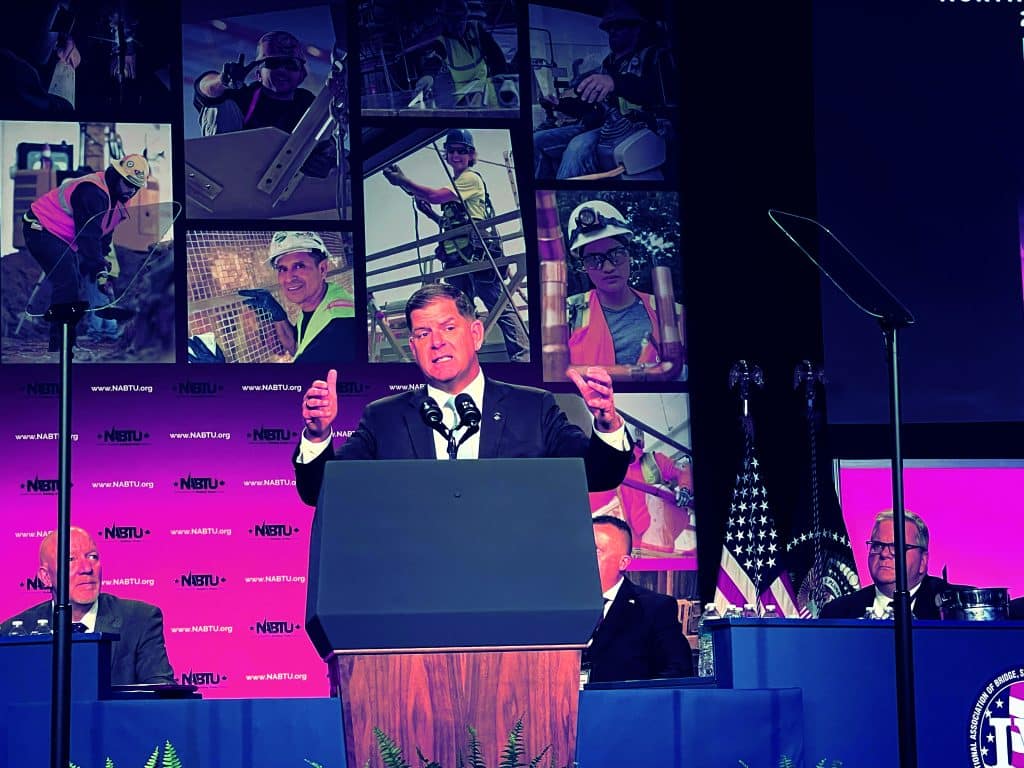
“Who you vote for has consequences,” Walsh said. “This is how we restore and expand access to the middle class in this country: through good, union jobs.”

Following Walsh, NABTU attendees were joined by Governor Pritzker, who has overseen a transformative pro-worker shift in the Prairie State — including the passage of the Workers’ Rights Amendment, project labor agreements on more than 1,000 construction projects, a $50 million Illinois Works pre-apprenticeship program and the passage of the Climate and Equitable Jobs Act, a pro-worker clean energy law that covers climate infrastructure projects with project labor agreements.

“Workers’ rights are gaining strength,” Pritzker declared. “Supporting workers’ rights is about investing in Illinois’ most precious resource, our nation’s most precious resource: our people.”

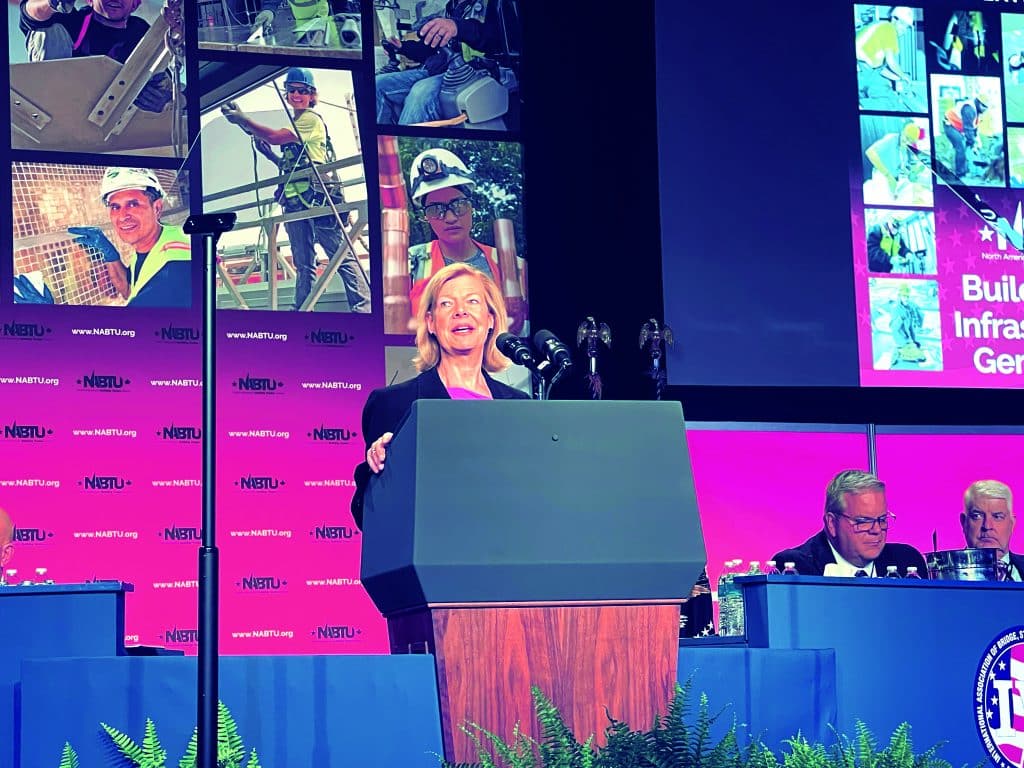
Wisconsin Senator Tammy Baldwin has been a steadfast advocate for the union apprenticeship model, recognizing the potential unions have to lift workers of all backgrounds into the middle class. She explained the continued significance of union apprenticeships as policy and technology shift the way the world works, and declared to NABTU attendees her intent to continue the fight to reauthorize the National Apprenticeship Act.

“There’s one tried and true method that has lasted and stood the test of time, and that’s apprenticeships,” Baldwin said.
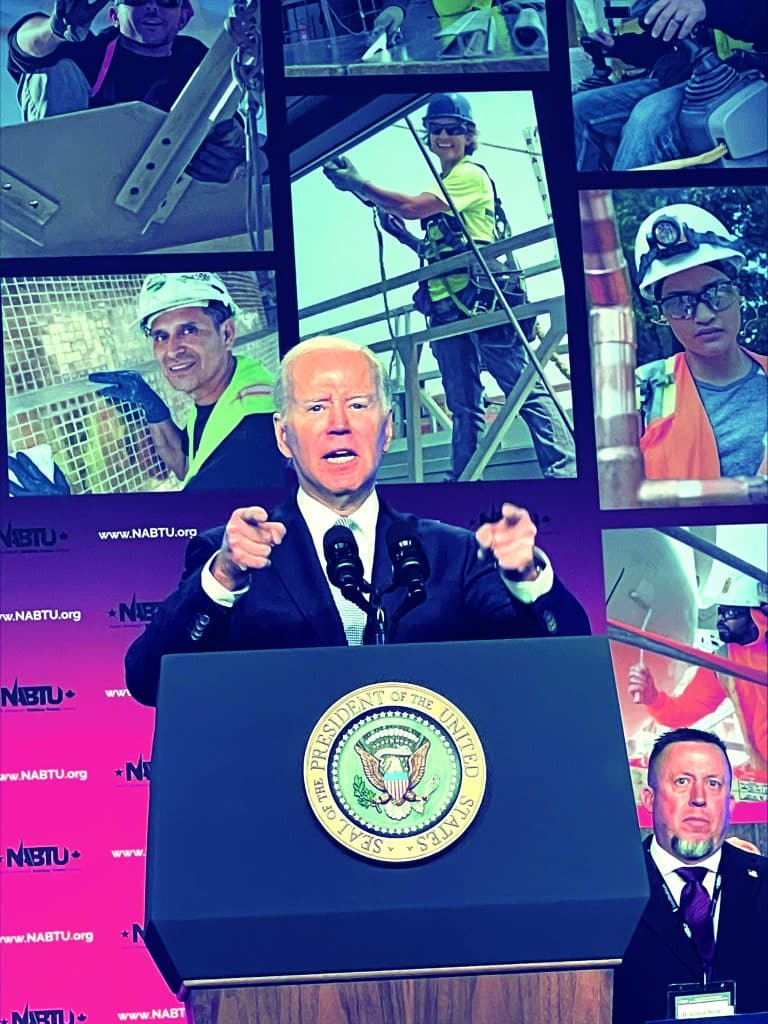
The day concluded with a fiery address from President Joe Biden, who took the stage hours after announcing his intent to run for reelection. Throughout his speech, Biden focused on the steps taken by his administration to create an American economy that grows from the bottom up and the middle out — and emphasized that “we need to finish the job.”

“I learned a long time ago: There’s labor, and then there’s UNION labor,” he declared.

Biden explained how his administration’s pro-worker agenda has led to the passage of laws including the American Rescue Plan, the Bipartisan Infrastructure Law, the CHIPS and Science Act and the Inflation Reduction Act. Together these laws helped protect multiemployer pension plans; invested heavily in HVAC, energy efficiency, production, transit, rail infrastructure and other SMART sectors; created more than 800,000 manufacturing jobs; capped insulin copays at $35 per month for those covered by Medicare; and much more. The president also referred to his executive order requiring project labor agreements on federal projects that cost more than $35 million — a policy that amounts to an investment in union labor.

“I’ve said it many times: Wall Street didn’t build America. The middle class built America, and unions built the middle class,” Biden said.

“For decades, trickle-down economics hollowed out the middle class. America rewarded wealth, not work. … As jobs were lost, something else was lost as well: a sense of pride, a notion of who you are, a sense of self-worth, earning your way,” he added. “My economic plan is a blue-collar blueprint to rebuild America, and that’s what we’re doing: rebuilding America.”
The April 26th plenary saw remarks from a range of bipartisan speakers, including Rep. Nikki Budzinski, Republican Congressmen Don Bacon and Brian Fitzpatrick, Senator Raphael Warnock, Senate Leader Chuck Schumer and others. Once again, the focus was firmly on the future — and how unions like SMART need to ensure we meet the workforce demands of this moment for generations to come. From making sure people of all backgrounds have pathways into union apprenticeships, to passing legislation that helps fund ever-evolving apprenticeship and pre-apprenticeship programs, now is the time to secure our future

“Thank you for building the strongest and most robust country in the world,” Bacon said during his speech. “You deserve fair wages for a hard day’s work; pension when you retire and safety at work.”

“You are at the center of America,” Warnock added during his remarks. “We need to hear your voices and countless efforts you’ve made to build this country. As you continue beating that drum, I will keep looking for every opportunity I can to stand up and protect our working people.”

Following the speaking agenda, SMART members joined representatives from the rest of the building trades on Capitol Hill to lobby for legislation that benefits our members.

“SMART has proudly gathered with our fellow building trades unions at the annual NABTU Legislative Conference for decades, and in recent years we have seen first-hand how conditions for workers have changed under the Biden administration,” SMART General President Michael Coleman said. “We will continue to work with pro-labor allies and push for policies that put our members to work.”
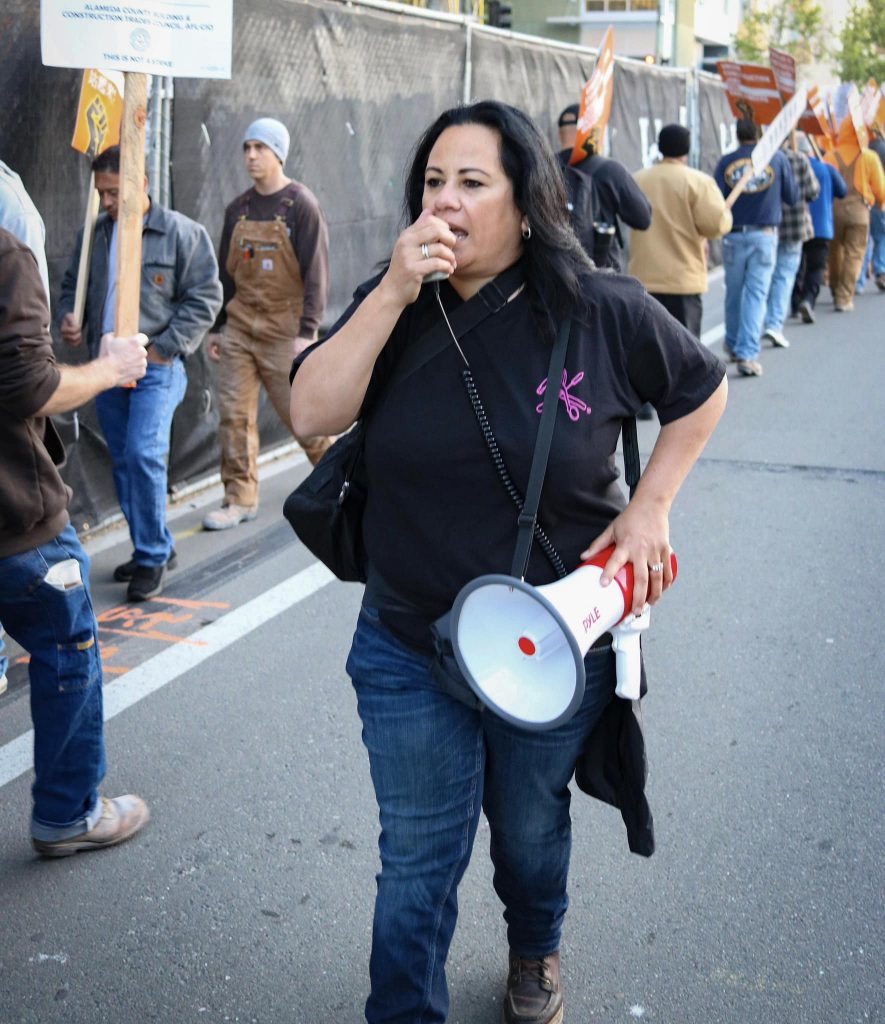
SM Local 104 (northern California) Business Representative Alicia Mijares – the first woman business representative in the local’s history – was born into the labor movement.

Alicia Mijares, first woman business representative at Local 104, on the picket line.

“Three of my grandparents were union members, both of my parents and my stepfather were union members, both of my brothers, my only sister and my wife are all union members,” she said. “I walked my first picket line in front of a Safeway with my mother, a member of the United Food and Commercial Workers.”

Mijares was not, however, born into the sheet metal trade; she entered the industry almost by accident. As a high school graduate without a clear vision of her future, she worked at a pizza restaurant and in a precision sheet metal shop, where the best-paid employees made $12.50 and hour. (“It’s funny how that sounded like great money back then,” Mijares recalled.) One day, a customer picking up a pizza order asked Mijares if she liked her job; she replied that it was the second job she’d worked that day that she didn’t like. In response, the customer passed her his Local 104 business card.

“When I read ‘sheet metal,’ I thought it would be something similar to the precision shop where I had been working,” Mijares remembered. “I didn’t realize at the moment that it was construction, so I went down, took the test, passed it and began as a pre-apprentice.”

Mijares immediately took to life as a union sheet metal worker. She worked in both the shop and in the field, treasuring the contrasting stability and variety of each respective setting. But it’s not just the hands-on elements of the craft that she finds appealing; her favorite part, Mijares says, is the impact SMART sheet metal members have on their communities.

“Air is life, and we make people’s lives healthier and more comfortable by bringing in hot and cool air, and filtering it on the way.”

Mijares threw herself into Local 104 union activities from the start – growing up in a union household, she knew that the members are the union. She participated in precinct-walking and phone-banking efforts as an apprentice and as a journeyperson, helping support pro-worker candidates and policies, and she served her fellow members as a shop steward and on Local 104’s Executive Board. It was during her time as shop steward that she noticed a fomenting disconnect – the members weren’t necessarily aware of the work that their elected representatives and organizers were performing on their behalf. Now, as Local 104 business representative, Mijares wants to bridge that disconnect; to remind the membership why we call each other brother and sister.

“We always want to go after project labor agreements, we always want to bring in more work for the membership – that’s the top priority – but what I would like to do is improve member participation,” she said. “Members pay to be in the membership – [not engaging with the union] is like writing a check to a gym and never setting foot inside.”

Mijares is currently serving in her first term as business representative. One of the highlights, she said, is when she gets to dispatch members: “Being able to make that phone call and say, ‘hey, are you ready to go back to work?’ It’s always a happy conversation.”

She also values the opportunity to advocate for the trade – something she was already doing as a rank-and-file member.

“I participate in a lot of outreach, whether it’s career fairs or anything else, because a lot of young women are starting to approach our table and say, ‘what is this about?’ So I talk about how great the trade is; I’ve been able to buy a home in the state of California, I’ve been able to travel.”

Mijares makes sure not to sugarcoat the industry – sheet metal is hard work, from the drafting and math required to pass the apprenticeship test to the early starts and long hours on the job. But she always tells potential apprentices a motto that applies as much to union leadership as it does to sheet metal work: “Hard is what makes it great. If it was easy, anybody would do it.”

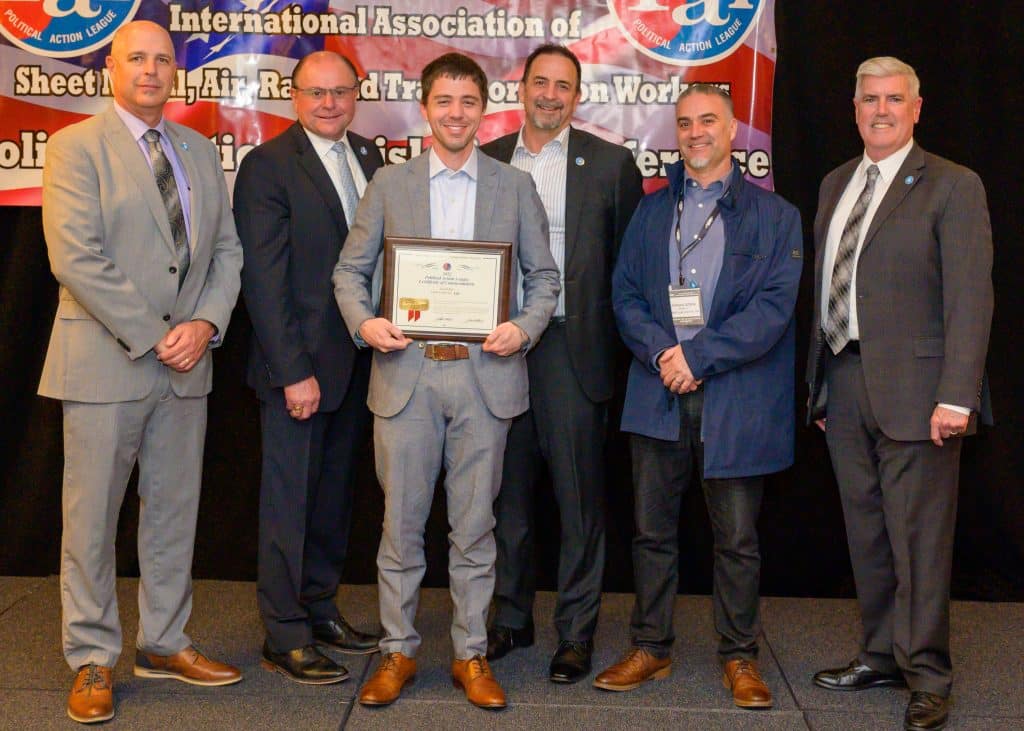
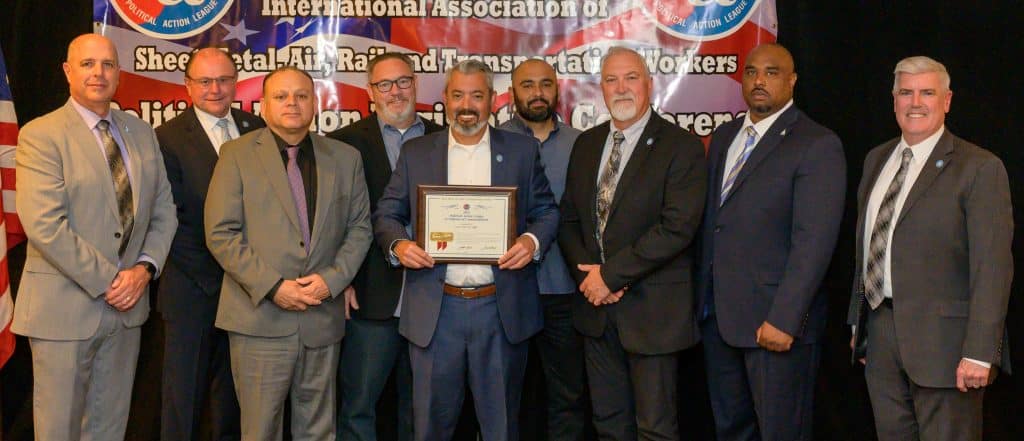
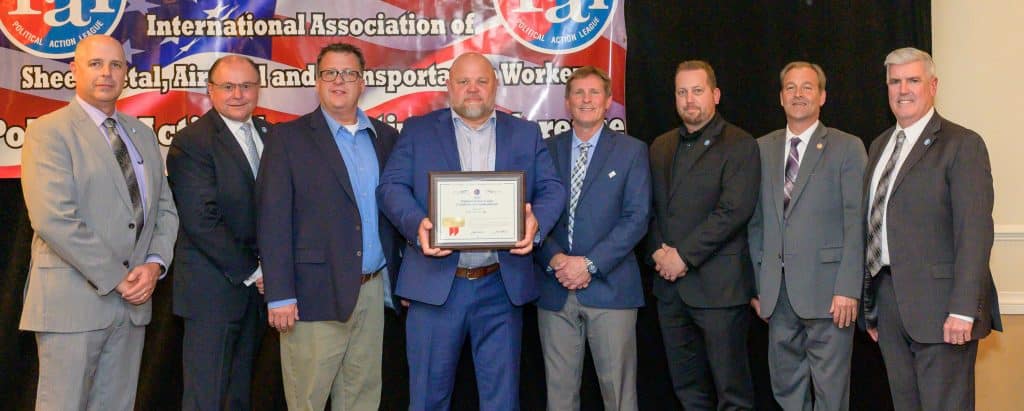
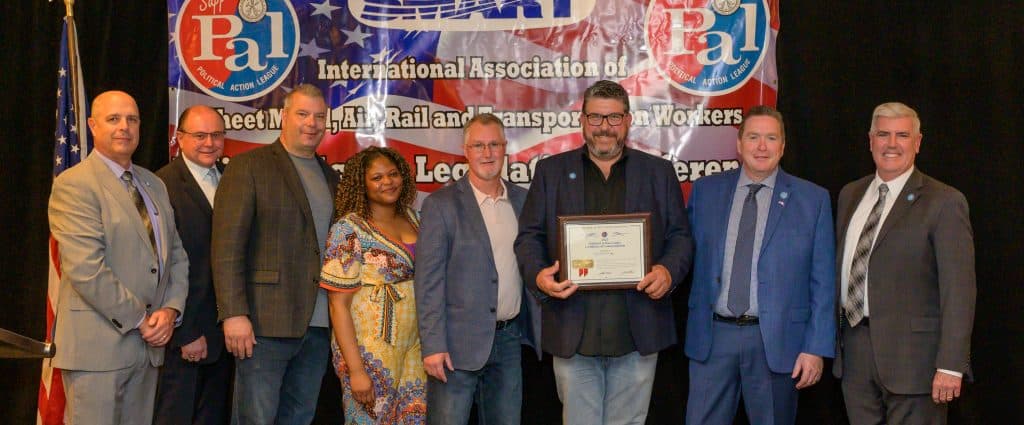
See images of SMART’s 2023 Political Action League reception, as well as pictures of all local unions with representatives at the reception.

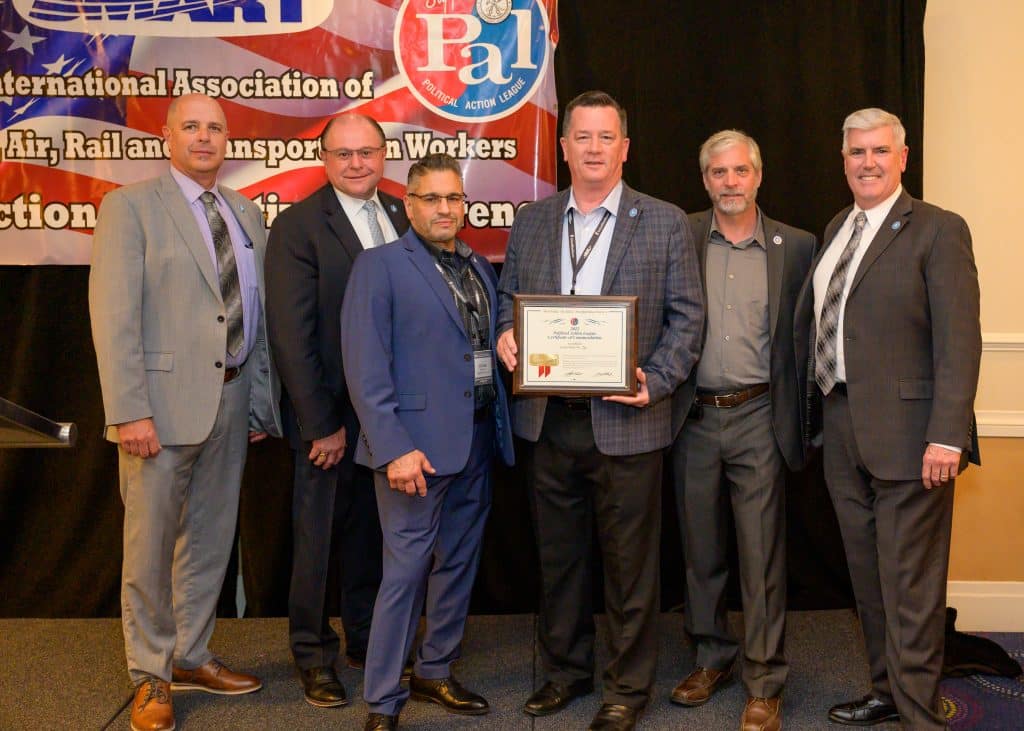
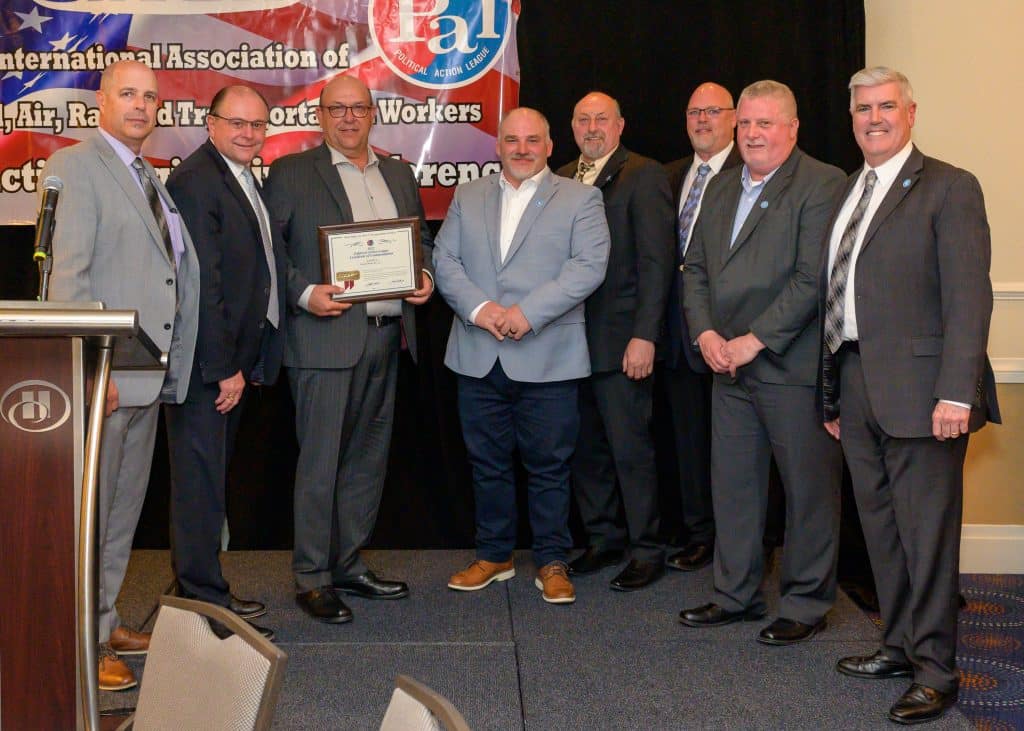
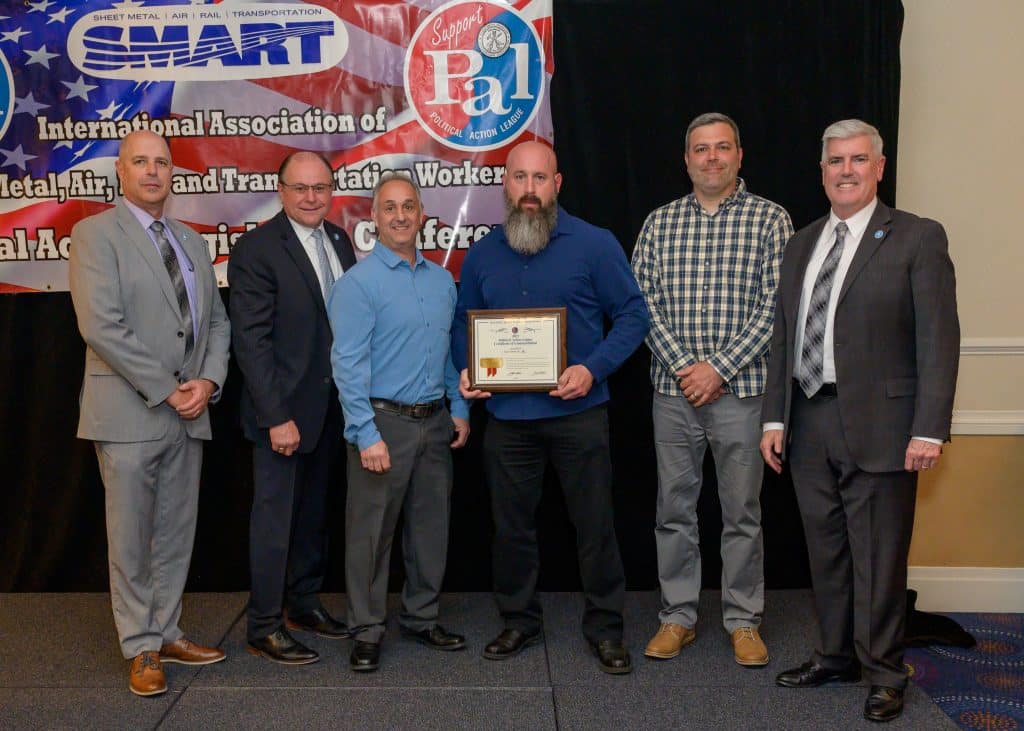
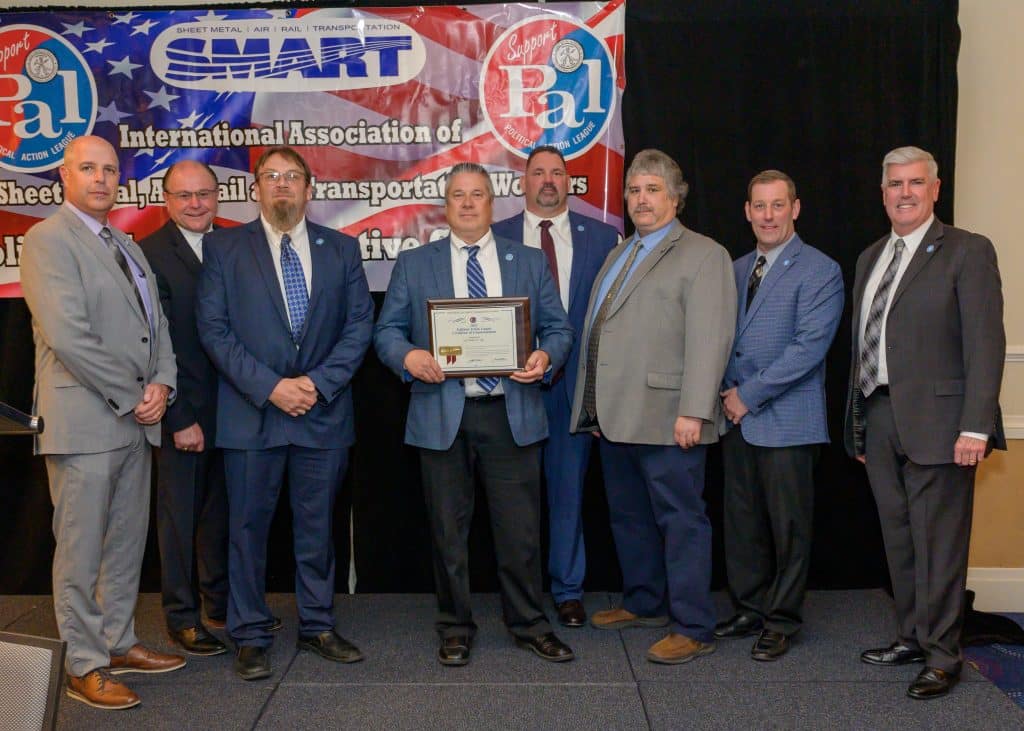
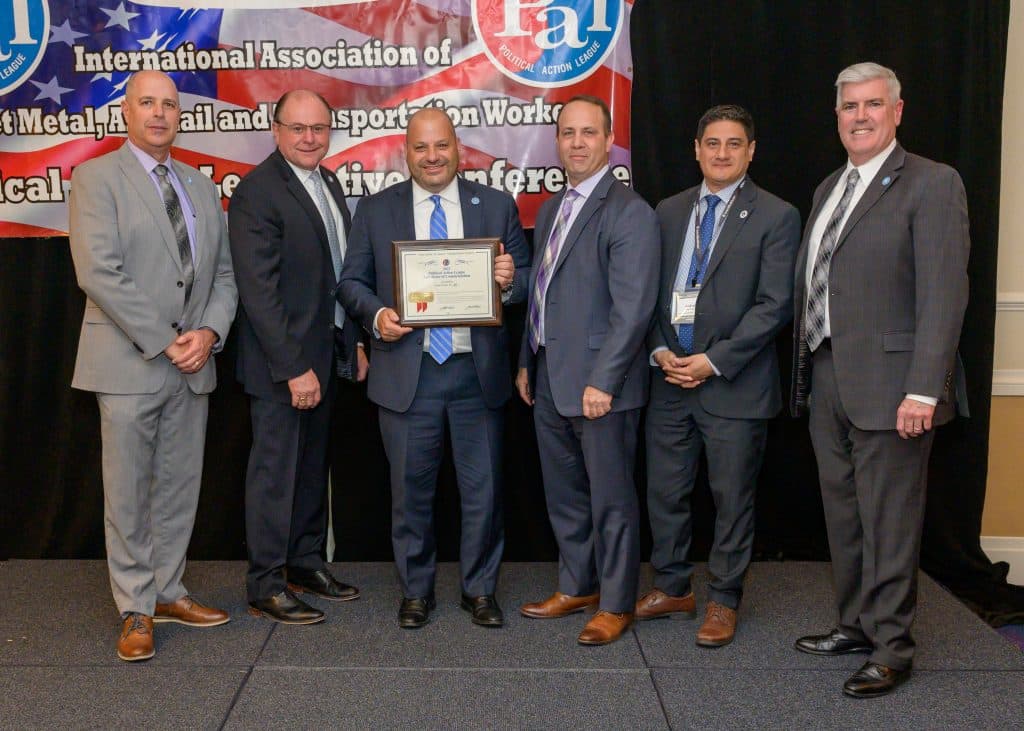
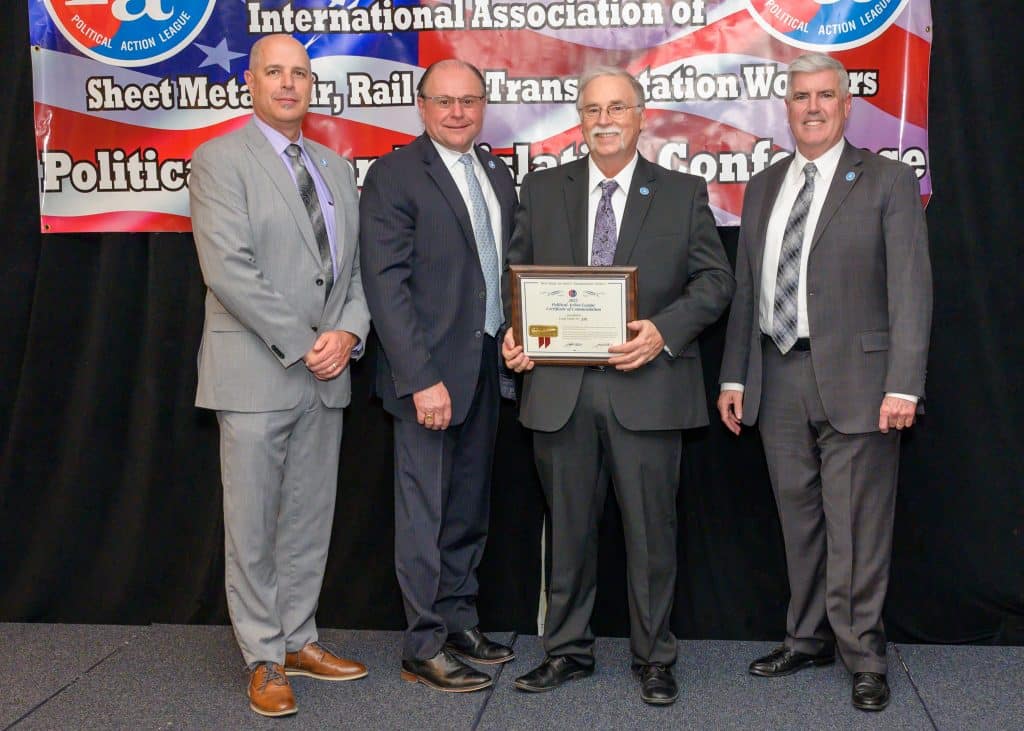
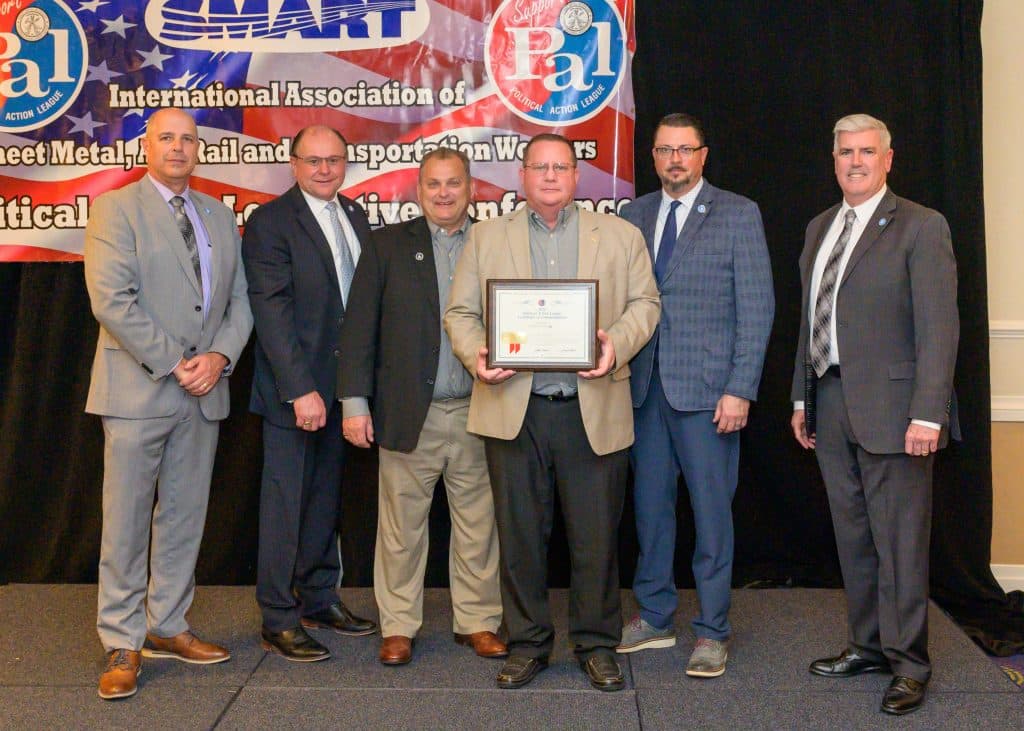
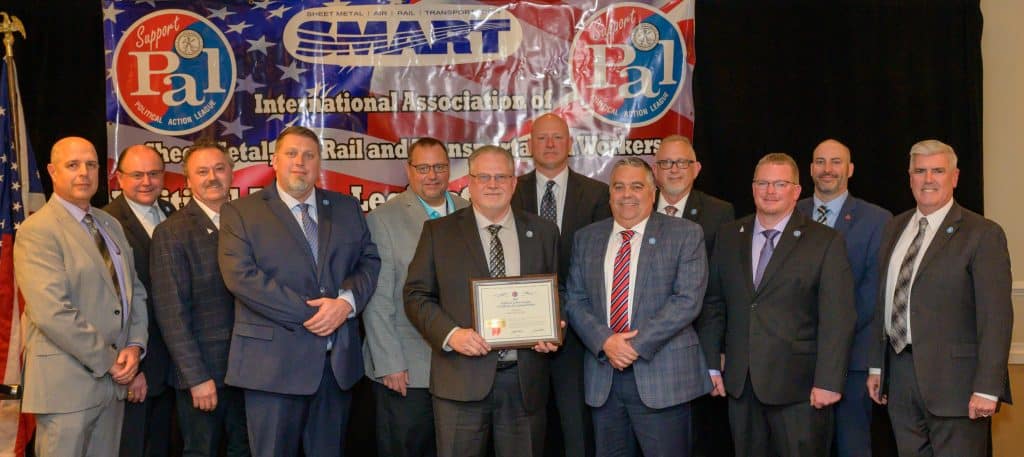
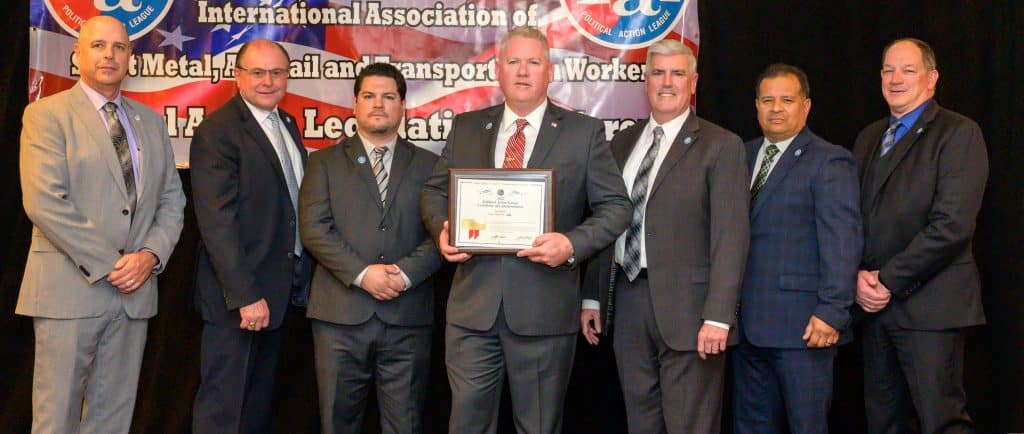
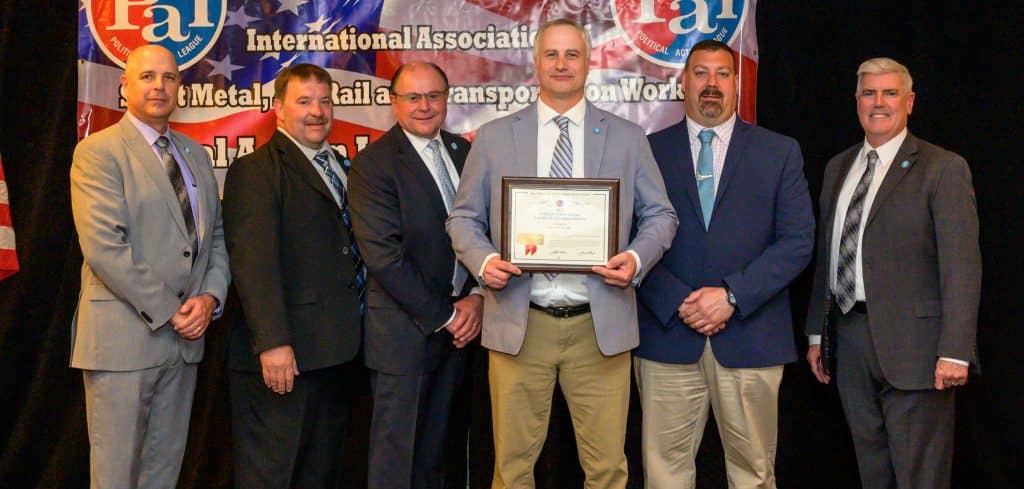
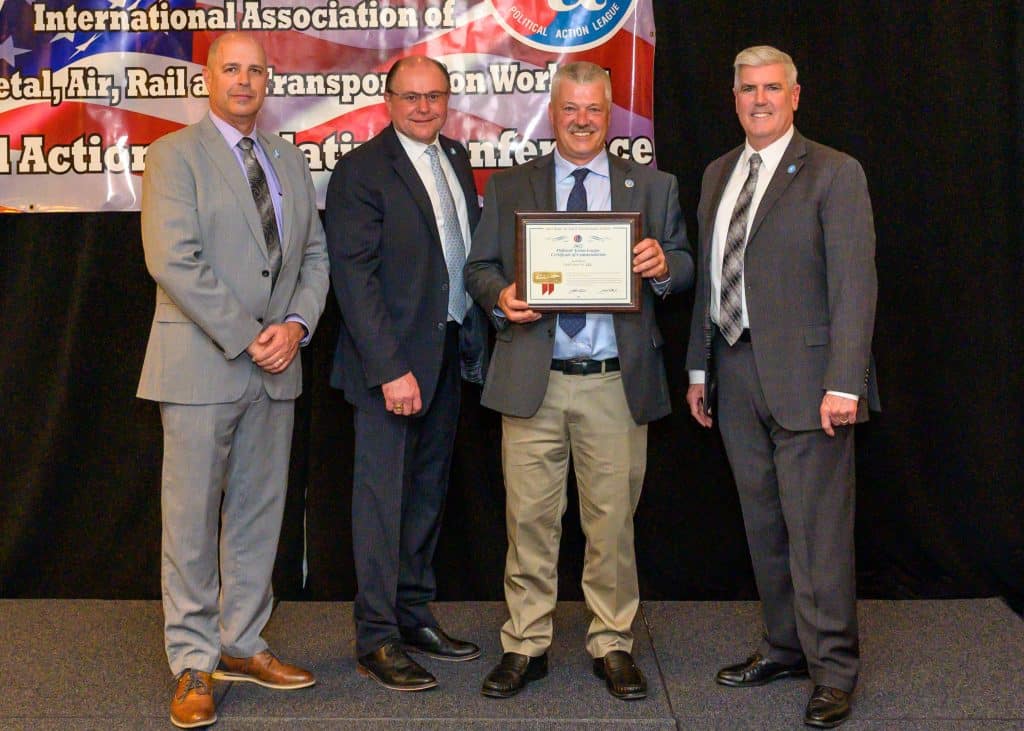
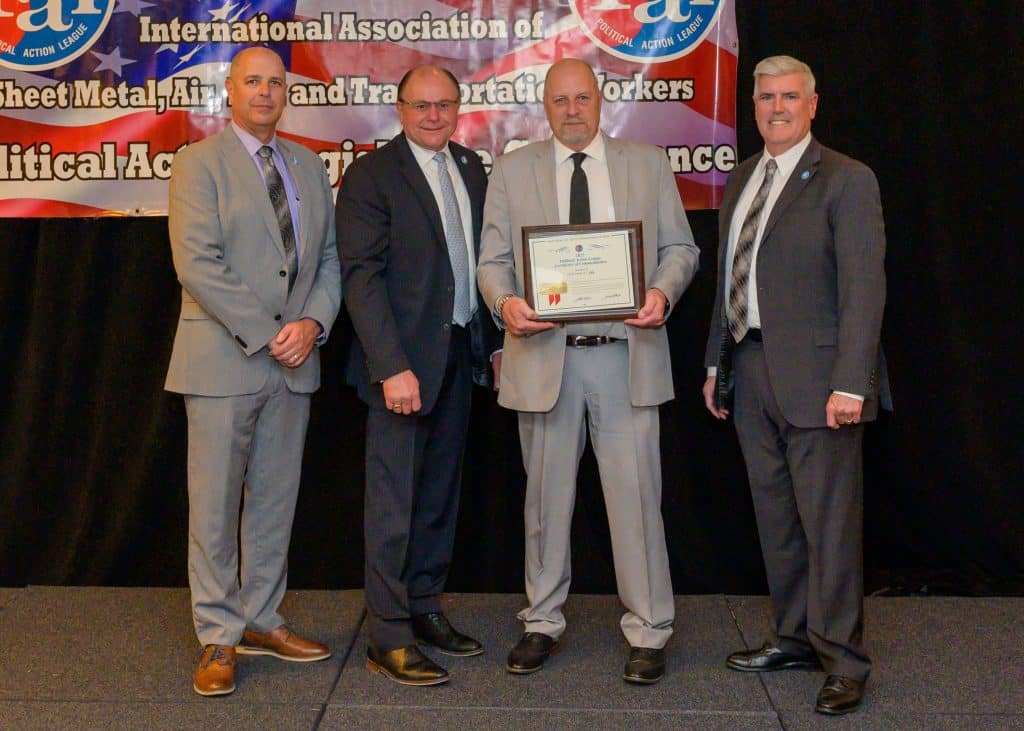
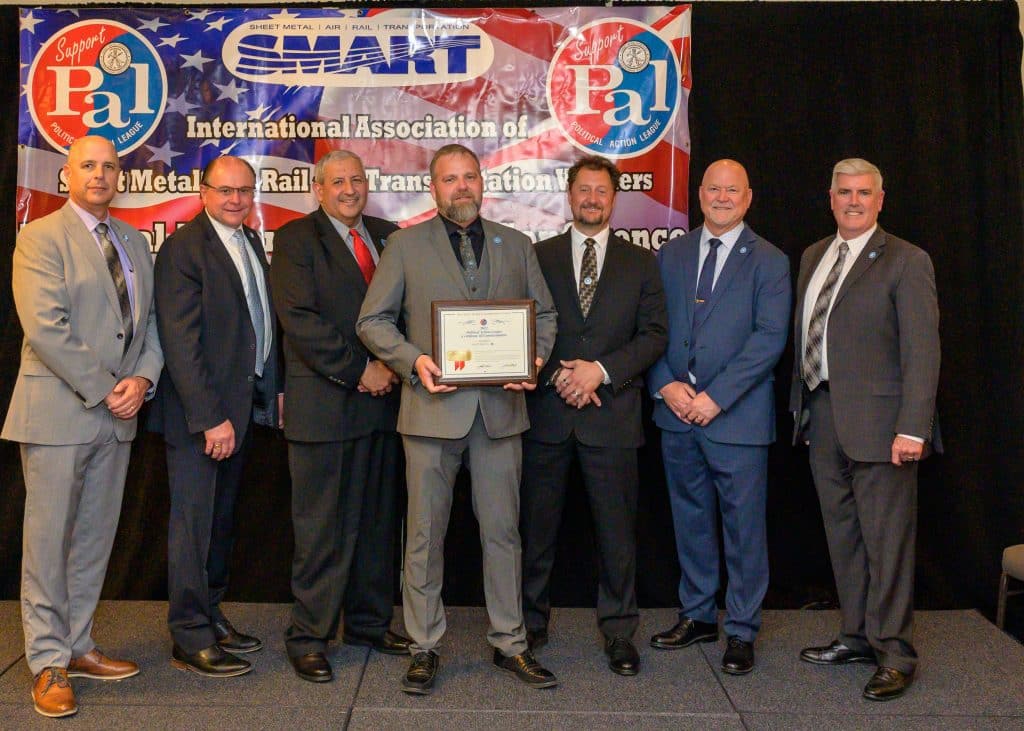
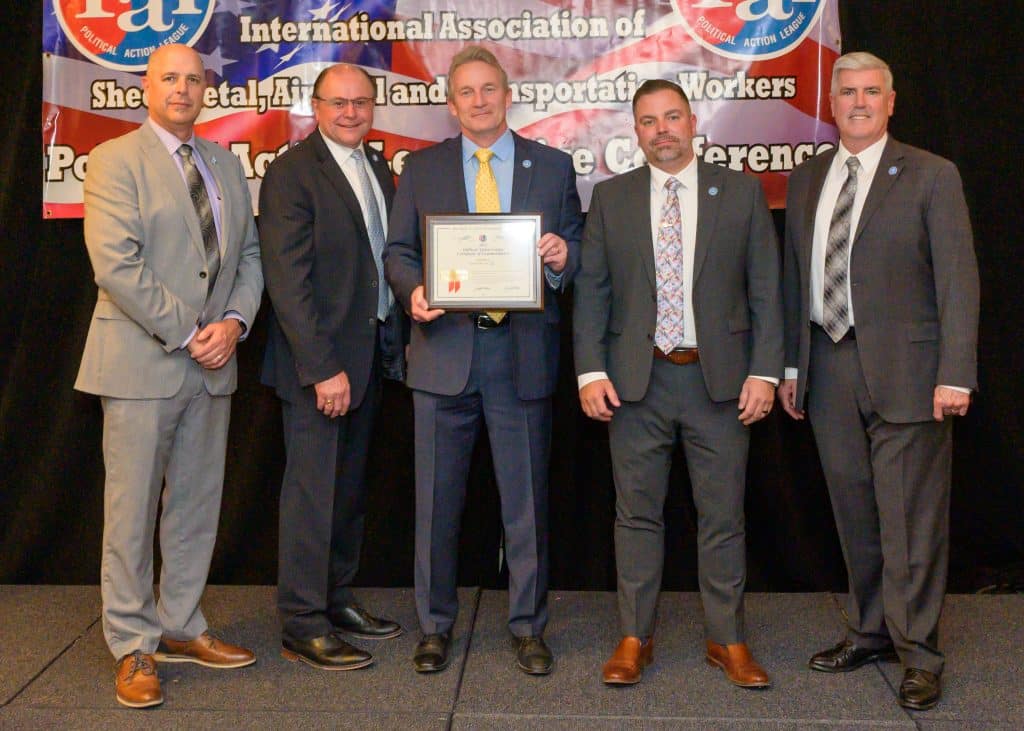
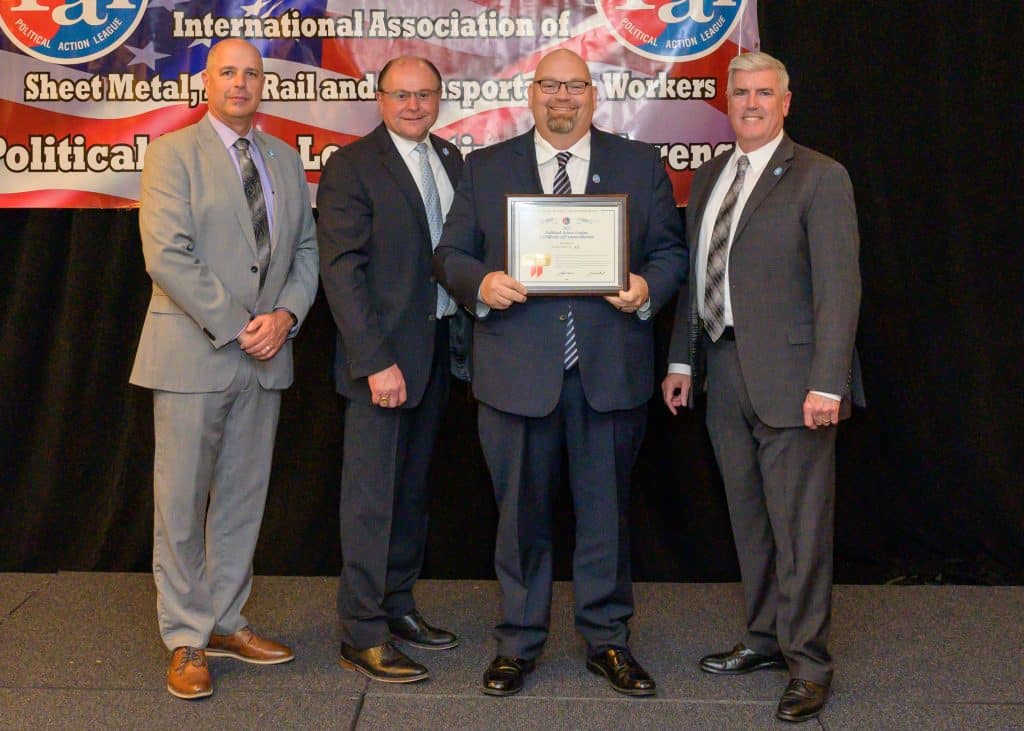
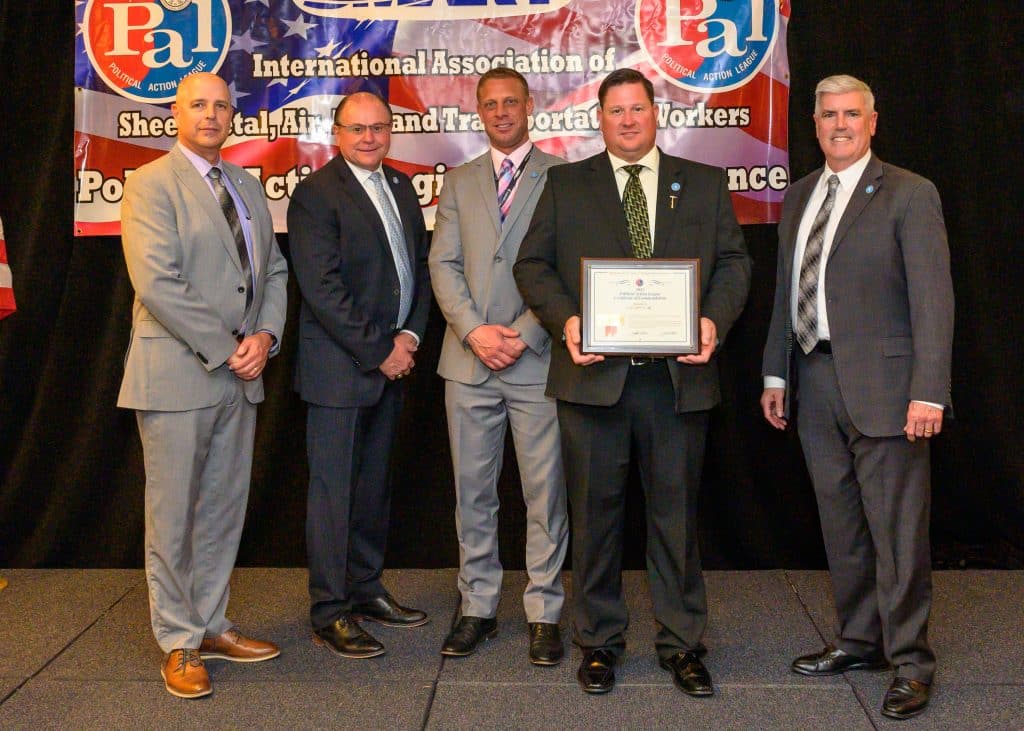
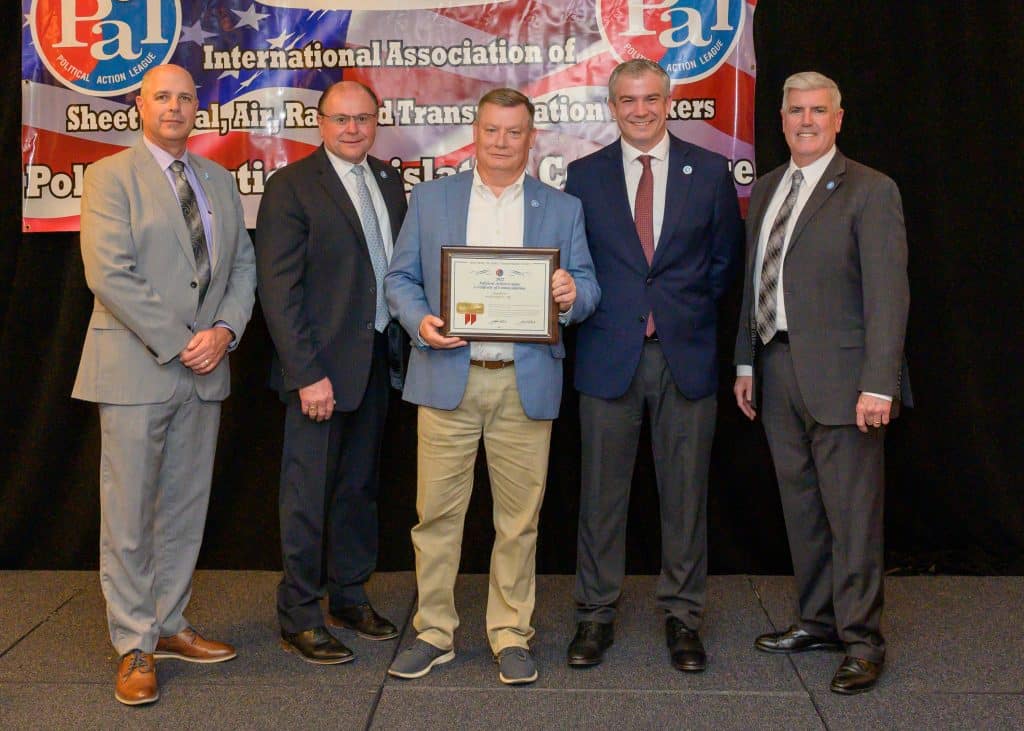
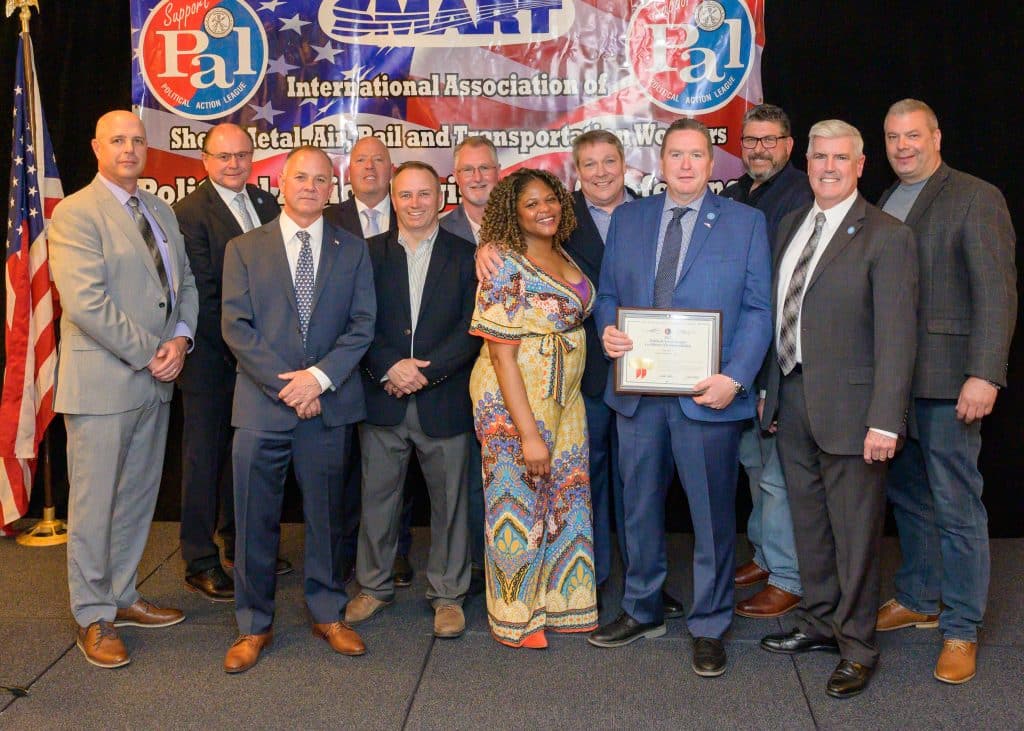
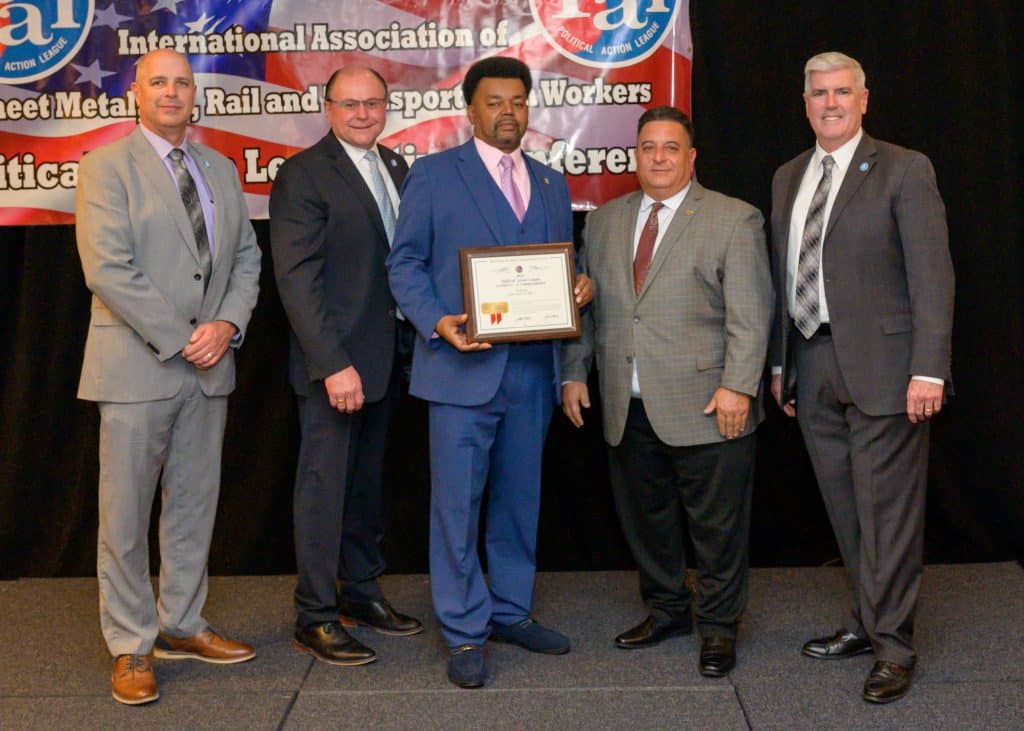
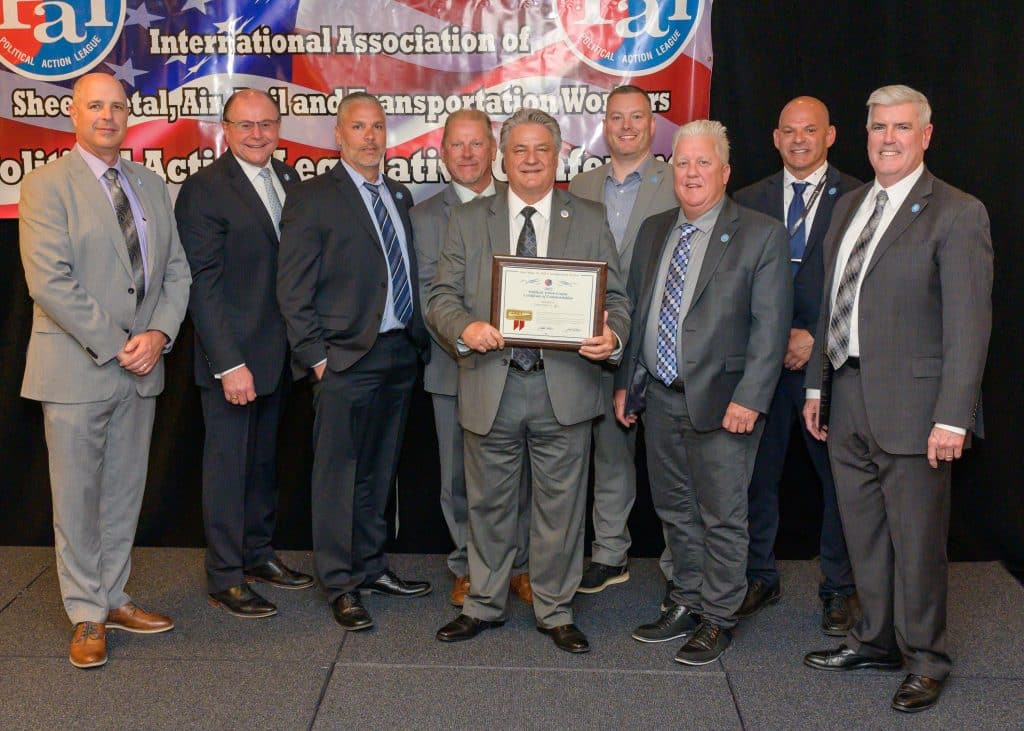
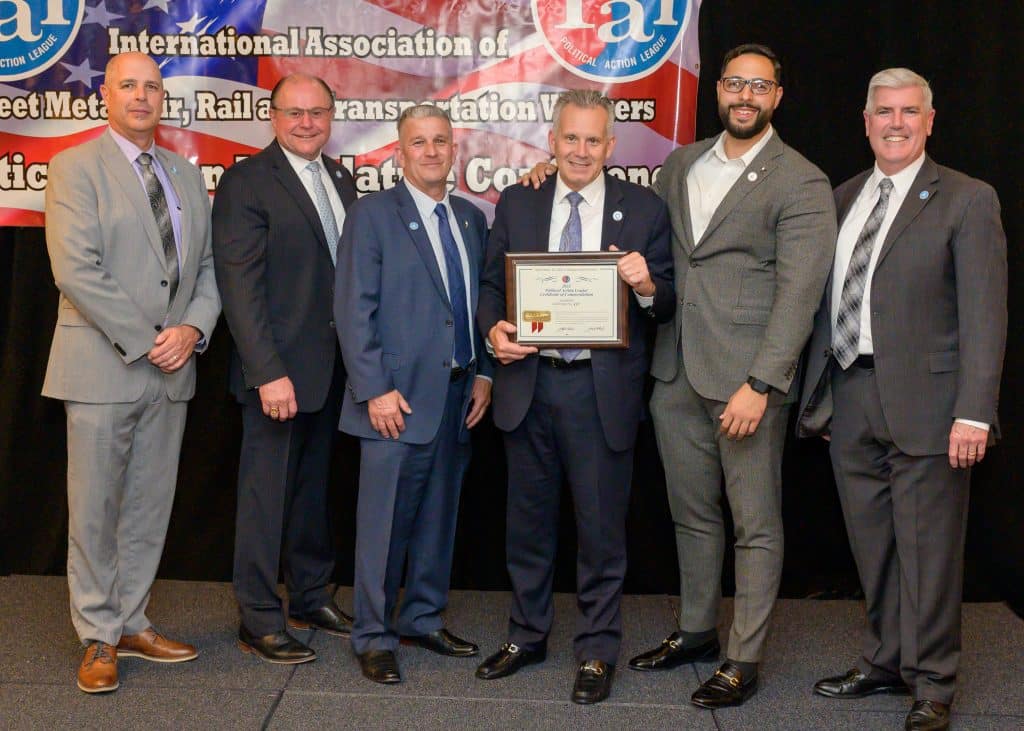
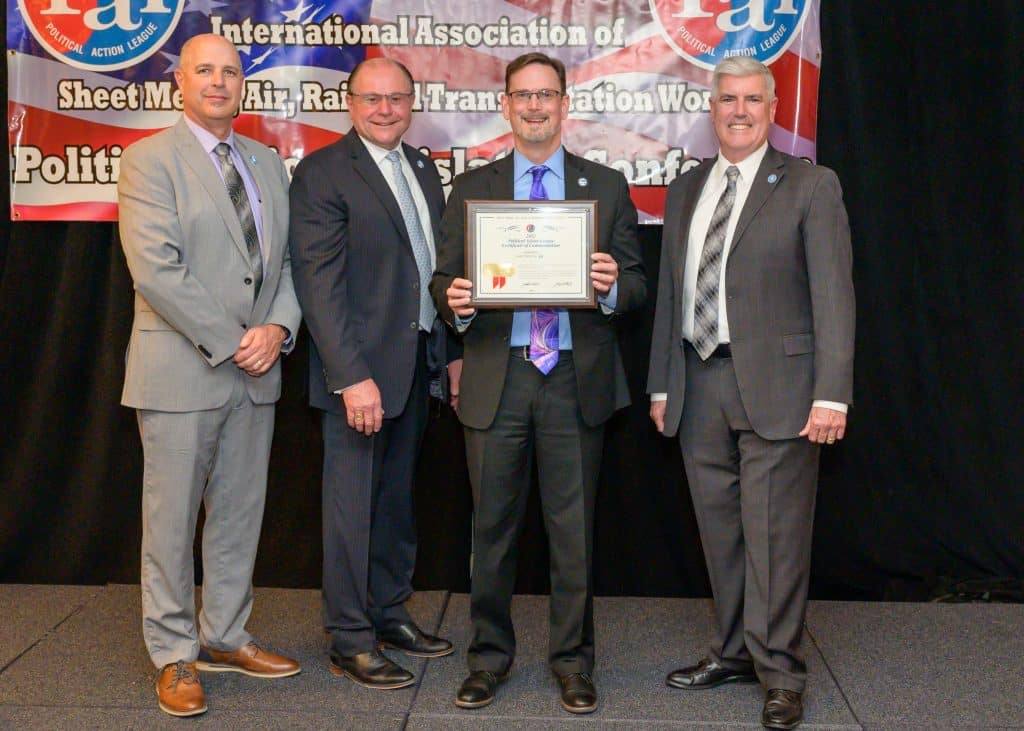
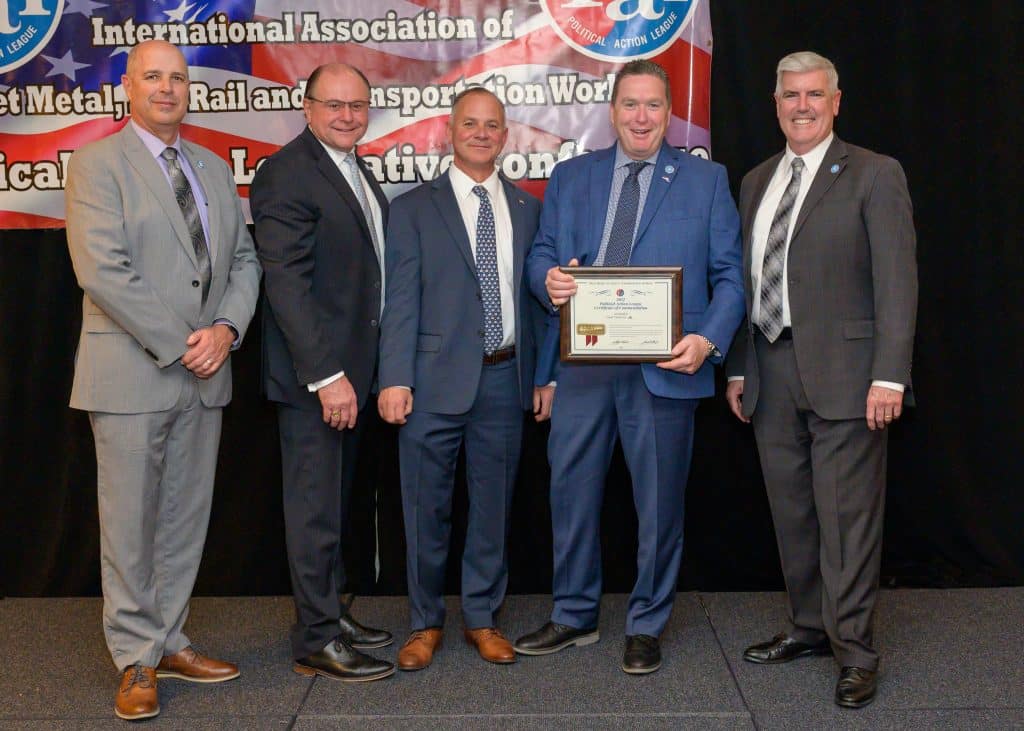
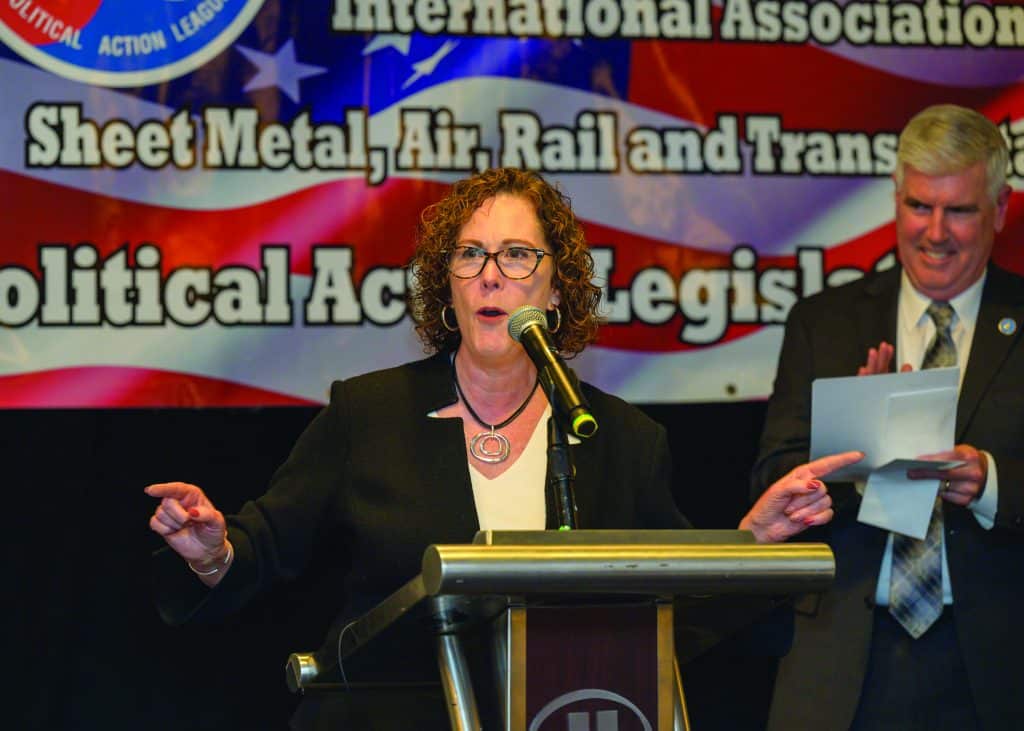
During SMART’s reception at the NABTU Legislative Conference, former General President Joseph Sellers presented plaques to the previous year’s top 31 contributors to the SMART Political Action League (PAL). PAL contributions by local union members enable SMART to support candidates who act on members’ behalf. Congratulations to the top 31! View pictures from the reception here.

  1. Local 293 (Honolulu, Hawaii)
  2. Local 40 (Hartford, Conn.)
  3. Local 66 (Seattle, Wash.)
  4. Local 137 (New York, N.Y.)
  5. Local 27 (southern New Jersey)
  6. Local 25 (northern New Jersey)
  7. Local 17 (eastern Massachusetts)
  8. Local 71 (Buffalo, N.Y.)
  9. Local 265 (Dupage County, Ill.)
  10. Local 36 (St. Louis, Mo.)
  11. Local 435 (Jacksonville, Fla.)
  12. Local 22 (Union, Morris,
    Somerset, Sussex counties, N.J.)
  13. Local 88 (Las Vegas, Nev.)
  14. Local 399 (Charleston, S.C.)
  15. Local 112 (Elmira, N.Y.)
  16. Local 15 (central Florida)
  17. Local 441 (Mobile, Ala.)
  18. Local 44 (northeastern
    Pennsylvania)
  19. Local 206 (San Diego, Calif.)
  20. Local 63 (western Massachusetts)
  21. Local 20 (Indianapolis, Ind.)
  22. Local 105 (Los Angeles, Calif.)
  23. Local 104 (San Francisco, Calif.)
  24. Local 33 (northern Ohio)
  25. Local 80 (Detroit, Mich.)
  26. Local 218 (Springeld, Ill.)
  27. Local 54 (Houston, Texas)
  28. Local 28 (New York, N.Y.)
  29. Local 12 (southwestern
    Pennsylvania)
  30. Local 38 (Westchester and
    Rockland counties, N.Y.)
  31. Local 7 (Lansing, Mich.)

The theme of the 2023 SMART Leadership Conference was “This Is Our Time!” In recognition of this important moment — for both our union and the industry — we invite SMART members to practice the five skills of the BE4ALL (Belonging and Excellence for All) leader.

These core skills help to create welcoming workspaces that foster belonging for all. They are also consistent with the vision and mission of BE4ALL, a joint initiative supported by SMART, SMACNA and the International Training Institute (ITI).

The five practices:

1. Intergroup contact. BE4ALL leaders make intergroup contact a daily practice. Intergroup contact requires that leaders step out of their comfort zone to engage people who are different (or those they perceive to be different). If done on a regular basis, this practice can be life changing. In the book Biased: Uncovering the Hidden Prejudice That Shapes What We See, Think, and Do, author Jennifer Eberhardt, a Stanford social psychologist, notes that “personal connections can override the power exerted by implicit bias.” There are several ways to practice intergroup contact. In the workplace, the strategy may involve regular lunch meetings or check-ins with coworkers in which two people get to know each other beyond job titles and roles. In private life, intergroup contact could take the form of participating in a diverse social club or community association.

2. Micro-affirmations. BE4ALL leaders also practice micro-affirmations. Micro-affirmations are small — but important — ways that we can acknowledge the humanity, dignity and worth of others. They include:

  • Name recognition. Asking a person for their name, and then remembering and repeating their name later, is one of the most powerful ways that we can signal to another person: “I see you.” “You matter.”
  • Life events. Inquiring about important events in people’s lives. These include birthdays, anniversaries and important holidays. You can record the dates in your calendar – then, when an important date arrives, take a moment to acknowledge the person by sending a card, email or text.
  • Feedback and affirmation. Take time to give other people feedback (positive or otherwise). But remember, for feedback to be effective, it needs to be specific and genuine. It’s also important that you have enough of a relationship with the other person that they will be open to receiving what you have to say.

3. Non-biased decision-making. In the Bias and Belonging training sessions conducted by the ITI, instructors offer several tools to assist with non-biased decision-making. These tools include the use of mental scripts. A simple mental script goes like this:

What if I’m wrong, and what’s happening in this situation is not (what I think it is)? But, instead, it’s (something else).

For example, what if the reason why the apprentice has been late three days in a row has nothing to do with a lack of work ethic? Instead, maybe the person is homeless and sleeping in their car.

Mental scripts invite us to pause and challenge our assumptions before making a decision.

4. Courageous conversations. BE4ALL leaders regularly practice courageous conversations. A courageous conversation is an exchange between two people. Usually, the conversation is initiated in one of two situations: a) when we feel that we have been wronged by another person and/or; b) when we have done or said something (real or perceived) to wrong another person.

In a recent article, we laid out the seven “As” of a courageous conversation.

But there are two that are foundational for every leader. They are

  • Anchoring: Preparing yourself — mentally and emotionally — before the conversation. This provides a reserve of energy to tap into for what can be a long and uncomfortable process. Preparation may include listening to music or going for a walk or run.
  • Acknowledging: Share with the person ways that you may have contributed to the problem or tension. To do this, simply say: “I want to acknowledge that, at times, I can be (or I may have done) ______________. And this may have contributed to the problem or tension we have.

The above practice is often referred to as looking in the mirror leadership versus looking out the window (where we blame and point fingers at others).

5. Remembrance and repair – the two “Rs” of history. Finally, the effective leader takes the time to understand the history of diverse groups. In BE4ALL Learning Journey sessions, we often talk about the two “Rs” of history — remembrance and repair. Remembrance is the practice of reflecting on the past, and looking for lessons that we can apply to the future. Repair is the practice of taking action — as individuals or through our organizations — to repair any harm caused by the past, and to ensure that the past does not repeat itself.

One of the easiest ways to practice remembrance is by visiting museums, either in person or virtually. Below are several resources — each with virtual exhibitions, teaching resources and more that can be accessed via each resource’s website — that leaders can use to support their practice work. Do not just “visit” the exhibits once. Instead, make it a ritual.

The exhibits and resources are:

National Museum of the American Indian (NMAI). The NMAI collects and preserves the world’s most expansive collections of Native artifacts and is committed to serving the greater public as an honest and thoughtful conduit to Native cultures — present and past — in all their richness, depth and diversity.

Asian Pacific American Center (APAC). Bringing history, art and culture to you through innovative museum experiences and digital initiatives with the goal of enriching the American story with the voices of Asian Pacific Americans.

LGBTQ+ History. Resources curated by the Smithsonian with LGBTQ+ connections, including archival collections, videos and online exhibits.

National Museum of African American History and Culture (NMAAHC). Devoted exclusively to the documentation of African American life, history and culture.

American Women’s History Museum. Decades in the making, the American Women’s History Museum’s physical location is not yet complete. With a digital-first mission and focus, the online museum amplifies a diversity of women’s voices, highlighting contributions women have made to America’s most defining moments.

Museum of the American Latino. Currently being built to recognize the accomplishments, history and culture of Latino communities.

United States Holocaust Memorial Museum. A living memorial to the Holocaust, the United States Holocaust Memorial Museum inspires citizens and leaders world-wide to confront hatred, prevent genocide and promote human dignity.

North America’s Building Trades Unions (NABTU) hosted the Mikva Challenge’s annual “Democracy is a Verb!” celebratory reception on Sunday, April 23 in Washington, DC. During the reception, Mikva Challenge — whose mission is “to develop youth to be empowered, informed, and active citizens who will promote a just and equitable society” — honored former SMART General President Joe Sellers with the organization’s Legacy Award, recognizing his contributions to and support for the program and local communities.

Sean McGarvey, president of NABTU, introduced Sellers. “Joe is very involved in apprenticeship and training, since back at Local 19. Some of the progressive programs he put together at SMART have been fantastic.” He added that Sellers “is like a steady rock. He’s always there. He’s always there with you. He’s been there for SMART members, and he extended that to groups like Mikva.”

Sellers then took the stage, telling Mikva Challenge: “Your civic engagement is unmatched, and the issues you’re working on are vitally important to not only your neighborhood but our country. Listening to what you do enthused me to make a difference in the way you’re making a difference.”

Founded in 1998, the Mikva Challenge began as a small pilot program with an all-volunteer staff in four Chicago schools; 23 years later, Mikva has grown to serve over 17 states, 3,200 teachers and 135,000 students annually. According to the organization’s website, Mikva has spent the last two decades developing an education model based on the principles that: 1. Youth voice matters; 2. Youth are experts on the issues that affect them; 3. Our communities and schools are stronger when youth leaders are involved in all aspects of civic life.

“I am impressed with how you create goals and you follow those goals with action plans,” Sellers remarked to reception attendees. “And there is nothing that gets me more jazzed up than action plans!”

The Mikva Challenge provides schools with strategies and tools to engage young people in high quality, student-centered learning about the democratic process — an objective that aligns with the way SMART provides state-of-the-art training to apprentices while encouraging members to engage with their local union. Mikva’s programs are designed to develop social and emotional skills, critical thinking, communication and collaboration. The organization also focuses on improving school and community culture while enhancing teacher effectiveness through inquiry-driven, project-based study, creating opportunities for engaging in democracy.

Sellers concluded his remarks by addressing Mikva students.

“Make sure you understand about our apprenticeship programs,” he said. “Our goals are aligned with yours, and with an apprenticeship you can go back and harness your power as a union member to amplify your voice.”

From May 15–19, 2023, the SMART Recruitment and Retention Council — along with the Roofing and Building Enclosure and Production and Sign Councils — met in Memphis, Tennessee, where SMART leaders from across the United States and Canada reviewed and planned out activities for the year and beyond.

With the continent-wide need for workers at a generational high, now is the time for locals to recruit new members and apprentices for upcoming megaprojects in both nations. Lauren Sugarman and Lark Jackson from Chicago Women in the Trades discussed recruitment strategies to build a diverse pool of potential members to strengthen the union. Tiffany Finck-Haynes from the SMART Government Affairs Department gave an overview of federal funding available to local JATCs to assist with recruitment and retention of members from across all ethnic and gender backgrounds.

Darrell Roberts, SMART’s assistant to the general president, and Josh Garner from the SMART International Organizing Department led a presentation on recruitment tactics, while SMART-TD Chief of Staff Jerry Gibson led a discussion on recruitment and retention and its unique role in the industries the SMART Transportation Division represents. He was joined by John Pitts (organizer from SMART-TD Local 608), James Sandoval (general chairperson for SMART-TD Local 0023) and Chad Yokoyama (SMART-TD Local 1687).

Michael Childers speaks to SMART councilmembers.

Attendees at the Roofing and Building Enclosure Council meeting were also updated on cutting-edge tools and training for new panel systems. These will give SMART architectural sheet metal workers and roofers a leg up over the nonunion competition as SMART continues to expand market share and collective bargaining power for members.

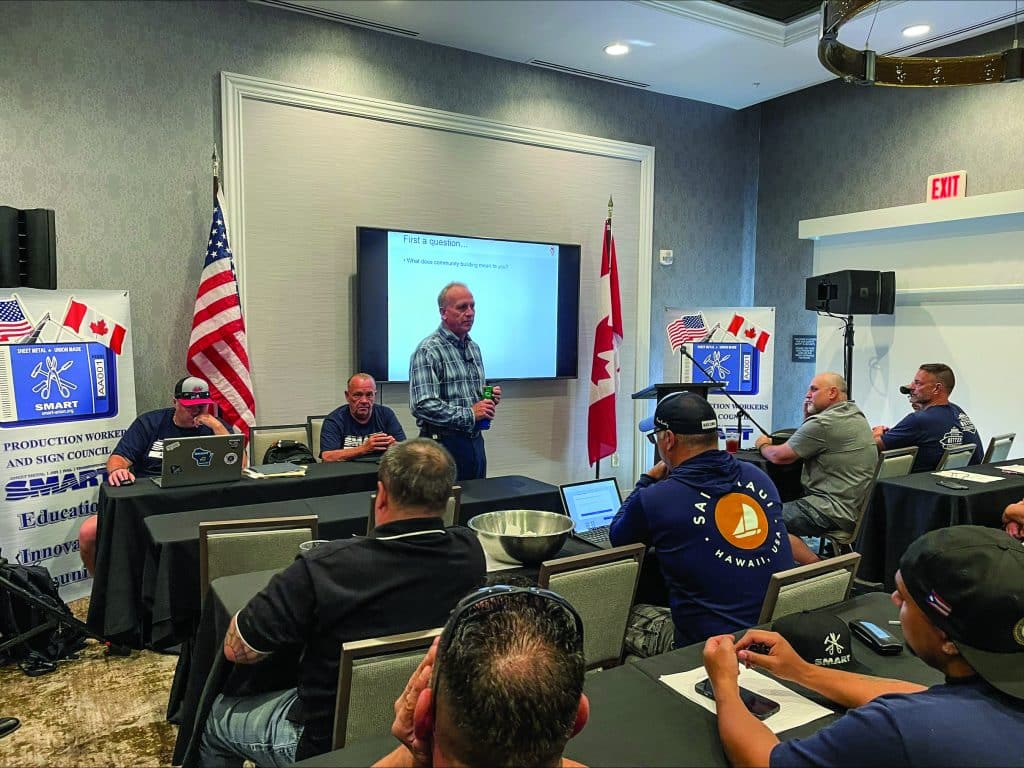
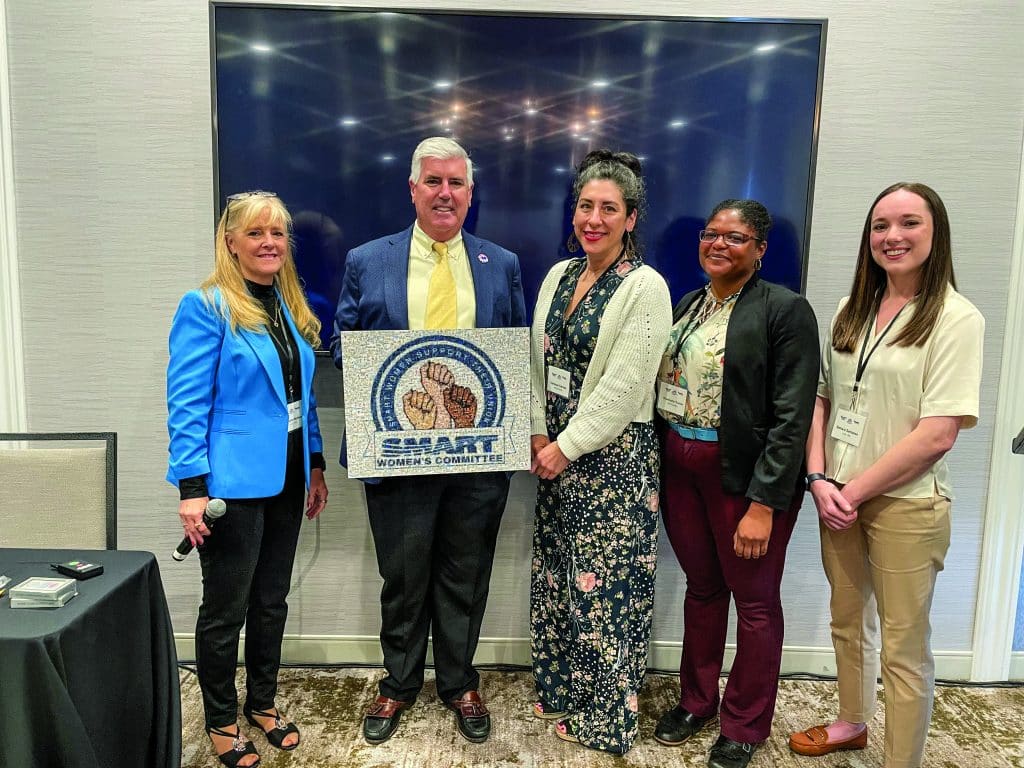
The Production and Sign Council heard from Michael Childers, the department co-chair of the School for Workers at the University of Wisconsin-Madison. Childers spoke about the collaboration between the labor movement and civil rights movements, and how that solidarity translates to work being done today as SMART looks to spread our message of opportunity to people of all races and backgrounds. Local 464 (Ponca City, Okla.) Business Manager Mechelle McNew, a longtime leader on the council and founding member of the SMART Women’s Committee, was also honored at the close of the council meetings for her contributions to the organization as one of the first woman leaders in the SMART sheet metal industry.

Former SMART General President Joseph Sellers and General President Mike Coleman addressed attendees at all three meetings and updated them on progress at the International level. Each committee later honored General President Sellers for his contributions to the union and the substantial progress made during his time in office. Among the items Sellers received was a fishing rod to use during his retirement, when he will have the chance to spend time with his family.

Remarking at the end of a presentation from the SMART Women’s Committee, whose members were also in attendance, Sellers noted that he “looks forward to seeing the work you continue to do, because you’re shaping SMART.”

SMART Army lands in Memphis

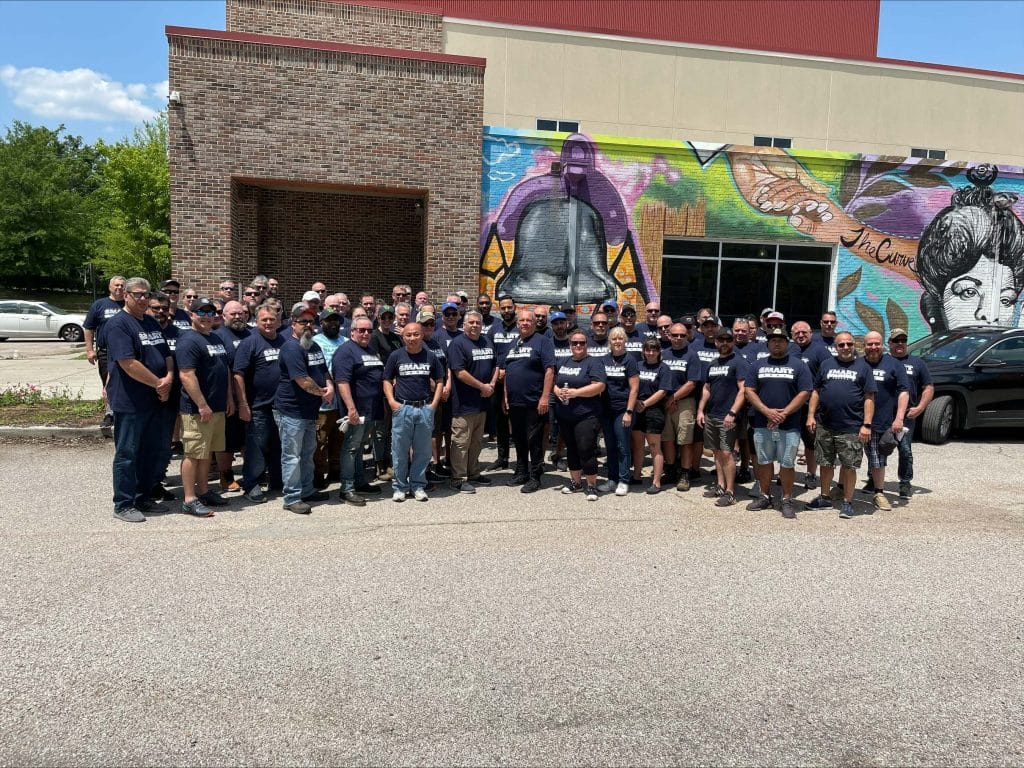
On Thursday, May 18, members of SMART Local 4 in Memphis were joined by SMART members across North America for a community litter cleanup in historic Soulsville, where union members also helped repair and plant in Urban Forest and Community Garden. Following the event, the SMART Army presented a $21,100 check to Memphis City Beautiful, the nation’s oldest beautification commission.

“As part of our Recruitment and Retention Council, Roofing and Building Enclosure Council and Production and Sign Council meetings in Memphis this week, we decided to collectively do what our union does best: uplift working families in local communities,” said SMART General President Michael Coleman, who participated in the volunteer event. “We are proud to partner with organizations like Memphis City Beautiful and the Urban Forest and Community Garden to give back to the neighborhoods in which our members live and work.”
Congresswoman Craig

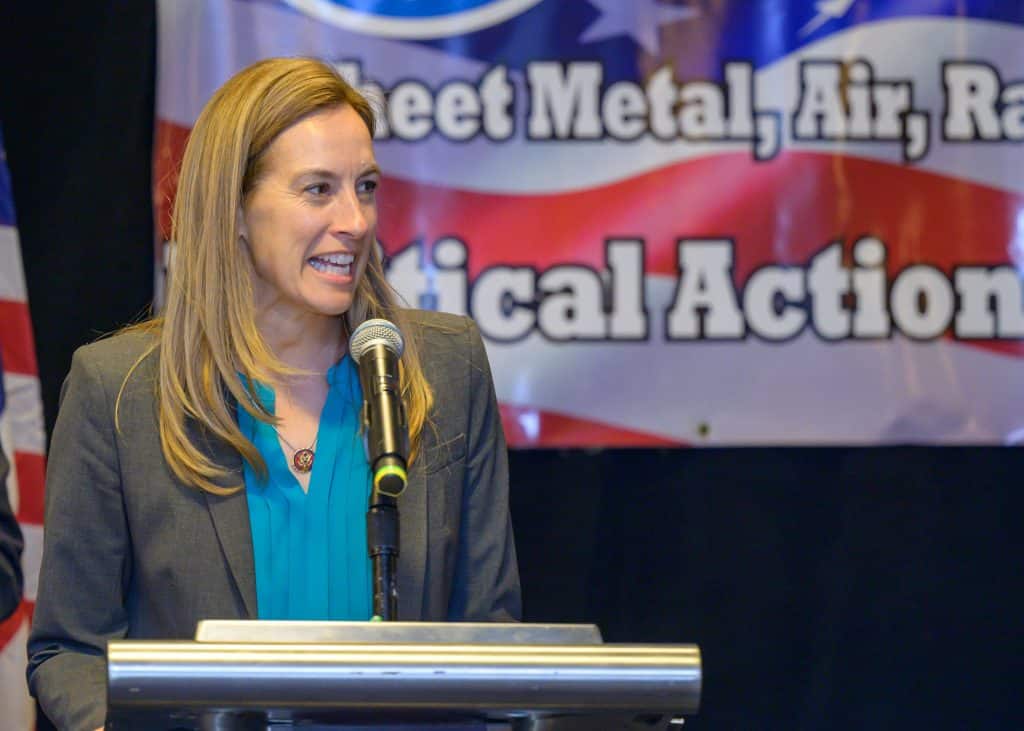
SMART’s political advocacy has paid off during recent years, as pro-labor members of Congress voted to invest in our jobs and our industries with the American Rescue Plan, the Bipartisan Infrastructure law, the CHIPS and Science Act and the Inflation Reduction Act. International and local union leaders continue to forge political relationships in order to benefit members across the country — and in April, the strength of those relationships was made clear, as congressional leaders from both parties stopped by SMART’s reception during the North America’s Building Trades Unions (NABTU) Legislative Conference.

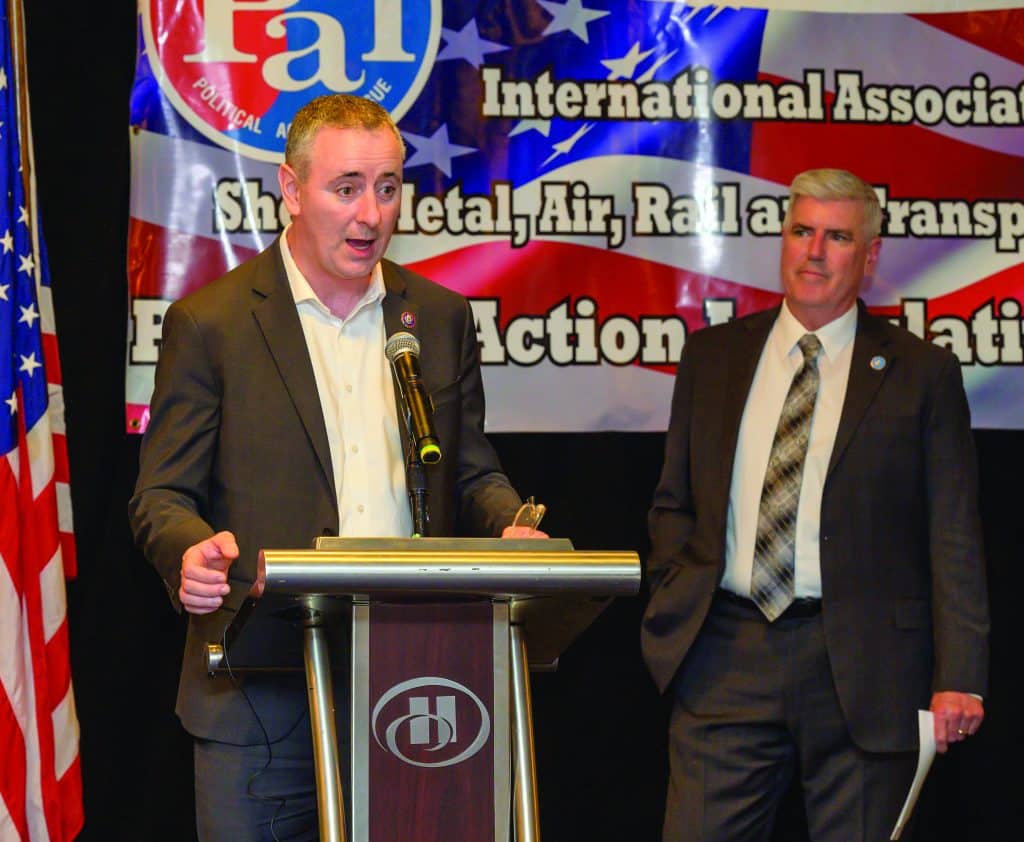
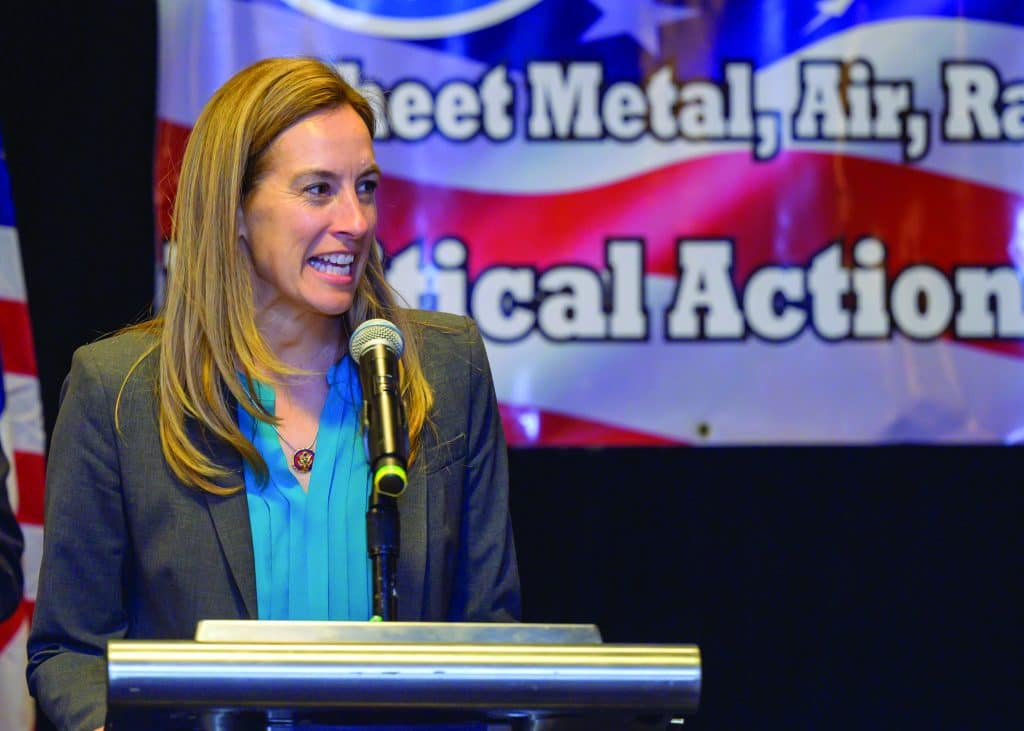
SMART members in attendance heard from Reps. Mikie Sherrill (D-N.J.), Angie Craig (D-Minn.), Nannette Barragán (D-Calif.), Brian Fitzpatrick (R-Pa.) and Valerie Hoyle (D-Ore.). Members in each representative’s respective state turned out in force to put those candidates in office; in return, each candidate has acted on our behalf: from introducing legislation to bring labor to the table on workforce training standards, to voting to pass the Protecting the Right to Organize (PRO) Act.

“I’m standing here today because of labor,” Craig said before urging Local 10 (Minnesota) members to leave to watch the Minnesota Wild playoff hockey game. “You knocked so many damn doors, and I promise I will be here for you every damn day.”
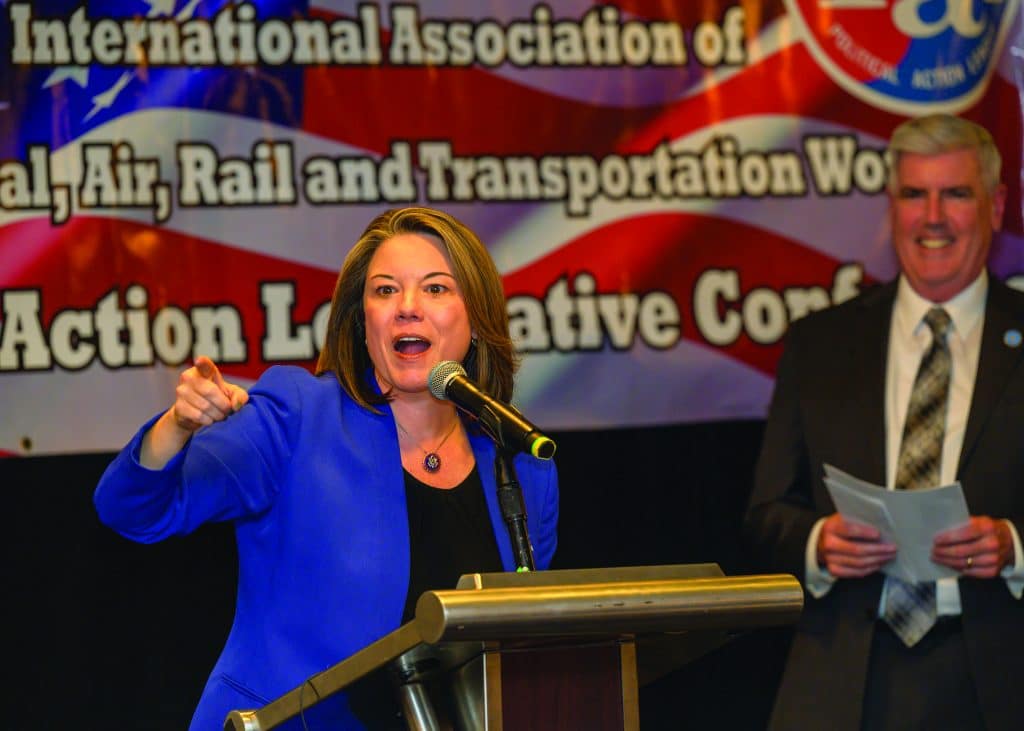
Congresswoman Hoyle

“I can guarantee to all of you that I’m never going to stop fighting for you,” Hoyle declared later. The former UNITE HERE member added: “If you come into my office, I’ve got hard hat stickers from SMART, I’ve got my AFL-CIO posters up — you walk into my office, you know it is a union office.”
SMART members also heard from Local 19 (Philadelphia, Pa.) President and Business Manager Gary Masino, who is currently running for city council to represent Northeast Philadelphia. Masino was born and raised in Northeast Philly — he knows from experience that working people need a champion for their interests in office. As councilmember, he vowed to work tirelessly for safer streets, jobs that pay livable wages and to invest in Philadelphia schools.

“I’m going to fight for labor and do everything I can to make Philadelphia a union town again,” Masino said.

SMART’s relentless political advocacy over recent years has helped foster massive infrastructure investment on both public and private projects. From New York state, to Central Ohio, to Arizona and well beyond, megaprojects are creating tens of thousands of jobs for SMART sheet metal workers — all with a presidential administration that is pushing hard for these projects to include strong labor standards that create union jobs.

“Right now we’re tracking close to 300 megaprojects — we know that there will be about 60 that will break ground, are currently started or will be starting this year,” said SMART Chief International Representative Scott Parks. “It wasn’t that long ago that a $1 million sheet metal job was very exciting; now we have 60 megaprojects in the pipeline. It’s a good time to be a sheet metal worker.”

Much of the public funding for these projects comes from legislation passed by the Biden administration: the American Rescue Plan, the Bipartisan Infrastructure Law, the CHIPS and Science Act and the Inflation Reduction Act. Due to the unprecedented role labor has played in the passage and assembly of those laws, companies hoping to take advantage of funding and tax incentives are being pushed to build with strong labor standards in place, bringing good, union jobs to projects breaking ground from coast to coast.

Importantly, Parks pointed out, these jobs require a consistent sheet metal presence, keeping our members at work as technology advances, during retooling and reorganization, and during outages and shutdowns. And the specific skills and crafts required on such projects cover nearly all the sheet metal positions that SMART represents: from frontline supervisors, to testers and balancers, to welders, to everyone else.

“If you can imagine balancing a project that could require 100 balancers — geographically, you may only have 100 balancers in two states,” he explained. “So we’re going to be challenged to make sure we tool up our members so that they’re prepared to take care of these projects.”

The bounty of work on the horizon has created an unprecedented moment of opportunity. According to Parks, the current number of megaprojects breaking ground means one can almost make a projection 10 years out — a far cry from the post-2008 years, when SMART leadership balked at speculating even two or three years into the future. But with that opportunity comes new responsibility.

“We are not going to be able to apprentice our way into the workforce we need to meet these demands — we are not going to be able to do things the way we have always done it in the past, period,” explained SMART General President Michael Coleman. “We have got to put an exceptional focus on organizing, recruiting and retaining in every community.”

SMART members and local unions know the differences between a union career and a nonunion gig: stability, family-sustaining pay and benefits, solidarity and safety on the job, to name only a few. Now, with hundreds of huge jobs breaking ground from Oregon to Atlanta — on top of SMART local unions’ core work — the time is now to bring members into our union.

“When it comes to organizing and recruiting, we’re organizing shops, we’re organizing projects — folks who want to be union sheet metal workers, we’ll bring them in,” Parks explained. “If they’re in an apprenticeship program that may not be a sheet metal apprenticeship program, we’re bringing them in so they have the best chance of success moving forward. If someone comes in as a nonunion journeyperson, that’s great too — we want everyone.”

Many of these projects may provide SMART members in other locations with the opportunity to travel for work. For more information on traveling to jobsites, contact your local business manager and visit the SMART sheet metal job bank.

The explosion of megaprojects in North America, combined with ongoing core work in the sheet metal industry, is creating previously-unheard- of workforce demands for local SMART unions across the continent — not just in the next few years, but the next several decades. In response, SMART, SMACNA, the International Training Institute and other industry stakeholders have launched a variety of initiatives to bring young people into the trade and expand beyond recruiting through word of mouth.

“The industry is going to change moving forward, and it’s vital that we evolve with it,” remarked SMART General President Mike Coleman. “If we are going to achieve the growth required in upcoming years, we need to make sure we’re recruiting in all the communities in which we live and work, bringing in apprentices from all backgrounds.”

One program has already proven successful in that regard.

Heavy Metal Summer Experience (HMSE) is a six-week-long summer career exploration camp that introduces high school students and recent graduates to careers in the building trades through hands-on projects, working alongside skilled tradespeople and discovering local apprenticeship training opportunities. Founded by Angie Simon, past president of SMACNA and retired CEO of Western Allied Mechanical, the program seeks to engage young people who may not otherwise know about our trade and give them the opportunity to learn directly from SMART sheet metal workers, among others. This can be particularly beneficial for young people in underserved areas — giving our union the chance to establish a foothold in communities where we may previously have been absent.

The camp began as a trial program at Western Allied Mechanical in Union City, California and Hermanson Company in Seattle, Washington in 2021. Since then, it has expanded across the country, producing success stories along the way. SNIPS NEWS recently profiled Alejandra, a Local 66 (Seattle) apprentice who found her way to the trade via HMSE.

“I didn’t know exactly where I was going. I didn’t have the funds to go to college or university, and I heard about this program, the Heavy Metal Summer Experience,” she told SNIPS. “I attended and they introduced me to the trades — more sheet metal focused — but they did touch on most trades. They told me that they would pay me to learn, and I was sold.”

Alejandra’s experience demonstrates the importance of programs like Heavy Metal Summer Experience in raising public awareness and providing pathways into the trade for women, people of color and others from historically underrepresented communities. By bringing in those members, local unions can expand their reach and grow their strength well into the future.

“These megaprojects and the organizing and recruiting we do now won’t just impact the next few years — these are chances to provide good, family-sustaining careers for generations to come,” Coleman concluded. “By engaging with programs such as Heavy Metal Summer Experience, local unions can help secure a legacy in their communities for the long term.”

Local unions and interested members can find more information at HMSE.org.