Public transit is crucial for SMART members and working families in Illinois. The state’s public transportation system, the second largest in the country, helps people get where they need to be every day — and provides jobs for rail workers, transit operators and tradespeople.

But earlier in the year, as a result of funding issues, Metra and other transit agencies in the Chicago area had proposed service cuts of approximately 40% — which would have had devastating consequences for SMART-TD members, Railroad, Mechanical and Engineering members, and union sheet metal workers in the region.

“Metra, publicly, earlier this year, came out with what we call a ‘doomsday scenario,’” explained SMART-TD Illinois Safety and Legislative Director Robert Guy, referring to the funding cliff that faced transit agencies in Northern Illinois.

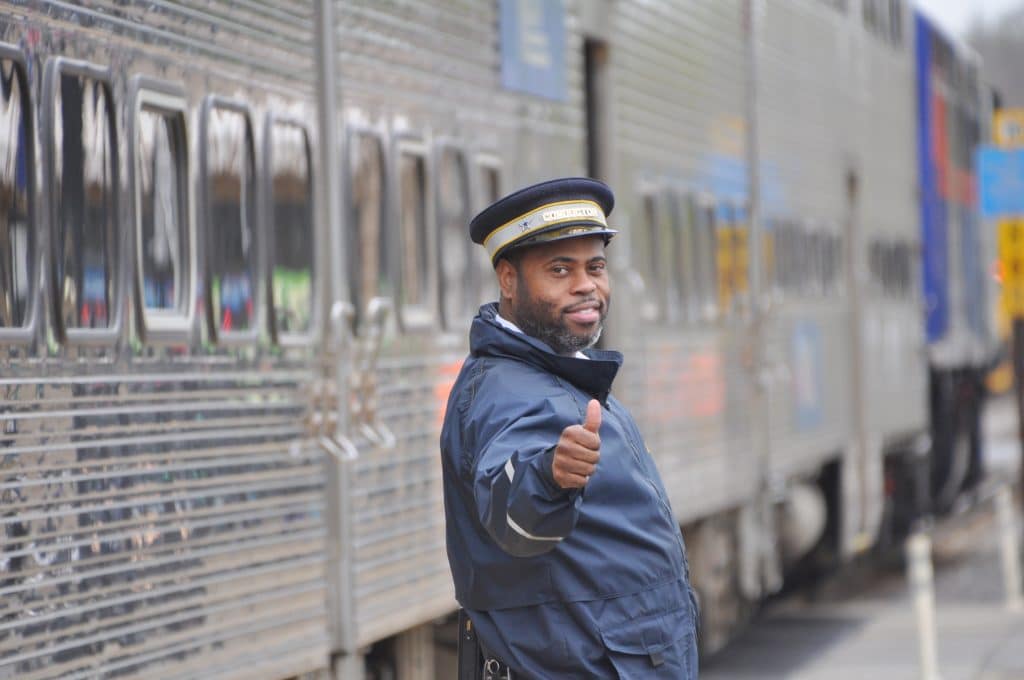
“We consider ourselves to be the face of Metra; we interact with the passengers more than any other craft,” he added. “So when you’re talking about reducing 300 on-board personnel, that would have been mostly our members. It would have been devastating.”
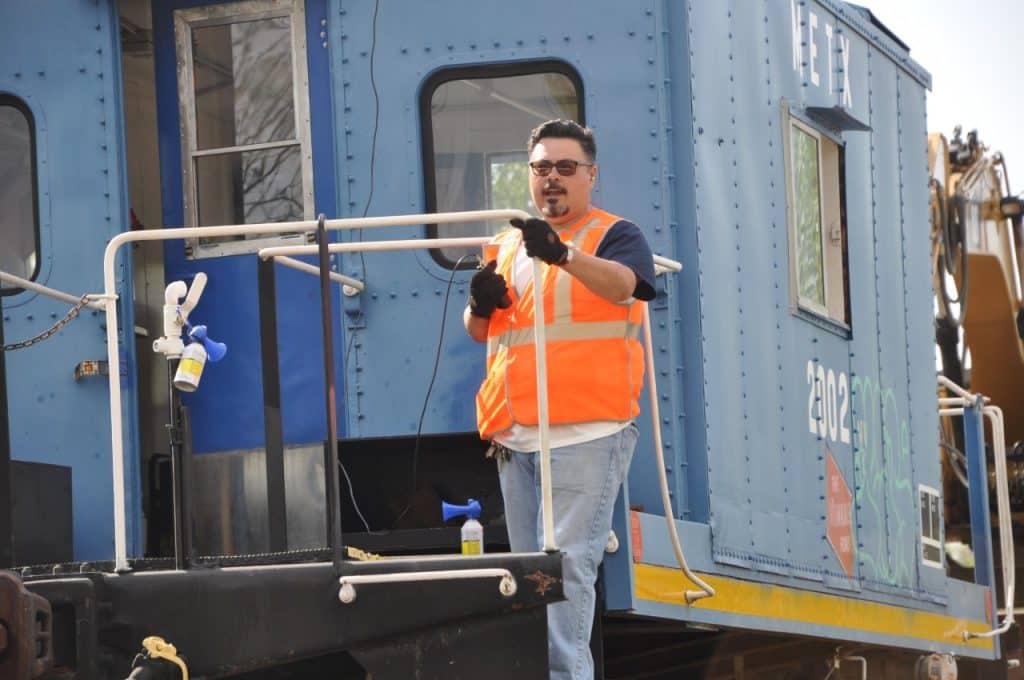
Unions united in response, creating the Labor Alliance for Public Transportation and organizing fiercely to pass transit funding legislation that would protect members’ jobs.

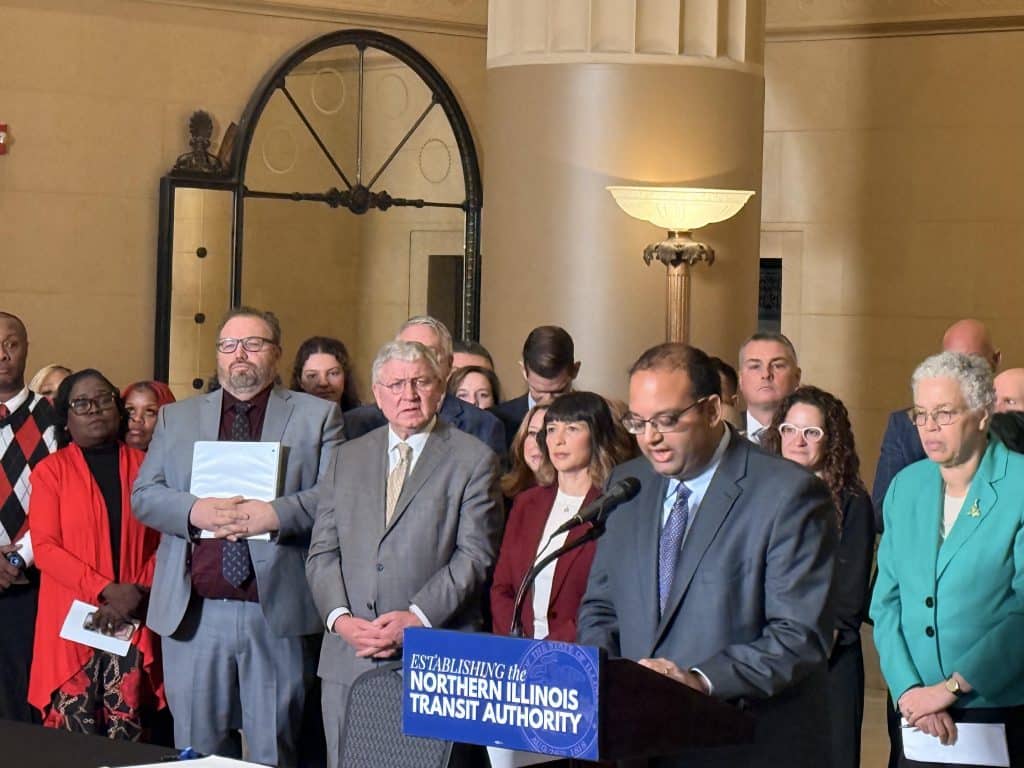
That effort paid off on December 16, 2025, when Illinois Governor J.B. Pritzker signed the Northern Illinois Transit Authority Act into law.

“Failing to address the transit fiscal cliff simply wasn’t an option, so we applaud those in the General Assembly who supported SB 2111, along with the other stakeholders and the thousands of our fellow union members of the Labor Alliance for Public Transportation for fighting every day to get this vital piece of legislation over the finish line,” Guy said.

An existential funding crisis

Back in early 2025, finding a solution for Chicagoland’s transit crisis looked anything but guaranteed.

The root of the problem dated back decades. Years of underfunding, made even worse by the Covid-19 pandemic, led to an impending fiscal cliff that would have exceeded $750 million in 2026. The only possible outcome from such an extraordinary funding shortage would have been dramatic cuts to Metra, the Chicago Transit Authority (CTA) and Pace — leading to lost jobs for SMART members and disrupting the lives of millions of people in Northern Illinois. The CTA has 309 million riders annually, while Metra and Pace have 35 million riders and 17 million riders each year, respectively.

“[Proposed service cuts] would mean less weekday service,” Guy said. “It would mean drastically reduced early morning service, late evening service, less express service, which really would have made commutes longer.”

Notably, the cuts affected not just SMART-TD members, but the SMART RME members who work on the railroad and the Chicago-area sheet metal workers who build and maintain transit infrastructure.

“This would impact SMART Railroad, Mechanical and Engineering employees, SMART-TD members as well as Local 73 members at the CTA,” said Rob Shanahan, International representative in the SMART RME Department.
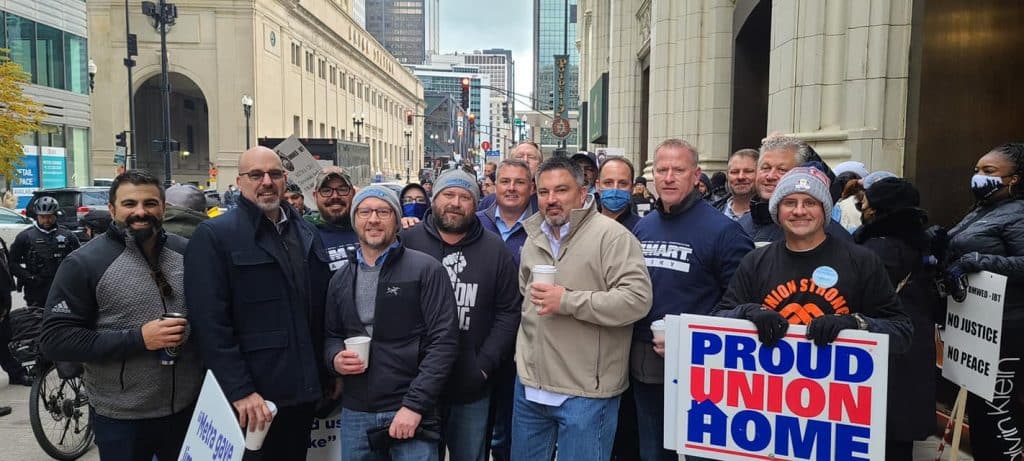
SMART-TD and sheet metal leaders joined RME members at a Chicago rally for a fair contract with Metra in 2022

Labor organizes to protect jobs, transit

The fight to save SMART members’ jobs and public transit in Northern Illinois lasted throughout 2025.

The Labor Alliance for Public Transportation lobbied in the Illinois General Assembly, fighting to win legislation that would fund public transportation, fix existing inefficiencies in the transit systems and keep members working. At the same time, union members made their voices heard, talking about what the Chicagoland transit system means to them and spreading the word about the upcoming fiscal cliff.

The most important thing throughout the process, Guy said, was solidarity.

“Everyone brought their own perspective, their experience, the stories from the membership. We stayed strong, we stayed together. If we would have cracked at all, we probably couldn’t have got this over the finish line,” he noted. “We really did work as one.”

The result? The Northern Illinois Transit Authority (NITA) Act, passed in December. The law creates a new regional authority (NITA) to oversee CTA, Metra and Pace, invests in public transit, capital projects and tollways across the state, and addresses the fiscal cliff that threatened so many SMART members’ jobs.
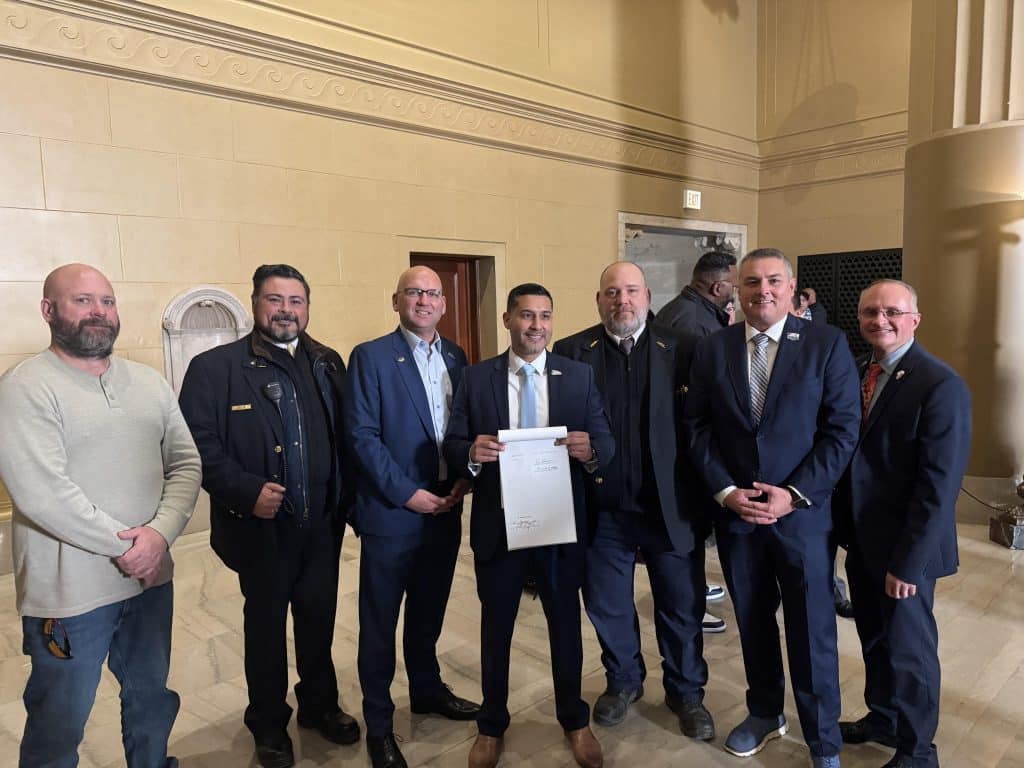
“The bill is going to provide robust funding to continue operations as they currently exist,” said Shanahan, who is a member of SMART Local 256 in Chicago. “It will offer improvements as far as potential expansion, more money to improve facilities and equipment. And finally, it provides some security and stability; it’s a long-term solution to the problem of funding transit in Illinois.”

The law calls for there to be a transition team to move from the current system to the new NITA board system. In a nod to the crucial role unions played in securing the legislation, labor will be part of the transition, Guy said.

“As we were as the legislation moved through the General Assembly, our voices will be heard to protect not only our members currently but hopefully our future members, as we look to expand transit and have a transit system worthy of 10, 15, 20 years down the line,” he concluded.
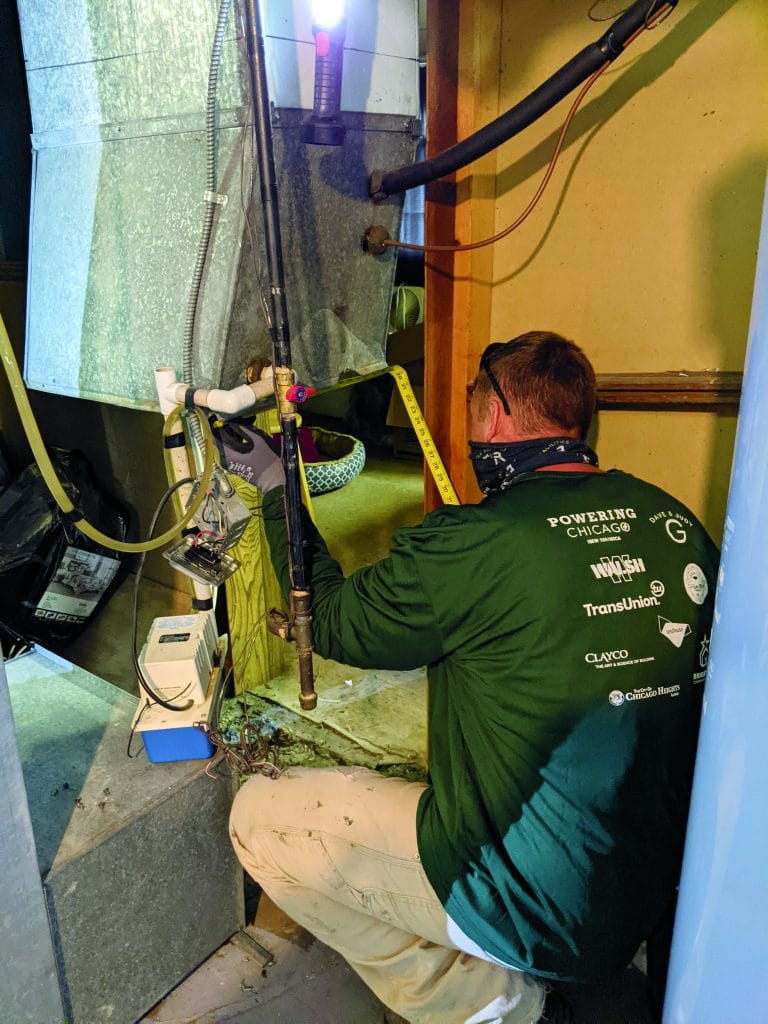
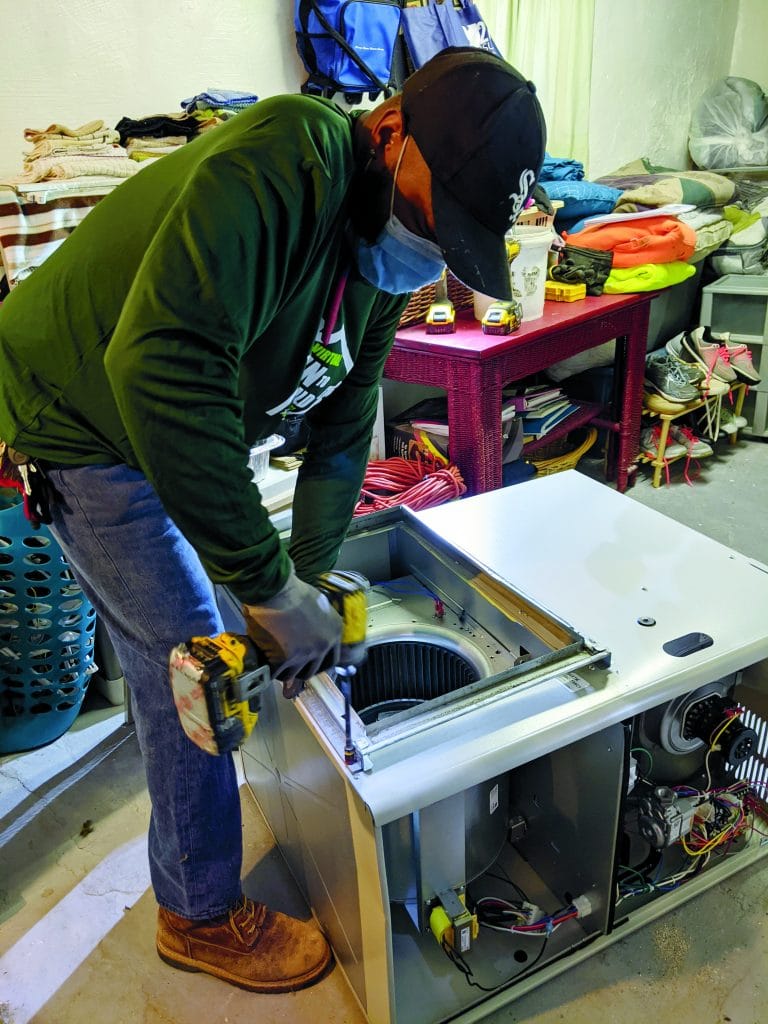
To help get through the cold winter, low-income homeowners in Chicago and Chicago Heights received free furnace and boiler tune-ups to keep them safe and warm. This initiative was the result of a partnership between Rebuilding Together Metro Chicago, SM Local 73 and SMACNA Greater Chicago.

When the risks associated with COVID-19 limited Rebuilding Together Metro Chicago’s ability to perform interior home repair, the organization met the challenge by broadening the services it provides to families and elderly homeowners. As part of this transition, Rebuilding Together Metro Chicago led an outreach effort with the intent of assessing its clients’ unique needs, while providing valuable referrals and connections to other resources in the community. From ensuring food security to providing PPE, Rebuilding Together Metro Chicago has responded to the crisis by providing a safer, more secure home environment for area residents.

In December 2020, a partnership with Local 73 and SMACNA Greater Chicago provided warmer, safer home environments for low-income families in preparation for winter. This initiative, called Warm the Metro, enlists union members and local HVAC contractors to visit more than 50 homes annually, offering free tune-up services on boilers and furnaces. This year, the Warm the Metro partnership provided tune-ups in 64 homes, plus full replacements in five.

“Furnace and boiler tune-ups are exactly the type of support our homeowners need to stay safe and warm through the winter. We are delighted to continue this partnership for a second year, and so grateful to our SMACNA and Local 73 friends,” said Wanda Ramirez, CEO of Rebuilding Together Metro Chicago.

In addition to providing improved heating efficiency, safety and indoor comfort, a regular furnace tune-up can spell the difference between a five- to 10-year and a 15- to 20-year life expectancy for a heating system. To complete the tune-ups, Rebuilding Together Metro Chicago partnered with South Suburban Heating and Air Conditioning, Inc., and RD’s HVAC, Inc. for the Warm the Metro initiative.

“The men and women of Sheet Metal Workers’ Local 73 have a long history of giving back to our community,” said Local 73 President and Business Manager Raymond Suggs. “We are proud to work with Rebuilding Together Metro Chicago to Warm the Metro in preparation for winter. The danger posed by COVID-19 makes it more important than ever to have a safe, warm, comfortable home to protect residents’ health and safety this winter. We look forward to future partnerships with Rebuilding Together Metro Chicago and continuing to provide and give back our services to those in need.”

The Chicago Tribune reported that Hunter Harrison, CEO of CSX, is at it again – killing jobs and rolling over safety measures to increase profits that benefit only a select few.
According to the report, more than 60 engineers, conductors and switchmen at Barr Yard in Chicago have been furloughed, fueling speculation that the Chicago yard may soon close.
John Risch, SMART TD national legislative director was quoted for the story:
“There’s one person to blame, and it’s E. Hunter Harrison,” Risch said. “He’s the guy that plunged into this thing forcefully and just decided to make major changes, and they’re not very well thought through.”’
Read the entire article here.

The doors of a packed Metra BNSF train opened while going 34 mph, reported the Chicago Sun-Times. No one was hurt and the doors quickly closed after an estimated three seconds.
SMART TD Illinois State Legislative Director Bob Guy told the Sun-Times that when engineers are pulling out of a station, they’re focused on the track ahead and a door light can easily be overlooked.
Click here to read more from the Chicago Sun-Times.

CC_mag mile lights
Credit: © Choose Chicago

Members planning to attend one or both of the SMART Transportation Division regional meetings this summer can now make reservations for either city. 

Click here to register online for the San Francisco regional meeting. Click here to register online for the Chicago regional meeting. Click here for the mail-in registration form.

Regional meeting registration is available online now by going to the Meetings page and clicking on the respective city. Hotel information can be accessed by visiting www.utu.org and clicking on the “Meetings” box on the bottom of the homepage. Links to the host hotels, city visitor bureaus, and online car-rental are also available.

Regional meetings will be held July 4-6 in San Francisco and July 25-27 in Chicago.

Each regional meeting will run for 2.5 days, ending early on the afternoon of the third day. The evening of the first day has been left unscheduled so you, your family and friends will be free to explore and enjoy the many offerings of the regional meeting cities.

All those attending the regional meetings must be registered in order to attend any planned social function. Children ages 11 and under who are pre-registered are complimentary.

The pre-registration fee for the 2016 regional meetings is $150 per member, spouse or child over age 11, the same fee charged the last eight years. Additional fees apply for the golf outings and family tours. You must make your own room reservations, and certain deadlines apply.

The $150 registration fee covers all workshop materials; a welcoming reception the night before the meeting; three lunches and one evening meal. Those wishing to attend only the workshops do not need to pay the registration fee. No one-day registrations are offered.

You may cancel your meeting registration 10 days prior to the first day of the meeting or the golf outing without penalty. Call the SMART Transportation Division at (216) 228-9400 or email ghenges@smart-union.org immediately regarding any changes or cancellations.

If you choose to register by mail, you must submit a completed registration form listing each attendee, regardless of age. Complete payment in U.S. funds must be received at the SMART Transportation Division, 24950 Country Club Blvd., Suite 340, North Olmsted, OH 44070-5333, by June 19 for the San Francisco meeting or by July 3 for the Chicago meeting, or the registrant will be charged an on-site registration fee of $200.

railyard, train yard; trainsWith last week’s 7 feet of snow in upstate New York heralding an early winter, railroads crisscrossing Chicago are rushing to open 24-hour command centers, install heaters to keep switches from freezing, and plotting ways to reroute traffic.
The aim is to avoid the gridlock that started with storms last winter in Chicago, the biggest Midwest city and the epicenter of a rail system where the six largest U.S. and Canadian lines intersect. Even after adding engines, crews and capacity carriers from Warren Buffett’s BNSF Railway Co. to Norfolk Southern Corp. (NSC:US) are still recovering from last winter’s delays as this one roars in.

Read the complete story at Bloomberg Businessweek.

Amtrak LogoWASHINGTON — Right now, you would need $75 minimum and at least nine hours of travel time to get from Chicago to Omaha aboard an Amtrak train cutting across southern Iowa and missing most of the state’s major cities.

Not very convenient, or efficient. If Gov. Terry Branstad and the Iowa Legislature had come up with the $20.6 million needed to match a federal grant awarded to Iowa and Illinois four years ago, a new intercity railway eventually could have run through some of the bigger cities in the eastern half of the state.

Rail passengers could get from Chicago to Iowa City in less than five hours. And the line potentially could be extended to Omaha.

Read the complete story from The Gazette.

oil-train-railWarning that the frequent railroad trains loaded with crude oil passing through the Chicago area are a “serious risk to public safety,” the City Council is calling for tighter restrictions on the shipments than federal officials proposed in July.

Council members on Tuesday also asked that the city and other municipalities be given the authority to impose a hazardous material transportation fee on shippers – money that would help cover the cost of training firefighters and supplying the equipment and foam to battle a tank car derailment and fire.

Read the complete story at the Chicago Tribune.

CHICAGO – An emergency track-side braking system activated but failed to stop a Chicago commuter train from jumping the tracks and barreling to the top of an escalator at O’Hare International Airport, a federal investigator said Tuesday.

The events that led to Monday’s accident, which occurred around 3 a.m. and injured more than 30 passengers, might have begun with the train operator dozing off toward the end of her shift, according the union representing transit workers. But Tuesday’s announcement that a piece of emergency safety equipment might have failed was the first indication the accident could have been caused by human error and mechanical failure.

Read the complete story at the Associated Press.