Brothers and sisters,

I’m writing as we approach the end of the year — and everything that comes with it. In the United States, we recently celebrated Thanksgiving, along with Veterans Day and, in Canada, Remembrance Day in early November. By the time you read this, members across our union will have celebrated various holiday traditions — Christmas, Hanukkah, New Year’s Eve and many others — and will be looking forward as we begin 2026.

Christmas, Hanukkah, Kwanzaa, Veterans Day, Remembrance Day — all these holidays mean different things for different people. But to me, they have powerful things in common.

For one, they all carry a message of gratitude. Veterans Day and Remembrance Day remind us to be thankful for the selflessness, the service and the sacrifice of military heroes in the United States and Canada; the people who fought, in the name of something bigger than themselves, to bring us the freedoms we enjoy today. And whatever faith you hold or tradition you recognize, holidays like Thanksgiving, Christmas and Hanukkah also remind us to be grateful: for our communities and for each other.

They also remind us to be thankful for our union. For so many of us, our SMART membership is the reason we have the ability to give gifts to family, spend time with loved ones, gather with those we haven’t seen in a while. Those things weren’t given to us. They were earned. They were won by us, working Americans and Canadians, when we came together and used our collective voice to make change.

And that is why, as we take on the first weeks and months of 2026, I’m also filled with determination.

There’s no point in sugarcoating it, brothers and sisters: 2025 was tough. The cost of living has continued to climb. Trade policies at the government level impacted members in both of our nations. In the U.S., legislation passed that will threaten our members’ jobs — in fact, there has already been a negative impact — and will raise the costs of our health care plans. The rich continued to get richer, all while we fight so the people who power North America get the pay and respect they deserve.

But that’s the thing about our union. We are defined by our solidarity. We fight collectively. We bargain as one. We stand together as hundreds of thousands of working people across our two nations, ready to defend each other and fight for our families. As I look back on 2025 — at the way we worked tire­lessly, even in the face of challenges, to win better contracts, safety on the job, and good lives for our families — I know our future is brighter than the past.

Lastly, I want to make sure to note something. The holiday season isn’t always the easiest, even when our societies make it seem like it’s simply a time for joy and celebration. In that spirit, I hope all of you know that your union, your brothers and sisters, are here for you. We have support systems and resources available to members, from the SMOHIT Helpline to Union EAP. We have your back.

When we stand with one another, we know what we can achieve. Let’s continue to do exactly that in the year ahead.

In solidarity,

SMART General President Michael Coleman

As we start another year, it’s worth reflecting on where we’ve been — and where we want to go.

Throughout 2025, SMART members won victo­ries that changed lives. Our own lives, the lives of our families and the lives of people we most likely will not ever meet. We organized, signing up new members in production shops in right-to-work states, recruiting sheet metal apprentices and journeyworkers all over the United States and Canada, bringing in new properties on the railroad and winning big victories at municipal bus carriers. We bargained, coming together to collectively secure contracts — across the sheet metal and transportation industries — that provide the pay, benefits and dignity that every single one of us deserves. We mobilized, whether we were helping build better communities through SMART Army service projects or packing city hall buildings to secure project labor agree­ments and union jobs.

That is what we do, sisters and brothers. We are sheet metal workers, sign workers, roofers, railroaders, bus and transit operators, and production employees. United by our common cause and our values, we achieve things together that we could never do alone.

And yet, as General President Coleman wrote, last year was still a tough one. We faced attacks from people who are wealthy, powerful and determined to hold on to that power, even if it means making life harder for working families.

The truth is, this isn’t new. Anti-worker forces have been attacking the labor movement for decades. They did it through “trickle-down” economic policies in the 1980s that cut taxes for the wealthy. They did it through deals like the North American Free Trade Agreement, which led to outsourcing and lost jobs for working people in both of our nations. And they kept it up this past year, in the U.S. especially: canceling funding for construction jobs, including when the government was shut down, and passing legislation that will raise costs and lead to lost work hours for SMART members.

With all those challenges, it can be easy to feel like the odds are against us. They have money, they have influence, and they have allies in government who will prioritize their interests over policies that benefit working families. But there’s a reason these forces are so determined to pass right-to-work laws, undermine collective bargaining and try to weaken our move­ment. It’s because they know our strength.

There’s a saying: “Organized people beat organized money.” SMART members prove that every single day. When we pass laws that extend prevailing wages to offsite fabrication, like we did in Connecticut, New Mexico and other states. When we get project labor agreements passed in cities and counties across the country. When we win state railroad safety policies in states like Colorado, or when we secure bipartisan support for our issues. All of that shows that when we stand together, we have real power and strength — even when we are up against the richest and most powerful people in the world.

The start of a new year gives us a chance to chart where we go from here. Over the next 12 months, let’s stand together, have each other’s backs and secure the future for ourselves, our families and our union.

In solidarity,

John Daniel
SMART General Secretary Treasurer

Brothers and sisters,
It’s a simple fact: Unions provide stability for workers in an economic environment where that concept is rare.

That’s true across many different industries but especially in the technology sector, where workers are seen as expendable and burnout (both physical and mental) is the norm. This should sound familiar to all of us!

Also normal are mergers and mass layoffs with little thought given to the actual humans who make these companies run.

One of the most well-known mass layoffs in the technology industry happened in 2002. Hewlett-Packard Co. (HP) announced that it would cut thousands of jobs as part of its acquisition of Compaq Computer Corp, a merger that promised to “boost efficiencies” — AKA Precision Scheduled Manufacturing.

In total, more than 17,000 workers lost their jobs and their livelihoods in the blink of an eye.

It was a lose-lose situation: Employees were seen as disposable and put on the chopping block while the merger failed to meet its lofty, promised goals.

Without representation or protec­tions like a union contract (or a Jobs For Life agreement) in place to push back against these massive layoffs and safeguard their interests, these workers were ultimately lost to the footnotes of history.

More than 20 years later, this move has seemingly become second nature.

The unmentioned but common denominator? These are almost always nonunion workers who lack the benefits and job protections that are a well-known hallmark of membership.

Jobs that from the outside might be seen as flashy, cushy or status-bearing usually carry little to no insulation from things like mass layoffs and at-will employment, where you can be fired for any (or no) reason.

That’s where a union and a union contract are game changers.

In September, SMART-TD announced a landmark agreement with Union Pacific that puts a promise in writing: Our members working in train and yardmaster service will have job protection for the length of their careers following the carrier’s merger with Norfolk Southern, subject to the usual require­ments for continued employment.

This is an unprecedented guarantee in the history of American railroading.

When the agreement was announced, we didn’t mince words: The biggest railroad and biggest rail union in America were breaking new ground that protects jobs, families and the future of the United States supply chain.

That’s the union difference at work.

Or take our brothers and sisters at the Port Terminal Railroad Association. As SMART News reported in October, a disturbing pattern emerged over the past several years highlighted by ongoing disregard for union agree­ments, safety obligations and basic respect for the workforce.

We fought for our yardmasters who were being mistreated and sent a clear, unmistakable warning to PTRA management: This behavior will not be tolerated and stops now.

What’s been most notable, however, is the solidarity between crafts on the property. Although represented by several different unions, yardmasters, engineers, conductors and maintenance workers have demonstrated that unity and solidarity are the best protections against intimidation and are proof of what solidarity in action looks like.

Union members are much more difficult to treat as disposable. We fight for our fellow brothers and sisters, because we’re a family. Like all families, unions are far from perfect and not without flaws. But when the going gets tough, we get going.

We stand up and fight for our members to ensure they don’t become another set of statistics in an article about the latest layoff.

We ensure they have a voice at work and are afforded the protections that they’ve earned as union members.

We’ve got their backs — from the day they receive their union card until it’s time to retire.

That’s the value of being union, and being in the SMART-TD family.

In solidarity,

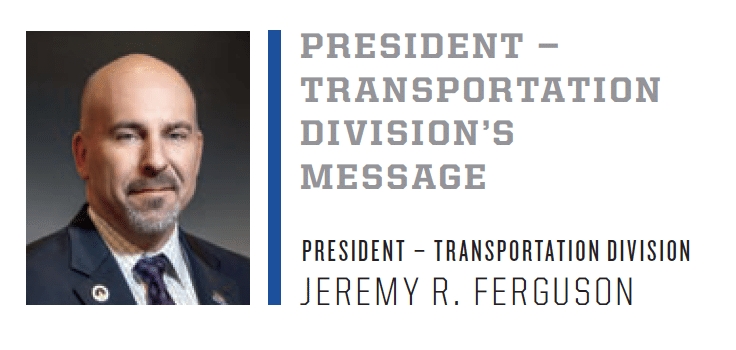
Jeremy R. Ferguson
President, Transportation Division

As we begin the new year, there is a lot to be thankful for. Our industry is thriving, our members are supported through existing and newly negotiated collective agreements, and we are preparing to take on an increased number of megaprojects in healthcare, the industrial sector and housing. At the same time, our production units continue to be busy.

We are entering 2026 well-positioned to build on this momentum. Supporting our members and the union­ized construction industry more broadly is the 2025 Federal Budget, passed on November 17, that included significant investments in infrastructure, housing and megaprojects across the country.

Some of these major investments include:

  • $75 million over the next three years to fund the Union Training and Innovation Program.
  • $51 billion over 10 years through the Build Communities Strong Fund to support provincial and local infrastructure projects.
  • $115 billion over five years for infrastructure in healthcare, transit and wastewater systems.
  • $25 billion to accelerate homebuilding and address housing needs across the country.

SMART members have always played a critical role in building community infrastructure that keeps our cities thriving. Looking ahead, we will remain key in delivering transformative megaprojects, with the federal government’s goal of “building an enormous amount of infrastructure at speeds and scales not seen in genera­tions.” SMART members will be on the front lines, shaping Canada’s future while leading the shift toward modern, low-carbon construction.

This is the work our members have excelled in over the centuries. Now, that expertise will be formally recog­nized through the SMART Green Certificate program, which is currently being developed. This program will reaffirm our members’ knowledge and readiness to contribute to upcoming clean-economy projects. The SMART Green Certificate program is being established in collaboration with Canada’s Building Trades and Skill Plan Canada.

In the new year, SMART will continue working on the development of this program, which will feature sheet metal-specific learning modules tailored to today’s evolving industry and will provide unified, industry-leading green training nationwide. Down the road, this certification will increase employability, support greater mobility between provinces and give our members pride in the environmental leadership that SMART Canada is striving for.

SMART Canada was proud to host Secretary of State for Labour, Minister Zerucelli, at the Local 47 Training Centre (Ottawa, Ontario) for the re-announcement of the SMART Green Certificate. The visit highlighted how government, industry and unions continue to work together to strengthen our training and support the future of our trades.

We closed 2025 on a high note and look forward to what 2026 will bring as these major infrastructure and training investments begin to take shape. Together, we can build a stronger future for our members, our industry and our country.

In solidarity,

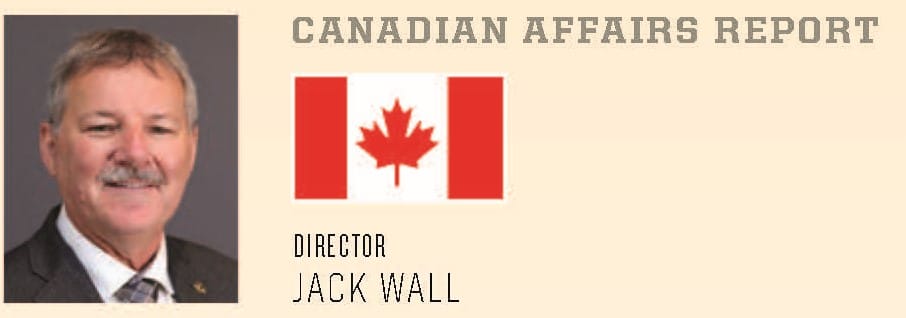
Jack Wall

Director of Canadian Affairs

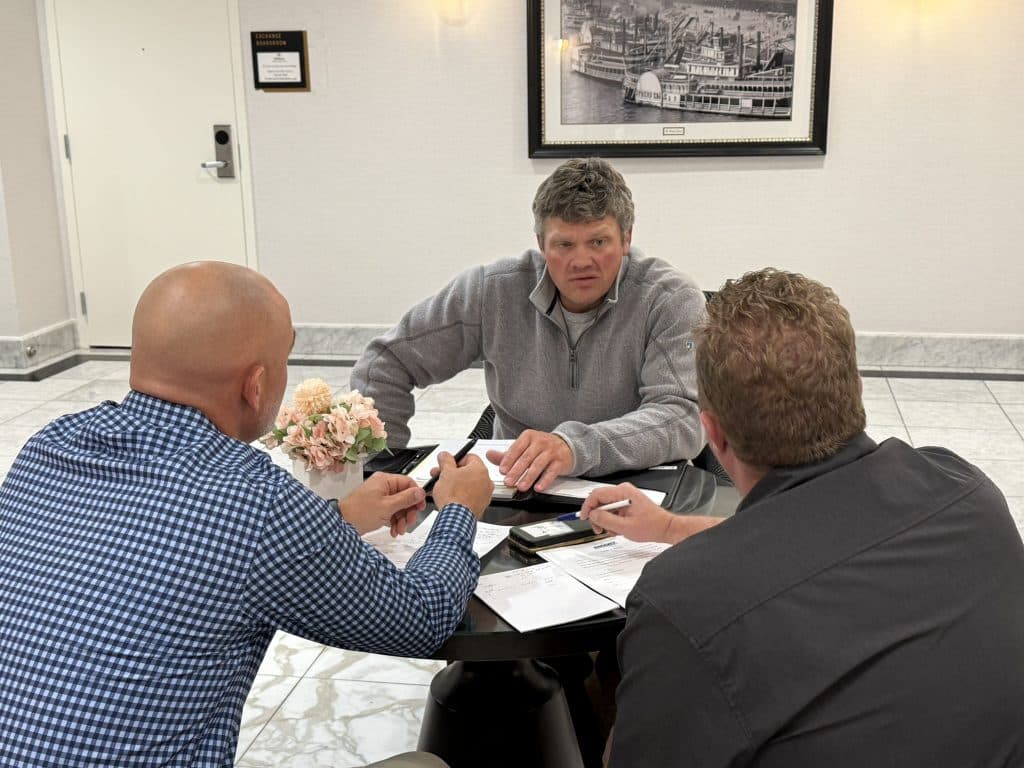
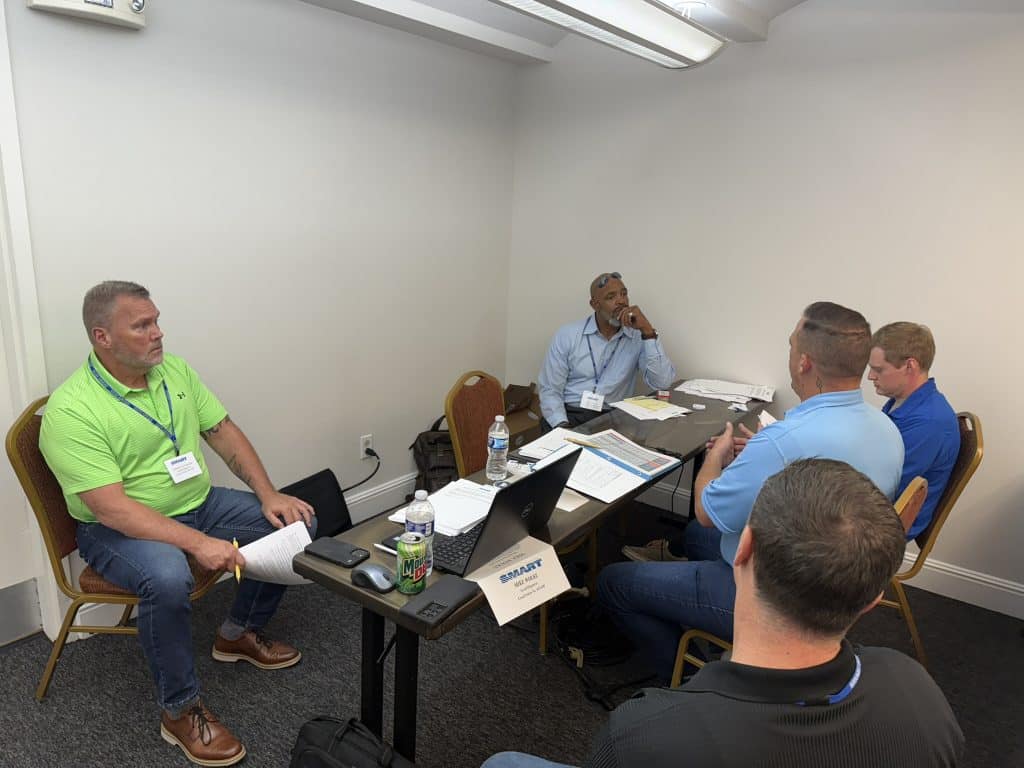
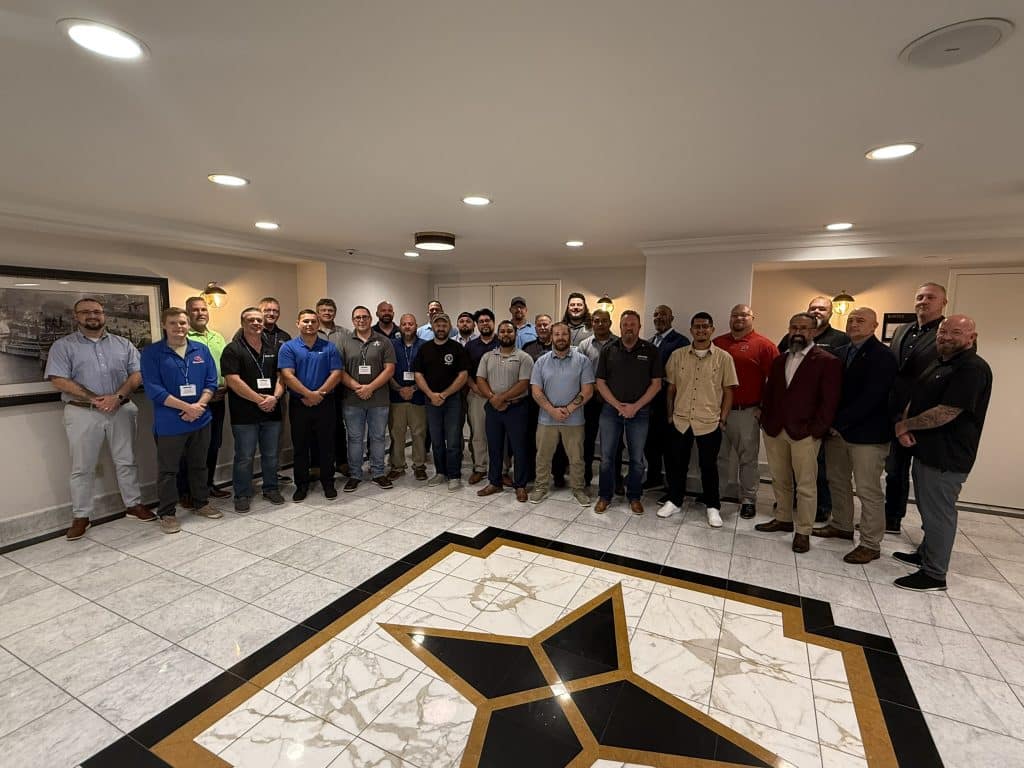
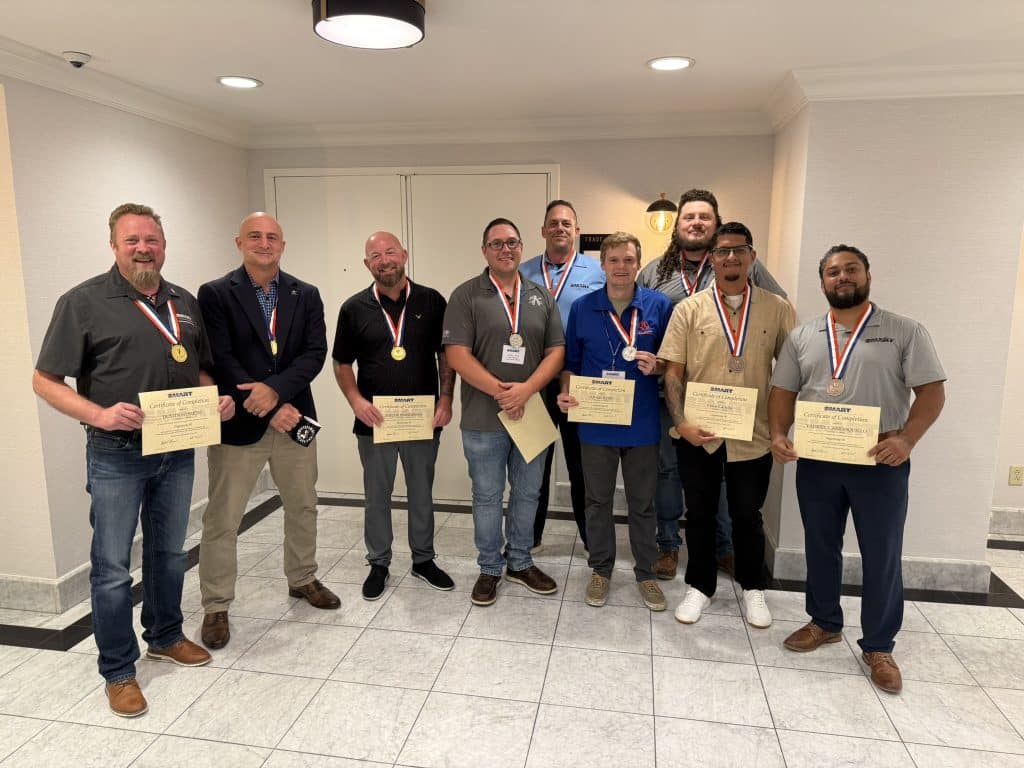
The SMART Education Department, in collaboration with the Organizing Department, held its Organizing III class during the week of October 6–10, 2025, in St. Louis. This redesigned class focused on the “top-down” organizing strategy, with a specific emphasis on developing organizing campaigns targeting nonunion contractors.

Expanding SMART’s signatory contractor base is one of the best methods local unions have to keep members employed. For that reason, it’s more important than ever for organizers to strengthen their ability to identify, build relationships with and ultimately sign new employers.  

The primary subject of the October class centered around what contractors need to succeed and how our locals are built to fulfil that primary need: a flexible labor force. Participants delved deep into a contractor’s mindset to understand the challenges of running a construction company, learning how to reframe common employer objections to unionization as benefits for both workers and contractors. Attendees also roleplayed interactions with the gatekeeper, delivered a custom-built elevator pitch and practiced both first meetings and subsequent meetings with the contractors.

Throughout the week, participants learned to find nonunion contractors in their local’s jurisdiction using Standard Industrial Codes (SICs) and turned their lists into maps and routes using Google Maps. There were nearly 20 exercises during the course; after mock exercises, participants debriefed with critical feedback to their peers.

A point system was in place, with organizers grouped into fiction local unions and evaluated by their fellow participants. “Local 111” — Phil Berg (Local 23), Cesar Carrillo (Local 26) and Yadriel Carrasquillo (Local 68) — took third place. “Local 444” — Adam Kerr (Local 71), Doug Meyers (Local 103) and Aaron Leslie (Local 104) — was ranked second place. “Local 333” — Dustin Hysmith (Local 16), Hallie Jennerman (International organizer/Local 18) and Jay Jones (Local 265) — was recognized by peers as the top group in the class.

“Congratulations to Jay Jones, the highest point winner in the top group, for winning the coveted ‘Coffee is for Closers’ coffee cup!” said SMART Director of Education Eli Baccus. “We hope this class spurs participants’ top-down organizing efforts, and that more contractors are brought in for more member jobs.”

In late August, President Trump’s Department of Transportation canceled $679 million in federal funding for 12 offshore wind projects across the country. That included fully taking back hundreds of millions of dollars in grant money for infrastructure work at Humboldt Bay Harbor District in Northern California — immediately throwing Local 104 members’ work opportunities into question, in the short and long term.

“As long as this administration makes decisions that directly impact our members, I’m going to keep calling balls and strikes. This decision is clearly a ball,” said SMART General President Michael Coleman. “For our members in Northern California, this was a once-in-a-lifetime project — one that was going to create dozens of jobs in the short term, and keep employing Local 104 sheet metal workers for the long haul. Taking back that grant money, which was already awarded, just makes zero sense.”

The DOT had originally awarded a $426 million infrastructure grant to the Humboldt Bay Harbor District, allowing the Harbor District and the Building and Construction Trades Council of Humboldt and Del Norte Counties — which includes Local 104 — to agree to the very first project labor agreement in the region. Around 90% of that grant was earmarked for the development of a heavy-lift marine terminal to support offshore wind; money that has since been pulled back, putting construction in jeopardy.

When SMART members hear “offshore wind,” they may not immediately think “sheet metal jobs.” But the fact is, the Humboldt offshore wind development would have turned a brownfield site into a full-blown, brand-new facility, expected to include multiple new buildings. That means sheet metal work: duct fabrication, facility construction and potentially up to dozens of Local 104 members on-site at various project phases. And that was just the immediate opportunity. The offshore wind company, RWE, had signed a memorandum of understanding (MOU) that committed to using union labor for long-term operations and maintenance of the facility, guaranteeing work for years to come. 

“In short, this project represented a generational opportunity for our members in an area that doesn’t see many large infrastructure projects,” said Local 104 State Legislative Director Vince Sugrue. “The cuts are a devastating blow to the immediate construction jobs that would have put our members to work, but also to the long-term union maintenance and operations jobs that were guaranteed under the MOU.”

The Humboldt Bay Harbor District is just one example of many jeopardized jobs across the country. In Massachusetts, the DOT canceled $34 million in federal funding for the Salem Wind Port Project, where work had already started. The project was expected to create 800 construction jobs over the next couple years.

“Our government leaders have the power to do things that directly benefit our members. Federal funding for these port projects is a great example of that,” General President Coleman said. “Taking that funding away, and threatening our members’ jobs by doing so, is just not the right thing to do for members, our families or our country.”

Additional projects impacted:

Withdrawn funding:

  • Sparrows Point Steel Marshalling Port Project (Maryland)
  • Bridgeport Port Authority Operations and Maintenance Wind Port Project (Connecticut)
  • Wind Port at Paulsboro (New Jersey)
  • Arthur Kill Terminal (Staten Island, New York)
  • Gateway Upgrades for Access, Resiliency & Development at the Port of Davisville Project (Rhode Island)
  • Norfolk Offshore Wind Logistics Port (Virginia)

Terminated funding:

  • Redwood Marine Terminal Project Planning (Northern California)
  • Lake Erie Renewable Energy Resilience Project (Michigan)
  • Radio Island Rail Improvements in Support of Offshore Wind (Maryland)
  • PMT Offshore Wind Development (Virginia)

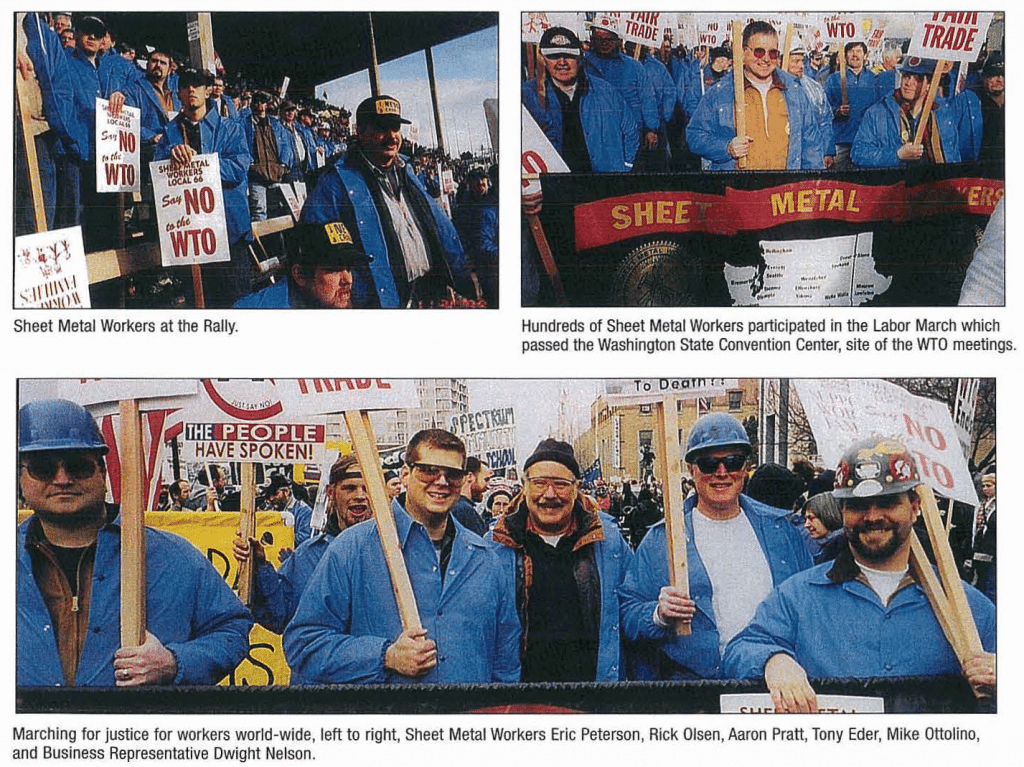
SMART members and labor unions across the world have been fighting for workers’ rights throughout their history. Case in point: The Janu­ary–February 2000 issue of the Members’ Journal, which covered sheet metal workers’ participation in now-famous rallies at the World Trade Organization’s 1999 meetings in Seattle.

“Hundreds of sheet metal workers and their fami­lies from Local 66, Seattle; Local 16, Portland, Oregon; Local 280, British Columbia, Canada; and France constructively and peacefully demonstrated labor’s concerns about the practices and policies of the World Trade Organization during a massive Labor Rally and March in Seattle, Washington, November 30, 1999,” the Journal reported. “Prominent union leaders from the United States and around the world spoke at the Labor Rally, outlining some of the anti-worker practices and policies of the World Trade Organization, which in reality is a comprehensive system of corporate-managed trade.”

SMART members are continuing this legacy — fighting for policies that prioritize workers — to this day.

The Tennessee Valley Authority recently made headlines and prompted hundreds of SMART members to write letters to their senators. Why? Reports that the Trump administration was con­sidering privatizing the public power utility.

Privatization would have an extremely negative impact on working families and SMART members in the region. The Tennessee Valley Authority (TVA) creates good, union jobs for SMART members and working people every year, putting sheet metal workers on the job during construction projects and employing members and our neighbors year-round who operate one of the most successful public power utilities in the world. Privatizing or dismantling the TVA would have put those jobs at risk — and raised electricity prices for members and families in the region.

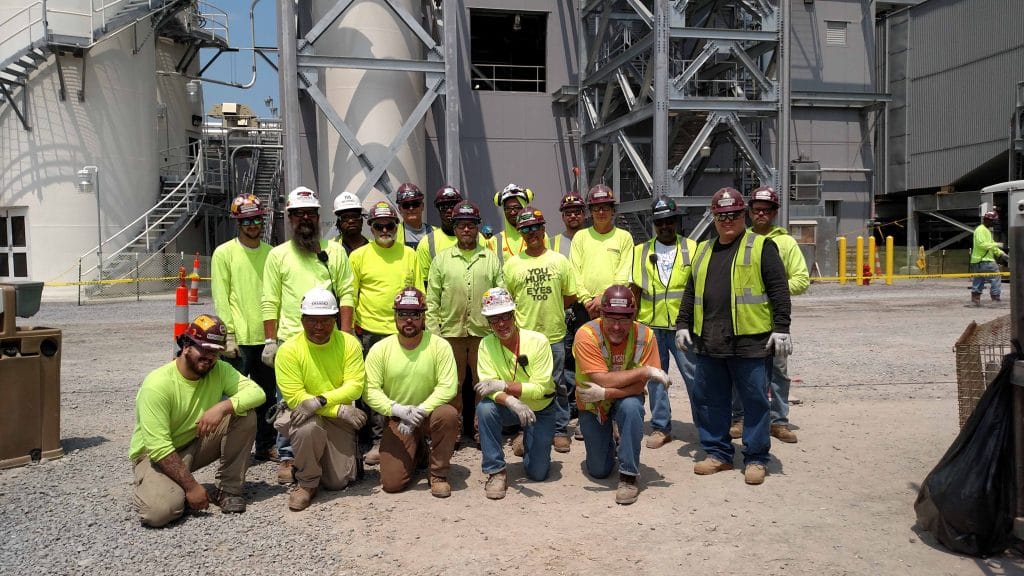
SMART members on the job at the TVA

What is public power?

The TVA is unique in the United States. Created as part of President Franklin Delano Roosevelt’s New Deal — at a time when investor-owned utilities were refusing to invest in the South, then the poorest part of the country — it is a power provider owned by the federal govern­ment. That means its purpose for existing is to provide reliable, affordable power to the Americans that it serves, not to make money for shareholders or Wall Street. While private, for-profit corporations’ obligation is to those shareholders, the TVA answers to the American people.

Some facts about the TVA:

  • For more than nine decades, the TVA has provided good service and affordable electricity to tens of millions of people across seven states in the South.
  • The TVA does not receive any tax dollars; in delivering energy to millions of Americans and 800,000 busi­nesses, the provider is self-funded.
  • The TVA is the nation’s largest provider of public power.

The problem with private utilities

Working Americans everywhere deserve to be able to keep the lights on. In 2026, it’s hard to imagine the cost of electricity or gas rising more than the rate of inflation, which is already squeezing American families. But that’s exactly what has been happening.

Private power companies — also known as investor-owned utilities — provide 70% of the electricity in the United States, according to the American Prospect, which also reported in February 2025: “These private utilities have increased residential electricity rates over the past three years at a rate 49 percent higher than inflation. Over the same period, publicly owned utilities have increased their rates 44 percent less than inflation.”

It’s worth repeating: Private utilities raised their prices even higher than needed to keep up with inflation. Public power providers, which exist not to make profit but to provide power for the American people, didn’t even come close to matching inflation with their rate increases.

SMART members power the power

The TVA is one of the largest employers across the Tennessee Valley — including the contractors that help the authority continually grow and evolve to serve its customers. Construction projects at the TVA include not only those related to upgrading power plants and other facilities — such as a Clean Air Project expansion that put members of SMART Locals 177, 4, 5, 33, 40, 46, 48, 73, 88, 214 and 218 on the job — but also those focused on managing the Tennessee River. Plus, there’s the day-to-day work of ensuring the TVA continues to function. All told, the TVA supports tens of thousands of union jobs.

The authority benefits unions and local communities in other ways, too. In August 2025, North America’s Building Trades Unions (NABTU), the TVA and the Tennessee Department of Labor and Workforce Development announced the creation of the Forever Family Apprentice Partnership. This initiative will provide former foster youth with career pathways to the union construction and energy industries — helping Americans find fulfilling careers and strengthening unions like SMART.

Protect the TVA

The TVA is run as a government corporation by a nine-member board of directors, nominated by the president and confirmed by the Senate. Congress and the White House have rarely interfered with the board throughout its history.

In early 2025, President Trump fired three board members, leaving just three out of nine to govern the TVA. At the time, the Atlantic reported that President Trump pressured the remaining TVA board members to fire its CEO, Don Moul, or risk being replaced — with some on the board concerned that the president was looking to advance the privatization of the TVA.

Privatization would have threatened union jobs and the affordable energy prices that working families rely on, which is why SMART worked to make sure that didn’t happen. Union officers and staff engaged politi­cians at all levels, and members sent hundreds of letters to their senators, urging them to protect the public power utility.

In October, when the president nominated new members to the board, each nominee committed to keeping the TVA a public utility during U.S. Senate committee hearings. Those commitments are great news for SMART members, year-round TVA employees and people and businesses in the Tennessee Valley.

While full confirmation of the nominees is still pending at the time of writing, SMART will continue working to make sure the TVA stays public, protecting the millions of jobs and the affordable electricity that the utility provides. From the federal government to statehouses, from legislative allies to on-the-ground action, SMART will keep fighting for members and working families.

On November 4, 2025, voters went to the polls across the United States to choose new leaders and decide on critical issues. Candidates who stand with SMART members won big in races nationwide, such as Local 12-endorsed Pitts­burgh Mayor Corey O’Connor, Local 36 member and St. Paul, Mo., Alderman Kevin Brugmann and newly elected Tama City Councilmember Chris Smith (SMART-TD Iowa safety and legislative director). But our union really flexed its muscles in New Jersey. Congresswoman Mikie Sherrill won decisively in the state’s election for governor, pledging after her victory to work to cut costs for working families and lower the state’s high property tax burden — priorities which will benefit thousands of SMART members.

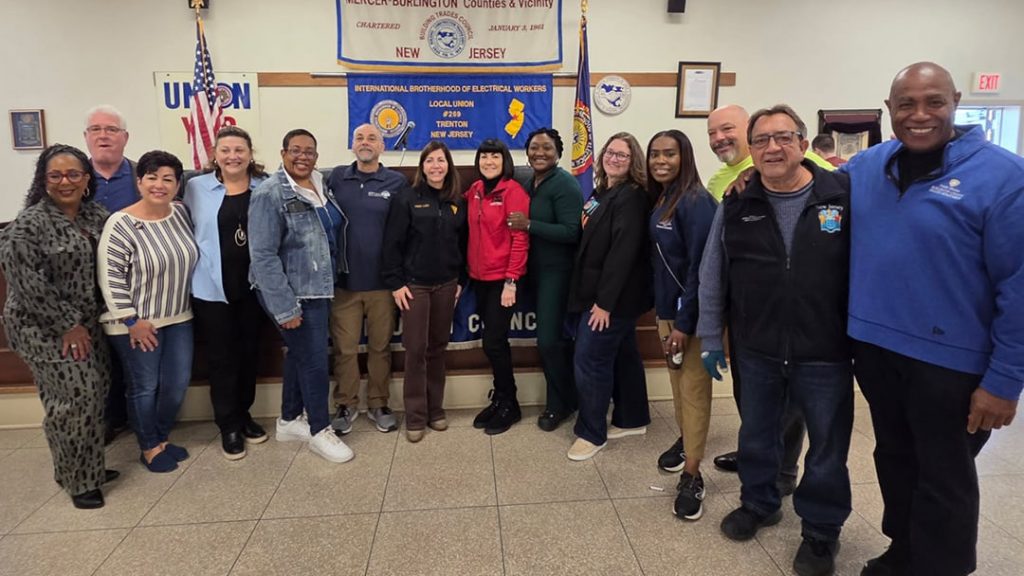
SMART members were front and center in the campaign. Local 22 in Kenilworth lent their union hall for the get-out-the-vote effort, launching labor walks in Union County where Governor-elect Sherrill won with over 66% of the vote. She stopped by the union hall on the Saturday before the election to speak with union volunteers and Local 22 Business Manager Jim O’Reilly, recording a video for members before her next event.

“As governor, I’m going to stand with sheet metal workers as we fight hard to upgrade our schools [and] provide the skilled union workers that we need,” Sherrill said in the video.

Governor-elect Sherrill has been a champion of rail safety and full funding for New Jersey’s rail and bus transportation system during her time in Congress, in close collaboration with SMART-TD’s New Jersey Safety and Legislative Director Ron Sabol. Sabol has long been a powerhouse in New Jersey politics, and 2025 was no different: In Mercer County, where he serves as secretary-treasurer of the Central Labor Council, the AFL-CIO had an overwhelming 550 volun­teers knocking doors on Election Day. (Sherrill also appointed Sabol to her transition team after winning the election.)

Reacting to the outcome, Sabol said, “The people of New Jersey sent a message on Tuesday: We want a strong pro-worker government to work with us on fixing the problems in our state. Labor candidates won up and down the ballot, and we’ll continue the hard work of making New Jersey safer and more affordable.”

In addition to the governor’s race, there is now a larger pro-union majority in the New Jersey Assembly than any year since 1973. That means oppor­tunity for policies to bring down costs, ensure public money is spent on construc­tion projects that create good jobs, and for investments in public safety and affordable housing — making life better for everyone while creating work opportunities for SMART members.

Another Jersey legend, Bruce Springsteen, once lamented, “Sometimes it’s hard to remember that this place belongs to us, that this is our hometown.” From Montclair to the Pine Barrens, SMART members made it plain on Election Day that this place belongs to the men and women who go to work every day to build it.

From October 1 to November 12, 2025, the United States government shut down.

What does that actually mean? In theory, it’s simple. Congress must pass what are called appropriations bills in order to fund government agencies. These bills pay our military servicemembers and air traffic controllers, and they provide Americans with the services we pay for with our taxes. When Congress can’t agree on federal funding levels and refuses to compromise, the government shuts down.

All the while, the rich get richer. Business for some went on as usual during the 2025 shutdown, with the government bailing out Argentina’s economy to the tune of billions of dollars.

There is no reason for members of Congress, no matter their political party, to close the government. That was especially true for the 2025 shutdown, which primarily came down to one simple, common-sense issue: the cost of health care. During negotiations in the weeks before the shutdown, the expiration of Affordable Care Act tax credits became the main sticking point. The credits expire January 1, 2026, leading to an increase in the cost of health care for millions of Americans; when open enroll­ment began November 1, 2025, many families saw health care premiums double. (Note: Information in this article is current as of December 1, 2025.) Refusing to extend this lifeline to families who are working hard and still can’t afford necessities is a dark moment in American politics.

Union allies in Congress fought hard to extend the tax credits, but congressional leadership refused to include extension of those credits in any bill to keep the govern­ment open. Here’s how this affects SMART members: Faced with less funding, insurance companies would shift costs to high-quality plans like the ones SMART members enjoy. Expenses would rise for 179 million Americans who rely on job-based insurance, and American families could see their costs rise by as much as $2,000 a year.

But rather than stick up for SMART members and working Americans, Congress refused to make a deal. The result: a 43-day government shutdown, with health care tax credits still set to expire at the time of writing.

And who pays the price during a shutdown? Not members of Congress; they continue to get paid. Working people — including law enforcement and air traffic controllers — have to work without pay. Others get furloughed. While not completely closed, the Federal Railroad Administration (FRA) did not process new Violation Reports during the 2025 shutdown, putting the safety of both the public and rail workers at risk.

And in the middle of this particular shutdown, the federal government made things worse by canceling billions of dollars’ worth of funding for construction proj­ects. The Department of Energy alone cut $7.56 billion from 223 clean energy projects, including the Pacific Northwest Hydrogen Hub and California’s ARCHES Hub — projects that would have created more than 138,000 construction jobs under project labor agreements.

“Working people should not pay the price for dysfunc­tion in Washington,” said SMART General President Michael Coleman at the time. “Our industries and our nation cannot operate under this kind of chaos.”
To recap: While the government was shut down and essential law enforcement and air traffic employees worked without pay, federal agencies canceled funding for job-creating construction projects. While the government scrambled to find funding to pay military servicemembers and provide food stamps to people at home, the Treasury Department helped facilitate around $40 billion in aid to Argentina.

That’s not a government working for the people.