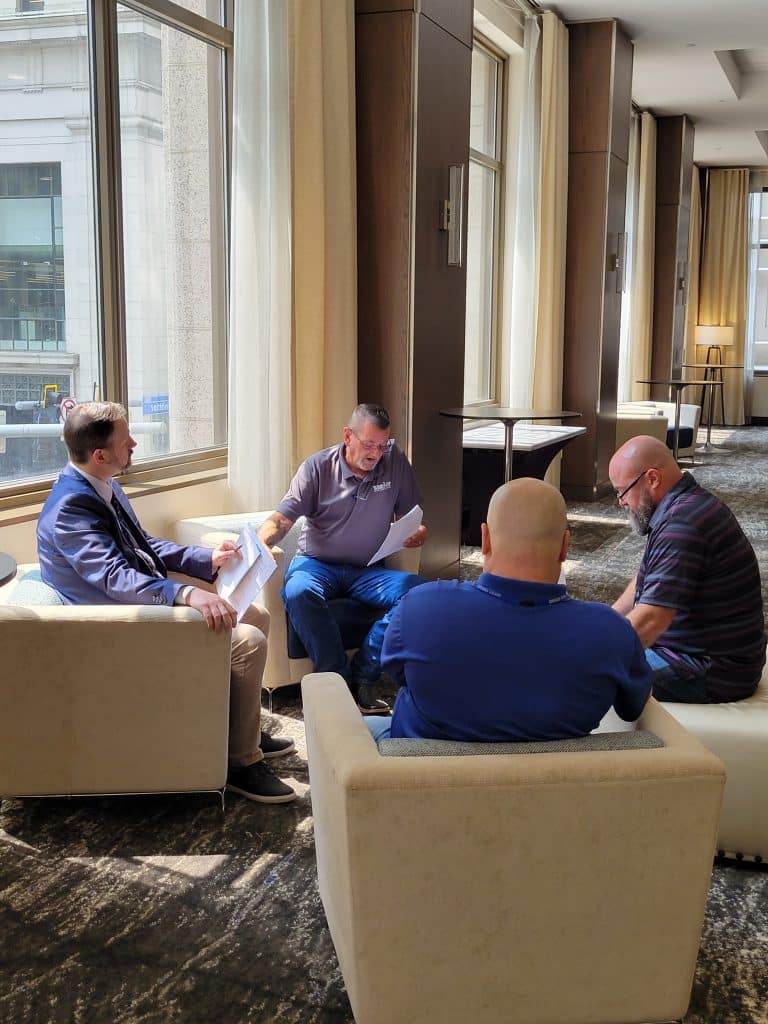
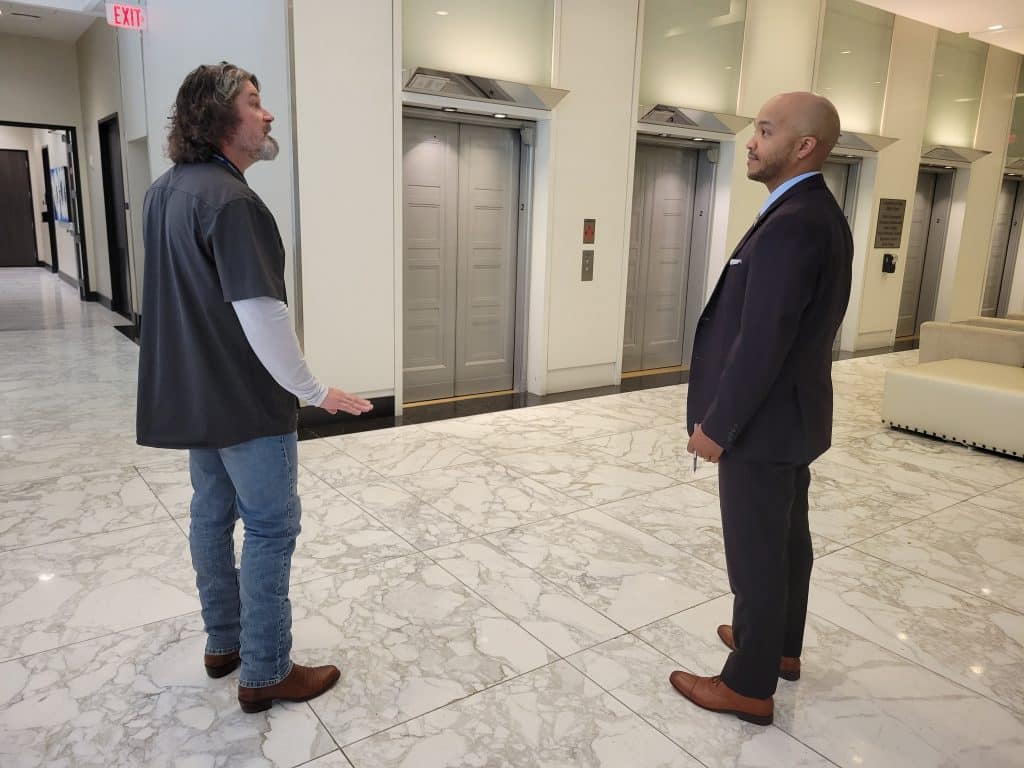
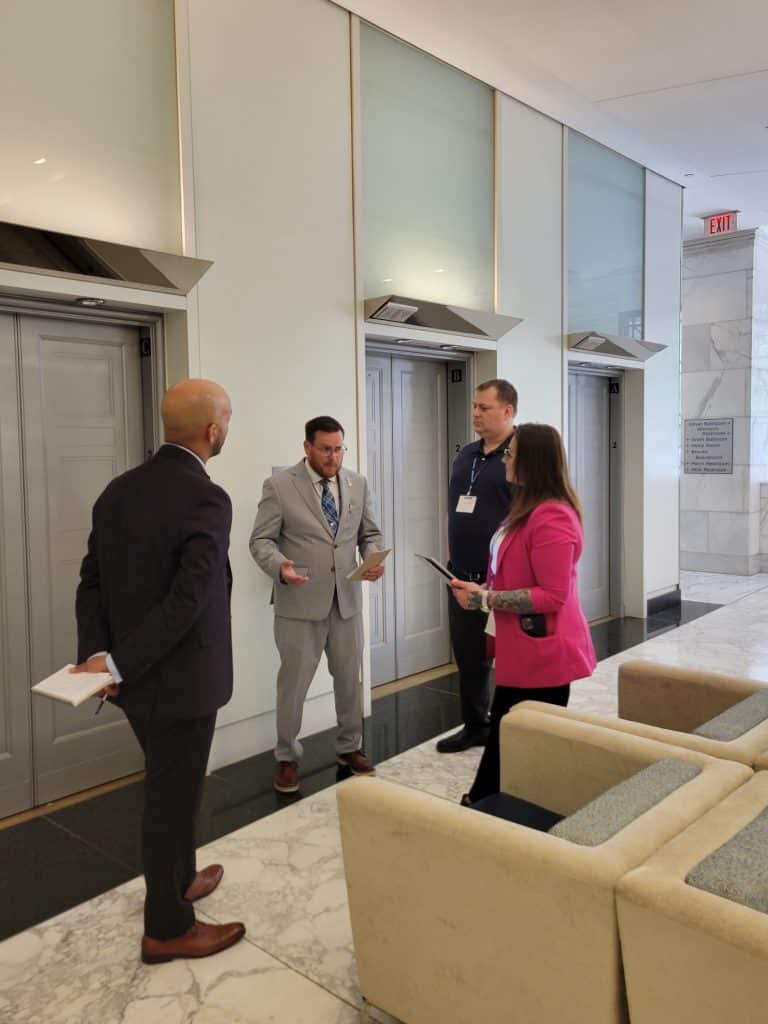
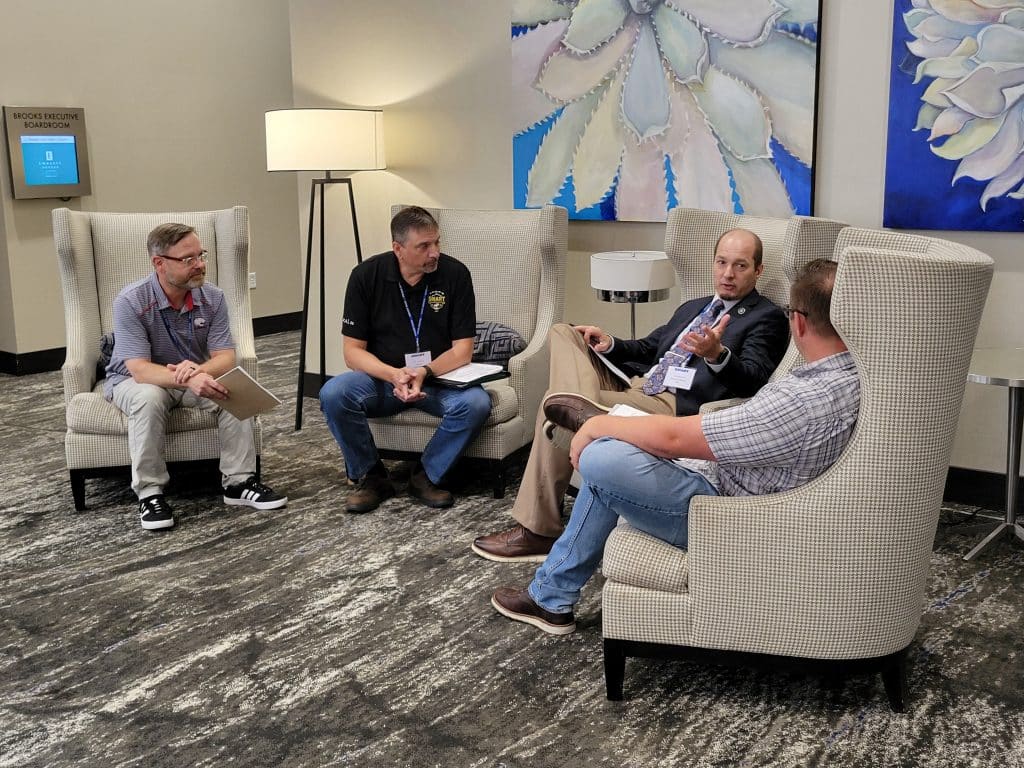
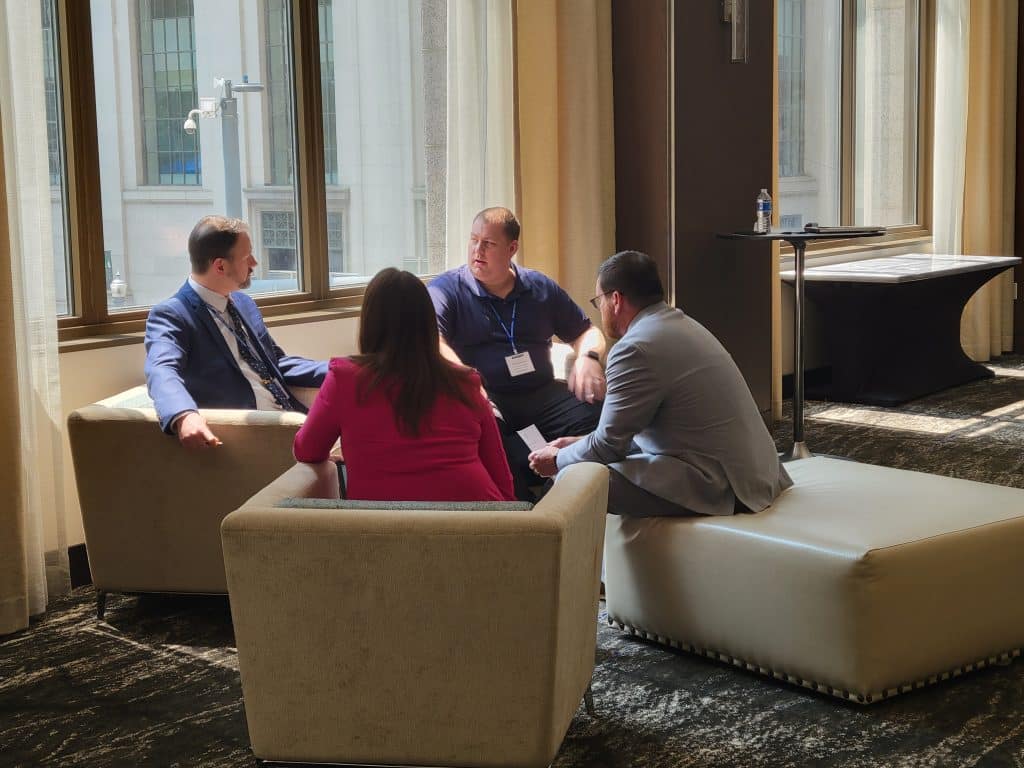
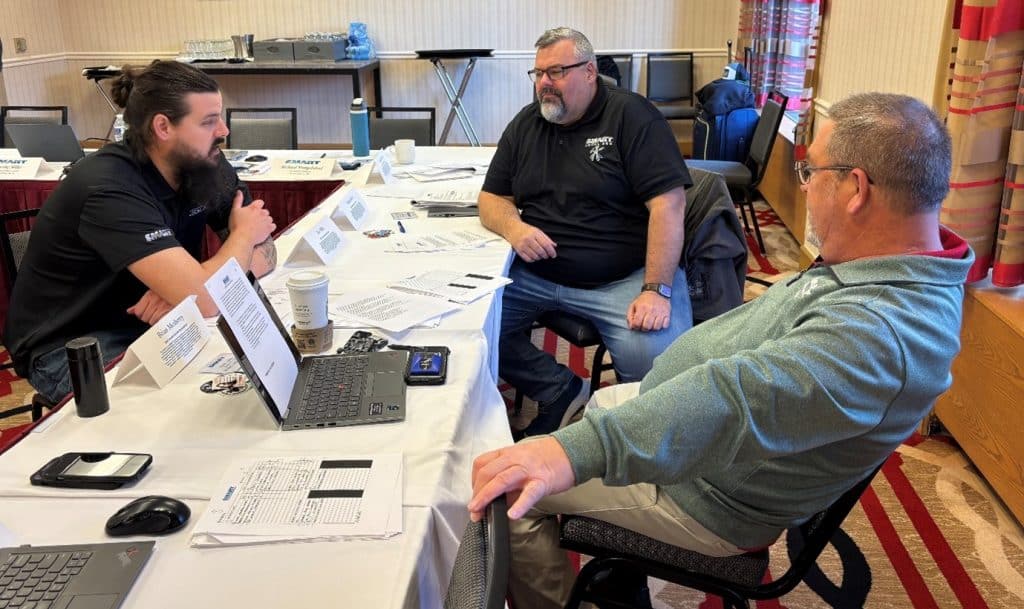
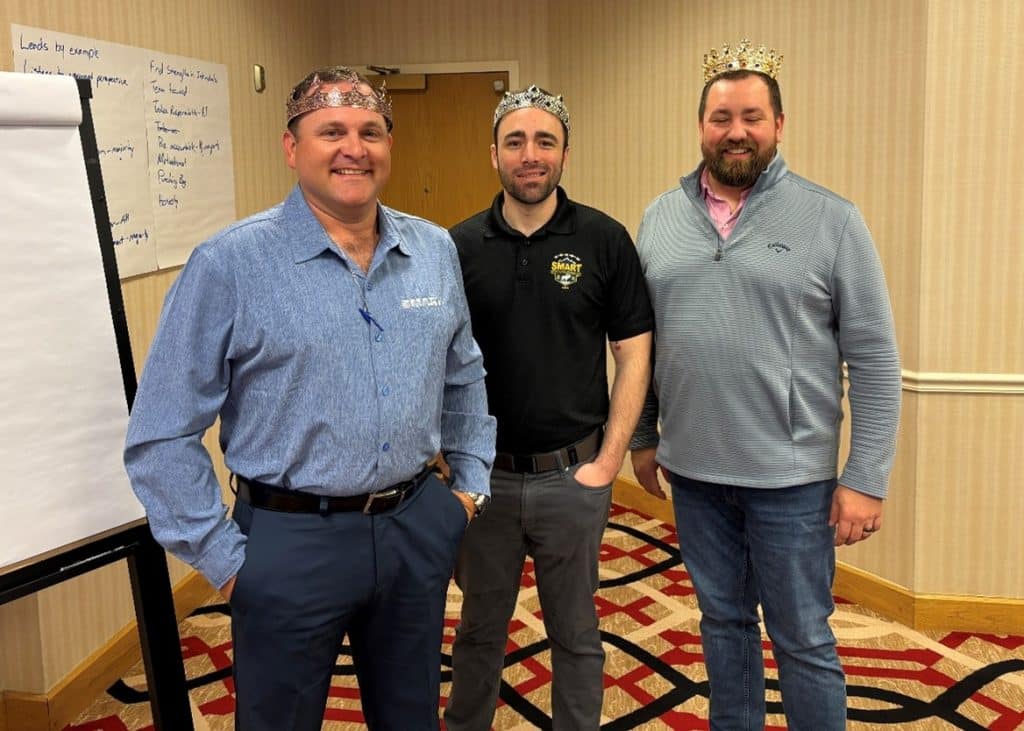
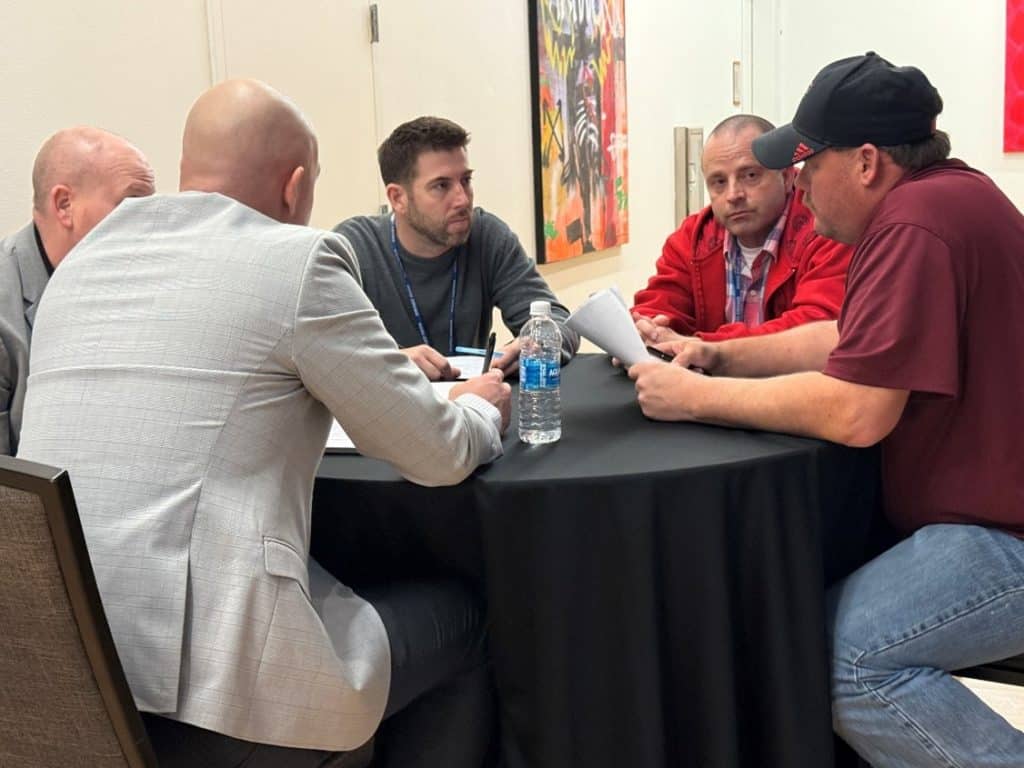
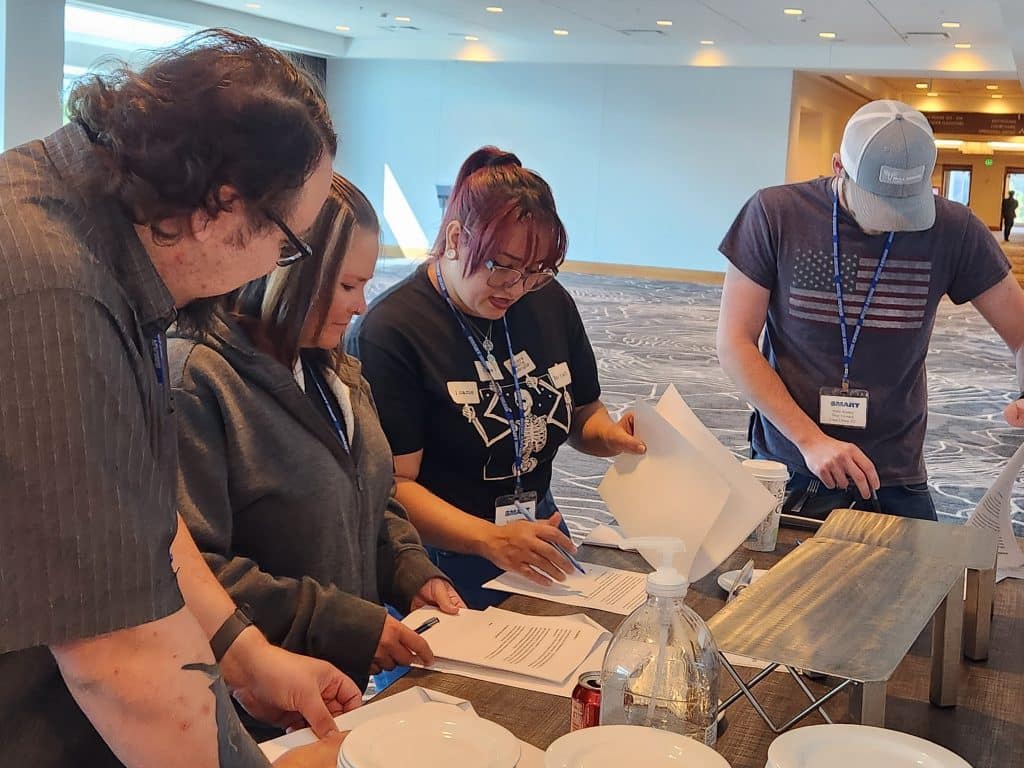
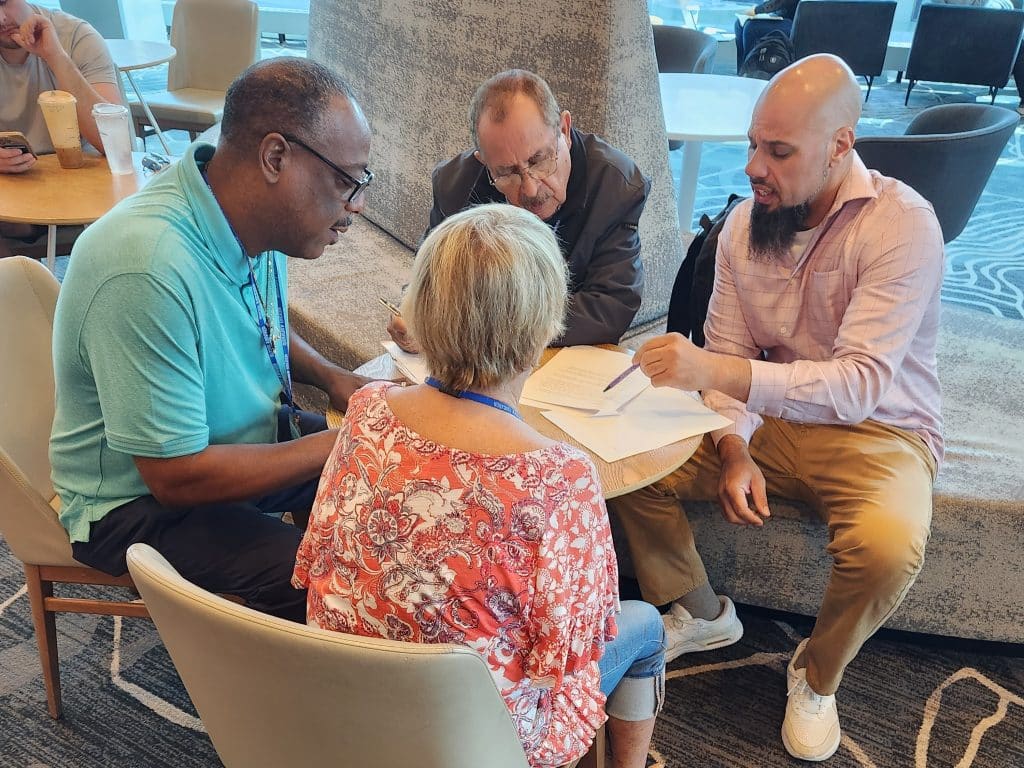
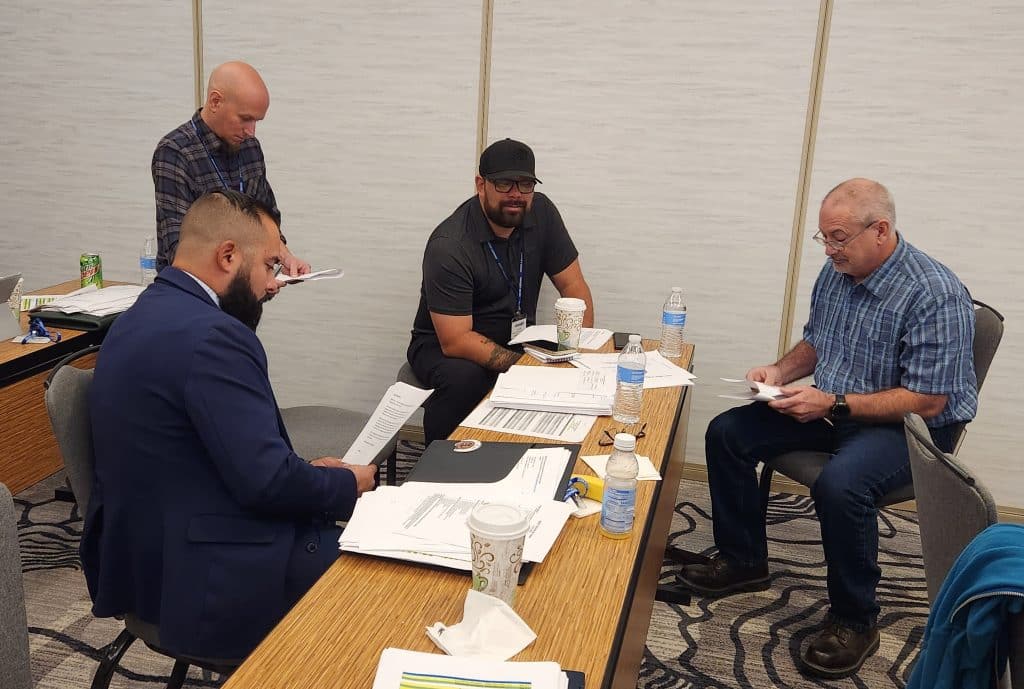
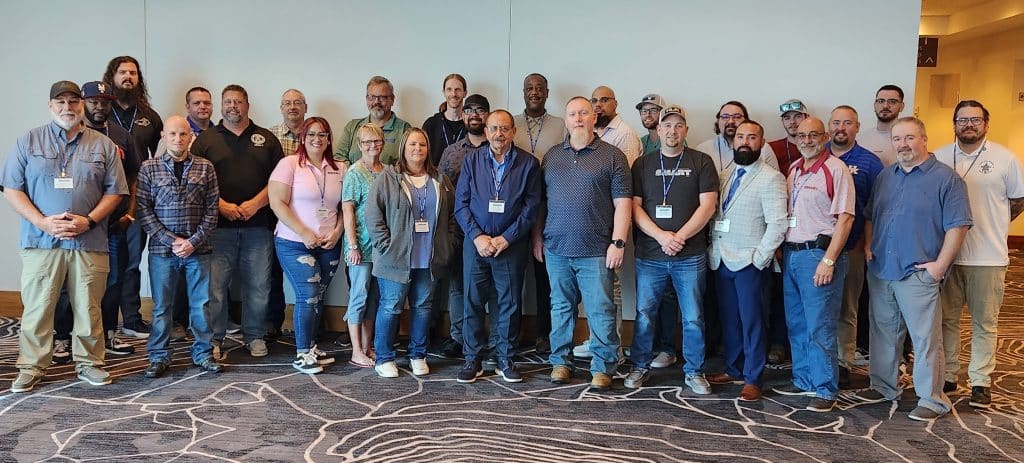
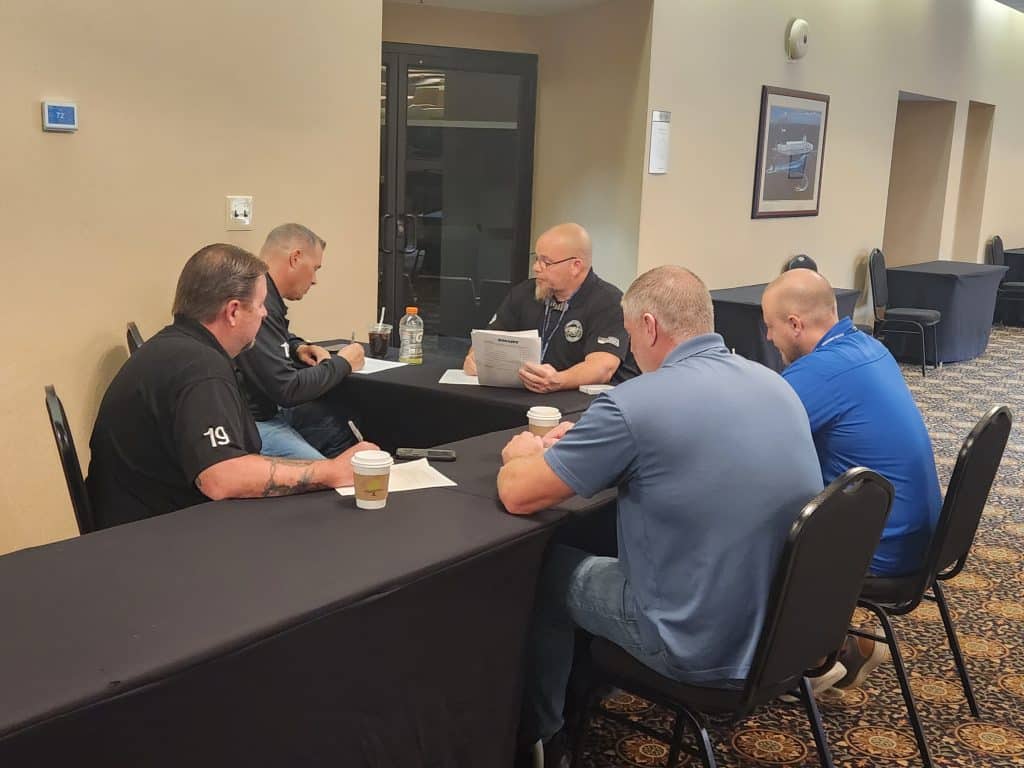
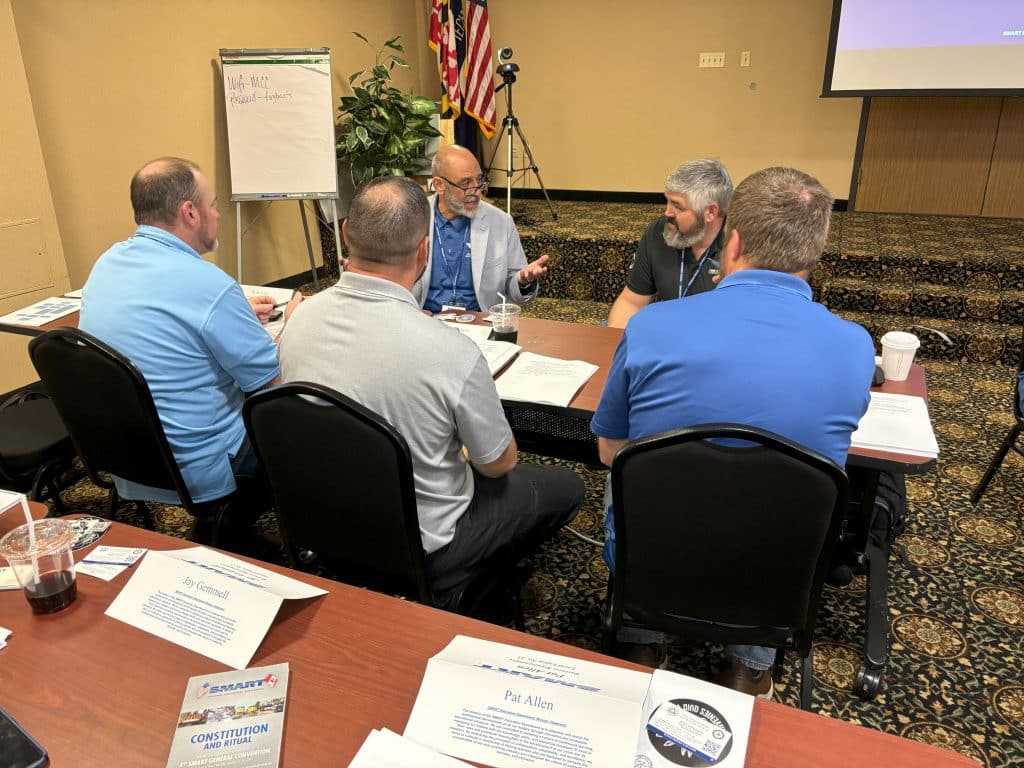
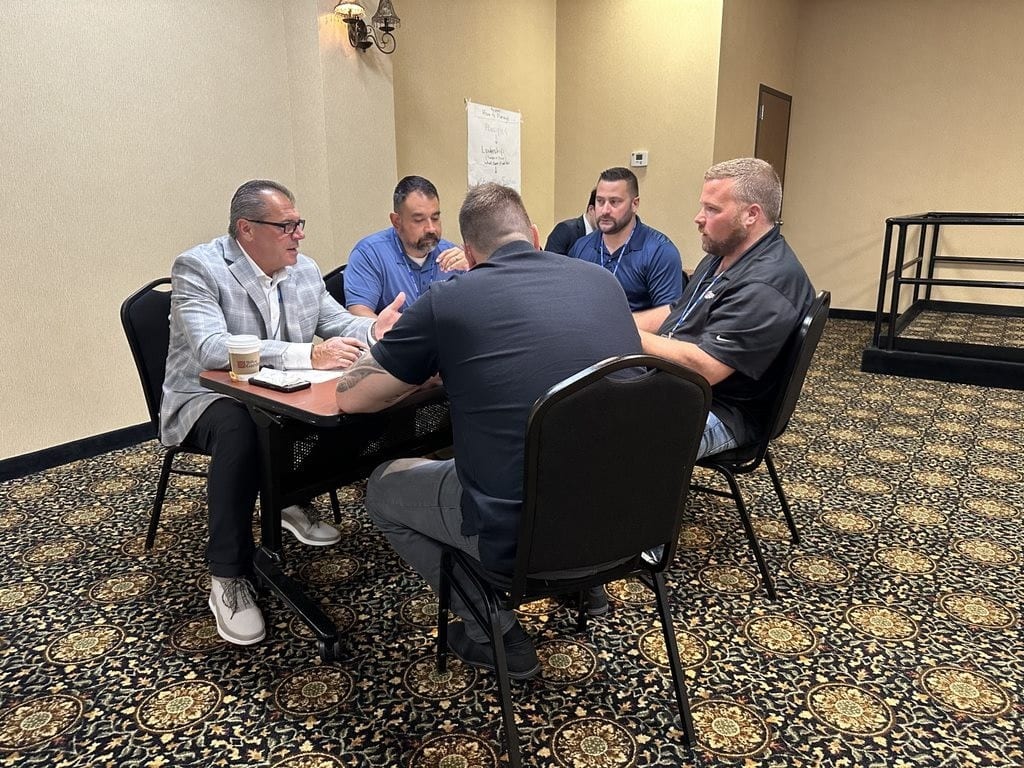
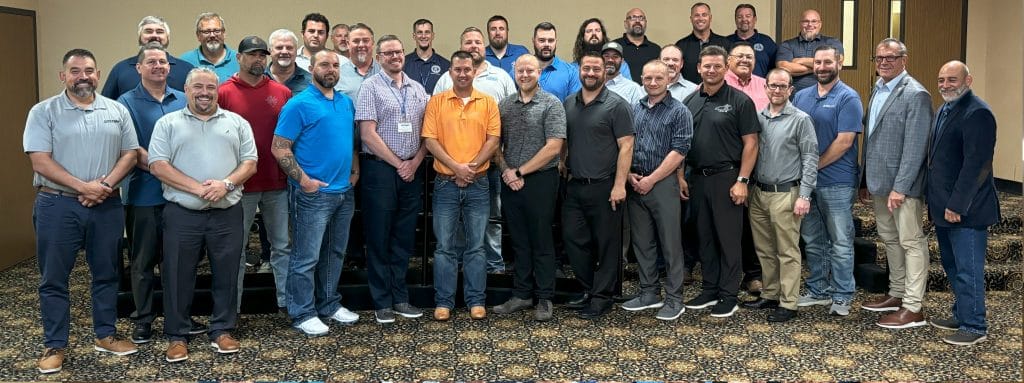
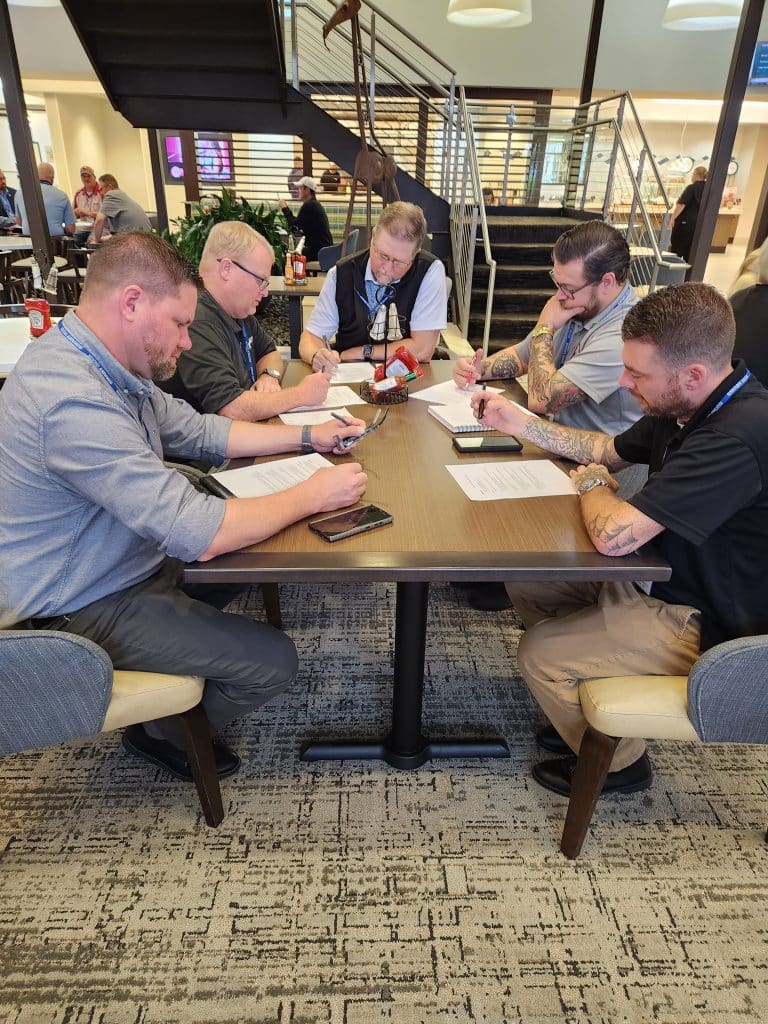
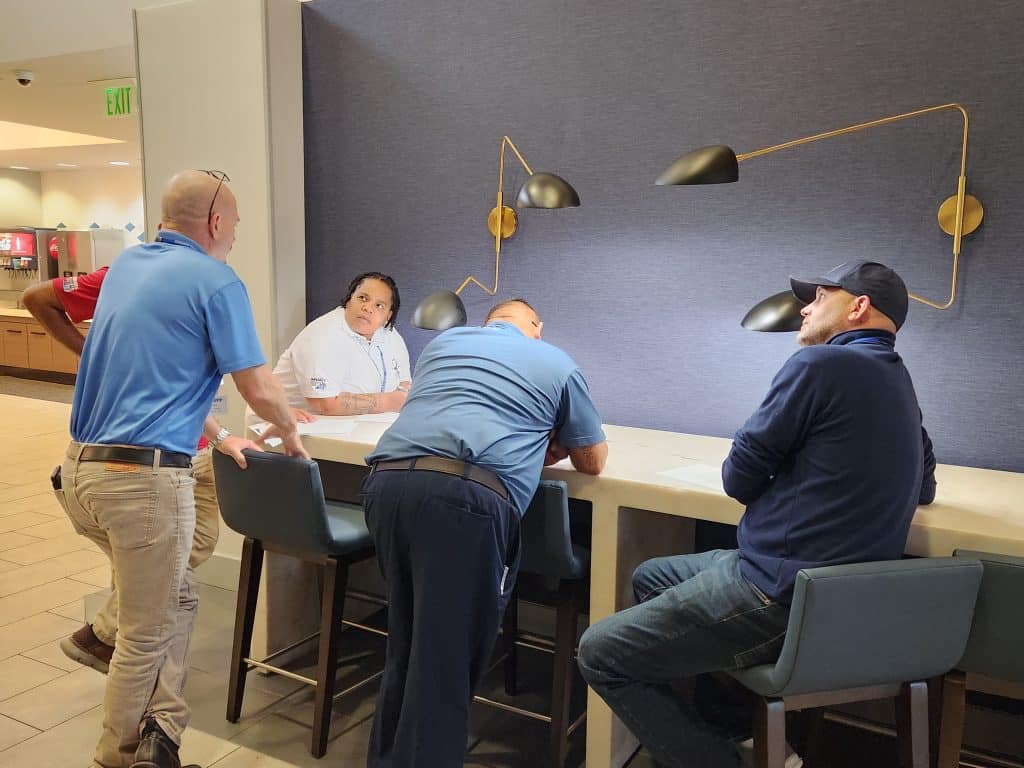
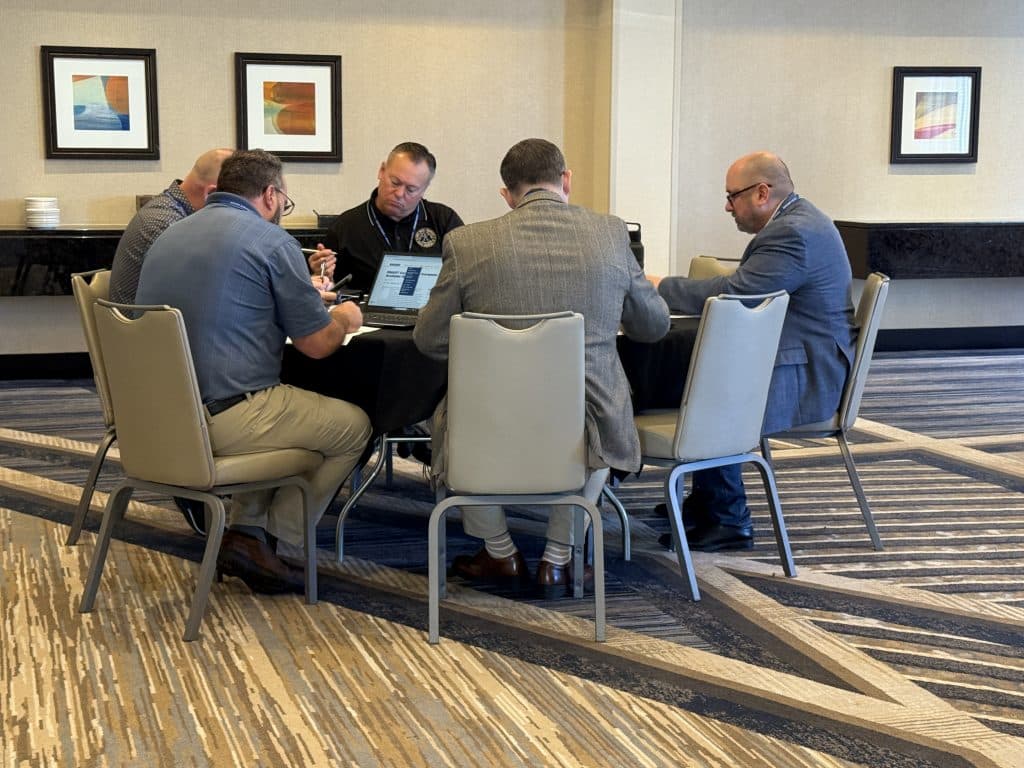
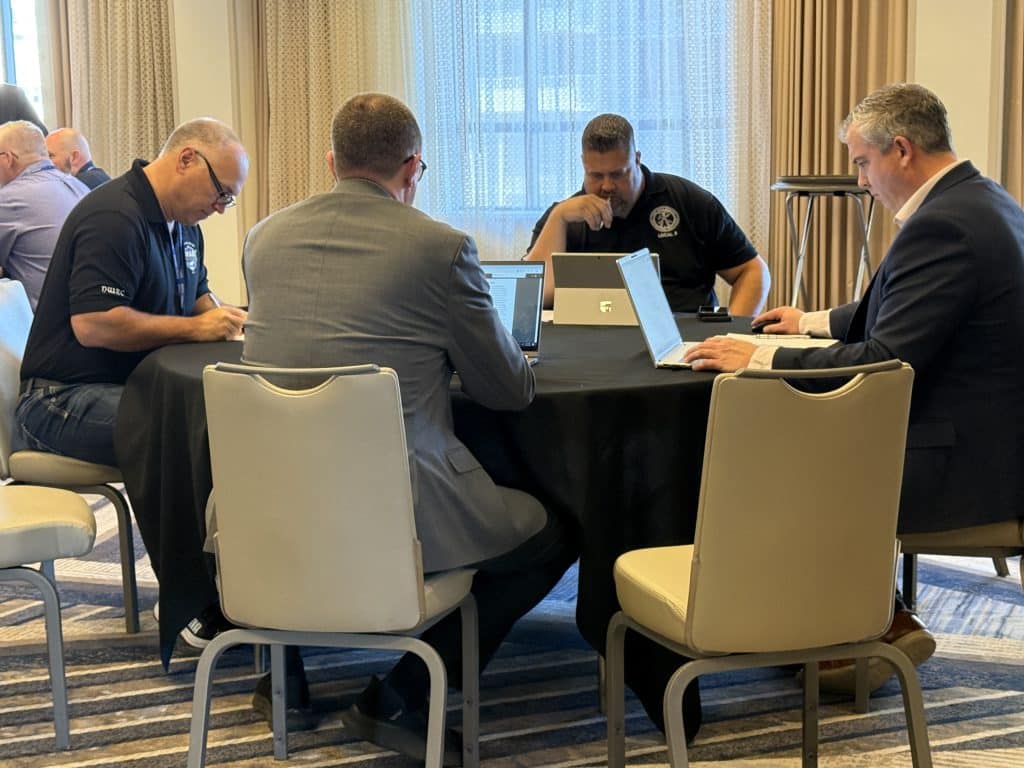
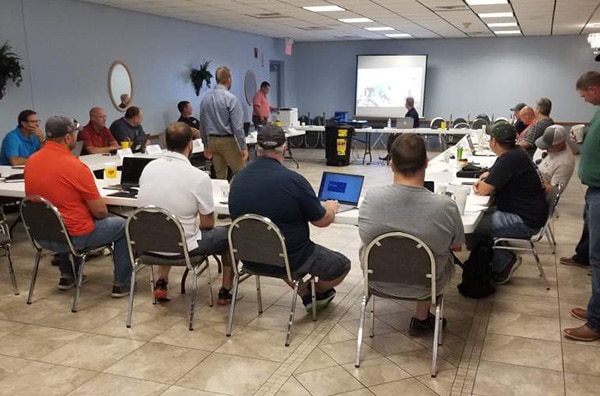
SMART union leaders often need to communicate important information to a wide variety of parties — politicians, business owners, fellow workers and reporters, to name a few — when fighting to better the lives of SMART members. That’s why the SMART Education Department held its Effective Communication II class in Pittsburgh, Pa., during the week of June 3, 2025, bringing together participants from across North America to enhance their skill sets.
The class focused on improving communication skills by dissecting branding and messaging techniques, practicing lobbying tactics, creating pitches for news stories, framing and reframing talking points, and making spontaneous arguments through debate. On each of the three days of the class, participants honed their lobbying skills with exercises that asked attendees to role play as random organizations that sometimes challenged their beliefs, helping local leaders understand the other side of the argument. Groups were mixed for every exercise, and a point system was in place.
“Congratulations to Christina Bayaniyan (first place) and Jon Davis (second place) for being recognized by their peers as the top two participants in the class!” said SMART Director of Education Eli Baccus.
As industry, politics and economic landscapes shift, SMART representatives are constantly called upon to adapt accordingly, ensuring union members are represented to the best of their abilities. It’s a daunting task — but thanks to the SMART Education Department, local union officers across our union have access to an always-evolving lineup of courses designed to strengthen their representation.
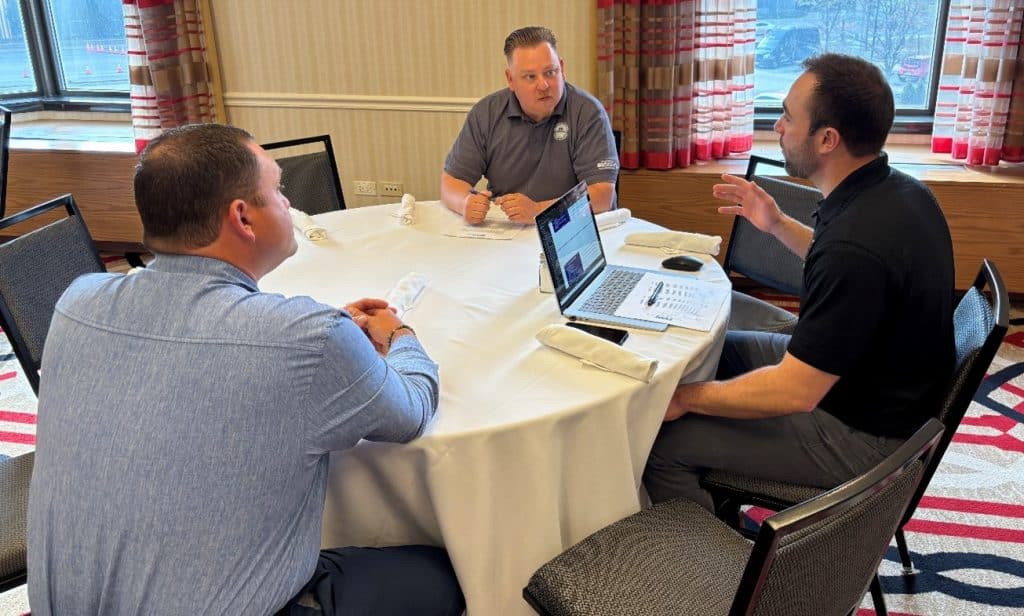
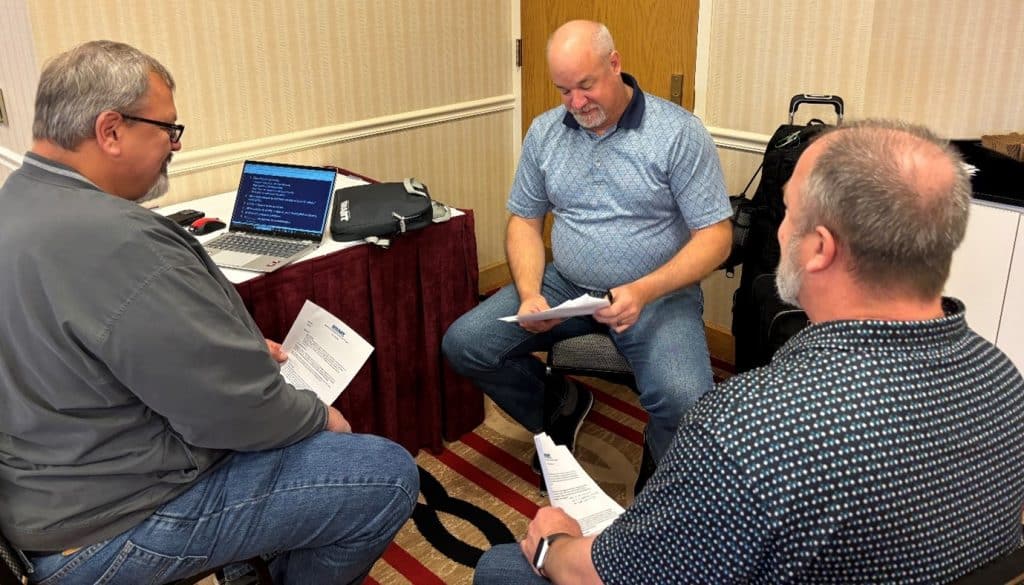
That includes the department’s New Representatives II course, held in Rosemont, Ill., during the week of April 14th, 2025.
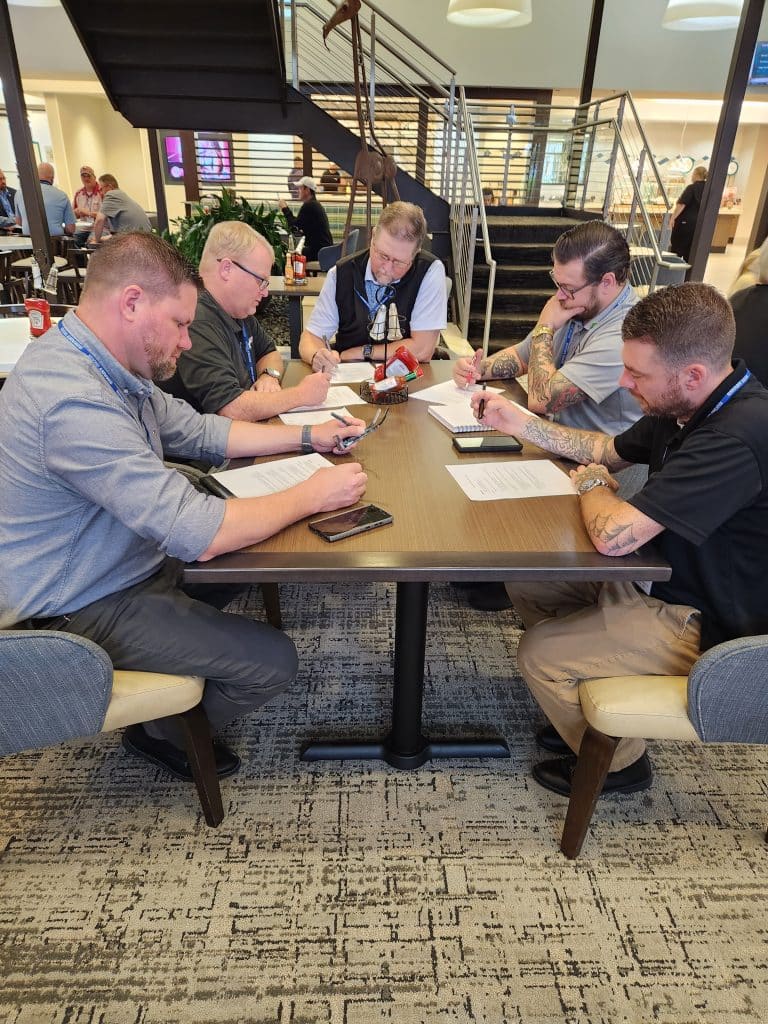
New Representatives II, which was completely redesigned for 2025 and delivered in-person instead of online, focused on improving representational and leadership skills beyond the day-to-day tasks that a representative would face. Participants worked in groups in several role-playing exercises throughout the week that covered topics such as time management, identifying leaders in local union memberships, building strategic relationships, lobbying, pre-jobs and conflict resolution. This class also marked the first time the Education Department implemented its new peer-based scoring system.
“Congratulations to Michael Thomas, Wayne Petty and James May for finishing as the top three participants in the class!” the department wrote.
As 2025 gets fully underway, bringing with it a new set of challenges across the United States and Canada, the SMART Education Department continues to offer classes to SMART members and officers — helping local unions better represent members, and strengthening our union.
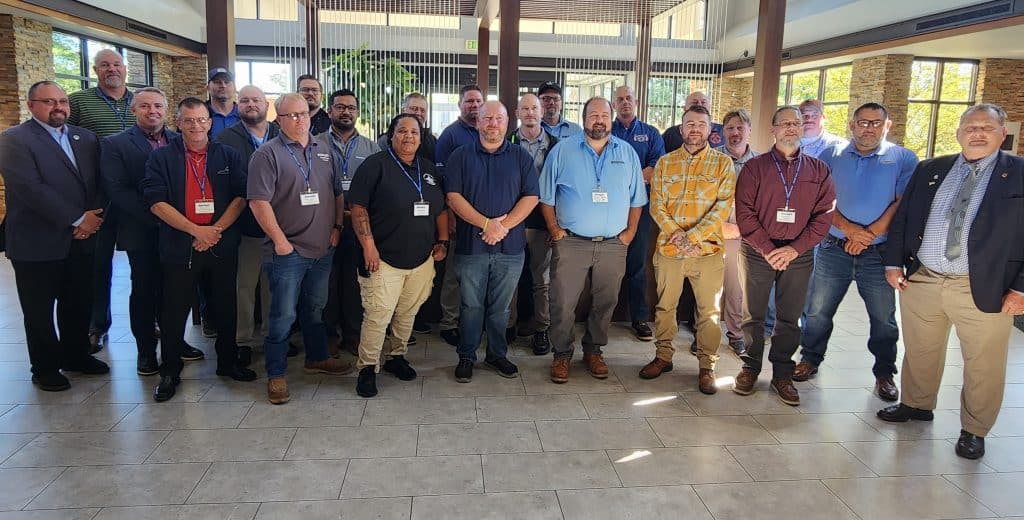
Effective Communication attendees
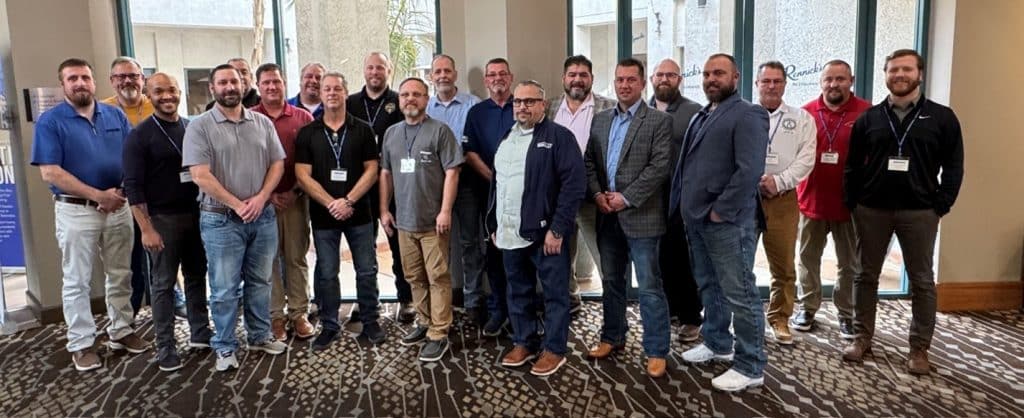
The Education Department held its Effective Communication I class in Phoenix, Arizona, during the week of January 13, 2025. Effective Communication I is focused on improving and applying public speaking skills by giving participants the opportunity to write, research and deliver speeches in front of the class. Participants worked individually and in groups to build informational and persuasive speeches on topics picked at random.
Effective communication is vital for activists of all kinds in our union — whether speaking at a union meeting, testifying to the importance of project labor agreements in front of a city council or speaking to organizing workers coming off the shop floor, communicating impactfully and persuasively can concretely benefit SMART members.
“Over the course of the class, the participants made noticeable improvements in their public speaking comfort level and delivery,” SMART International Instructor Richard Mangelsdorf reported.
Organizing I participants
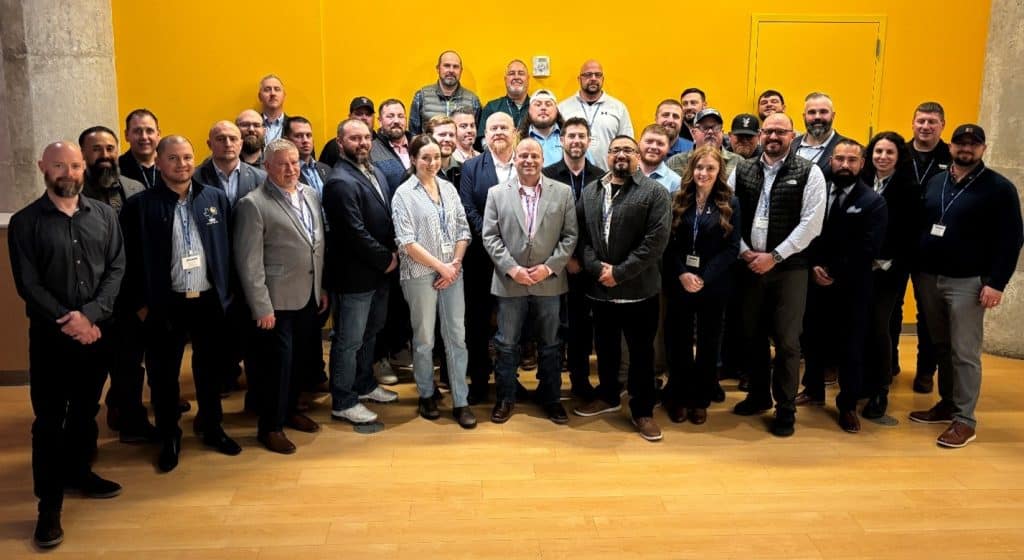
SMART members traveled to Dallas, Texas, approximately one month later to attend the Education Department’s Organizing I class during the week of February 10. The class, completely redesigned for 2025, focused on developing practical competency in the skills and process required to successfully facilitate “bottom-up” organizing campaigns: equipping organizers with the ability to help workers unionize their workplaces and join SMART.
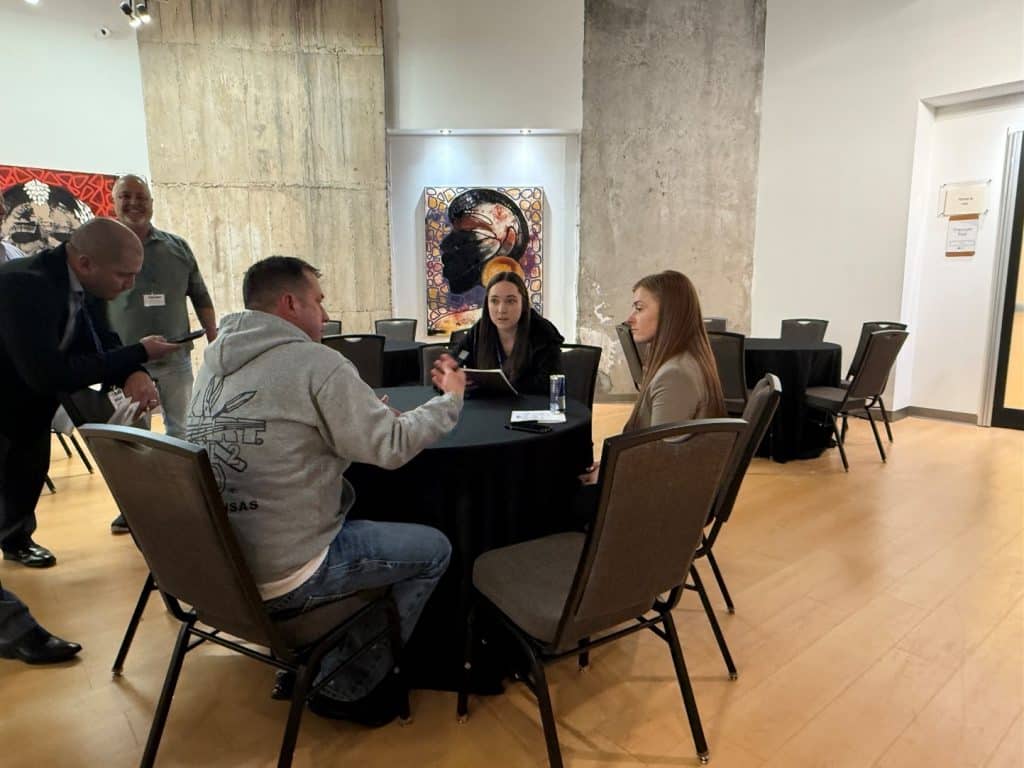
Throughout the week, participants worked in small “local” teams in a comprehensive enactment that mimicked a bottom-up campaign. Each group worked as an organizing team and role-played the workers at two fictional companies — Alpha and Beta Sheet Metal — based on character backgrounds provided for the simulation.
Organizing will be crucial to our union in the months and years ahead, and attendees approached the class with an appropriate level of intensity.
“Participants were genuinely engaged in the simulation and were observed organizing each other after hours, on their own time,” Mangelsdorf remarked. “Everyone did a fantastic job working with their groups and playing their parts.”
Education Dept. hosts second annual Production Institute
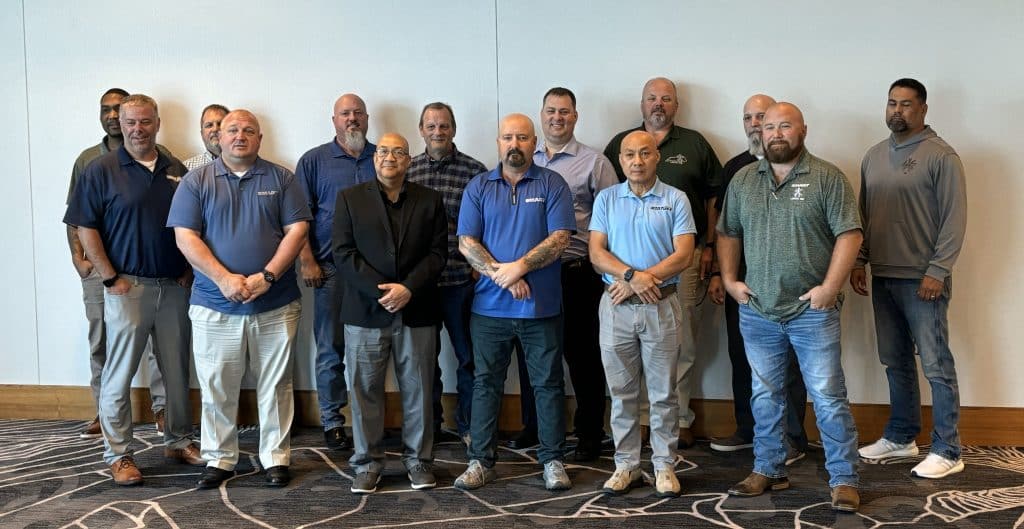
The SMART Education Department held its second annual Production Institute in Indianapolis, Ind., during the week of September 9th — bringing SMART production members and leaders together to build knowledge, skills and camaraderie, and to strategize for the years ahead.
The Production Institute is a three-year, progressive-format class, with attendees from last year advancing to the second round of courses. A new first-year class attended this year, along with the returning 2023 group.
All classes included production-focused content in the core areas of collective bargaining, steward training, organizing and labor history. Attendees also learned about more timely issues in daily breakout sessions on topics such as labor/labour law updates, the open shop agenda and Project 2025, a MEMO focus group, bias and belonging, and the production salting program. Through interactive exercises, attendees were able to apply their knowledge and develop their skills while also getting to know their peers from across North America.
First-year classReturning second-year class
New Representatives class helps latest crop of SMART leaders develop skills
Newly elected and appointed SMART representatives traveled to Linthicum Heights, Md., during the week of September 16th, 2024, to build bonds and learn from one another in the SMART Education Department’s New Representatives I class. The new representatives worked in different groups on activities associated with topics like member misconduct, jurisdictional disputes, contract administration, pre-job meetings and crafting local union meeting reports. In addition, participants built a leadership growth plan to identify areas they would like to develop more as leaders and created specific goals around each item to help them grow throughout their careers.
Education Department hosts class on so-called “right to work” to boost member engagement, organizing
The SMART Education Department held its new “Right to Work and Member Retention” class in Detroit, Mich., during the week of September 30th. The class focused on the open shop movement, the impact of so-called right to work, strategies for improving membership retention, and the critical role that union leaders play in maintaining local union power.
Twenty-three participants from across our union worked together to problem solve and create action plans for their respective locals. The class also took time to celebrate the repeal of Michigan’s right-to-work law and the role that Michigan Locals 7 (Lansing), 80 and 292 (both Detroit) played in that process.
“Everyone’s hard work will help strengthen our union!” said SMART International Instructor Richard Mangelsdorf.
The SMART Education Department held its New Business Managers class in St. Louis, Mo., during the week of November 18, 2024. The new business and regional managers built comradery throughout the week as they worked on different group exercises focused on managing their local unions.
As part of the course, participants created strategic action plans that prioritized improvements in the areas of personal leadership, union representation, growth, resources, trust funds and community relationships. New business and regional managers also created a strategic action plan for their local and presented it to the class.
“The class will meet online in six months to see how everyone is proceeding with their plans,” said International Instructor Richard Mangelsdorf. “Well done, everyone!”
The SMART Education Department held its new “Right to Work and Member Retention” class in Detroit, Mich., during the week of September 30th. The class focused on the open shop movement, the impact of so-called right to work, strategies for improving membership retention, and the critical role that union leaders play in maintaining local union power.
Twenty-three participants from across our union worked together to problem solve and create action plans for their respective locals. The class also took time to celebrate the repeal of Michigan’s right-to-work law and the role that Michigan Locals 7 (Lansing), 80 and 292 (both Detroit) played in that process.
“Everyone’s hard work will help strengthen our union!” said SMART International Instructor Richard Mangelsdorf.
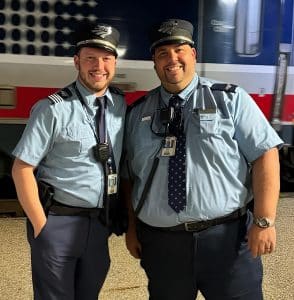
Conductor Nathan Hatton arrived at work on August 9th ready for an ordinary shift. The twice-daily Amtrak run between Pontiac and Battle Creek, Michigan, is usually busy, but calm. Hatton and Dallas Jeffs, his assistant conductor, greeted passengers as they boarded.
One passenger, ticketed for the three-hour trip to Battle Creek, caught Hatton’s attention.
“This passenger was traveling a long distance, and yet he only had one small suitcase. When I greeted him, he was nonresponsive and avoided eye contact.” Hatton explained. The passenger was also wearing camouflage and knee pads.
LESSON 1: KNOW THE PATTERN AND WATCH FOR ANOMALIES
Conductors Nathan Hatton and Dallas Jeffs collaborated to stop a potentially dangerous situation aboard an Amtrak train.
As the local chairperson for LCA-769A, Hatton attended SMART-TD’s 2024 National Training Seminar in July. His training included a session on de-escalation techniques for transit workers. Such training is part of the union’s ongoing effort to confront the rising epidemic of violent assaults involving bus and passenger rail workers across the United States.
“In the training we were taught to watch for things that stuck out to us as not normal. He was checking a lot of the boxes on the list. Things our instructor, John Bostain, told us to be aware of and not to blow off,” Hatton said.
Bostain, an instructor for Command Presence Training, modeled his course on techniques used by the U.S. Marine Corps to anticipate and, if possible, defuse tragic events.
“When anomalies start to pile up, it’s an indication something is potentially wrong,” Bostain taught. “That’s when the transit worker must decide what to do to protect the safety of themselves and their passengers.”
Hatton quietly shared his observations with Jeffs, and they agreed to keep an eye on their unusual passenger.
LESSON 2: WATCH FOR SIGNS OF A PERSON IS IN CRISIS
Early in the journey, the passenger stood from his seat near the front of the car, removed his case, and moved it to an easily accessible luggage rack behind all the other passengers. He returned to his seat for a time, then moved to the cafe car. Hatton observed as the man ordered three shots of gin.
“The single most important technique for dealing with people in crisis is not escalating,” Bostain wrote. It is easy to accidentally make a situation more intense through confrontation, when a tense situation calls for a delicate touch.
While the passenger was occupied in the bar, the conductors decided it was time to see what was in that case. Hatton kept watch while Jeffs opened the case and discovered multiple loaded firearms. Amtrak police were contacted and discreetly boarded the train in Jackson, an hour out from Battle Creek. Jeffs moved the case to a vestibule, out of sight of other passengers, where the officer could discreetly inspect it.
LESSON 3: STAY CALM, CREATE SPACE AND GET BACKUP
With 15 minutes left in the journey, the Amtrak police proceeded cautiously. By this time the passenger seemed intoxicated, and he may have been armed. While they kept watch, Hatton also contacted the Battle Creek Police Department. The man was detained as he stepped off the train.
REMEMBER YOUR TRAINING
While there is no way for Hatton and Jeffs to know the plan or intentions of the man, his behavior was erratic and, improperly handled, had the potential of being catastrophic.
By staying calm and working strategically, brothers Jeffs and Hatton may have saved their own lives, as well as several others.
The SMART Education Department held its Organizing I class in Dallas, Texas, during the week of February 12th. The three-day class covered topics including the history of organizing, basic labor and labour law, top-down and bottom-up organizing, pressure tactics, digital organizing, implicit bias and SWOT and GAP analysis. Each of the 40 organizers and business representatives who attended the class developed organizing pitches, identified unfair labor practices, role played contractor interactions and prepared SWOT and GAP analysis for their goals as an organizer.
The SMART Transportation Division is pleased to announce the first joint SMART Union Annual Leadership Conference. The event will replace the former TD Regional Meetings, which have had a two-year pandemic disruption. Please pay close attention to the following details as several changes have been made.
The 2022 Annual Leadership Conference is scheduled to take place Aug. 8-11 at the San Francisco Hilton Union Square, 333 O’Farrell St., San Francisco, CA 94102. The conference will be reserved for state board and general committee officers and the event includes the Sheet Metal Business Agents’ meeting.
For SMART-TD local officers, we are excited to continue our training strategy established during the COVID-19 pandemic of true “regional meetings.” The Regional Training Seminar (RTS) model was established to provide training close to the local in efforts to reduce the sometimes-prohibitive financial expense related to sending officers to these educational events. By providing training at multiple geographic locations and dates throughout the year, it will greatly assist in removing some of the logistical obstacles for local officers who want to attend.
During 2021, SMART-TD held four RTS in strategic locations that provided thorough and practical training for local officers. All were very well attended and received. General Chairpersons and SLDs will identify locations where there’s a demand for training and assist with organizing the event. We encourage locals and their officers to reach out if they would like an RTS. Once host locations are identified and chosen, information will be shared on our website and social media platforms about how to attend.
In addition, online SMART University training for members and officers will be made available in the very near future. In-person local secretary & treasurer workshops also will continue to be offered by SMART-TD and promoted on the TD Local Toolbox page when details are finalized.
Training is the backbone of our organization and SMART Transportation Division leadership is committed to bringing access to educational materials to all members and officers.
A more detailed article with additional information about the new structure of SMART-TD’s educational efforts will be released very soon.
Attendees participate in an educational session in Topeka, Kan., on June 23. (Photo courtesy Zach Nagy) The leadership of GCA-953 (Union Pacific) have kicked off a slate of educational sessions for local officers and members. The first of six sessions took place June 22 and 23 in Topeka, Kan., with General Chairperson Luke Edington, Associate GC Ian Reynolds and Sr. Vice GC Zach Nagy hosting and teaching the classes. The curriculum included training on serving as a union officer, an overview of officer duties, website training, filing a proper time claim, writing a discipline appeal and a mock arbitration session. Transportation Division President Jeremy Ferguson made a guest appearance through Zoom, Vice President Brent Leonard spoke in person and Larry Romine from Reliable Retirement spoke through Zoom. “We had attendees including local presidents, local chairpersons, vice local chairpersons and secretary/treasurers from four states in attendance,” Nagy said. The GCA has plans for five more sessions in Omaha, Cheyenne, Salt Lake City, Portland and Waukesha, Wis., as the summer progresses. For more information about time and locations, email Nagy at znagy@utu953.org.