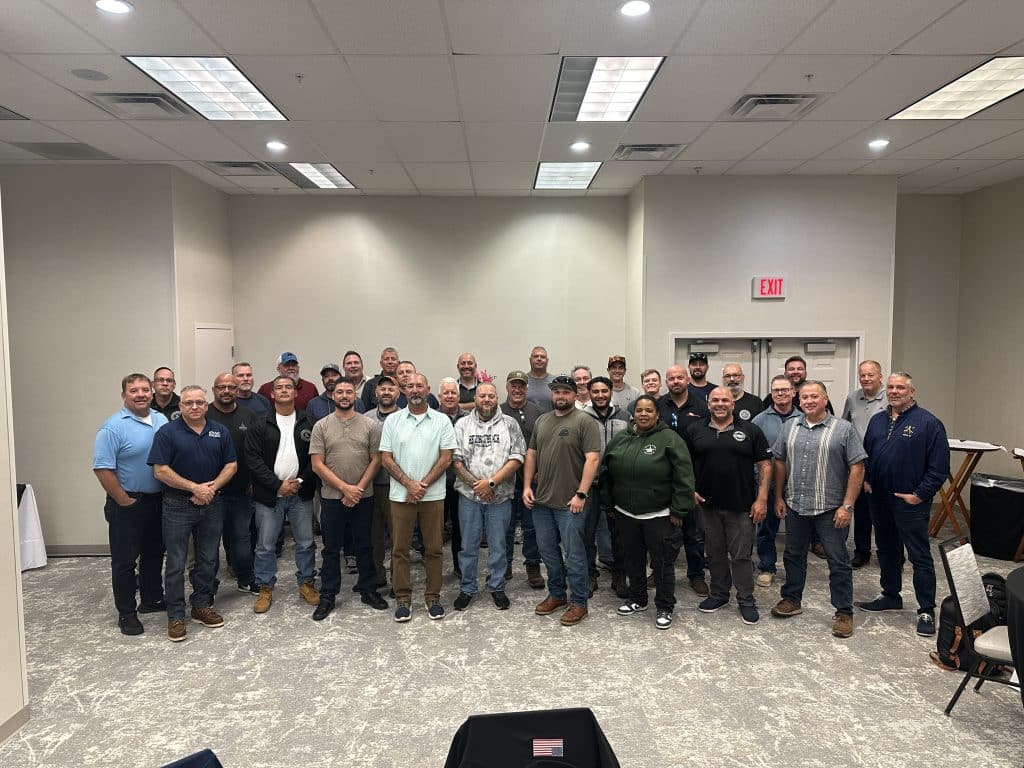
On Tuesday, October 28, SMART Transportation Division President Jeremy Ferguson, along with a delegation of national, general committee and local leaders, joined Norfolk Southern (NS) new hires at the company’s McDonough Training Center. The impromptu town hall brought together 97 fourth- and fifth-week trainees with the union that will have their backs every step of their careers. 

The event was made possible thanks to brothers Kelvin Hill and Greg Glenn. Both men are longtime NS employees and fixtures in the Atlanta area and Local 1245. Leading by example, Hill and Glenn go above and beyond to make sure new hires understand not just their job duties, but also the lifestyle, expectations that come with a railroad career and the support that’s a hallmark of their membership in SMART-TD. 

Brother Hill serves as a local chairperson and local safety and legislative representative, while Brother Glenn serves as a local chairperson and 2nd vice president of his General Committee. Together, the two have a long-standing agreement with Norfolk Southern to meet privately with every class of new trainees during their fifth week of instruction.  

Merger agreement creates stability for trainees 

When recent news of the proposed Union Pacific/Norfolk Southern merger sparked understandable anxiety among the trainees, Hill and Glenn saw an opportunity. With SMART-TD’s Regional Training Seminar (RTS) taking place nearby in Atlanta this week, they reached out to arrange a special visit. Their goal was simple: to get answers for our new brothers and sisters straight from the top. 

“Over the past few weeks, a lot of these men and women have been worried about what’s next for them,” Hill told SMART News. “Greg and I knew that if we could get our leadership in the room, (the people who are actually at the negotiating table), it could give these new brothers and sisters the clarity and confidence they deserve.” 

Their initiative quickly grew into a unionwide show of solidarity. Joining the session were President Jeremy Ferguson, Vice President Brent Leonard, NS General Chairpersons Tommy Gholson (GCA 898) and Nick Greficz (GCA 687), several vice general chairpersons, a few local chairpersons and other local officers who were in town for the RTS training. 

By the time the Q&A began the room was filled with experience, leadership and genuine care for the next generation of railroaders. 

“This went way beyond what I imagined,” Hill said. “These brothers and sisters haven’t even been to their home terminal yet. They haven’t been to a single local meeting and haven’t paid one dollar in union dues. And there they were, sitting in a private meeting with the president of the entire union, hearing directly from the leaders who can answer questions about the exact terminals they’ll be working in. It was absolutely next level.” 
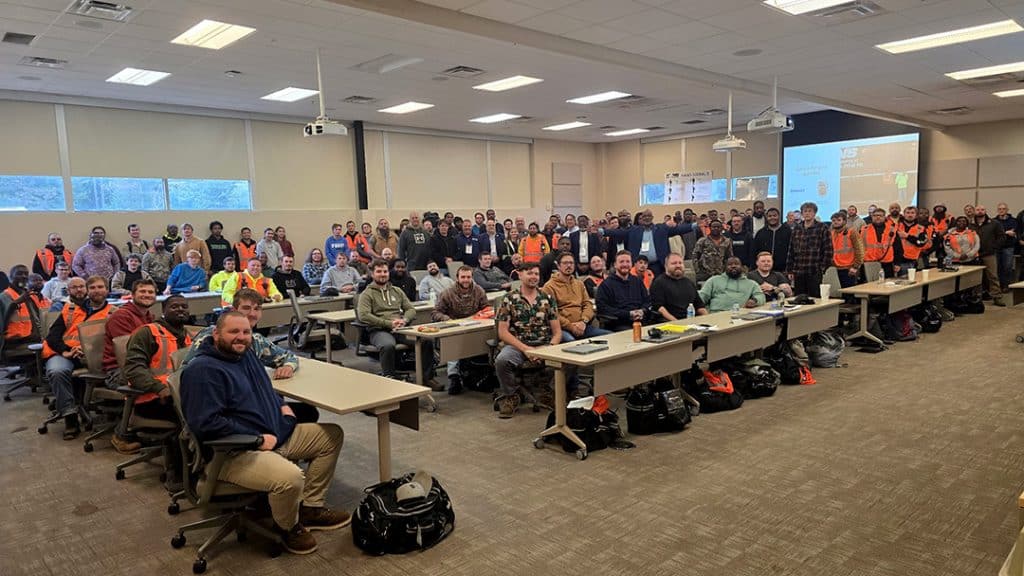
Turning uncertainty into empowerment 

President Ferguson addressed the trainees directly, answering questions about SMART-TD’s historic “Jobs for Life” agreement, a deal he personally fought to secure with Union Pacific and Norfolk Southern. Should the merger go through, the agreement guarantees job security for union members from now until the day they choose to retire. 

“I’m proud that we’ve made real progress toward giving you something no generation before you has had. That’s true job security,” Ferguson told the group. “But with that gift comes responsibility. You’ve got a career ahead of you and right now, your focus should be on learning how to stay safe doing it. Learn the rules, build good work habits and keep your awareness sharp. We’ve helped make sure you’ve got jobs for life — now it’s up to you to make sure you’re not cutting that life short.” 

He also reminded the trainees that the work SMART-TD does nationally is possible because members stay active locally.

“When you get to your terminals, get involved in your local. Ask questions. Be informed. You’re part of something much bigger than just a job.  You’re part of a movement.” 

Assistant Director of Organizing Andy Goeckner also took the opportunity to congratulate the trainees on their progress and to welcome them into the SMART-TD family. 

“You don’t have jobs anymore,” Goeckner told them. “You all have careers. And in addition to that, you have a family in SMART-TD that’s here to make sure you never lose it. The future of this industry depends on people like you. And our job is to make sure that future is secure, safe and strong.” 

The event also received support from Jason Myers, who oversees the McDonough Training Center for Norfolk Southern. Myers helped Brothers Hill and Glenn make the meeting possible. 

As the meeting concluded, the sense of unity in the room was undeniable. What began as a simple idea by Brothers Hill and Glenn had evolved into a powerful moment of connection between SMART-TD’s leadership and its newest members.
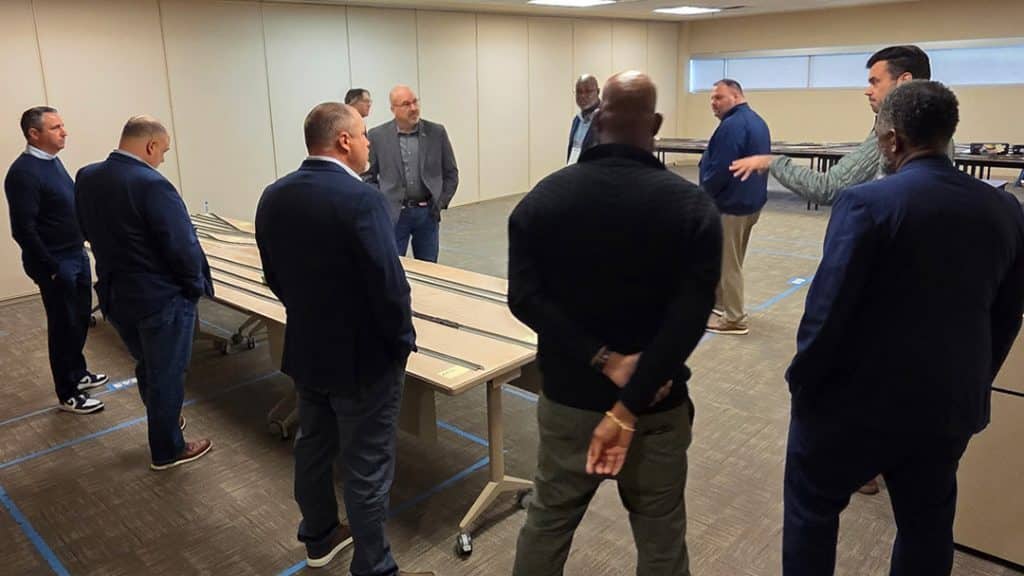
Welcome to the SMART-TD family 

“This is what unionism looks like,” Hill said. “From the president of the whole organization down to the newest trainee, everyone in that room was pulling in the same direction.” 

The men and women who attended that session are stepping into their railroad careers with a rare advantage. Thanks to the Jobs for Life agreement, their path is more stable than those who came before them. But as President Ferguson and the leadership team reminded them, stability doesn’t mean complacency. It means responsibility. 

It means learning the craft, working safely and honoring the generations who fought to make this progress possible. It means carrying the SMART-TD legacy forward, stronger than ever. 

The SMART Education Department and Production Workers Department held the third annual Production Institute in Indianapolis, Ind., during the week of August 25, 2025 — bringing together union officials from across North America, including rank-and-file stewards, to train on how to effectively represent SMART production members.

The Production Institute is a three-year, progressive-format class, with attendees from last year advancing to the second round of courses. A new first-year class attended in 2025, along with the returning 2023 and 2024 groups. The first years studied the basics of labo(u)r history, steward training and collective bargaining. The second-year class was focused on a more in-depth investigation of organizing, steward training and collective bargaining. Finally, the third-year class prepared for and role-played a mock grievance arbitration and collective bargaining sessions.

“Each day, all three classes were brought together to talk about subjects like right to work and knowing your rights for the U.S. participants, while the Canadians discussed top-down organizing strategies in the production sector,” said SMART Director of Education Eli Baccus. “Congratulations to the third-year class for being the first-ever students to graduate from the Production Institute!”

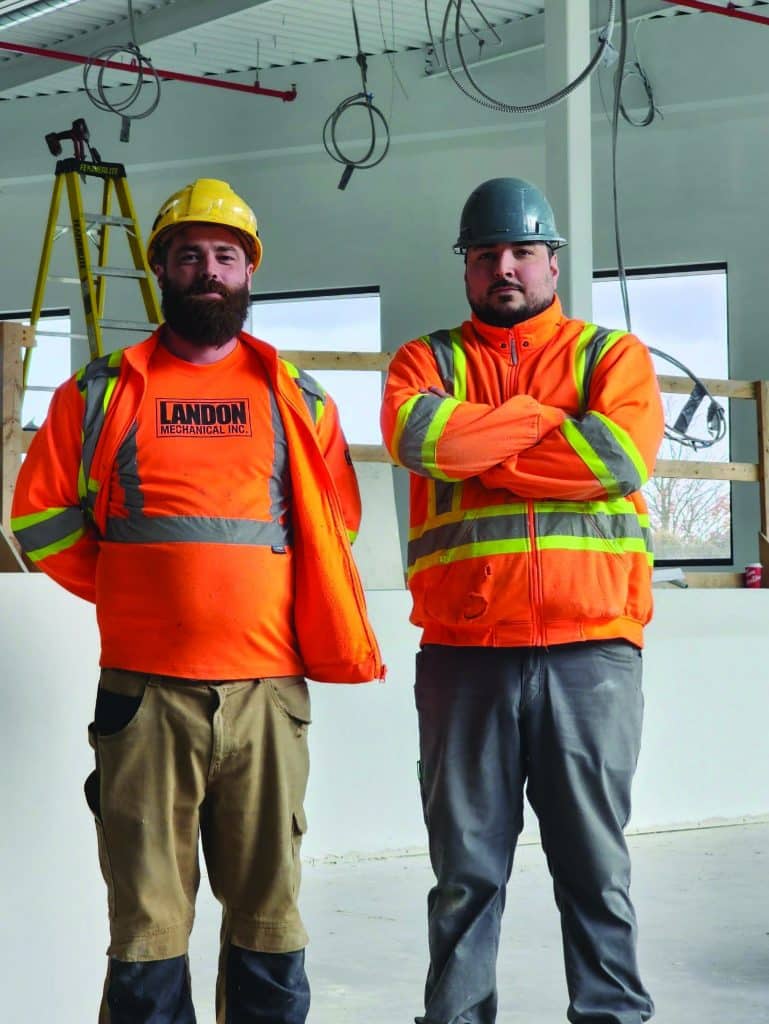
After two years of hard work, Local 537 (Hamilton, Ontario) Organizer Tim Last achieved a major milestone. He accomplished not only a personal career goal but an important goal for the organization — under the leadership of Business Manager David Har­rison — by organizing Landon Mechanical, the area’s largest nonunion competitor. The company has a significant market share, with 13 jobs on the go and six more about to start.

When Last first began orga­nizing Landon Mechanical, his persistence and consistency started to make an impact. Over time, small groups of workers began leaving the contractor to join Local 537, enticed by the employer-paid pension and benefits package. Even a few forepersons made the switch.

It didn’t take long for manage­ment to notice the steady loss of employees.

“If they kept losing their labour force, they would have trouble fulfilling their contracts,” Last recalled.

Crews were stretched so thin that eventually, Landon Mechanical was left with a choice: keep fighting or partner with Local 537 to stabilize their workforce and secure their future.

Last’s pitch to management was simple: “By joining Local 537, you get the labour force you need to not only stay alive and keep thriving, but to grow.”

Since certifying the company of roughly 48 members, Local 537 has already added 25 more members to the company, a huge accomplishment for a local that is already operating at full employment.

Looking back on the organizing campaign, Last sees it as more than just a win for one company.

“I’m very confident this success will inspire other nonunion companies to stop thinking of us as the big bad union,” he said, “and instead see that partnering with us helps their companies grow and be successful.”

In other words, it’s a win-win-win: “The contractor wins by getting skilled labour and opening new markets. We help keep them competitive through subsidized labour. Their employees win with the union package. And our local wins by gaining market shares and strengthening our labour pool for the future.”

But getting there wasn’t always easy. The two-year campaign came with its share of challenges, with Last never knowing just how close he was to a breakthrough. During those tough stretches, he leaned on the Ontario group of organizers, a close-knit group that stays in touch to celebrate victories and offer encouragement when faced with setbacks. That same spirit of collaboration was extended to Local 537 from other Ontario sister locals, who worked alongside Last to support Landon jobs across the greater Toronto area.

This success comes at a time of major growth for Local 537, which has added nearly 200 new members over the past year, including those from Landon Mechanical. Many of those members are now working on a major hospital infrastructure project, while the local has already started supplying members to a battery sepa­rator manufacturing facility.

That’s the union difference!

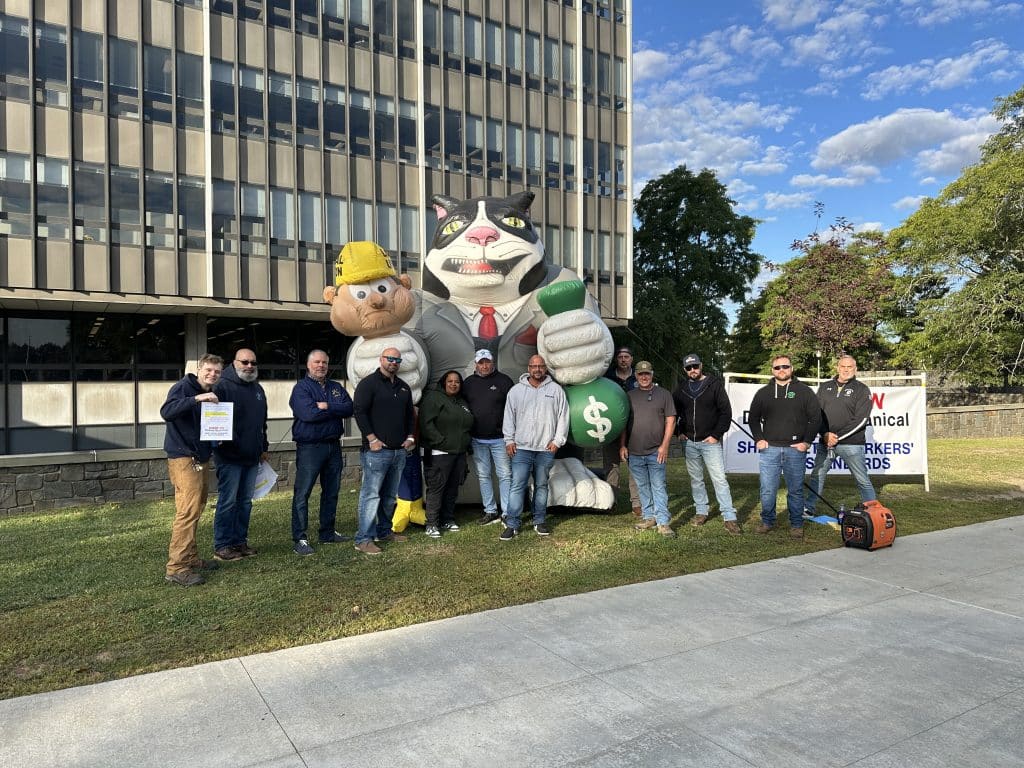
The 2025 SMART Northeast Region I Organizers Meeting was held September 9–10 in Clifton Park, New York, bringing together local union organizers, business managers, business agents and training coordinators from across the northeast of Region I, covering Virginia to Maine.

SMART Director of Organizing Jason Benson, Regional Director Frank Sullivan and International Organizers Tom Kelm, Warren Faust and Frank Greer provided field training to both experienced organizers and 11 newly appointed organizers, who participated in their first regional meeting.

The two-day meeting opened with sessions on SMART organizer expec­tations, street law, Construction Organizing Membership Education Training (COMET) and strategic campaign planning. Day two featured an in-field job action exer­cise at three different sites in SMART Local 83’s jurisdiction, as well as a debrief that provided hands-on experience in applying these orga­nizing strategies. The meeting ended with local organizers’ reports and an open floor discussion, fostering collaboration, knowledge-sharing and alignment on SMART’s orga­nizing priorities across the northeast portion of Region I.

Organizing is how we win!

By: Austin Keating, originally published in SNIPS

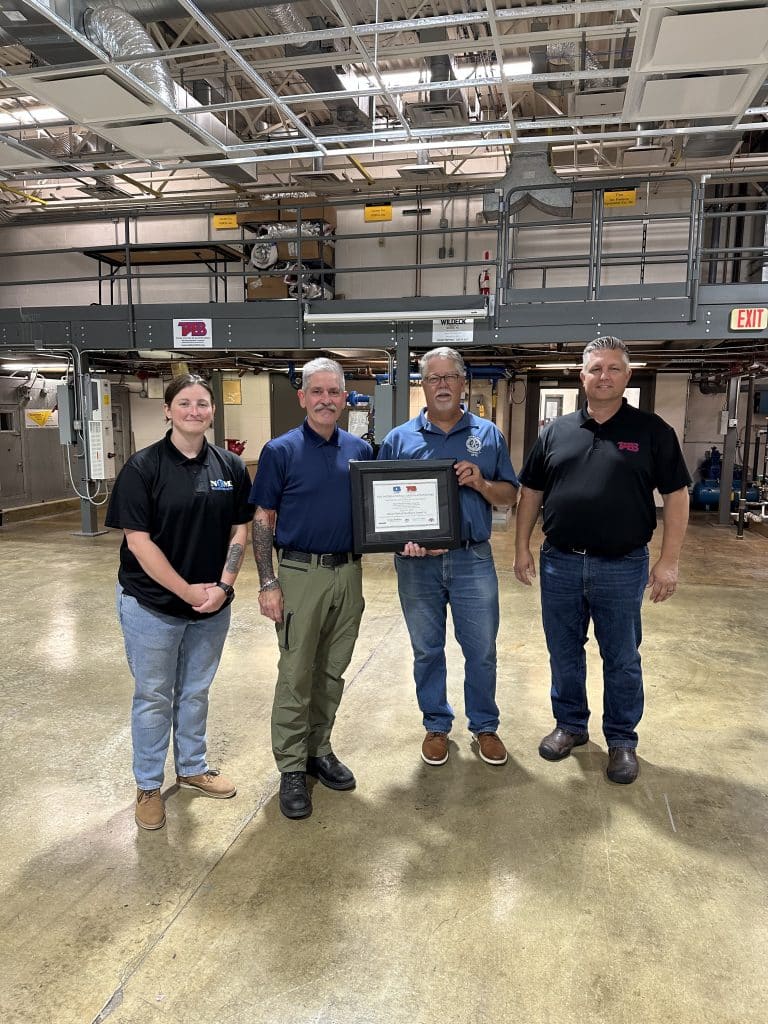
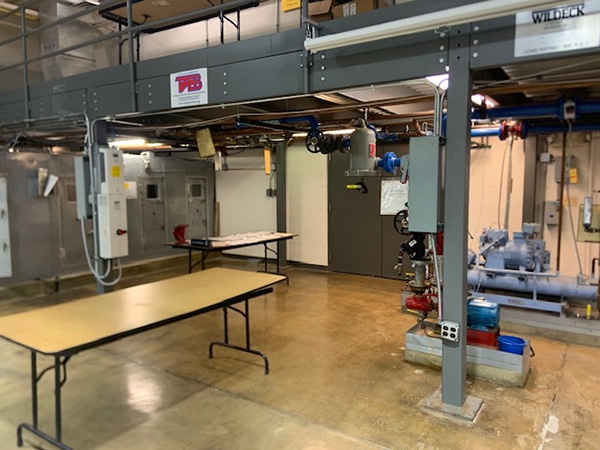
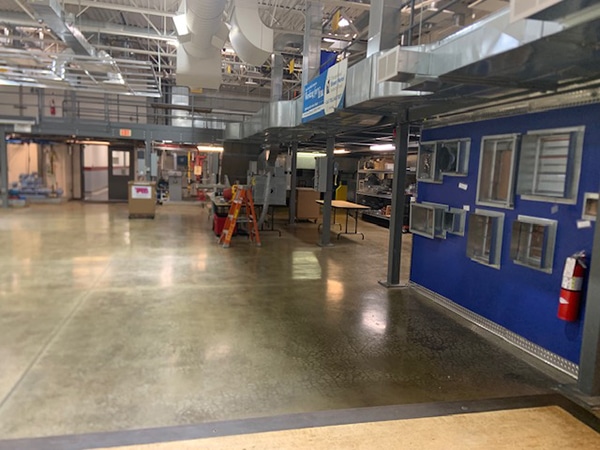
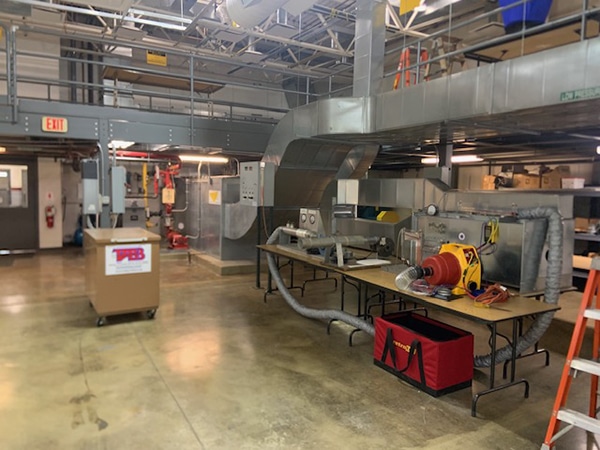
As wave of workforce demand sweeps the United States, the need for highly skilled, certified HVAC testing, adjusting and balancing (TAB) techni­cians has reached a critical point. In response, Chicago’s SMART Local 73 has opened a newly certified TAB lab — one of just 11 nationwide — to meet the industry’s most rigorous and current standards, and to provide a lifeline for both local apprentices and experienced technicians.

The lab’s recent certification by the International Certification Board (ICB) — under the National Energy Management Institute (NEMI) — ensures that more candidates can now complete their hands-on perfor­mance exams in Chicago, rather than traveling out of state. It’s a significant boost for the pipeline of certified TAB professionals, a group in high demand as older technicians retire and the complexity of building systems continues to climb.

From hall of famers to the next generation

For Leo Thier, a JATC instructor at Local 73 and a veteran of nearly four decades in the trade, the new lab is both a point of pride and a natural next step in a storied local tradition.

“I started my apprenticeship in 1987, and I was lucky enough to have the best instructors ever for TAB — John Christie and Gene Kennedy. They’re literally TAB Hall of Famers,” Thier recalled. “Now, our school has absolutely everything a sheet metal worker could come across, from architectural welding to a fully equipped TAB lab that just got certified.”

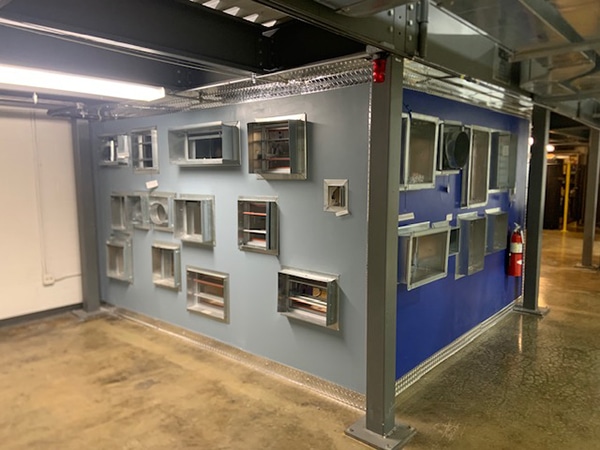
The facility features a clean room, fire damper walls and an array of both modern and legacy equipment — so students learn to balance everything from cutting-edge digital controls to the pneumatic systems still found in older buildings.

“We want to show both ends of the spectrum,” Thier said. “We’re adding new stuff to keep it current, but we keep the old controllers too, because that stuff’s still out in the field.”

Setting a national standard — and sharing it

Cassandra Kline, director of certification for ICB, empha­sized the broader impact: “Certifying labs like the one at Local 73 is a critical part of our mission. It guarantees that candidates are tested in facilities that meet rigorous, consistent requirements nationwide.”

The ICB/TABB certification process is accredited to the ISO/IEC 17024 standard, and it has recently been updated to reflect industry and regulatory benchmarks. As part of the transition to updated standards, previ­ously certified labs are undergoing recertification, with Local 73 being one of the first to meet the new benchmarks.

The lab’s reach extends beyond its own members.

“We had some members from other locals — 265, 20 — who wanted to take the test but didn’t have a school available because theirs was being rebuilt,” Thier explained. “We offered to help those members out as well. As far as TAB, you can test at any certified TAB school.”

Training for megaprojects, data centers and the future

The surge in demand for TAB technicians is driven not just by retirements, but also by a boom in projects like battery plants, high-tech manufacturing and data centers.

“This is where our trade is going,” Thier said. “Fire/ smoke damper technician, indoor air quality, building envelope — all those classes are getting more popular every day. Indoor air quality, especially, is a huge future for sheet metal workers.”

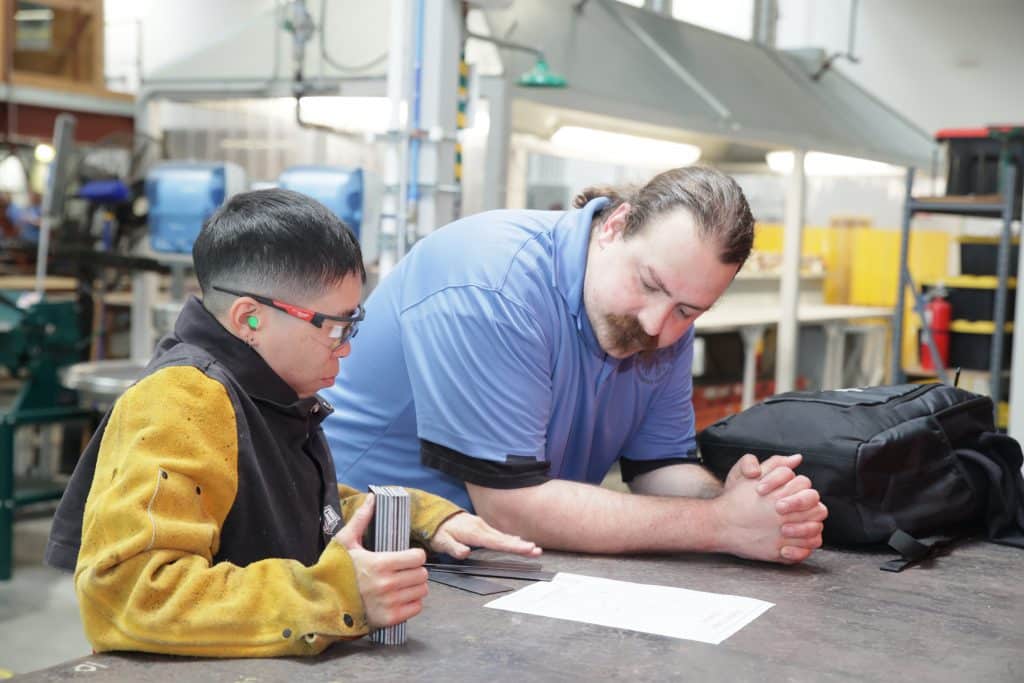
Certification is rigorous: Candidates must pass a five-hour written exam and a practical test at an ICB-approved lab, with pathways for advanced super­visor roles. Local 73’s program includes night classes, hands-on labs and, as Thier notes, a commitment to ensuring “everybody that takes the class gets the chance to pass the written test and then take the practical.”

The human side of certification

Thier credits his own mentors with sparking a passion for sharing knowledge.

“I can’t say enough about the instructors I had,” he said. “I picked their brains for every bit of information I could get. I’m just happy to pass it along. That’s what all members should be doing — sharing this information. The more we know, the better off we are.”

The curriculum at Local 73 goes beyond balancing airflows.

“We teach about commissioning, controls, everything,” Thier said. “Owners are hiring third-party commis­sioning agents to check building performance before letting in occupants. It’s all about integrity, and balancing is a big part of that. Owners should be able to trust our reports — they know these are certified people.”

Building trust, building the trade

For both Kline and Thier, the stakes are more than tech­nical; they’re about credibility and opportunity.

“I’m passionate about this because it’s about fairness for the candidates and trust for the industry,” Kline said. “By choosing a certified TAB technician, building owners can be confident the job is done right and meets the highest industry standards.”

With a certified lab now open in Chicago and more facilities upgrading across the country, Thier hopes the next generation will be equipped to meet this moment.

“The best way to build a reliable pipeline is to invest in new talent and make sure the standards are rock solid,” he said.

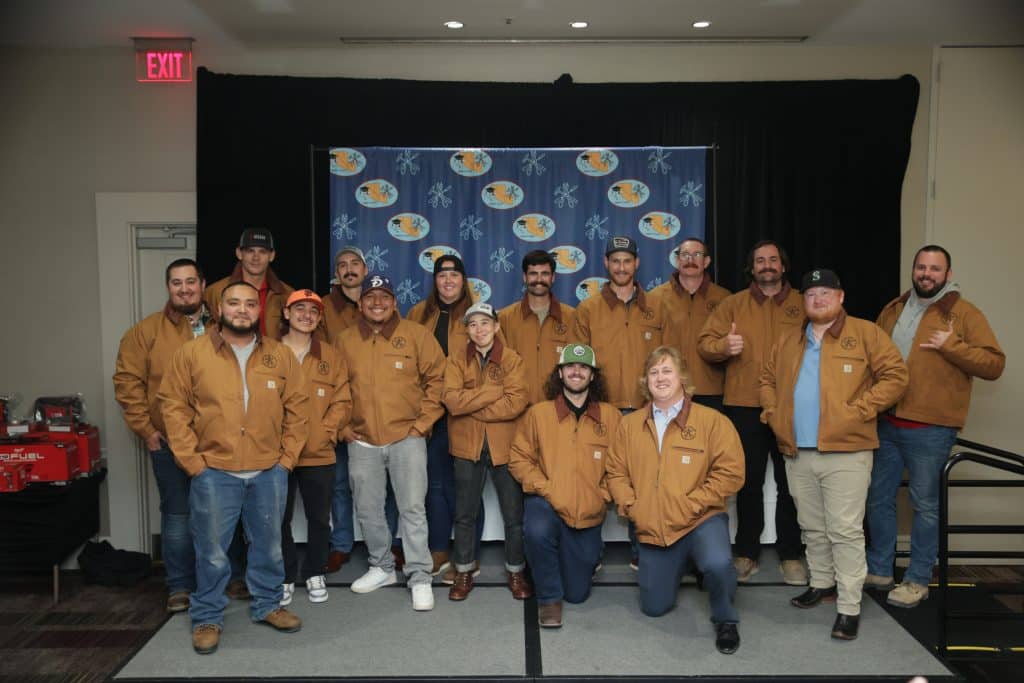
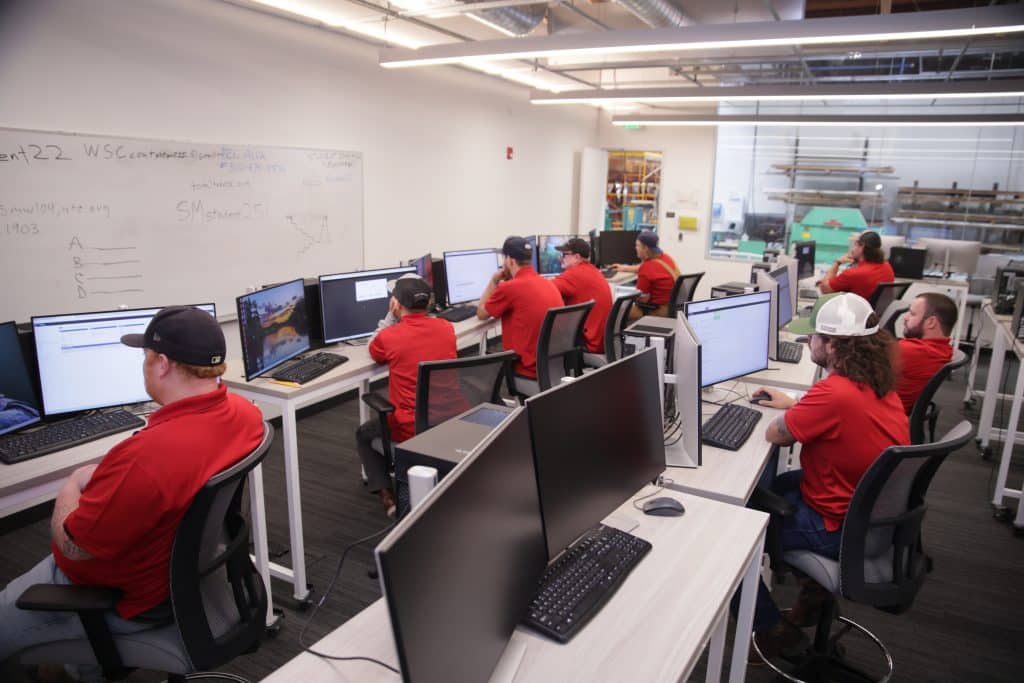
SMART Local 104 and the Bay Area Industry Training Fund hosted the Western States Apprentice Contest on July 18-19, 2025, at its Livermore, California, training center. Sixteen apprentices from five locals participated in the first contest in the region since 2011. Another first: the addition of the project management category, which made its debut for the first time at any regional contest.

California, Nevada, Arizona and Hawaii make up the SMART Western States Region, and apprentices and coordinators from Local 104, Local 105 in Southern California, Local 206 in San Diego, Local 359 in Phoenix, Arizona, and Local 26 in Sparks, Nevada, were represented at the contest. Each training program was allowed to send one competitor per 300 apprentices.

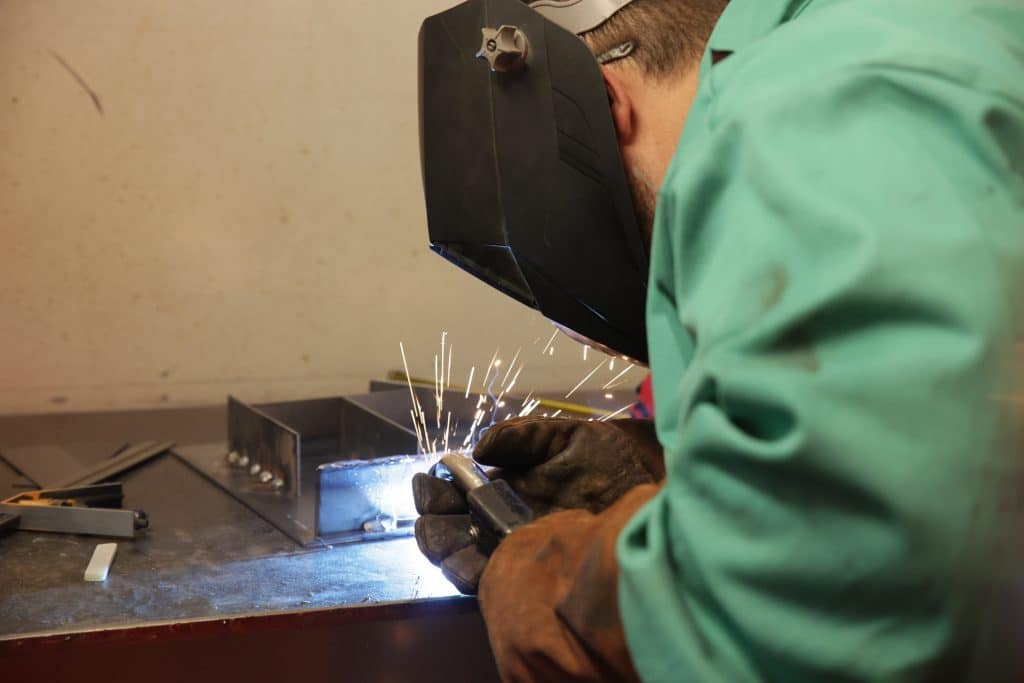
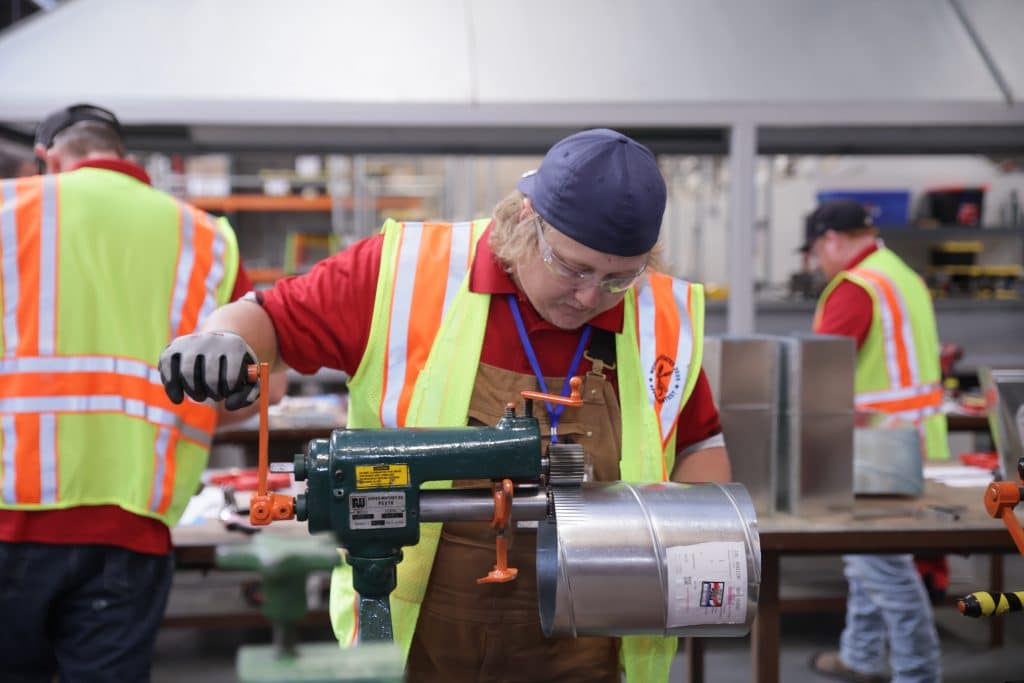
The competition projects were divided into four categories: architectural, HVAC, industrial/welding and project management, which tested apprentices on their organizational skills and attention to detail in a leadership position.

To compete, apprentices worked long days designing a gutter system, fabricating and installing a duct system, and performing field verification and site measurement. Working side by side, then decompressing together after tasks, they were forging connections with other future industry leaders.

In the new project management category, Austin Cummings, a third-year apprentice at Local 105, placed first, with Alex Giroux of Local 104 earning second place and Rebecca Suen of Local 104 placing third.

In the architectural category, Esteban Mercado, a third-year apprentice at Local 104, took first place, and there was a three-way tie for second place: Trevor Baker of Local 104, along with Dillon Uhern and Richard Morrison, both of Local 105. Giroux came in third.

In the HVAC category, there was a tie for first place between Mercado and Morrison. Baker took second, and Uhern came in third.

For the industrial/welding category, Uhern took first place with Suen in second and Tristan Haynes of Local 104 in third place.

Scores from all categories were combined to award the overall winners, and the honor of first place overall went to Morrison, with Cummings in second place and Uhern in third.

“Coming out of it, I thought I did all right but didn’t expect this,” Morrison said. “I prayed a lot.”

After years with no regional contest, this one came together thanks to an apprentice contest grant from the International Training Institute (ITI). Milwaukee Tool, a longtime partner with the sheet metal industry, generously donated an array of prizes.

Tim Myres, administrator for Sheet Metal Workers’ Local 104 and Bay Area Industry Training Fund, was a driving force behind restarting this contest, and training coordinator Nate Vennarucci and instructor Ben Alva, both from Local 104, put in the work to create and test the projects used in the contest, a process that began in October 2024.

Jason Ferguson, ITI field representative, was on hand to support the event and meet face-to-face with coordinators. He said the sense of accomplishment you feel as an instructor or coordinator, watching your apprentices succeed, is even greater than winning yourself.

“These apprentices are your future leaders, and today they’re getting to know others in the industry,” Ferguson said. “Intentional or not, they’re collaborating, they’re strengthening those relationships.”

What started as a regular day on the job quickly turned into an emergency when one of brother Jarid Morelli’s coworkers experienced a medical episode.

As a shop steward at AMBICO and a proud member of SMART Local 47 (Ottawa, Ontario), Morelli, along with his colleagues and fellow union members, take safety seriously — making it a top priority to ensure their coworkers can go home to their families at the end of each workday.

That priority became reality when a colleague suddenly collapsed on the shop floor. In a moment where every second counted, Morelli and his coworkers remained calm and acted quickly under pressure. Thanks to their fast response, training in first aid and the availability of an auto­mated external defibrillator (AED) on-site, they were able to save their colleague’s life.

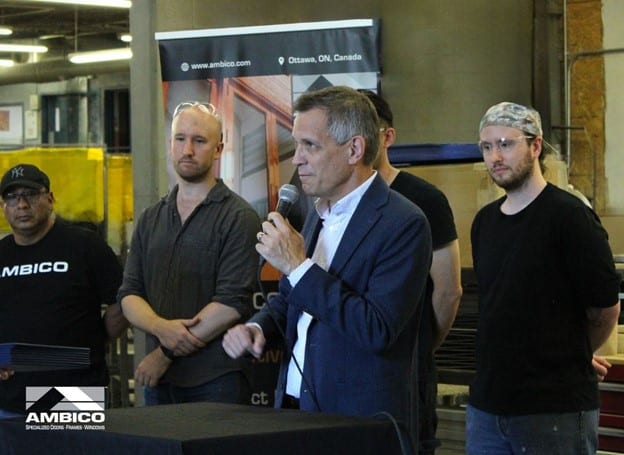
Mayor Sutcliffe visited AMBICO to present awards of commendation to members

It is part of Local 47’s policy to have all officers of the local trained in CPR and first aid. As both the health and safety representative and lead hand at AMBICO, brother Morelli received CPR training through the company as part of his role; training that proved vital in a critical moment.

The actions of Local 47 members Morelli, Luis Lopez, Cameron Pryor, Ruben Fuentes and David Court saved brother Andrew James’ life, and because of their quick thinking and training, James is not only alive today but can return to work. In recognition of their heroic actions, AMBICO worked with the city of Ottawa to get Ottawa Mayor Mark Sutcliffe to present our Local 47 brothers with awards of commenda­tion, a well-deserved honour that reflects their outstanding service.

The incident served as a powerful reminder of the importance of safety preparedness and the need for the right equipment and training. Access to AEDs and regular emergency response training are vital tools that save lives and foster a work culture where safety and readiness are prioritized.

This potential tragedy was turned into a story of resilience, readiness and the power of looking out for one another.

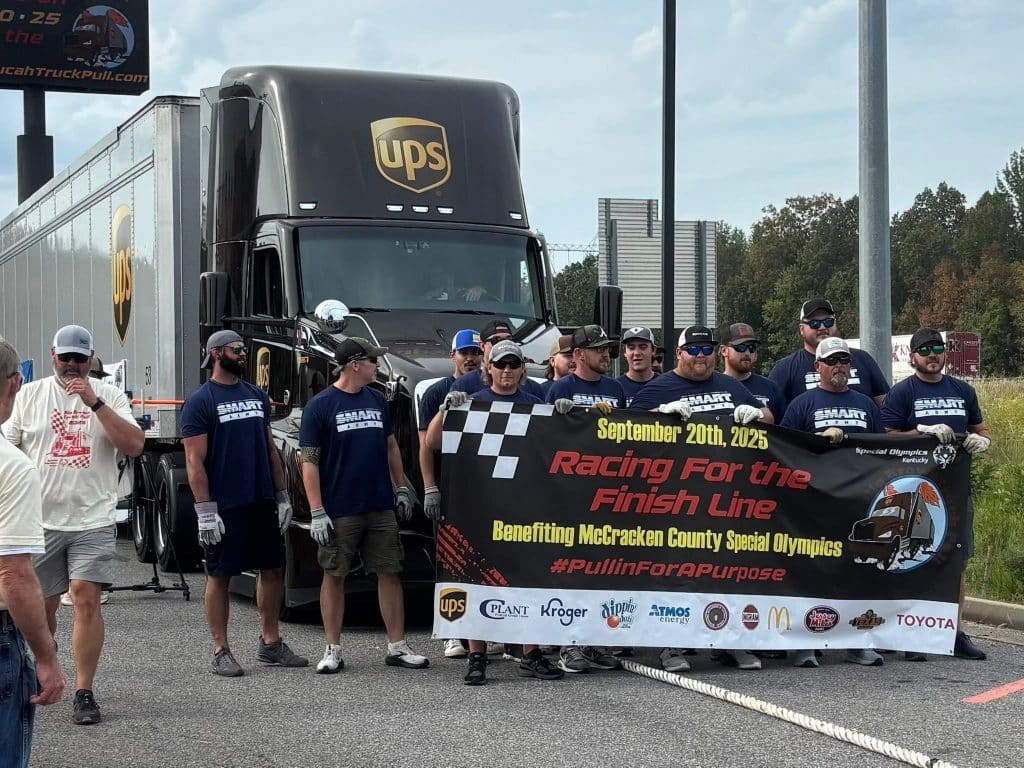
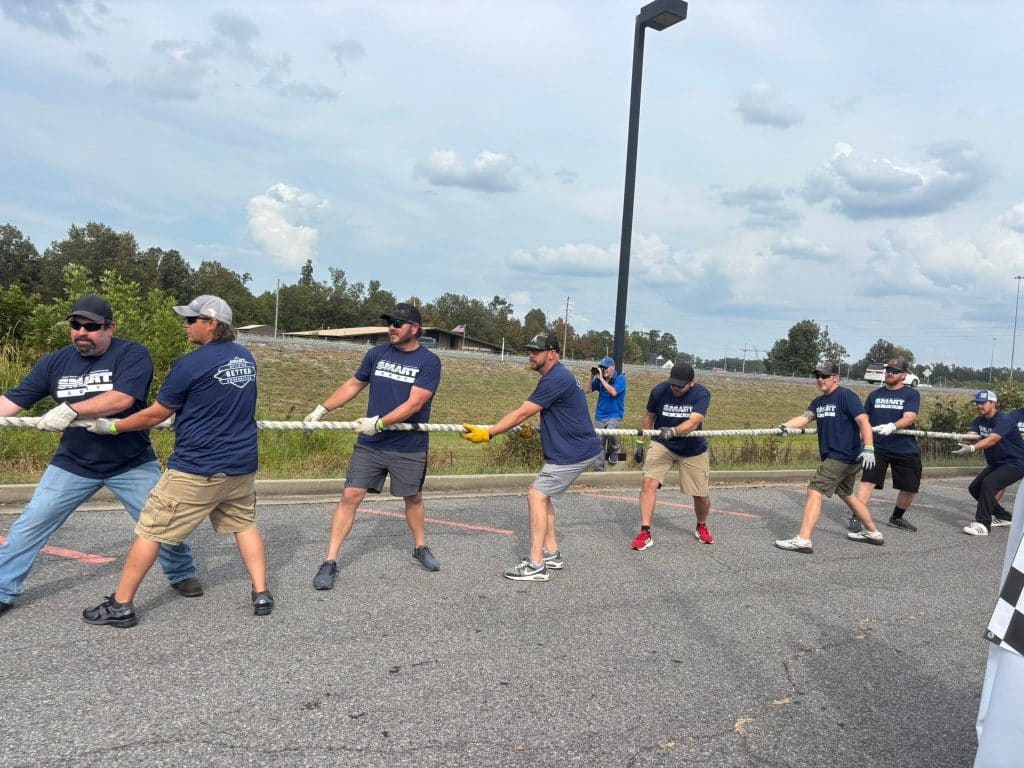
Each year, Special Olympics Kentucky hosts the Big Brown Truck Pull to raise money for local athletes. Teams of 15 take turns pulling an 18-wheeler UPS cargo truck 12 feet; the teams with the fastest pull times win trophies in dif­ferent categories, with awards also given for fundraising, team spirit and more.

SMART Local 110 showed up in force for the Paducah event, taking third place in the pull and second place in most money raised. Together with other teams and participants, SMART members helped provide funding for Special Olympics athletes to compete in basketball, bowling, softball, cheer leading and track and field year-round on the local, regional and state level, traveling to tourna­ments in Bowling Green, Richmond and Louisville.

That’s what our union stands for. Great work, Local 110!

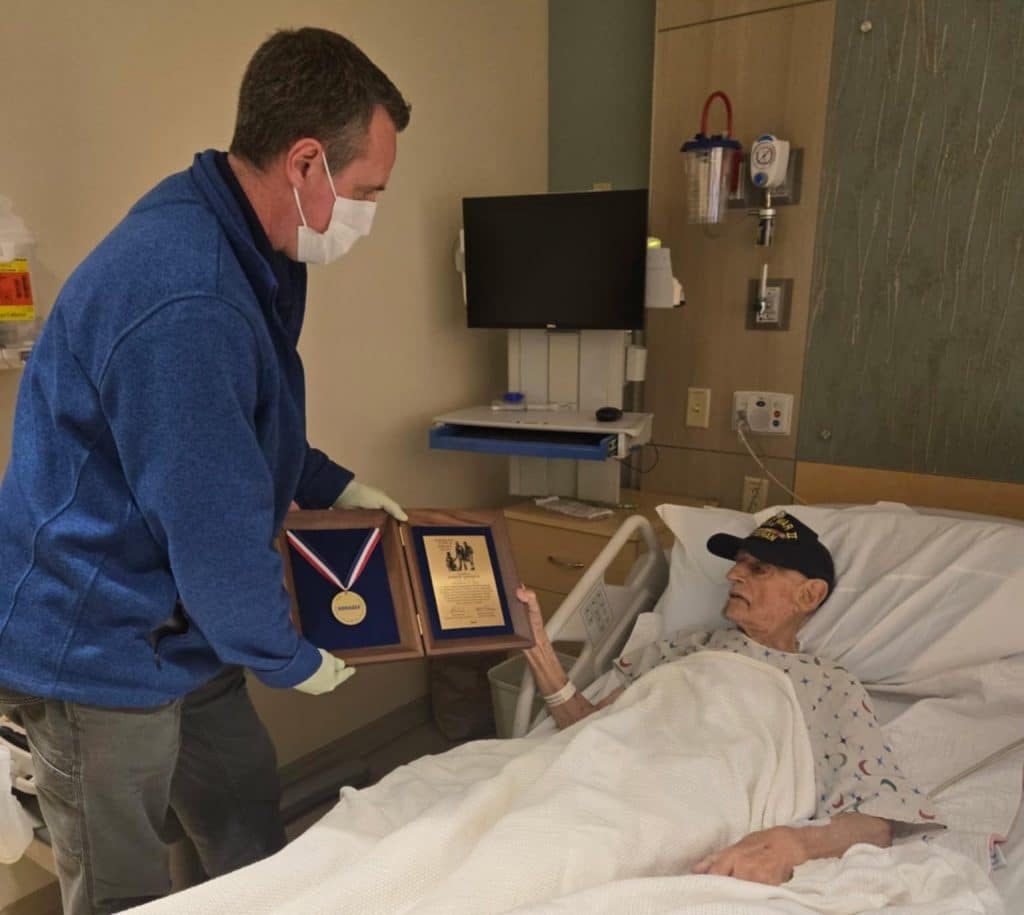
In October 2025, SMART Local 83 (Albany, New York) celebrated brother Joe DeMarco, who at 99 years old was one of the local’s oldest living members. Local 83 Regional Manager Rob Monahan and JATC Coordinator Steve Savoca personally presented brother DeMarco with his 70-year service award plaque.

Brother DeMarco sadly passed away on November 11, 2025, weeks after celebrating his service award.

“A proud veteran and dedicated tradesman, Joe’s passing on Veterans Day is a profound reminder of his lifelong service and commitment. We extend our sincere condolences to his family and loved ones during this difficult time,” Local 83 wrote.