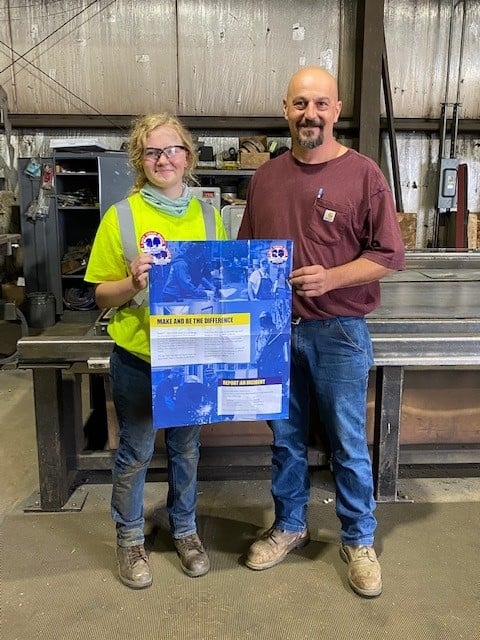
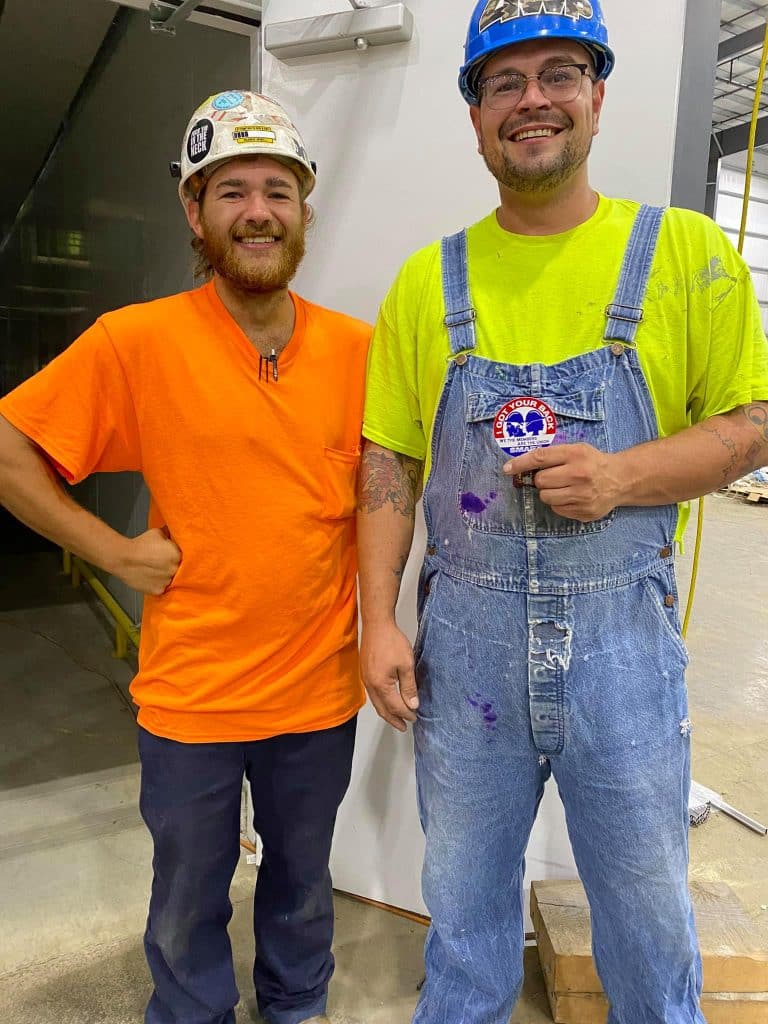
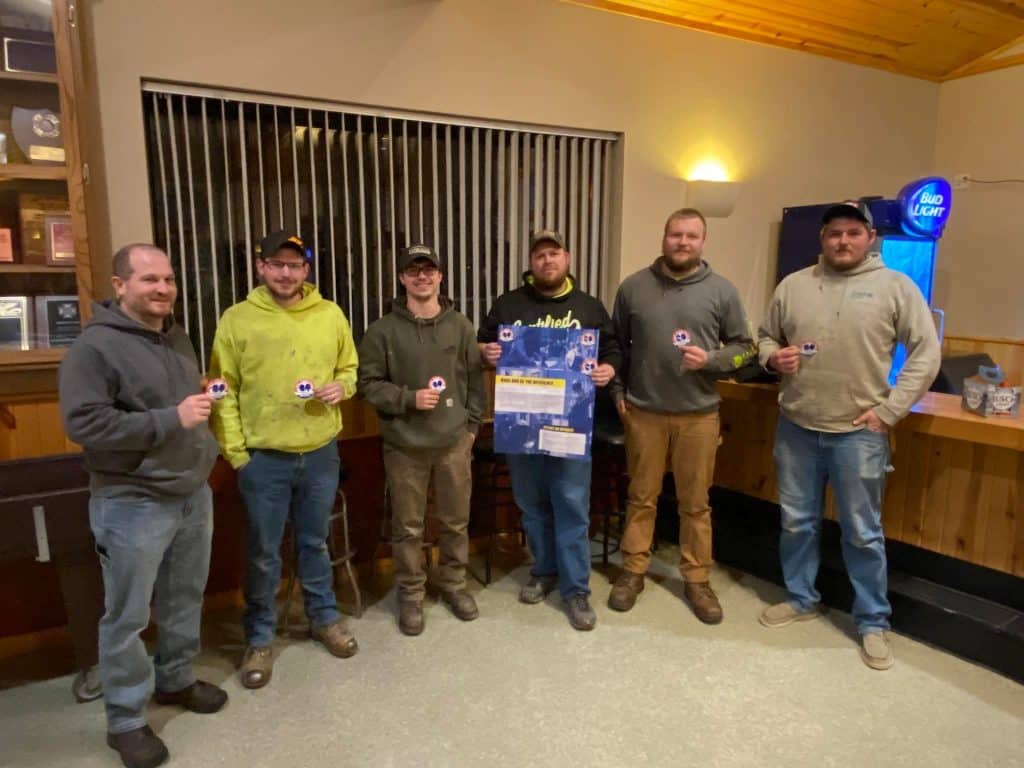
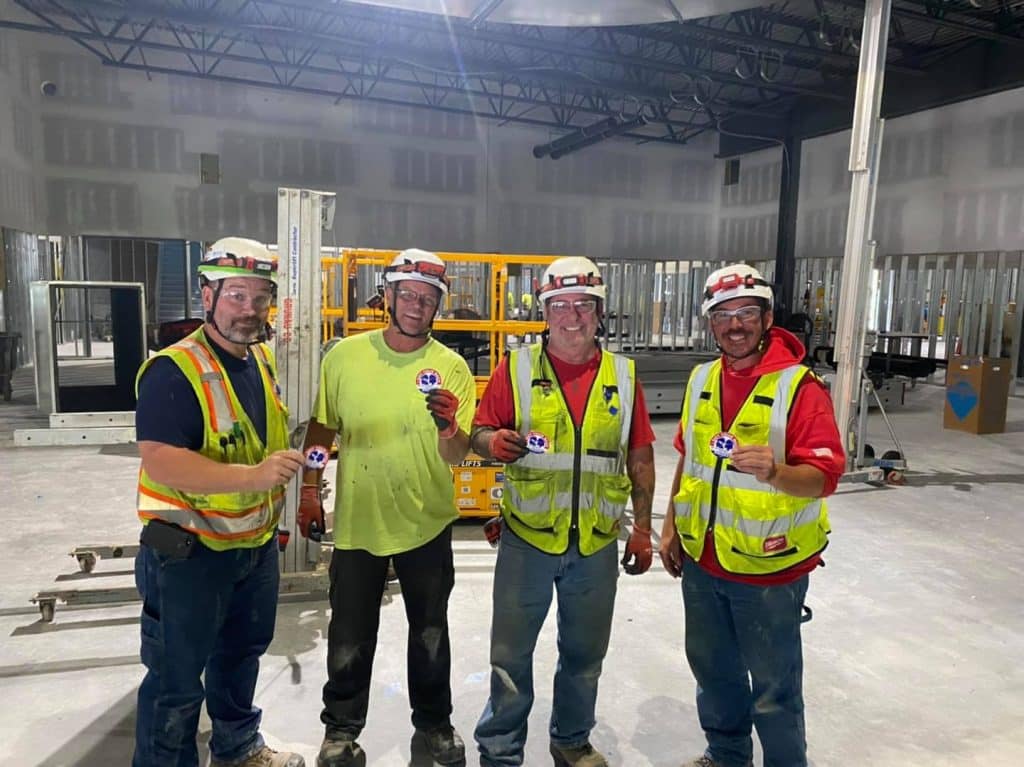
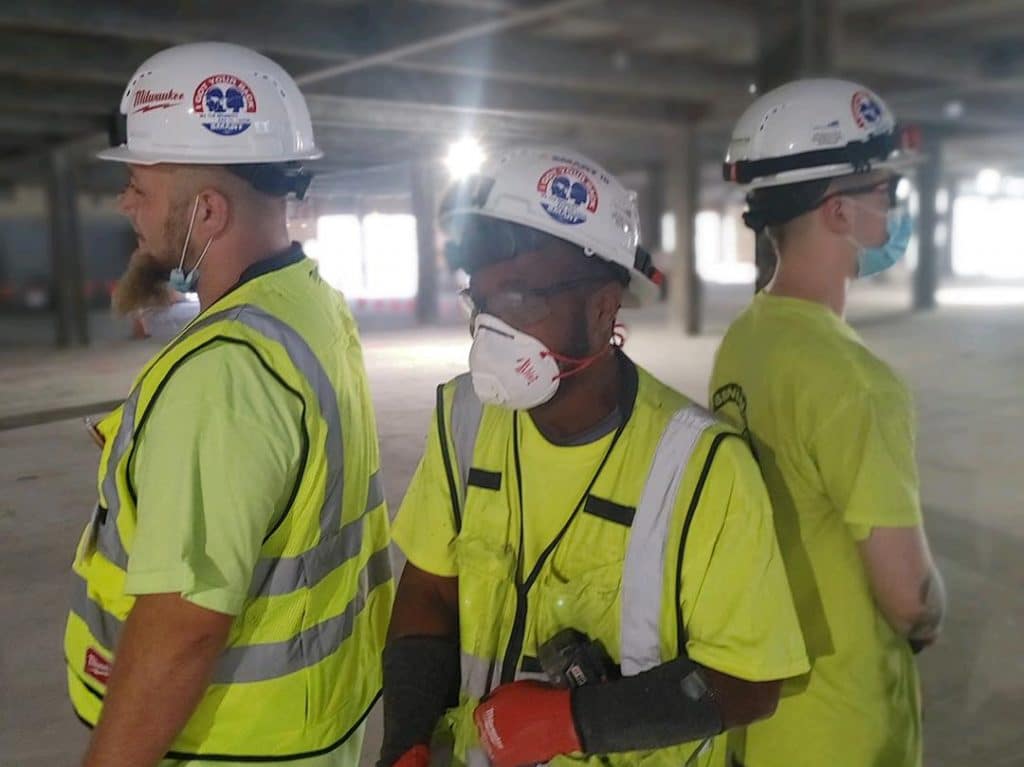
With organizing efforts in Indiana still at an all-time high, Local 20 recently participated in our first-ever organizing blitz to staff the Stellantis battery plant megaproject in Kokomo, Indiana. Thanks to the participation of Local 20 staff and the help of our Youth-to-Youth program, we were able to reach more than 500 jobsites, vocational schools, non-signatory shops and recruitment centers, ranging from Greenwood all the way to South Bend. We also handed out thousands of QR-code cards that linked to wage and benefit information for both non-signatory workers and the general public.
The blitz enabled us to boost membership as well as build our person-of-interest list in anticipation of other megaprojects coming to the state. Not only does this organizing benefit us as a whole; it also offers a life-changing opportunity for many people who are working nonunion.
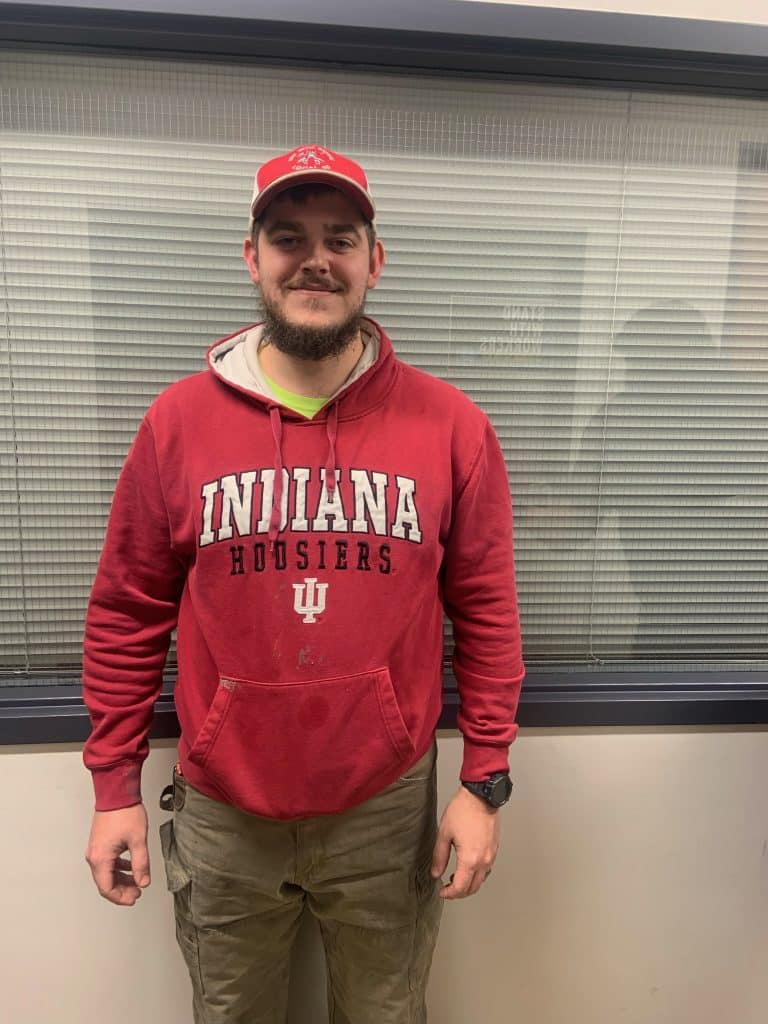
I reached out to a few members who were organized this year to see what difference they experienced and their overall thoughts on joining the trade. Here is testimony from Xia Walker, who we organized into the apprenticeship program from Peterman Brothers:
Xia Walker
“When it comes to my home life and work schedule compared to the big, nonunion HVAC company I was working for, I would have to say it is a night and day difference. The company I worked for did offer competitive pay, but that did not make up for the fact that I was paying almost $900 a month out of my wages just so my family could have insurance. I was also expected to work every day until the job was completed, which could range anywhere from six to 16 hours with no real time to rest in between or daily overtime to make it worth the headache.
“I hated it. I had no free time to spend with family and friends. I have five uncles in the trade who were consistently trying to recruit me so I could spend more time with family and friends and have better pay and benefits. I did enjoy some aspects of residential work, but commercial work is where it’s at. No more disgusting crawl spaces or small attics.
“Overall, I love my consistent work schedule. I can actually be home to spend time with my wife and kids throughout the work week. When I look back at it, I wish I would have stuck with the union back when I was 20; I would definitely be much further in my career than I am today.”
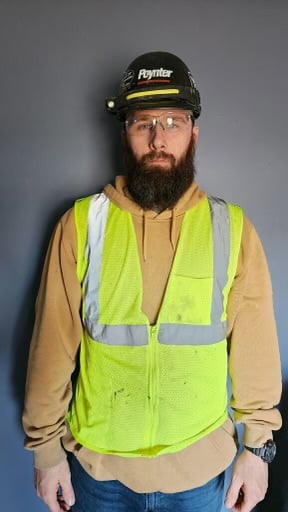
Next up: testimony from Clifton Beezley, who was recently organized from a nonunion fabrication shop and placed with one of Local 20’s contractors:
“The old job I came from did not have any professional mindset or desire to help me grow as an employee; they refused to share their knowledge with me so I could improve myself and expand my abilities in the trade. Since starting with Local 20, I have worked with a great group of knowledgeable workers who are more than willing to share their years of trade knowledge with me and want me to learn the trade and carry that same knowledge. The more I work with them, I see myself growing and gaining professional knowledge that I will eventually pass down to new members one day.
Clifton Beezley
“The shop I was previously working for made me feel very underappreciated and unimportant, and it feels good to work somewhere that makes me feel appreciated and important again. As far as the benefits go, between my old job and now, it doesn’t compare. My entire family has healthcare coverage as an employee paid benefit, and I love it! The last job offered benefits, but the price made them basically unattainable. This has been a huge stress reliever for me and my family, and we couldn’t be happier. This new job has truly offered me life-changing opportunities.”
It is always nice to see how much our organizing can affect someone’s life for the better. Hopefully, reading these testimonies will help us all remember how important it is for us to continue to bring new and experienced members into the trade and make sure they are treated with respect. Clifton shared his experience with Local 20 with others in the shop he came from, as well as family and friends, which has resulted in more than 10 people joining the trade.
This is a prime example of why we always treat every member with solidarity and respect: We are going to need every bit of help we can get in the future, and the need for people is increasing every day.
The SMART Education Department held its Organizing I class in Dallas, Texas, during the week of February 12th. The three-day class covered topics including the history of organizing, basic labor and labour law, top-down and bottom-up organizing, pressure tactics, digital organizing, implicit bias and SWOT and GAP analysis. Each of the 40 organizers and business representatives who attended the class developed organizing pitches, identified unfair labor practices, role played contractor interactions and prepared SWOT and GAP analysis for their goals as an organizer.
Across North America, various sheet metal funds including the National Energy Management Institute (NEMI), the International Training Institute (ITI) and the Sheet Metal Occupational Health Institute Trust (SMOHIT) work to expand opportunity and wellbeing in the unionized sheet metal trade. Read about recent appointees below:
New NEMI field representative tapped for Good Jobs, Great Cities Academy
Josh Hunter, former SMART Local 48 (Birmingham, Ala.) Business manager and new NEMI Southeast field representative, was selected earlier this year by the city of Birmingham Department of Innovation and Economic Opportunity to serve as a member of the Good Jobs, Great Cities Academy: a partnership between the National League of Cities (NLC) and the United States Department of Labor (DOL). The academy was established to develop innovative and scalable solutions to address pressing workforce challenges and is funded by investments from recently passed federal laws: the Bipartisan Infrastructure Law, the CHIPS and Science Act and the Inflation Reduction Act.
Birmingham was one of 16 cities chosen to participate in the academy. The group began meeting in May and will continue through July 2024 to develop solutions that focus on upskilling and reskilling workers and preparing underrepresented workers for quality, high-growth, in-demand occupations.
Working with labor leaders, industry partners and government representatives, the members of the Birmingham Good Jobs, Great Cities Academy specifically focus on infrastructure, clean energy and advanced manufacturing jobs, with an emphasis on barrier elimination, particularly as it relates to childcare and the care economy, Hunter said.
“I’m excited about this opportunity,” he added. “The work that we will be doing over the next year falls in line with the mission and goals our union has prioritized. We will look to create real solutions that will help our local recruit and retain members of the community, including those who are often underrepresented.”
Hunter hopes to create new marketing strategies and solutions, and he expects to work closely with the NEMI team to craft ideas that will assist his work group in completing its mission.
“NEMI has always been a resource we have relied on to help us move our local forward,” Hunter said. “I will absolutely rely on their expertise as a sounding board as we brainstorm solutions.”
Partnerships such as the academy are opportunities to get involved in the community, establish tangible relationships and build pipelines to recruit new members and promote the trade. Anything Hunter and Local 48 accomplish in Birmingham can be shared with other locals, too, added Lisa Davis, NEMI administrator.
“Local 48 has an incredible opportunity here, with Josh serving on the academy, to create real solutions that will benefit the entire community of Birmingham,” Davis said. “NEMI is proud to support his efforts in any way we can.”
Pittsburgh native lands leadership role at ITI
The ITI has named Len Liebert as program administrator, a position he accepted in September 2023. In his new role, Liebert oversees ITI classes and programs, working with teams on scheduling, planning and communication, as well as managing administrative staff and budget.
Len Liebert
Liebert has a history of mentoring apprentices and journeypersons. A longtime member of SMART Local 12 in Western Pennsylvania, Liebert joined the apprenticeship to become a second-generation sheet metal worker in 1989, shortly after graduating from Pennsylvania State University with a bachelor’s degree in secondary education. He then served as field foreman and in-house testing, adjusting and balancing (TAB) technician for Ruthrauff Service in Pittsburgh while working as a part-time instructor at his home local.
In 2001, Liebert took on teaching full time, and in 2014 he became the assistant training coordinator at Local 12. After around 20 years in service as a consultant for the ITI on instructor development, lesson packages, classroom management and educational psychology, Liebert was officially hired by the ITI as a field staff representative in 2017. He went on to become a certified Occupational Safety and Health Administration (OSHA) master trainer and a subject matter expert in infection control.
“Thirty-three years in this business has taught me to trust the people I have worked closely with,” Liebert said. “We have a great team here at the ITI, and I look forward to continued success with all our coordinators, instructors and members.”
Ed Robison aims to support members nationwide at SMOHIT
Ed Robison began his new job as field representative with SMOHIT — the health and safety arm of the unionized sheet metal industry — last summer, where his top priority is to educate members in their local unions about the resources SMOHIT offers.
Ed Robison
After entering the Local 218 (Springfield, Ill.) Apprenticeship in 1991, Robison completed the five-year program and steadily rose through the ranks to become an organizer and then, in 2014, the business manager. He lives in Springfield and continues to be a member of Local 218, where Carter Robison, the youngest of his three sons, is currently a second-year apprentice.
In his new position, Robison helps union members across the country by connecting them with local resources and familiarizing them with the SMART MAP (Member Assistance Program). Robison noted that it’s especially important to reach out to sheet metal workers who have traveled to work at large projects. These men and women are putting in long hours while living far from home, and those needing mental health support may not know where to turn.
“SMOHIT has increased staff size and vision, and it’s changing a lot,” he said. “I’m really excited for what lies ahead. This is going to be a whole new fund.”
John Wilson takes national role in sheet metal education
Longtime sheet metal worker John Wilson has been chosen as a field representative by the ITI. In this role, he will provide support for training programs and their directors, create and assist in the implementation of curriculum and training, and serve as a resource/liaison between the ITI and training facilities across the country.
John Wilson
Wilson began his career in the sheet metal industry shortly after he graduated high school in 2005. He completed the apprenticeship program with SMART Local 100, working mainly in the Washington, DC, area. From the moment he graduated from the apprenticeship, Wilson set his sights higher — first as a foreperson; then as general funds trustee, executive board member and part-time instructor; and finally, as an assistant training coordinator and recording secretary for Local 100. During his career, he worked for W.E. Bowers and Southland Industries.
Wilson is continuing his education at the Community College of Baltimore County, pursuing a degree in construction craft professionalism, in addition to industry training and certifications. Currently, he maintains multiple certifications in Occupational Safety and Health for the Construction Industry, fire life safety, duct air leakage, building envelope installer, ventilation verification and testing, adjusting and balancing, to name a few. He currently lives in Delta, Pennsylvania, just over the Maryland/Pennsylvania border.
Jeff Bradley named SMOHIT program director
Jeff Bradley, who joined SMOHIT in spring 2023 as a field representative, was promoted to program director in the fall, as his position underwent a “natural evolution:” moving into tasks such as scheduling and planning conferences and programs, reviewing contracts and overseeing the new version of health screenings, among others.
“The shift in responsibilities came organically as I stepped in to help with SMOHIT operations,” Bradley said. “Between revitalizing the health screenings in a different way that will reach even more members to scheduling SMART MAP sessions in Canada, it’s been busy, but I feel like I’m truly bringing benefits to members that could change their lives.”
Bradley entered his sheet metal apprenticeship in 2004 at Local 36 in St. Louis, where he currently resides with his wife and the youngest of his three children. Throughout his career, he has worked as a part- and full-time instructor and welding facility representative, as well as serving Local 36 as an organizer, vice president and director of marketing. He earned his associate degree in heating, ventilation, air conditioning and refrigeration (HVAC-R) from Vatterott College, and he holds multiple certifications and training completion certificates.
In 2023, Local 19 worked with the National Energy Management Institute (NEMI) and pro-union politicians in New Jersey to help pass fire life safety legislation — helping keep citizens safe and creating more work for SMART members in the Garden State.
The process began in January, when then Assistant Business Manager Bryan Bush, Assistant Business Manager Luke Gordon and Political Director Todd Farally approached Assemblyman Anthony Verrelli and Senator Nilsa Cruz- Perez about running a bill that would ensure the state of New Jersey would follow the National Fire Protection Association Code (NFPA), along with the International Fire Code (IFC). Both mandate inspections of fire, smoke, combination fire/smoke dampers and smoke control systems, which include but are not limited to smoke evacuation systems and stairwell pressurization. In addition, any deficient dampers or smoke control systems would need to be repaired in a timely manner after inspection.
Early on, Local 19’s team consulted with Jeremy Zeedyk, the Northeast representative for NEMI. Zeedyk helped to get the ball rolling on crafting the legislation and ensuring that all the technical information, including the necessary certifications, were specified within the language of the bill. After several rough drafts, Local 19 had solid language and talking points to bring to Trenton.
Fire life safety is just one example of the job-creating lawmaking opportunities available to local unions. NEMI encourages all locals to reach out for assistance identifying and drafting legislation.
“By early March, companion bills were introduced in the Assembly and the state Senate, and both bills passed unanimously out of two committees in each chamber over the next couple months,” said Farally. “The Assembly fully passed their version in May, and the Senate moved to pass the legislation in mid- June. Oftentimes we see votes in government fall along stark political lines, but these bills left both the Assembly and Senate unanimously and were headed to Governor Murphy’s desk.”
That’s when the process hit a momentary hitch. After the bills had passed both chambers in Trenton, sponsors of the legislation began to receive questions and calls for concern from the New Jersey Department of Community Affairs (DCA) and the Fire Service, which falls within the DCA. Assemblyman Verrelli’s office reached out to Local 19, laying out the concerns and where they were coming from.
“At this point, we reengaged Jeremy Zeedyk to look over the concerns the Fire Service had and then proceeded to set up a meeting between Local 19, the DCA, the Fire Service, NEMI and Assemblyman Verrelli,” explained Farally. “We were able to hear and address many of their concerns, and Local 19 shared our concerns with some of the proposed changes from the DCA.”
After a few months of drafting and redrafting language, in mid- November all parties agreed to some changes within the bill that give the state some flexibility while still upholding important standards which must be enforced. At this point, the bill was labeled as conditionally vetoed, which meant the governor’s office had changed some elements of the bill and it would be sent back to both legislative chambers for a vote to concur with those amendments.
In early December of 2023, the New Jersey Senate and Assembly both unanimously concurred with the changes, and fire life safety is now the law statewide — showing how important it is for SMART to be involved in the political process, and the vital role pro-union legislators play.
“There are still some steps to go through at this point under the regulatory process before everything is implemented, but rest assured — Local 19 will be there every step of the way to ensure the regulations are applied correctly and fairly to all,” Farally concluded.
Fire life safety is just one example of the job-creating lawmaking opportunities available to local unions. NEMI encourages all locals to reach out for assistance identifying and drafting legislation.
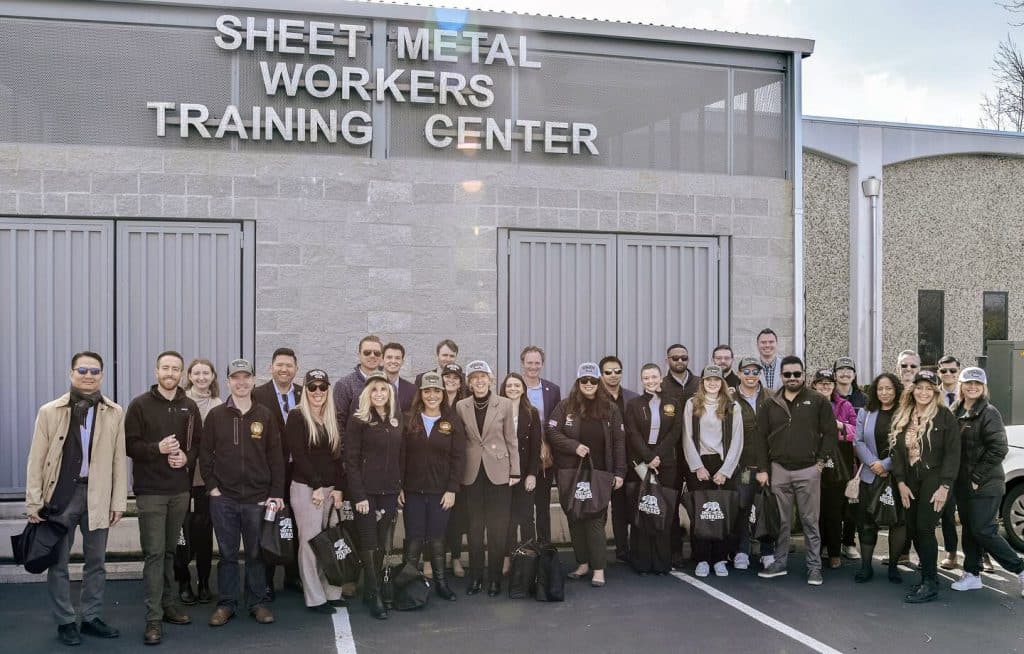
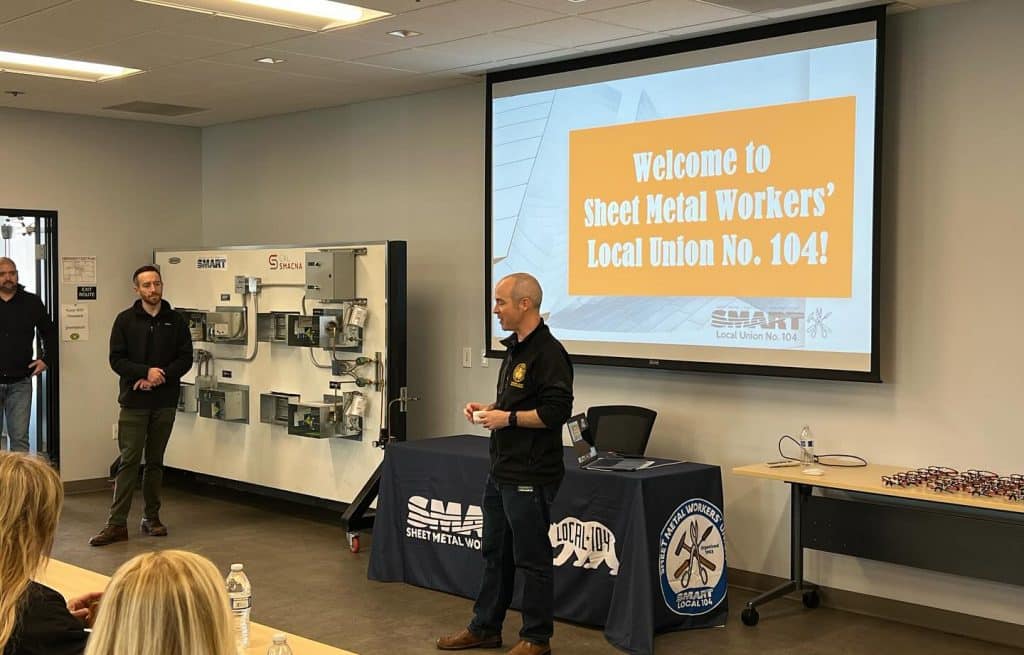
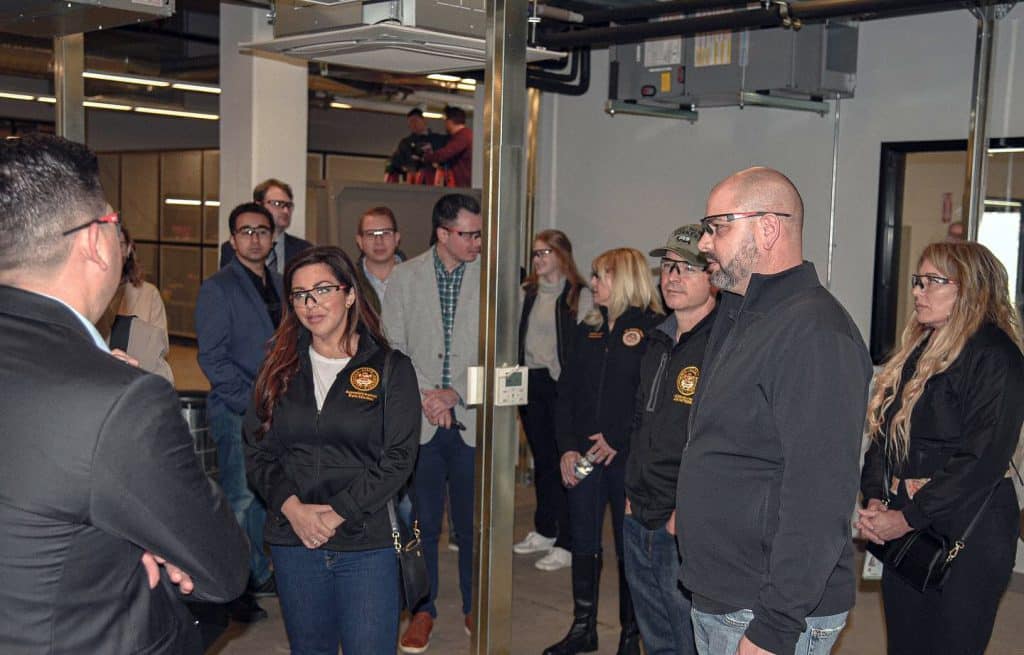
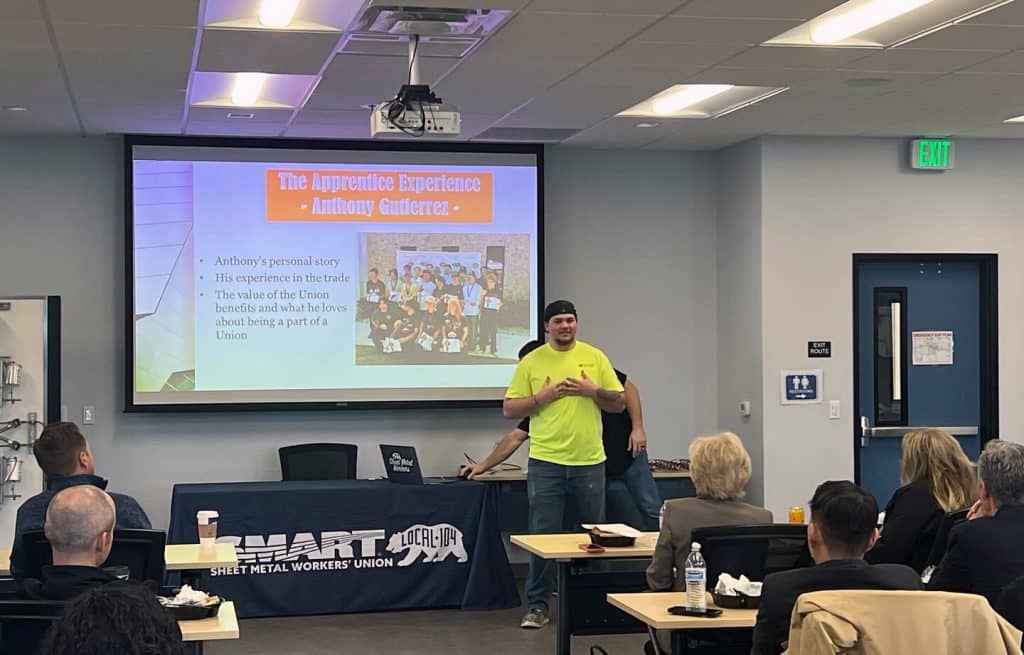
On February 13, SM Local 104 (Northern California) hosted the California Republican Legislative Caucus at its Sacramento training facility, where the local provided a guided tour during an active training session, presented on the contractor-union partnership, and apprentice Anthony Gutierrez told the story of how his Local 104 membership changed his life. The local hopes to collaborate with the caucus to create opportunities for union members and working-class families in California moving forward, demonstrating SMART’s commitment to working with any union-friendly politicians to benefit members — regardless of party affiliation.
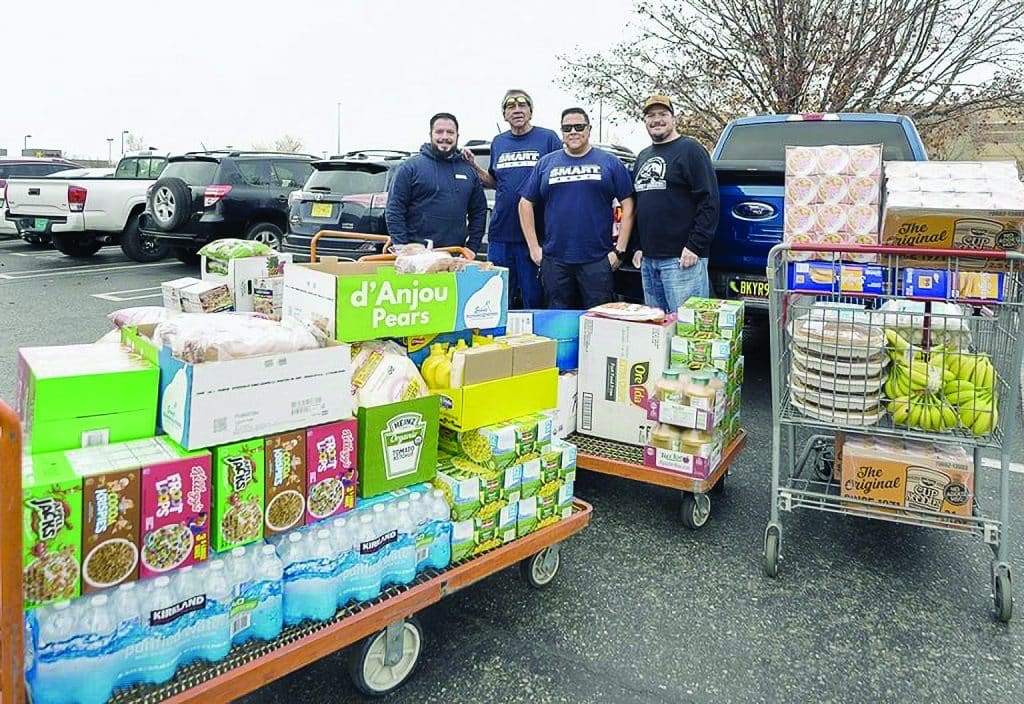
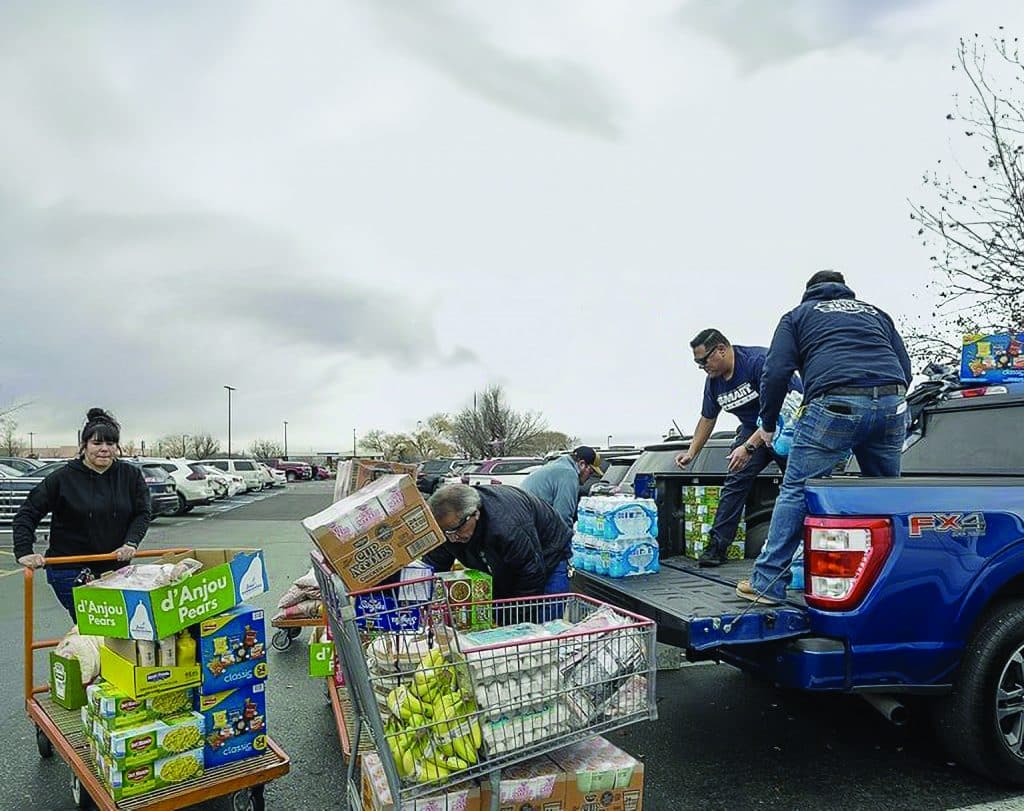
During the 2023 holiday season, SM Local 49 (Albuquerque, New Mexico) members gave their time, funds and food donations in a demonstration of union solidarity, helping the Albuquerque Sign Language Academy (ASLA) gather and distribute food to kids who rely on school meals — but can’t access that crucial nutrition source during breaks.
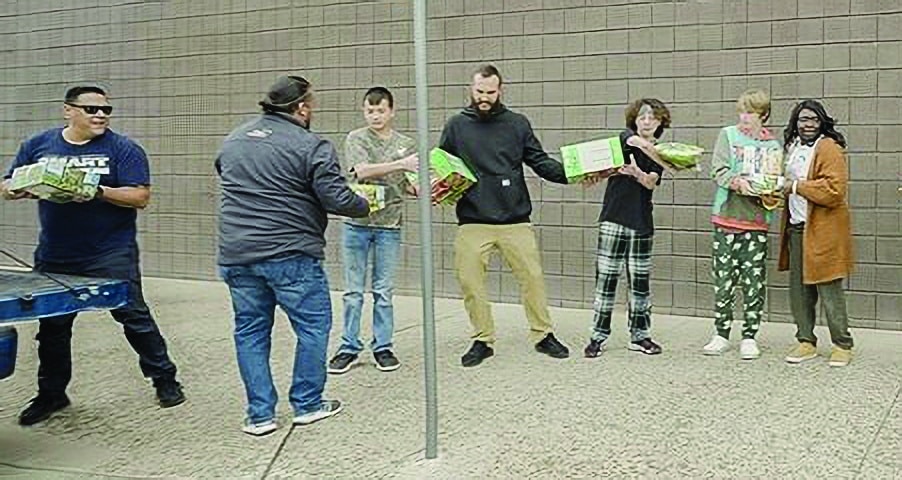
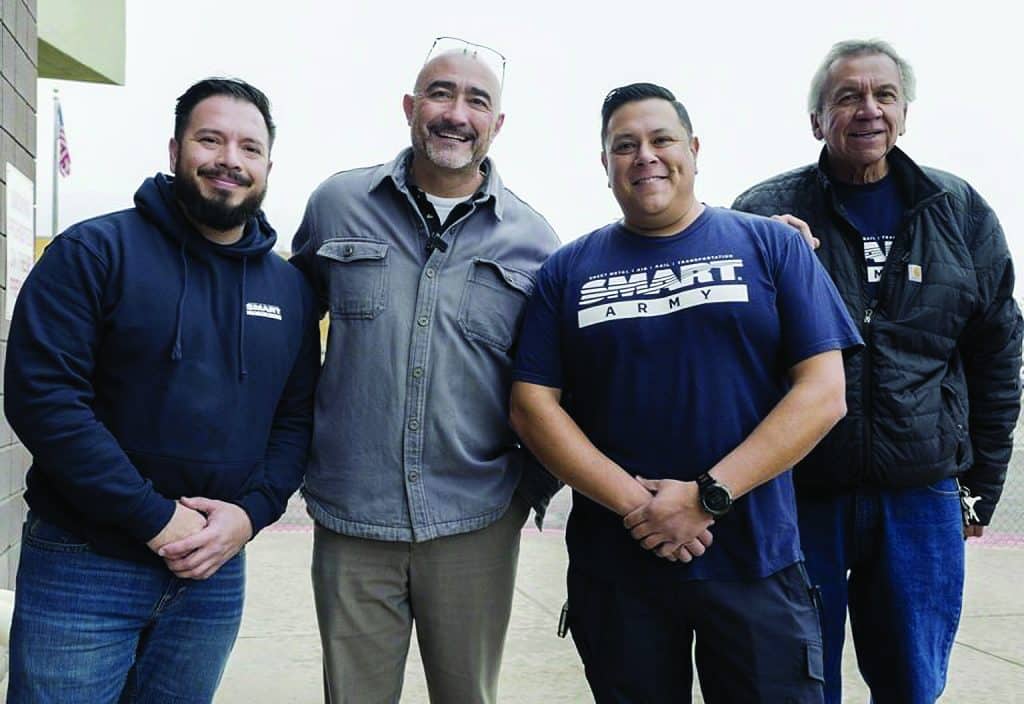
Local 49 officers and members joined ASLA staff and students to both donate food and load up trucks for delivery.
“Building better communities — that’s our mission with the SMART Army, and it is vital as a local that if we can, we should assist the community we live in,” explained Local 49 Business Manager Isaiah Zemke. “Thank you to our membership for assisting the Albuquerque Sign Language Academy with food donations. The academy’s staff is amazing and hustles to make efforts to help those kids eat.”
“Our families are truly very lucky to have the support of the union and the whole community, and the [ASLA] Honey Badgers appreciate your support,” an academy staff member told Zemke in a video shared to the local’s Facebook page.
The academy is nationally unique in that it serves students who are deaf, hard of hearing, and hearing within the same environment, said ASLA Executive Director Raphael Martinez. In its 15 years of existence, the academy has quickly become a local staple, Martinez added — making it a natural partner for Local 49, another organization rooted in the community.
While the connection between ASLA and the local happened on short notice — funds to provide food for ASLA were approved by Local 49 only one week before the donation event — the effort was a success.
“We look forward to doing this again next year,” concluded Zemke.
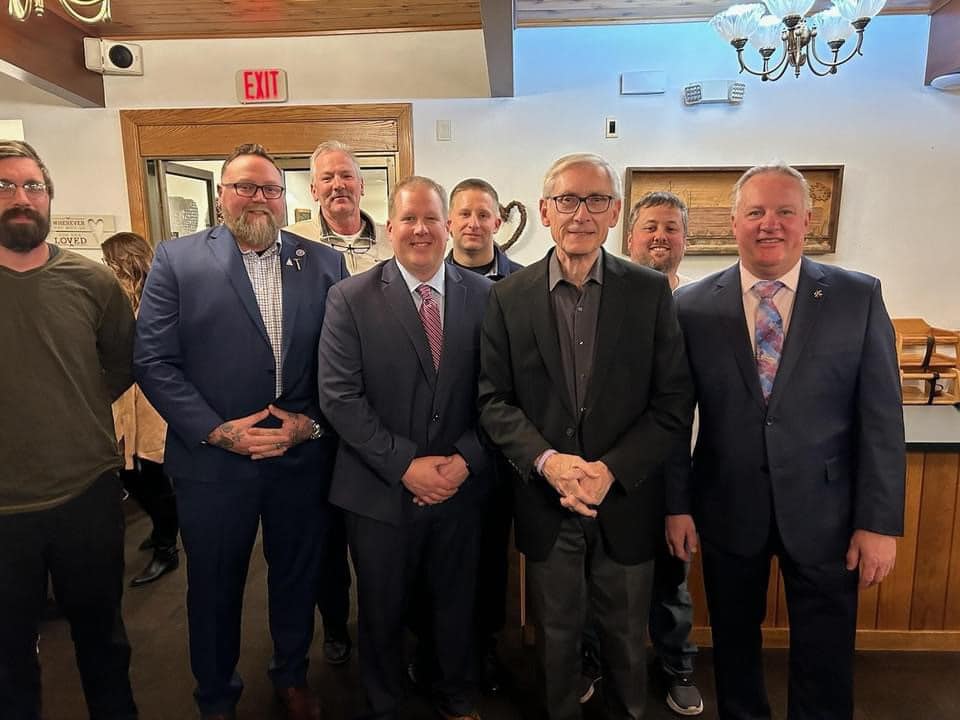
Pictured with Governor Evers (front row, second from right), left to right: Adam Norton, Organizer Jeff Lensink, Dale Wuestenhagen, Business Representative Matthew Van Der Puy, Trustee Jesse Rump, Aaron Bergman and Local 18 President/Business Manager Scott Knocke.
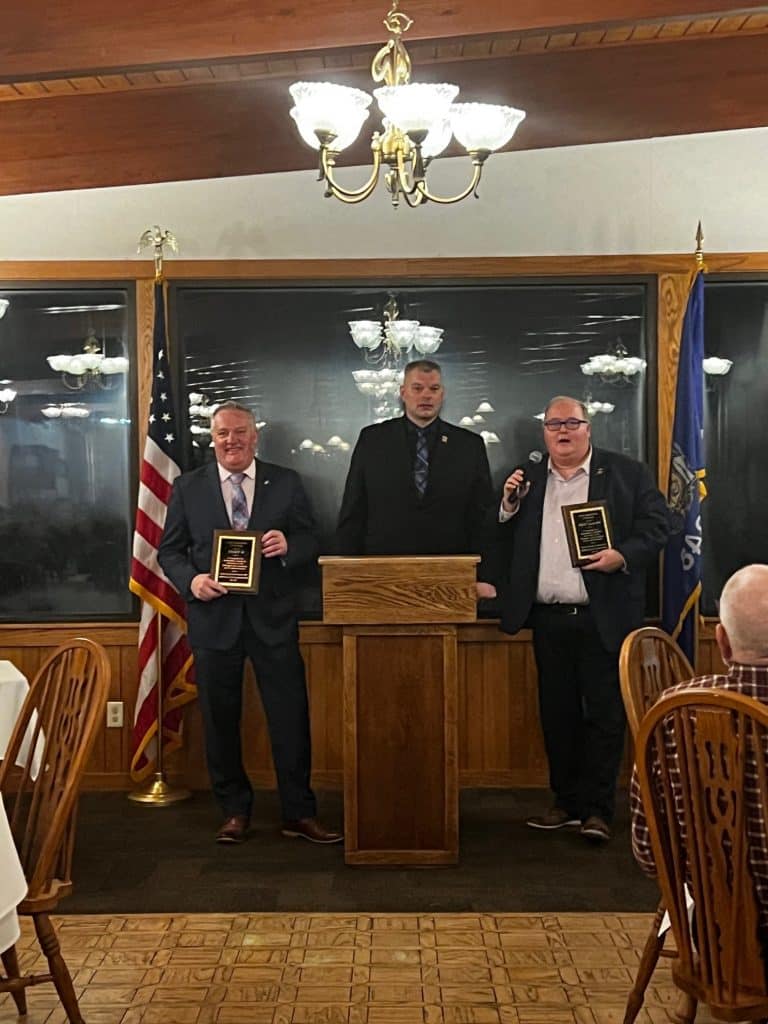
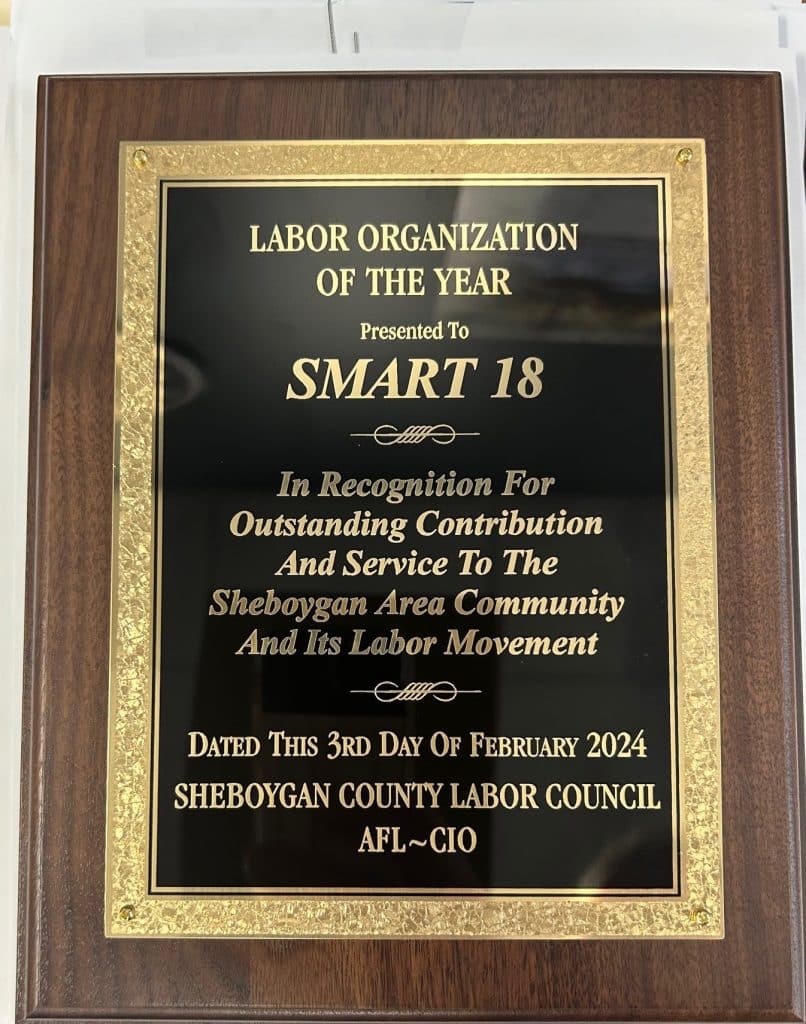
SMART Local 18 (Wisconsin) was recently honored by the Sheboygan County Labor Council as the 2023 Labor Organization of the Year, a recognition of the Local 18 SMART Army’s dedication to community service and solidarity – including participation in Habitat for Humanity projects and the donation of an HVAC system for the American Legion Post 149 in Sheboygan Falls.
“I had the privilege of accepting this award on behalf of all our members and their generous contributions to the Sheboygan County area,” said Local 18 President and Business Manager Scott Knocke. “The award was presented at the 65th annual kickoff banquet between the UAW CAP Council and the Sheboygan County Labor Council, and Governor Tony Evers was in attendance.”
In 2021, SMART launched the I Got Your Back Campaign, which celebrates the many great mentors and allies in our membership and reinforces member solidarity throughout our great union. Today, SMART announced the expansion of the I Got Your Back Campaign — “Speak Up, Speak Out.”
We seek to create and reinforce a culture where members Speak Up, Speak Out when they see something wrong. Therefore, we ask every member to do the following:
If you witness a fellow member being bullied, harassed, discriminated against or mistreated on the job, please Speak Up, Speak Out.
If you are being bullied, harassed, discriminated against or mistreated on the job, please Speak Up, Speak Out if you are comfortable doing so, or ask a trusted ally for help.
What does it mean to Speak Up, Speak Out? This can take many forms depending on the situation:
Ask the offender to stop. Here are some examples of things you can say: “This needs to stop right now.” “This is wrong, and you need to stop.” “This is not right. Leave [name] alone.”
Ask the individual if they are okay and if they would like to report this incident. Emphasize that they did not deserve to be treated this way and that you have their back.
Approach other bystanders and encourage them to Speak Up, Speak Out. Every voice matters, and there is power in numbers.
If you are not comfortable saying something in the moment, you can report the incident to your union representative or the employer.
In turn, we ask all of our union officials to commit to the following:
Ensure each of our members receives the best quality union representation when they are facing harassment, bullying, discrimination or mistreatment on the job.
Ensure there is no retaliation for speaking up and reporting an issue. Communicate repeatedly with your members that retaliation is not tolerated, ask members to report retaliation if it occurs, and take swift and decisive action if a member is retaliated against for speaking up.
This campaign expansion is designed to encourage our members to intervene when bullying or harassment occurs on the jobsite with the same sense of urgency as if a fellow member were facing unsafe work conditions. We believe the expansion of the I Got Your Back Campaign will help ensure this practice becomes universal throughout our union.
Preparing for the future of work isn’t new to SMART Local 33 in Cleveland. During the recession, contractors learned how HVAC Fire Life Safety skills could keep workers on the job while providing valuable services to commercial buildings in the area. With the pandemic in the rearview mirror, Local 33 hosted the National Energy Management Institute (NEMI) during a Ventilation Verification/Indoor Air Quality Awareness course on March 15.
With all the federal funding available — not just for schools, but for commercial and residential buildings too — Corey Beaubien, president and business manager of Local 33, and Lisa Davis, NEMI administrator, thought it was an opportune time to show the local’s sheet metal contractors that the work scope for Ventilation Verification/Indoor Air Quality isn’t just for TAB contractors.
“It’s a great way for people to continue their connection with their customers after the building is built by maintaining their contact through ongoing Ventilation Verification/Indoor Air Quality audits and monitoring,” Davis said. “In this way, the building owners not only get continuing increased indoor air quality throughout the life of the building, but the contractors are there to provide other services as well when other needs come up.”
NEMI, ITI and SMART contributed to the one-day course, which presented the scope of Ventilation Verification/Indoor Air Quality, challenged attendees to a hands-on portion and educated them on grant and funding opportunities as well as training and certification resources.
In addition to finding ways to keep workers on the job — just as educating contractors on fire life safety did in the 2010s — Ventilation Verification/Indoor Air Quality also opens doors for state and federal grants that fund renovations of a building’s HVAC system, Beaubien said.
“The class has generated interest. They had a better overall understanding about how it works, and that’s the beginning,” he added. “The class was meant to get the ball rolling.”
The skills needed to complete Ventilation Verification/Indoor Air Quality are typically taught during apprenticeship, and it doesn’t take TAB expertise to complete, which came as a surprise to some in attendance. Like fire life safety, this course showed contractors a different perspective — it’s a chance to get more work, but it’s also an opportunity to teach building owners of assisted living facilities, government and commercial buildings how to keep their buildings healthy and safe for their occupants, Beaubien said.
“Fire life safety was a big success. It was an idea to generate work opportunities but also to save lives,” he added. “This is another opportunity to educate contractors and the end users about what is going on above their ceilings.”
Davis added: “We are looking forward to assisting contractors and Local 33 with implementation of Ventilation Verification/Indoor Air Quality in their area, whether that looks like assisting them in helping their customers apply for grants or going after code or specification changes that would include a skilled, trained, certified workforce.”
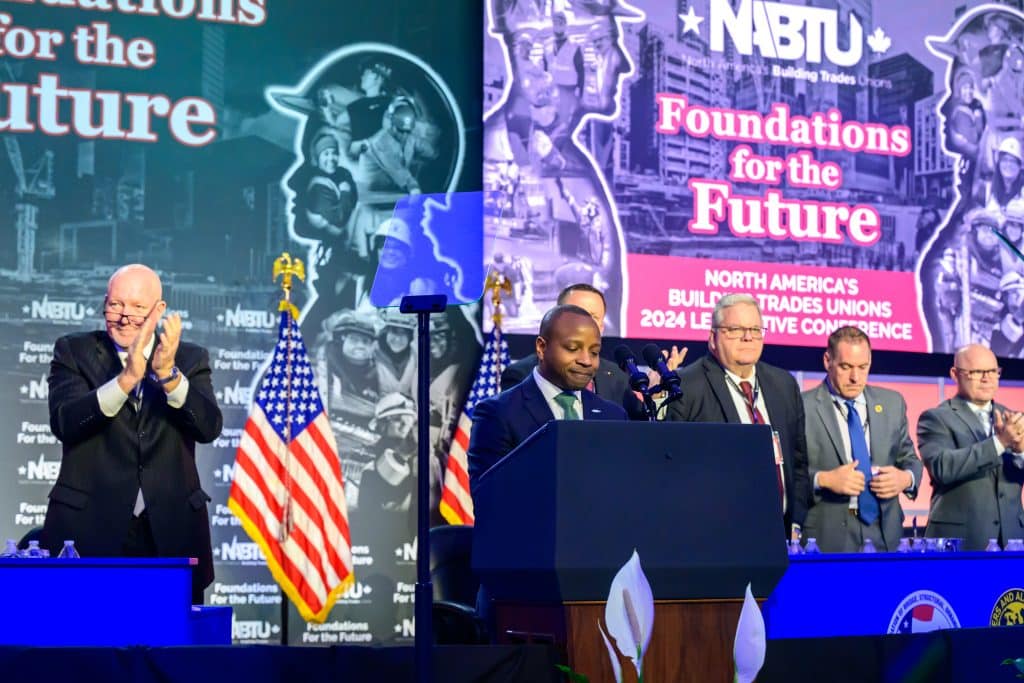
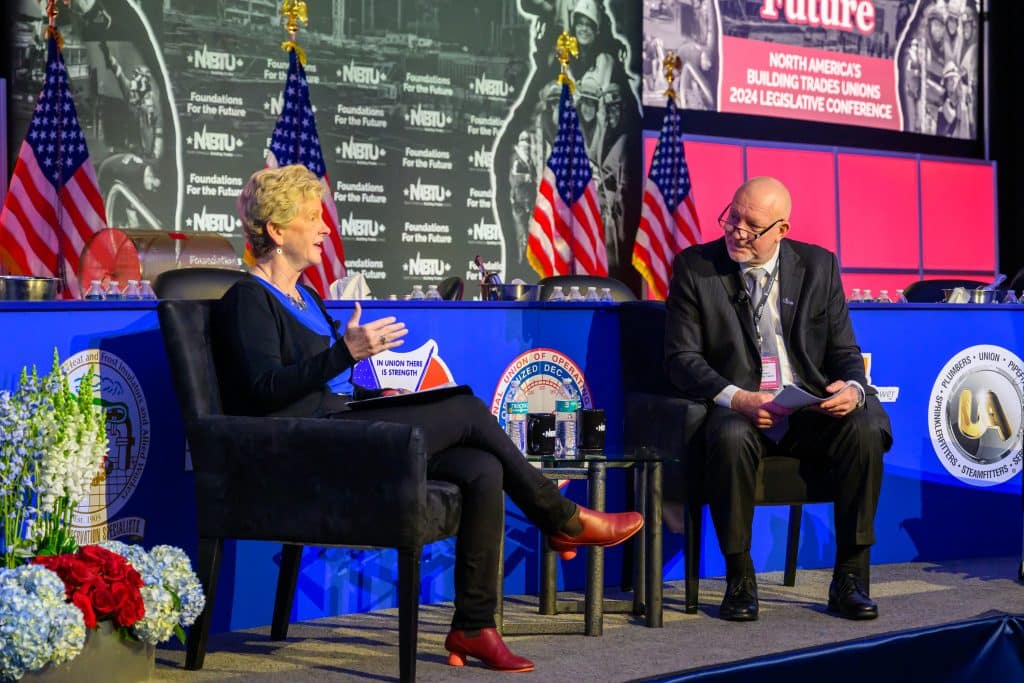
Each year in April, SMART members travel to Washington, DC, to gather with fellow trade unionists for the North America’s Building Trades Unions (NABTU) Legislative Conference: a week for union members to forge alliances with pro-worker politicians, lobby for laws that benefit workers and strategize for a future that puts SMART to work. This year’s conference was no different; with a theme of “Foundations for the Future,” SMART local and International leaders spent April 21-24 working to secure a better tomorrow for working-class people across North America.
Tuesday: pro-worker allies demonstrate commitment, attendees hit the pavement in workshops
Tuesday’s conference began with a jam-packed plenary session, where attendees heard from government officials whose actions – not just their words – have benefited SMART members and families.
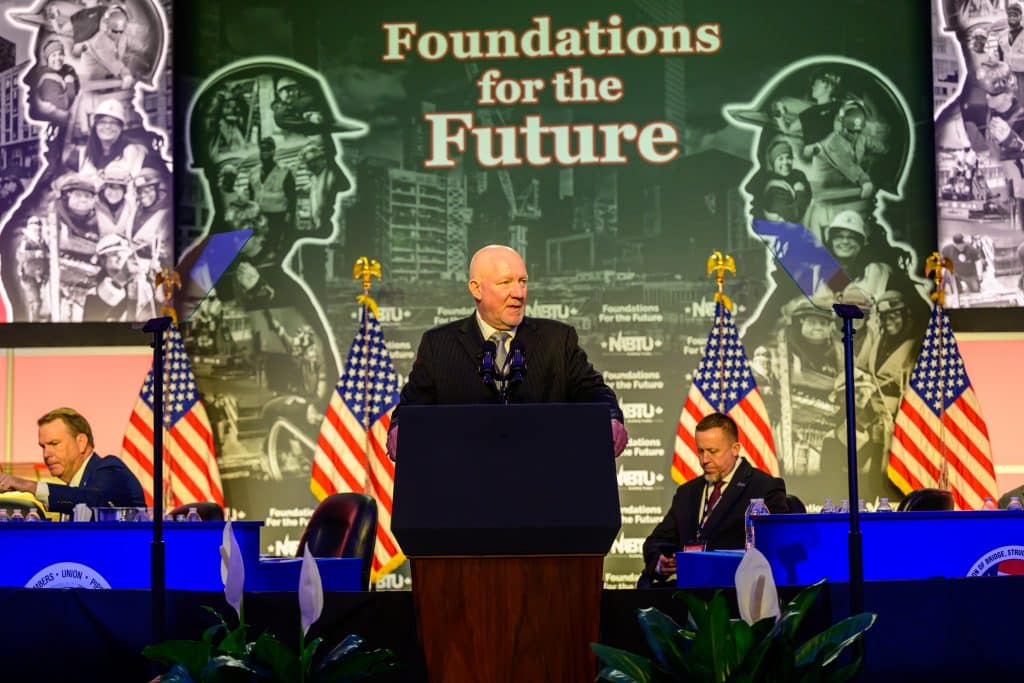
President Sean McGarvey speaks during the NABTU Legislative Conference
During his keynote address, NABTU President Sean McGarvey described the extraordinary difference building trades unions make in the lives of ALL workers across North America, from the apprentices who come from poverty and earn a union-made pathway into the middle class, to the workers building our nation’s transition to a green economy. He also outlined the progress unions have made in recent years: pro-worker laws that invest in our industries, an executive order from President Joe Biden requiring project labor agreements on large-scale federal construction jobs, permitting reform and expanded prevailing wage protections that raise pay for construction workers, to name just a few.
“Behind every policy win, behind every investment win, there are real workers’ lives at stake,” McGarvey reminded the capacity crowd. “We cannot back down, we cannot slow down – we must keep fighting.”
Minnesota Governor Tim Walz has been stridently pro-worker throughout his time in office, signing laws that establish air ventilation programs for public schools (with strong labor standards attached to create jobs for SMART Local 10 members); implement the most expansive prevailing wage enhancements in state history and the largest increase ever to the Minnesota work compensation system’s permanent partial disability fund; ban anti-union captive audience meetings; and much more (including a two-person freight train crew law).
“It’s not about winning races so you can get more political capital to go out and win another race,” he declared. “You win races so you can burn the hell out of that political capital to improve people’s lives.”
Walz described how desperately needed repairs to the Blatnik bridge that connects Duluth, Minnesota, to Superior, Wisconsin, can finally be made thanks to funding from the federal Bipartisan Infrastructure Law. But that funding – and the union jobs it has already created – can disappear in an instant, he warned attendees. Only with pro-union policies and policymakers can unions like SMART continue to benefit workers across the United States.
“Vote your values, stand together — if we do that, we truly are building the foundations of the future,” Walz concluded.
Acting United States Labor Secretary Julie Su – along with her immediate predecessor, Marty Walsh – has been one of the most pro-union leaders of the Department of Labor since the 1940s, and she showed it with her appearance at the NABTU Legislative Conference. Throughout her speech, Su referred to the union apprentices and journeypersons she has met across the country, including SMART members in Cleveland, Ohio, and Kokomo, Indiana. Those workers, she said, are experiencing the life-changing benefits of federal investment in union jobs and American industry.
“We’re not just talking about jobs. We’re talking about careers. We’re talking about building intergenerational wealth,” Su said. “That is what’s possible when we invest in workers.”
In her still-young tenure at the Department of Labor, Su has implemented regulations that finalize President Biden’s executive order requiring PLAs on large federal projects – which means there are an estimated 100 PLA-covered jobs now breaking ground – updated prevailing wage regulations to increase pay for construction workers nationwide and more. From strong labor requirements in the laws funding new megaprojects to increased protections of union-won jobsite standards, she noted, union members and families are reaping the benefits of pro-union policy. And she commended unions like SMART for committing to extending those benefits to women, people of color, the formerly incarcerated and beyond.
Day one attendees also heard from Cleveland Mayor Justin Bibb, Illinois State Treasurer Michael Frerichs and Jeff Peoples, chairman, president and CEO of the Alabama Power Company. Bibb has worked hand in hand with the Cleveland Building and Construction Trades to implement federal funding in a way that puts union members to work improving the city, and he vowed to continue that partnership to create a prosperous, resilient city for ALL Clevelanders. Frerichs, meanwhile, has long been an advocate for unions in Illinois – and he has leveraged his position as state treasurer to come up with innovative strategies to benefit workers in his state. By using policy to create a state fund for infrastructure investment and joining with pension funds to push for labor considerations for investors, Frerichs said, states beyond just Illinois can ally with union members.
“We may not win every fight, but we aren’t afraid to sit across the table from CEOs to make sure they use skilled labor,” he declared.
And Peoples, the son of a coal miner with a long appreciation for organized labor, detailed how working with the building trades has helped develop jobs, innovation and reliable power sources in the South: “If we’re going to build in Alabama, we’re going to build it with you, we’re going to build it with union labor.”
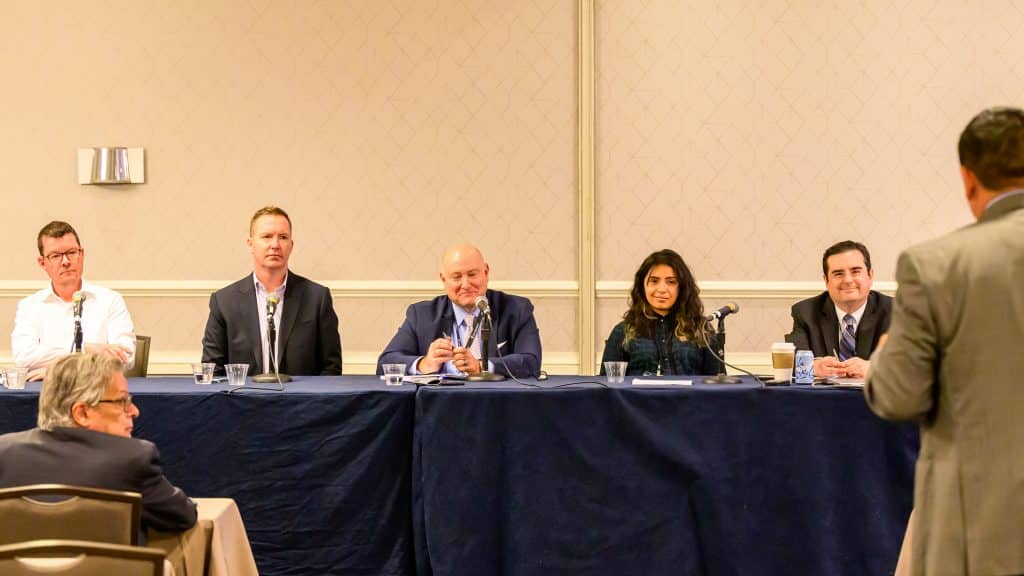
Attendees spent the afternoon in various workshops, networking with fellow trade unionists to pursue organizing, legislative and investing strategies that build power for union members. In the capital strategies and organizing workshop, attendees heard from a panel that included asset managers, a union organizer and an investigative journalist, who each spoke to different aspects of private equity’s power in American society – and how unions can work together to pressure hedge funds and managers into adopting strong labor principles.
Panelists take a question during the capital strategies and organizing workshop.
In a session on military service members’ rights, Department of Veterans Affairs (VA) educational benefits and Helmets to Hardhats, attendees learned about the laws and benefits protecting servicemembers and veterans — and how to put those laws and benefits to work in JATCs.
And SMART General President Emeritus Joseph Sellers moderated a panel on investing in commercial real estate with leaders from Ullico and the AFL-CIO Housing Investment Trust (HIT), diving deep on questions of commercial real estate and detailing how investing in labor-forward companies can reap dividends for everyone. One example: the AFL-CIO’s investment in housing construction, which creates union jobs and yields a return on investment for union funds.
On Tuesday night, SMART local officers and International staff gathered for the annual SMART Political Action League (PAL) reception, where SMART General President Michael Coleman awarded plaques to the 31 local unions whose members donated the most, per capita, to the PAL fund – helping SMART support politicians who work to create jobs and protections for union sheet metal workers.
Wednesday: demonstrating our political power, lobbying for more
Attendees came together on the final day of the NABTU Legislative Conference to hear from governmental allies on the federal, state and municipal level, and to lobby Congress to pass pro-worker policy that creates union jobs and benefits our members.
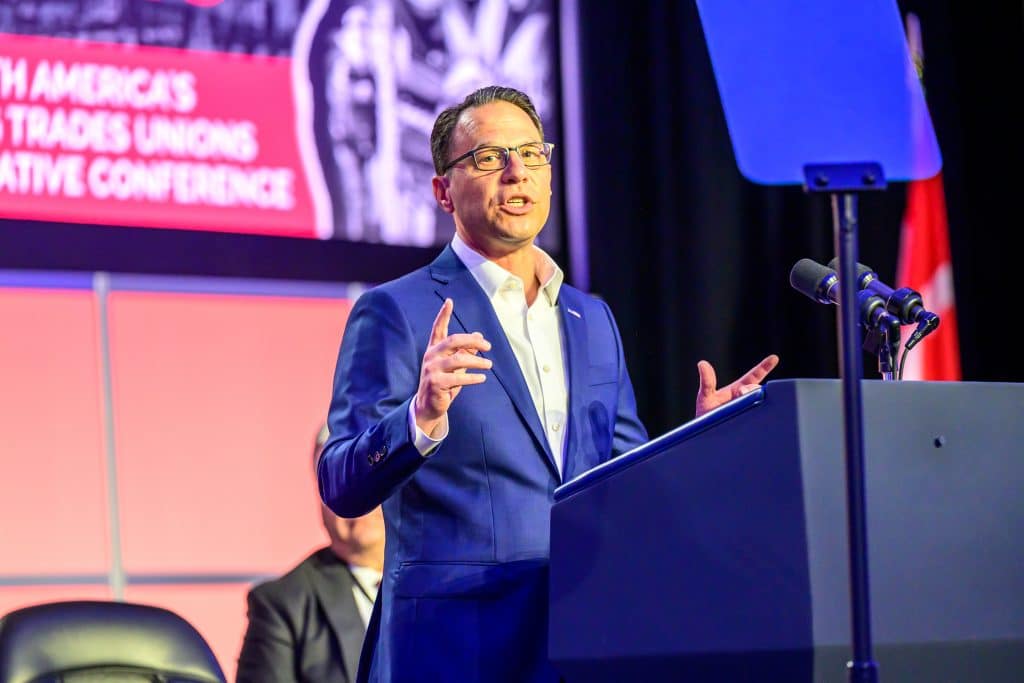
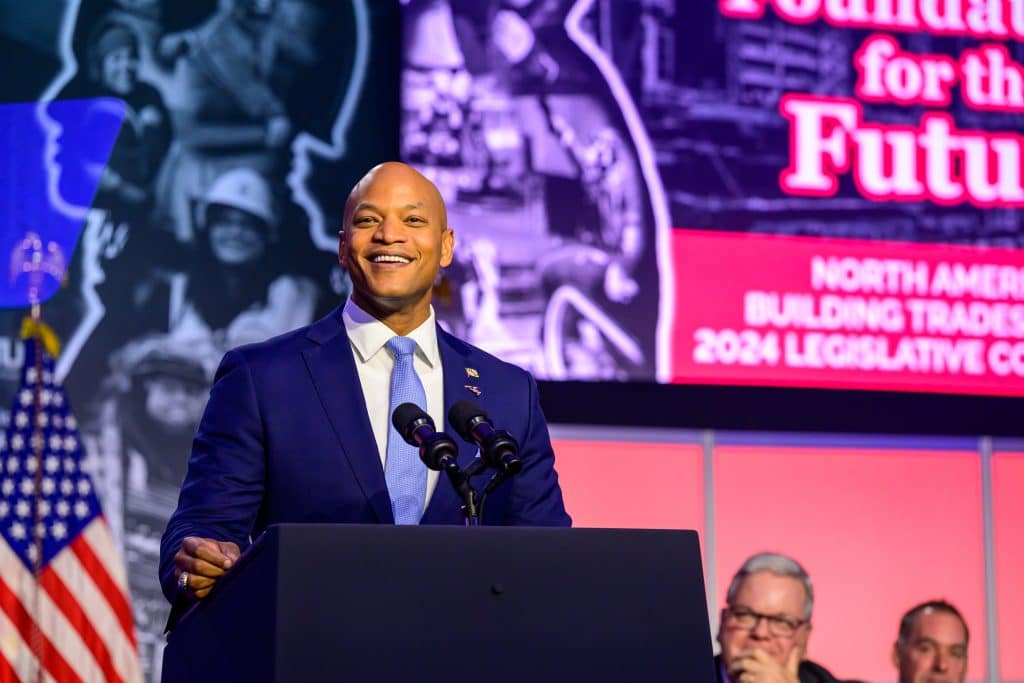
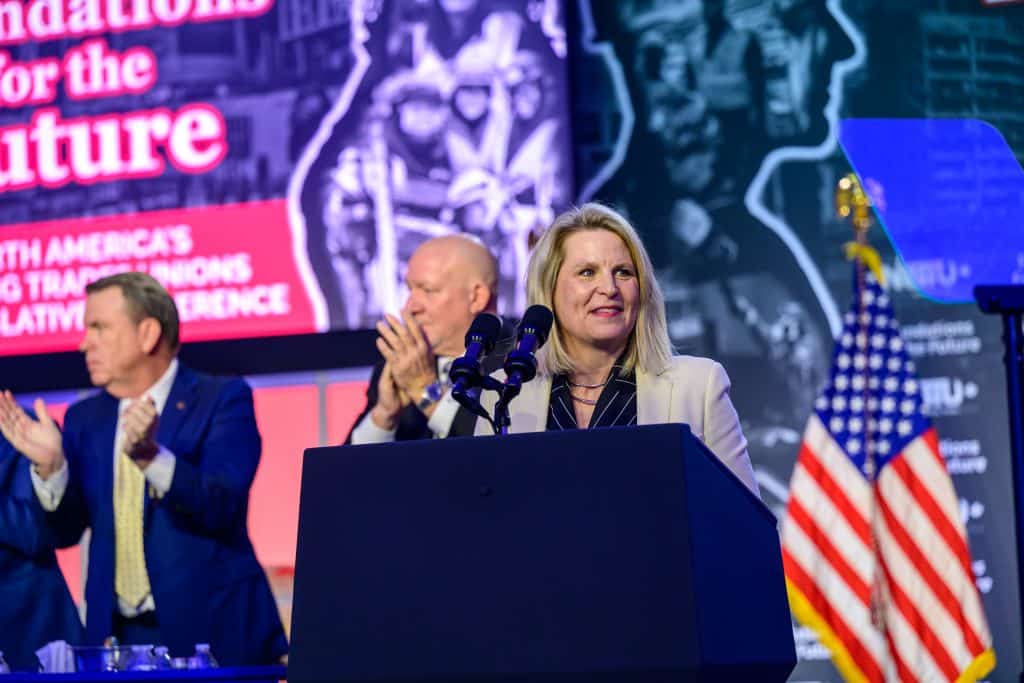
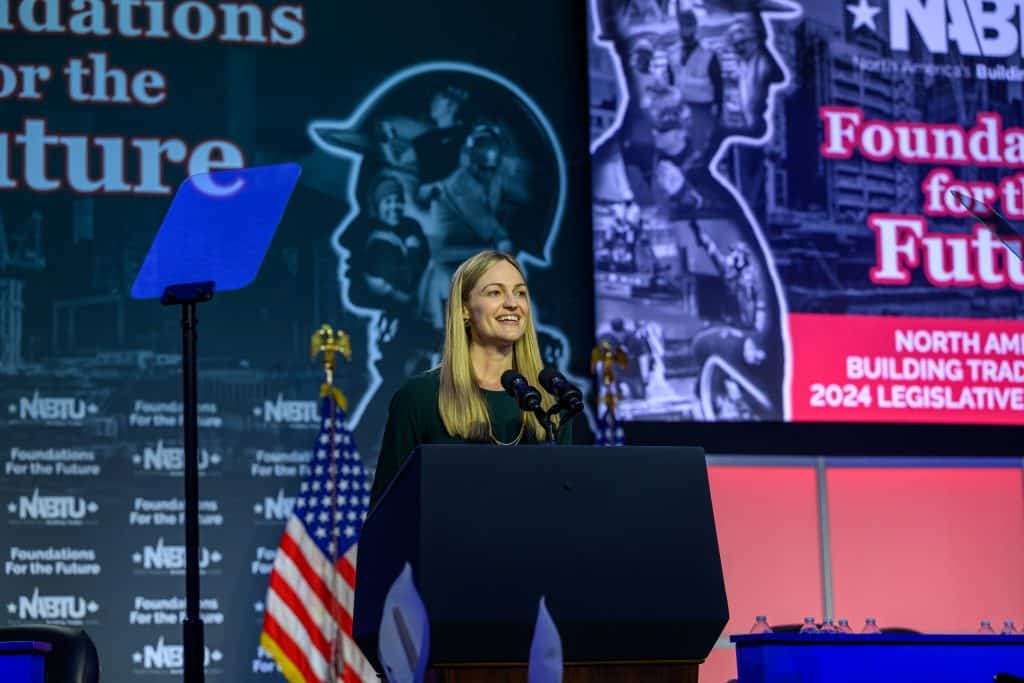
Pa. Gov. Josh ShapiroMd. Gov. Wes MooreAFL-CIO President Liz ShulerScranton Mayor Paige CognettiMilwaukee Mayor Cavalier JohnsonGSA Administrator Robin Carnahan speaks with NABTU President McGarvey
The morning began with a fireside chat with U.S. General Services Administration (GSA) Administrator Robin Carnahan, whose implementation of strong labor standards for projects related to federal facilities has put SMART members to work across the country. As the manager of federal government properties, acquisitions and more, the GSA is one of the largest players in the country when it comes to building, maintaining and retrofitting buildings, and as a pro-labor official, Carnahan has strived to ensure that work is performed using union workforces. She and NABTU President McGarvey discussed, among other things, the value of project labor agreements and how federal legislation provides the money GSA needs to put union members to work on “greening our federal carbon footprint.”
“Project labor agreements are just good business,” Carnahan declared.
U.S. Department of Energy (DOE) Secretary Jennifer Granholm also spoke to attendees on Wednesday, outlining the ways in which the department is implementing funding from the Bipartisan Infrastructure Law, the Inflation Reduction Act and the CHIPS and Science Act to pursue a decisively pro-union green energy policy. Thanks in large part to the public and private clean energy jobs breaking ground every day, Granholm said, construction employment is at its highest level in recorded history.
“These jobs are the result of a focused, strategic plan; a new industrial revolution is taking shape,” she told attendees. “It is historic, and your labor unions had a hand in shaping this strategy every step of the way. These wins belong to you.”
Liz Shuler, president of the AFL-CIO and a longtime fighter for SMART members, took the podium to talk about labor’s resurgence — and the importance of maintaining a policy platform that makes it possible for unions to organize, build, grow and win. From a pro-labor National Labor Relations Board to updates to prevailing wages and job-creating laws, she said, it is more vital than ever to vote for union members’ interests in November.
“It does not matter which craft you are in, people respect the building trades,” Shuler declared. “People recognize that you are the ones that build our nation. … Finally, people recognize that the labor movement is the place to build power.”
And on the state and municipal level, Milwaukee Mayor Cavalier Johnson, Scranton, Pa., Mayor Paige Cognetti, Pennsylvania Governor Josh Shapiro and Maryland Governor Wes Moore detailed the myriad ways in which pro-labor policy is extending from the federal scope to benefit union members in states and cities with a shared pro-worker outlook.
Johnson explained how Milwaukee works hand in hand with Wisconsin building trades workers to build a better city for residents, from huge residential projects — funded in part by the AFL-CIO Housing Investment Trust — to core infrastructure (much of it made possible by money from the Bipartisan Infrastructure Law and the Inflation Reduction Act).
“[The building trades] are working to make sure that they represent the interests of their members, yes, but those interests also coincide with what’s best for the city; what’s best for residents all across Milwaukee,” he said.
Cognetti, meanwhile, discussed how unions in Pennsylvania are helping lift workers in Scranton into the middle class — again, boosted by funding from federal legislation. Through workforce navigation money from the American Rescue Plan and infrastructure funds from the Bipartisan Infrastructure Law, Scranton is helping lead people to apprenticeship programs and putting members to work on core public works projects. Plus, Cognetti’s administration has instituted strong labor standards in the city: Any $25,000-plus project funded by the city or the state government pays a prevailing wage, and Cognetti is proposing a responsible contractor ordinance this spring.
Maryland Gov. Moore detailed his long personal history with the labor movement, starting when his father died when he was three years old — and his father’s union paid for the funeral. Decades later, Moore talked about the importance of investing in apprenticeship programs and putting union members to work on infrastructure projects — particularly as the state mourns the deaths of six construction workers in the devastating Key Bridge collapse in Baltimore. That bridge, he said, will be rebuilt with union labor. And moving forward, he vowed, Maryland will continue to invest in its workers.
“When people say that you have to somehow choose between having a growing economy and a fair one, it’s a false choice. We don’t have to choose, because we can and we will have both,” Moore declared.
And Shapiro, a longtime friend of SMART Local 19, Local 12 and Local 44, went long on his relationship with organized labor and how working with the union building trades has helped Pennsylvania accomplish incredible things — not the least being the repair of the I-95 highway collapse in just 12 days in 2023. Shapiro, who issued a directive to all agencies in the commonwealth of Pennsylvania to use project labor agreements whenever possible (a directive that went into effect April 1), explained how policies like responsible contractor ordinances and PLAs benefit workers, high-road contractors and the building tradespeople of the future. And in order to benefit those future trades workers, Shapiro told NABTU, he signed an executive order to create a first-in-the-nation initiative to invest up to $400 million in federal funding to train up to 10,000 new workers in Pennsylvania.
“We are giving every Pennsylvanian the freedom to chart their own course and the opportunity to succeed,” Shapiro said to a standing ovation. “We have a tremendous opportunity right now – and the progress we make is going to run right through your union halls.”
The conference’s final plenary session concluded with a speech from President Biden, who just that morning received NABTU’s endorsement in the United States presidential race. Biden drew a stark contrast between the anti-worker actions of 2016-2020 — a union-busting NLRB, a promised “infrastructure week” that never arrived and more — with the progress workers have made since 2021: 51,000 projects started since the passage of the Bipartisan Infrastructure Law; 15 million jobs created; an executive order requiring project labor agreements on federal jobs that cost more than $35 million; Davis-Bacon updates that expand prevailing wages for construction workers; and the repealing of Trump’s proposed Industry Recognized Apprenticeship Programs (IRAPs) rule, to name a few.
“Trump promised us an infrastructure week, but I’ll tell you: In four years, he didn’t build a damn thing,” Biden said.
With a pro-worker majority in Congress, more is possible, Biden added, calling for the passage of the Protecting the Right to Organize (PRO) Act.
“It’s just beginning,” he proclaimed. “Roads, bridges, ports, airports, clean water systems, available high-speed Internet all across America and built by the building trades.”
Following President Biden’s speech, SMART members and trades workers departed for Capitol Hill, where they met with legislative staffers to push Congress to act on our behalf. And as attendees returned to their home locals over the following days, they carried the message resounding throughout the conference halls to union members across the country: We need to advocate for our interests, at the ballot box and beyond, to secure our collective future.